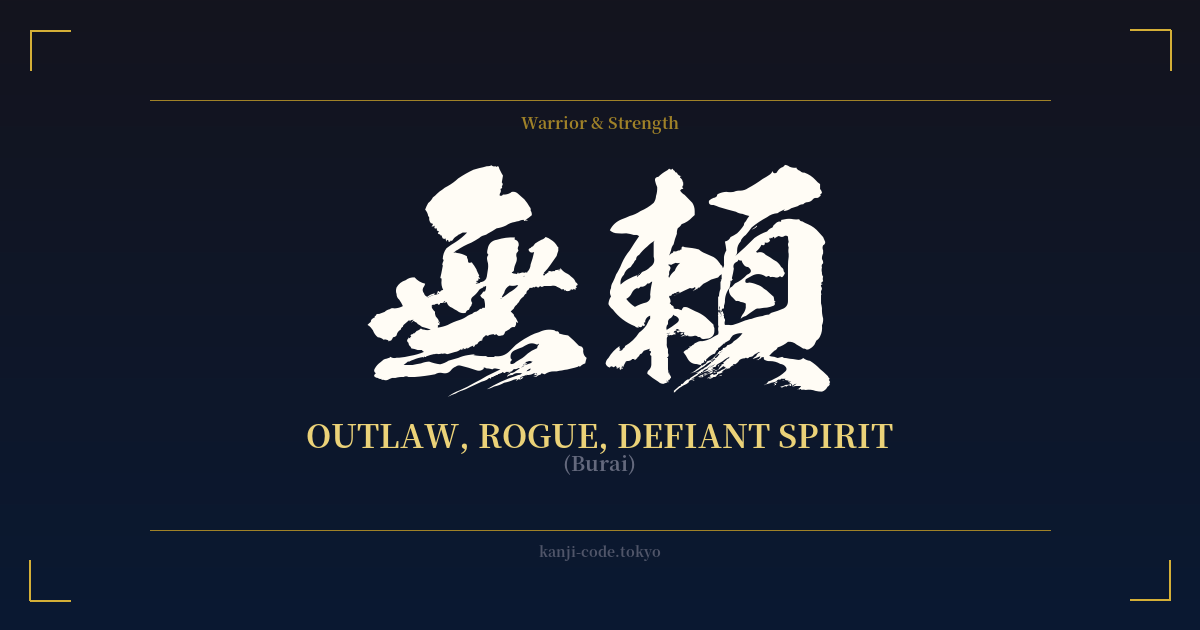
✍️ 無頼 (Burai) — Cultural Context
The Japanese word 無頼 (Burai) paints a vivid picture of a specific archetype: the outlaw, the rogue, the individual who lives by their own rules. To understand its depth, we can look at the kanji themselves. 無 (bu) means 'nothing' or 'without,' while 頼 (rai) means 'to rely on' or 'trust.' Literally, Burai describes someone who relies on nothing and, by extension, cannot be relied upon by the strictures of society.
This isn't just about simple criminality. The Burai spirit is one of profound defiance against authority, social norms, and established institutions. Historically, this archetype might be seen in figures like the kabukimono, eccentric samurai of the late 16th and early 17th centuries known for their bizarre clothing, disruptive behavior, and violent tendencies. They were a direct affront to the rigid social order, embodying a raw and untamed form of individualism.
The most significant cultural touchstone for Burai, however, comes from post-World War II literature. The Buraiha (無頼派), or 'Decadent School,' was a group of writers including Osamu Dazai and Ango Sakaguchi. In the wake of Japan's defeat and the collapse of its imperial ideology, these authors rejected the old values of patriotism and self-sacrifice. Instead, they embraced a life of purposelessness, decadence, and dissolution. They were 'outlaws' of the spirit, seeking authenticity not in societal contribution but in personal freedom, however destructive.
Ango Sakaguchi's famous essay 'On Decadence' argued that humanity finds its true nature in this fallen state, and that attempting to suppress it with artificial ideals is futile. This philosophy is the heart of the modern Burai concept. It's a cynical but honest worldview that finds a strange kind of integrity in abandoning all pretense.
In modern pop culture, the Burai character is the quintessential anti-hero. They are the lone wolf, the rogue swordsman, the cynical detective who operates outside the rules but follows their own internal code. They are not heroes in the traditional sense; they are often selfish, dissolute, and unreliable. Yet, they possess a core of rebellious integrity that makes them compelling. The word Burai carries this weight—a complex mix of admiration for defiance and a clear-eyed acknowledgment of its dark, self-destructive side.
🖌️ Font Styles for 無頼
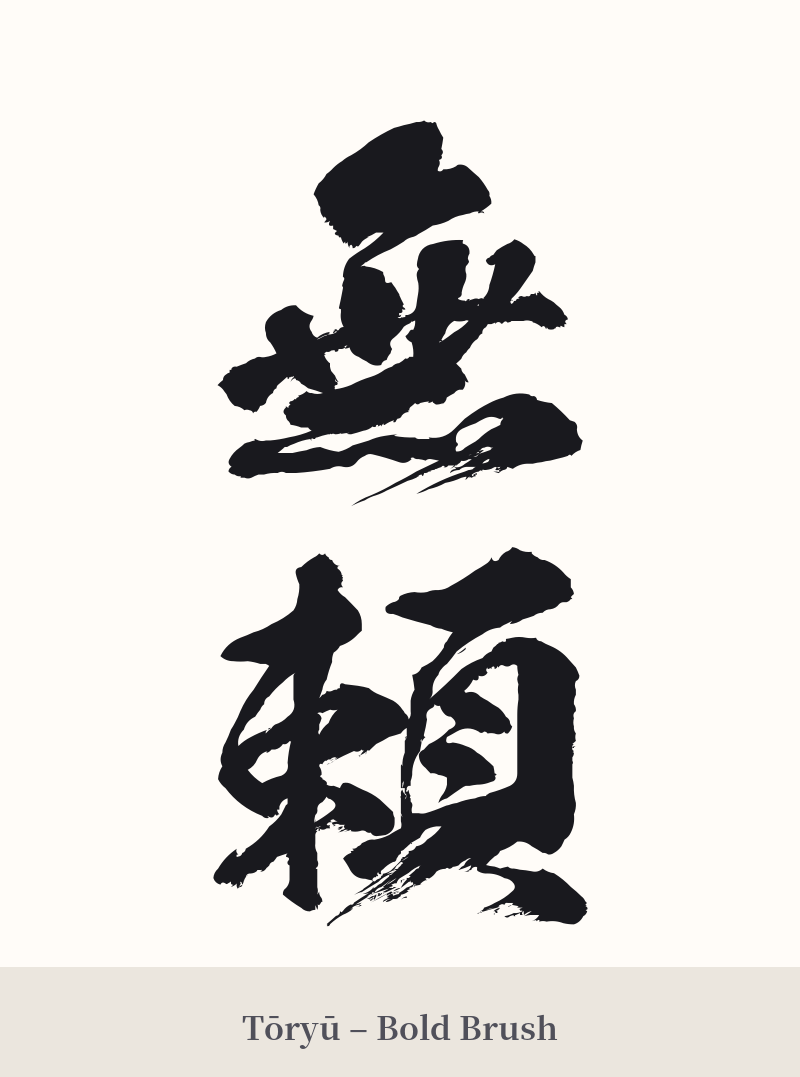
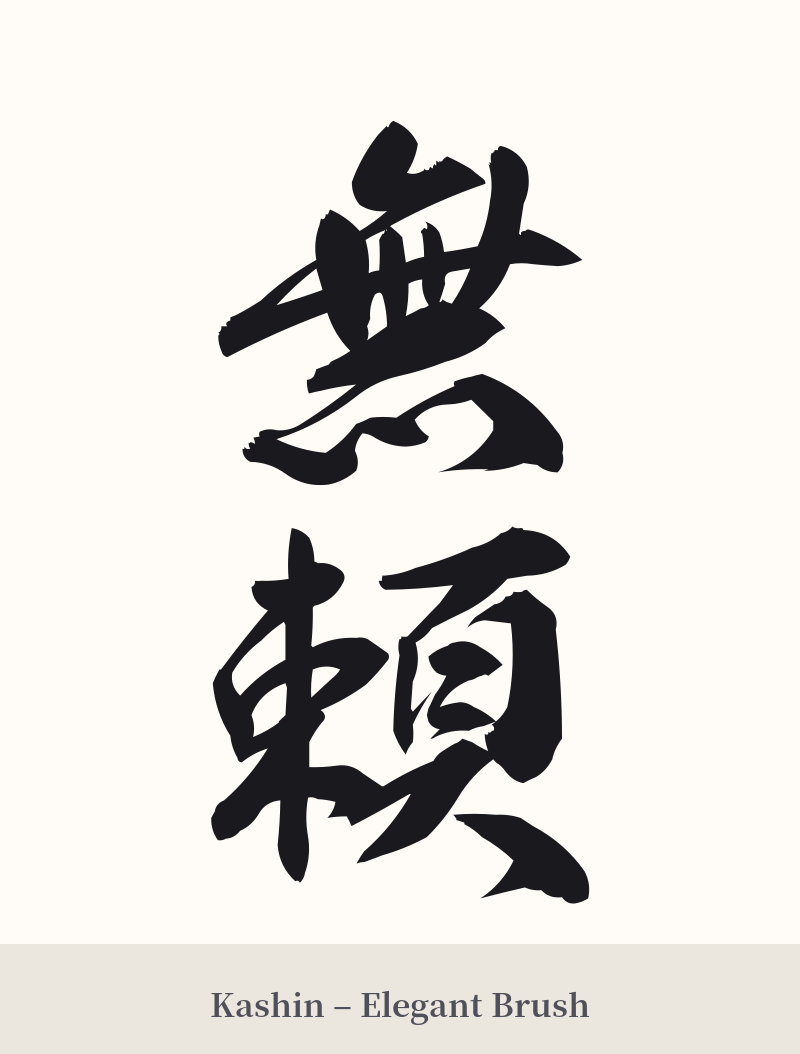
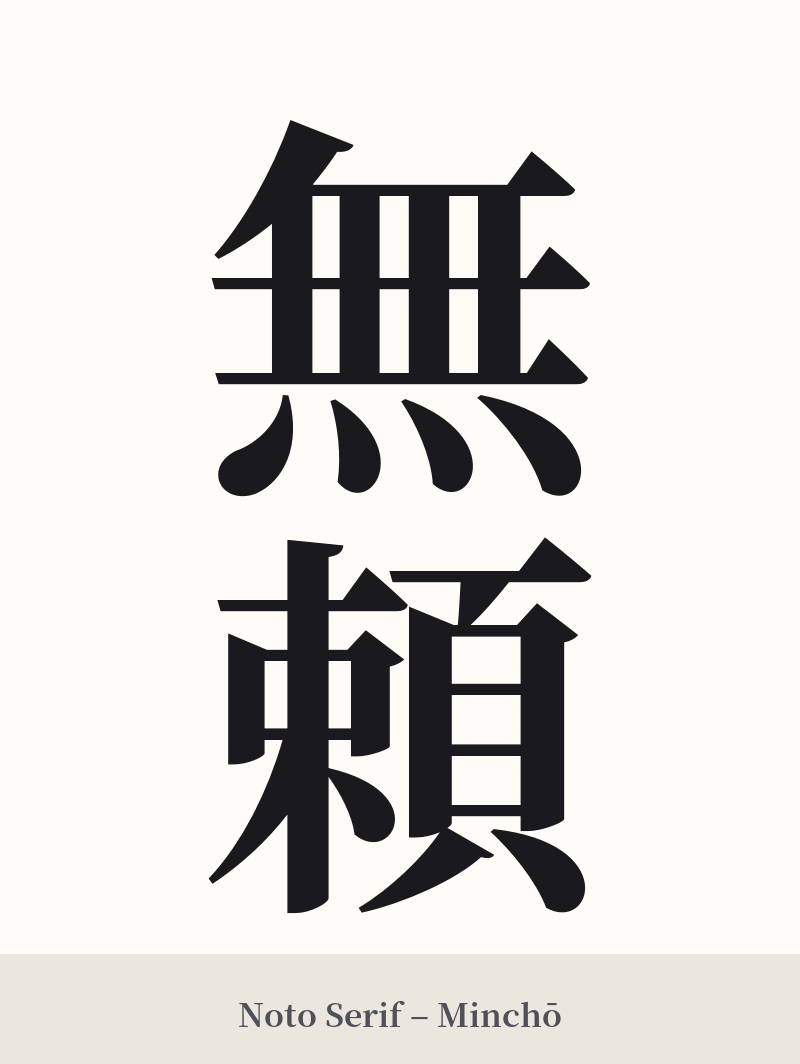
The same kanji can look dramatically different depending on the calligraphy style. Choose a font that matches the mood you want for your tattoo or design.
🎨 Tattoo Suitability
📐 Tattoo Design Guide
A tattoo of 無頼 (Burai) is a bold statement that requires careful design considerations to match its defiant energy.
– Placement: This two-character compound works best in a vertical alignment. Consider prominent, elongated placements like the forearm, the calf, or along the spine or sternum. These spots provide the necessary space for the complex characters to be rendered clearly.
– Font Style: The style should reflect the rebellious nature of the word. Aggressive, scratchy calligraphy (shodo) styles with visible brush strokes (kasuri) can convey a sense of raw energy and imperfection. A bold, semi-cursive Gyosho style also works well, capturing a feeling of fluid defiance. Avoid delicate or overly clean fonts like Mincho, as they contradict the meaning.
– Visual Tips: The second character, 頼, has 16 strokes and is quite dense. The tattoo must be sized large enough to prevent the ink from bleeding together over time and turning into an illegible smudge. A skilled artist is essential. Keep the design minimalist; the power of this word lies in its stark meaning, so adding other visual elements like dragons or waves may dilute its impact.
Comments