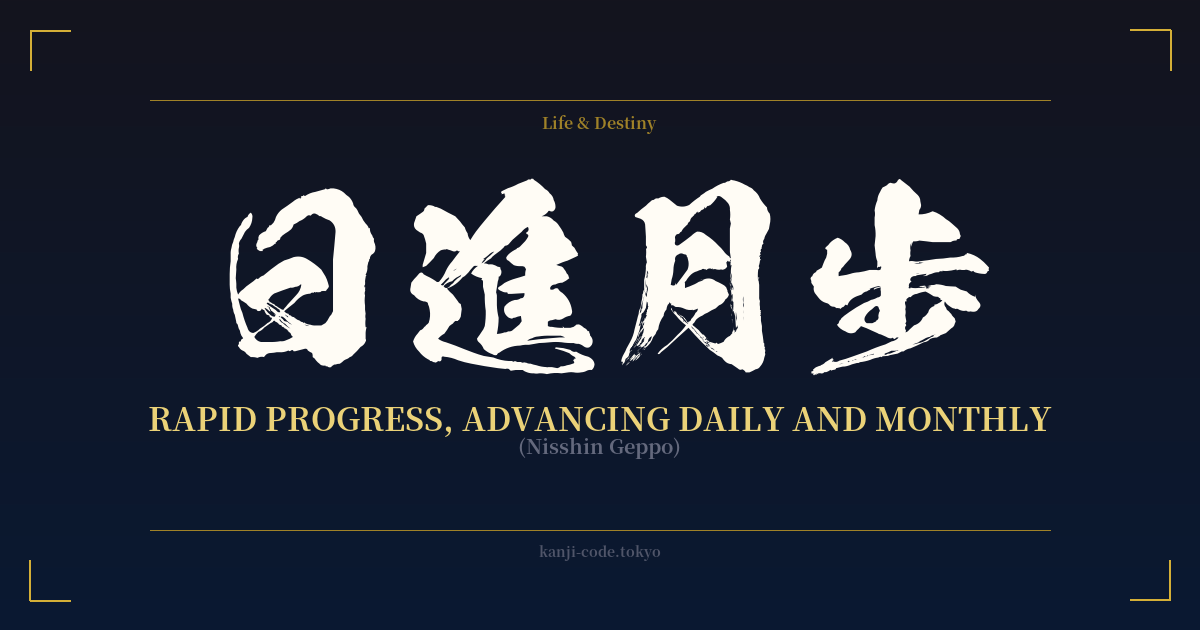
✍️ 日進月歩 (Nisshin Geppo) — Cultural Context
日進月歩 (Nisshin Geppo) is a powerful Japanese four-character idiom, or yojijukugo, that beautifully encapsulates the concept of steady, rapid, and continuous progress. The phrase literally translates to “sun progress, moon step,” painting a vivid picture of advancement that happens day by day (日) and month by month (月).
This isn't about sudden, explosive breakthroughs. Instead, Nisshin Geppo champions the philosophy of consistent, incremental improvement. It’s the idea that small, daily efforts accumulate over time, leading to significant and remarkable development. The sun rises and sets, marking the progress of a day; the moon waxes and wanes, marking the progress of a month. The idiom harnesses this natural rhythm to describe human or technological advancement that is both relentless and constant.
While its exact origin is debated, the sentiment gained significant traction during Japan's Meiji Restoration (1868-1912). This was a period of astonishingly rapid modernization and westernization, where Japan transformed itself from a feudal society into an industrial powerhouse in just a few decades. The spirit of Nisshin Geppo perfectly mirrored the national ambition. The phrase became a motto for a nation on the move, embracing new technologies, political systems, and ideas with incredible speed.
In modern Japan, Nisshin Geppo is deeply intertwined with the concept of kaizen (改善), or “continuous improvement.” This philosophy is a cornerstone of Japanese business culture, famously employed by companies like Toyota to refine processes and enhance quality. But its application extends far beyond the factory floor. It’s used in education to encourage students, in sports to motivate athletes, and in personal development as a mantra for self-growth.
To embrace Nisshin Geppo is to commit to a journey of lifelong learning and improvement. It is a rejection of stagnation and complacency. It acknowledges that true, lasting progress is not a single event but a sustained process. It’s the quiet discipline of showing up every day, taking one more step, and trusting that these daily and monthly efforts will compound into something extraordinary.
🖌️ Font Styles for 日進月歩
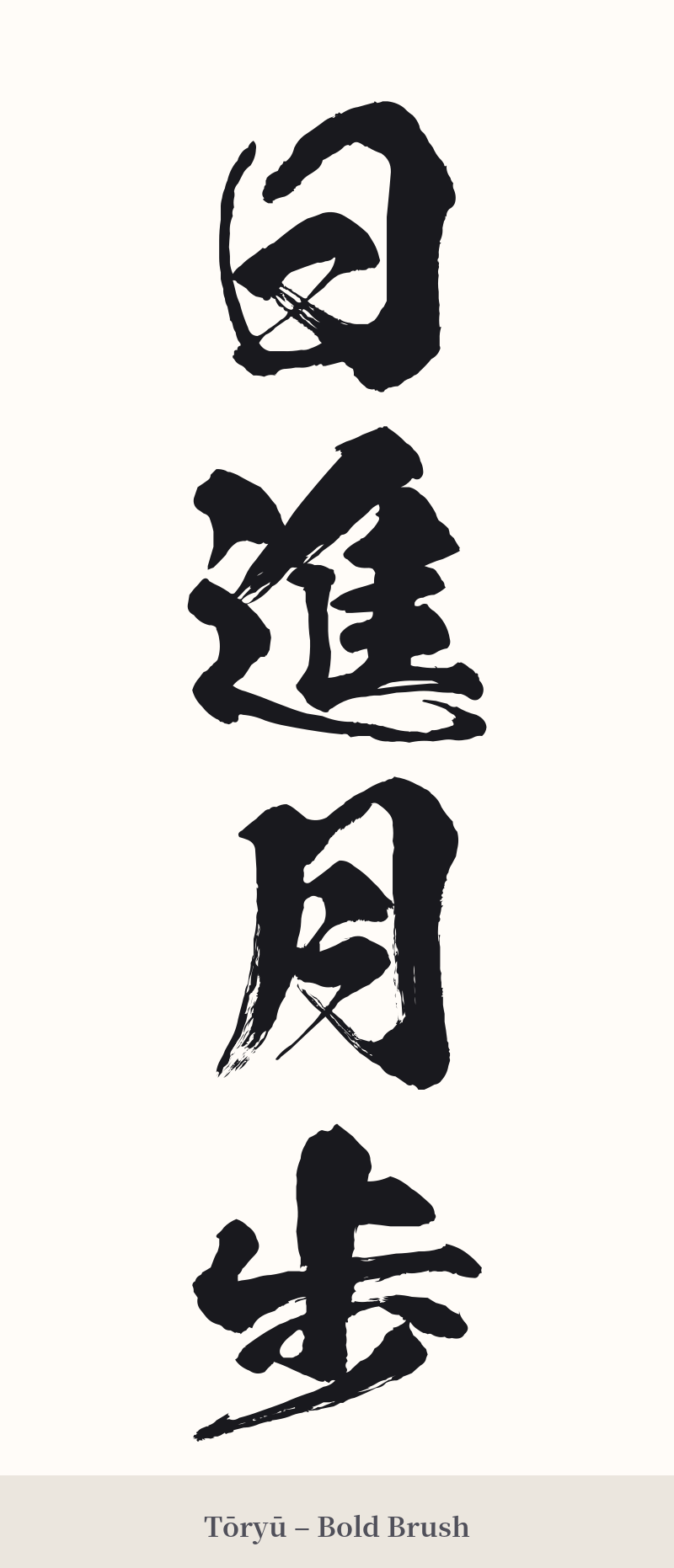
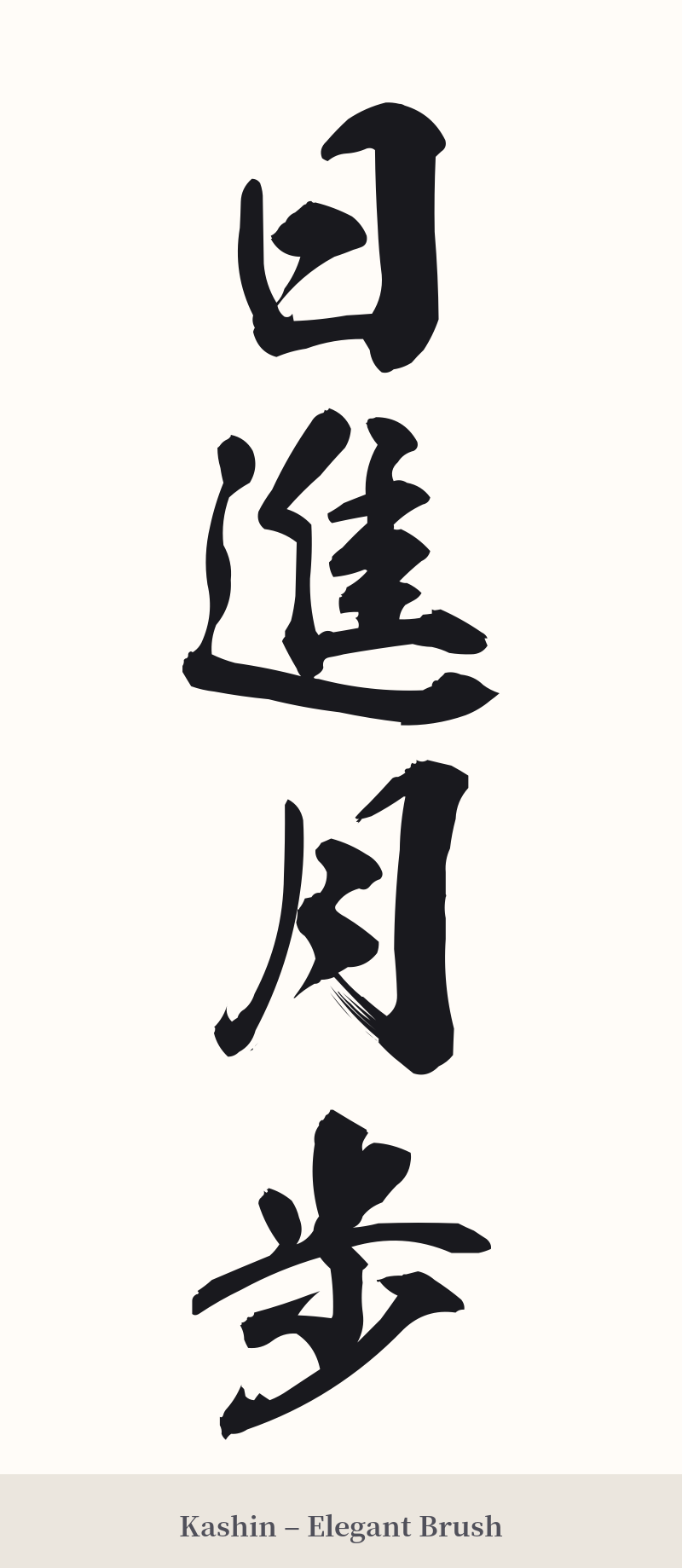
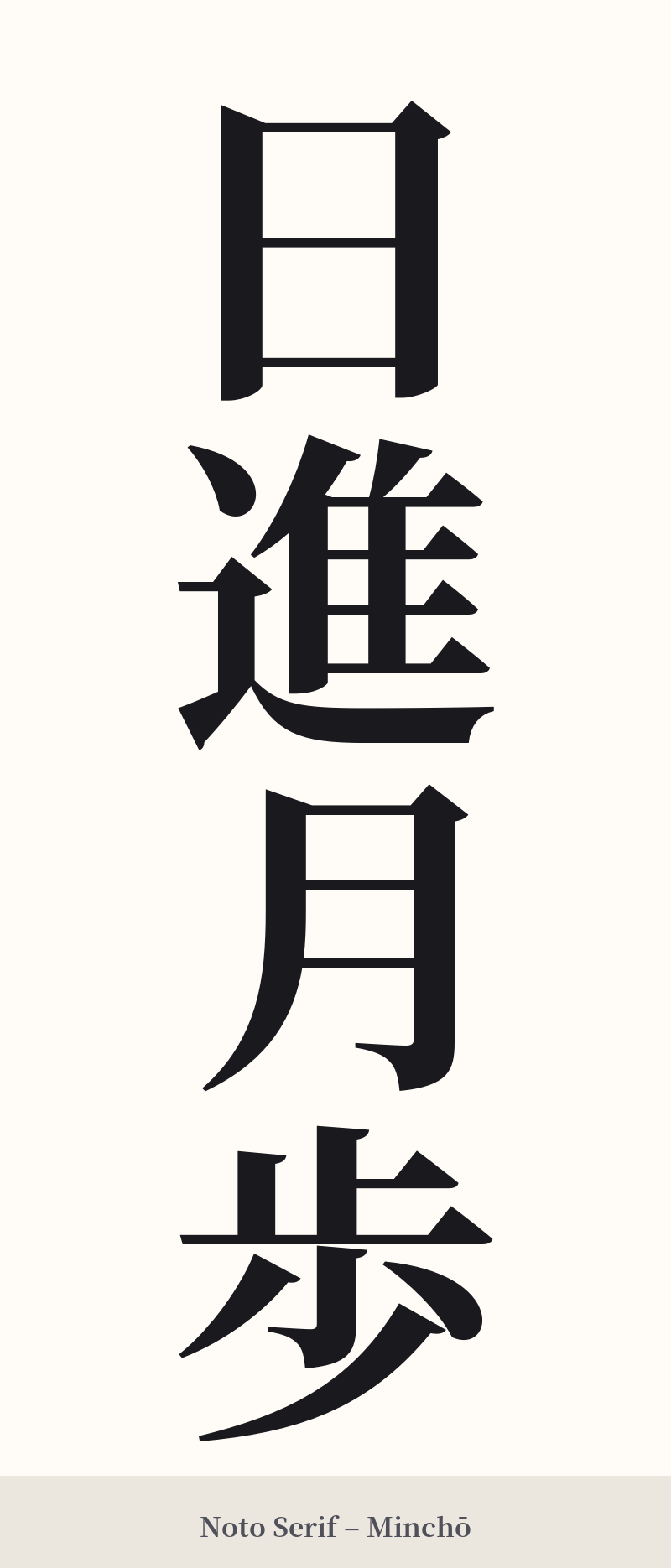
The same kanji can look dramatically different depending on the calligraphy style. Choose a font that matches the mood you want for your tattoo or design.
🎨 Tattoo Suitability
📐 Tattoo Design Guide
For a 日進月歩 tattoo, the layout and font style are key to conveying its meaning of dynamic progress. Here are some design recommendations:
– Placement: This four-character idiom works best in a linear arrangement. A vertical orientation is traditional and visually powerful, making it ideal for the forearm, calf, or running down the spine. A horizontal placement can also work well across the chest, upper back, or along the ribs.
– Font Style: The choice of script can dramatically alter the feel. A dynamic, semi-cursive style like Gyōsho (行書) can mirror the sense of movement and progress. For a more formal and disciplined look, the crisp lines of Kaisho (楷書) provide clarity and strength. A bold, expressive brushstroke style can emphasize the power behind the continuous effort.
– Visual Tips: The four characters are strong enough to stand alone without additional imagery. Ensure your artist gives adequate space between each kanji to maintain legibility. Pay special attention to the character 進 (shin), as its 11 strokes require precision, especially in smaller designs. Resist the urge to shrink the tattoo too much; its impact lies in its clear, confident presence.
Comments