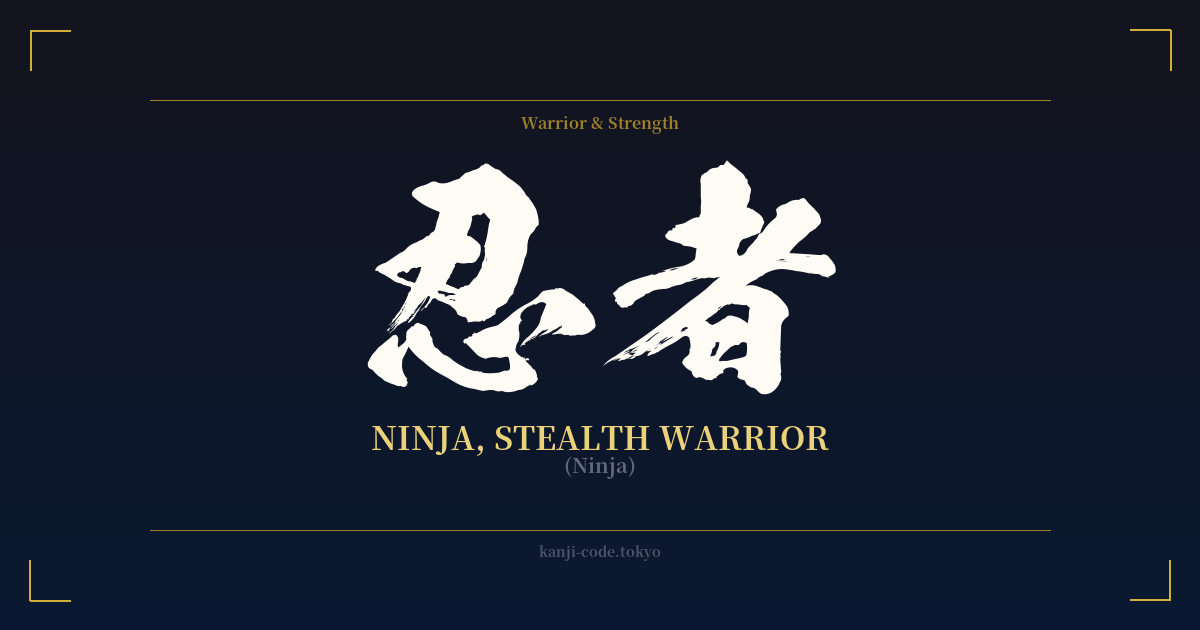
✍️ 忍者 (Ninja) — Cultural Context
The word 忍者 (Ninja) is a global icon, instantly conjuring images of black-clad figures moving silently through the shadows. But beyond the cinematic myth, the term holds a rich and complex history rooted in the realities of feudal Japan. The word itself is a combination of two kanji: 忍 (nin), meaning to endure, conceal, or sneak, and 者 (sha), meaning person. Literally, a ninja is a "person who conceals" or a "person of endurance."
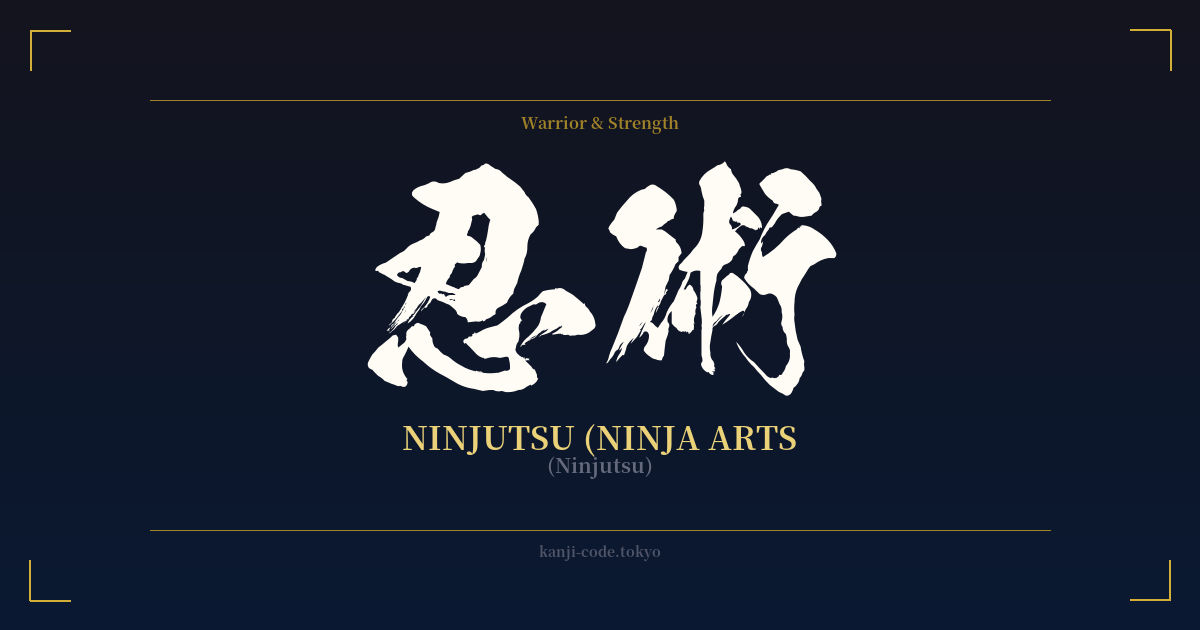
Historically, ninja, more accurately called shinobi, were not supernatural assassins but highly skilled mercenaries, spies, and saboteurs active primarily during the Sengoku period (15th-17th centuries). They were masters of espionage, infiltration, and guerrilla warfare, employed by daimyo (feudal lords) to gain intelligence or disrupt enemy operations. Their expertise, known as ninjutsu, was a practical collection of survival skills, not magic. It encompassed disguise, stealth movement, pharmacology, geography, and various forms of combat.
The popular image of the ninja—dressed in all black, wielding a straight-bladed sword, and using smoke bombs to vanish—is largely a product of Edo-period folklore, kabuki theater, and woodblock prints. As Japan entered a long period of peace, the real-life shinobi faded into history, and their exploits were romanticized and exaggerated for entertainment. This is where the legends of their near-superhuman abilities began to take shape.
In the 20th and 21st centuries, this legendary figure was exported to the world through movies, television, and especially anime and manga, such as the globally famous series Naruto. This has cemented the ninja as a symbol of Japanese culture, albeit a highly stylized one. For many, the word now represents not just a historical figure, but an archetype of discipline, perseverance against all odds, and the mastery of a hidden, powerful art. It embodies the idea of achieving extraordinary results through quiet, unseen effort.
🖌️ Font Styles for 忍者
The same kanji can look dramatically different depending on the calligraphy style. Choose a font that matches the mood you want for your tattoo or design.
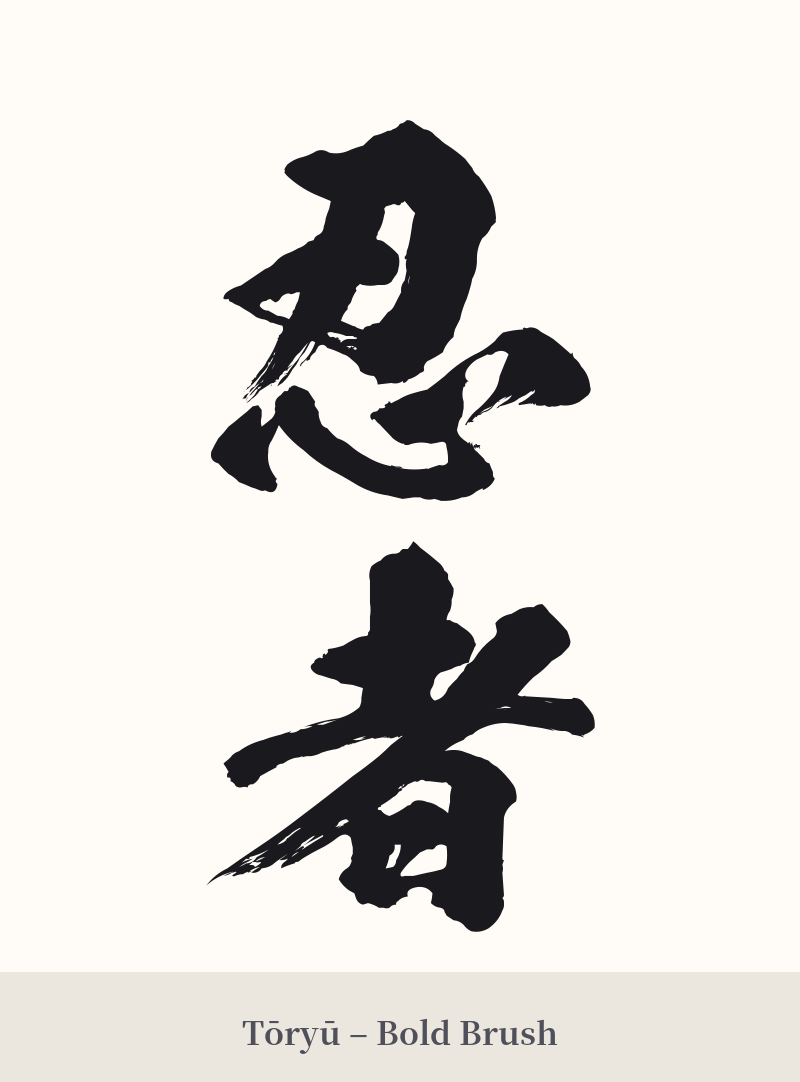
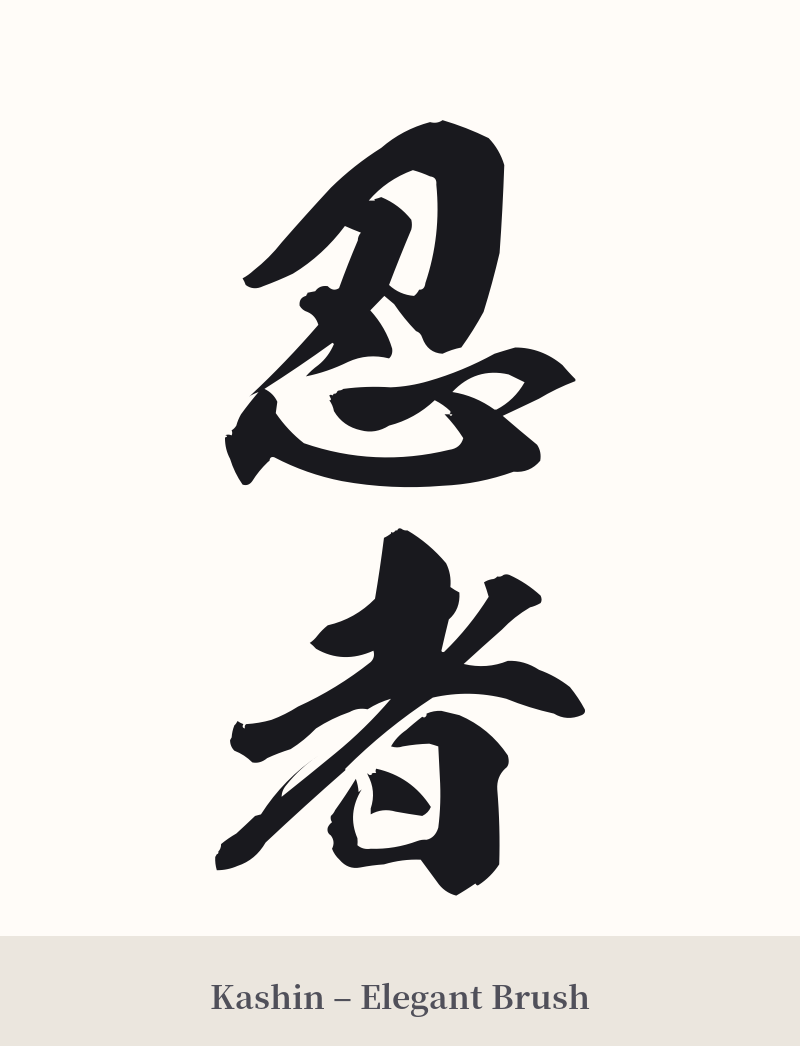
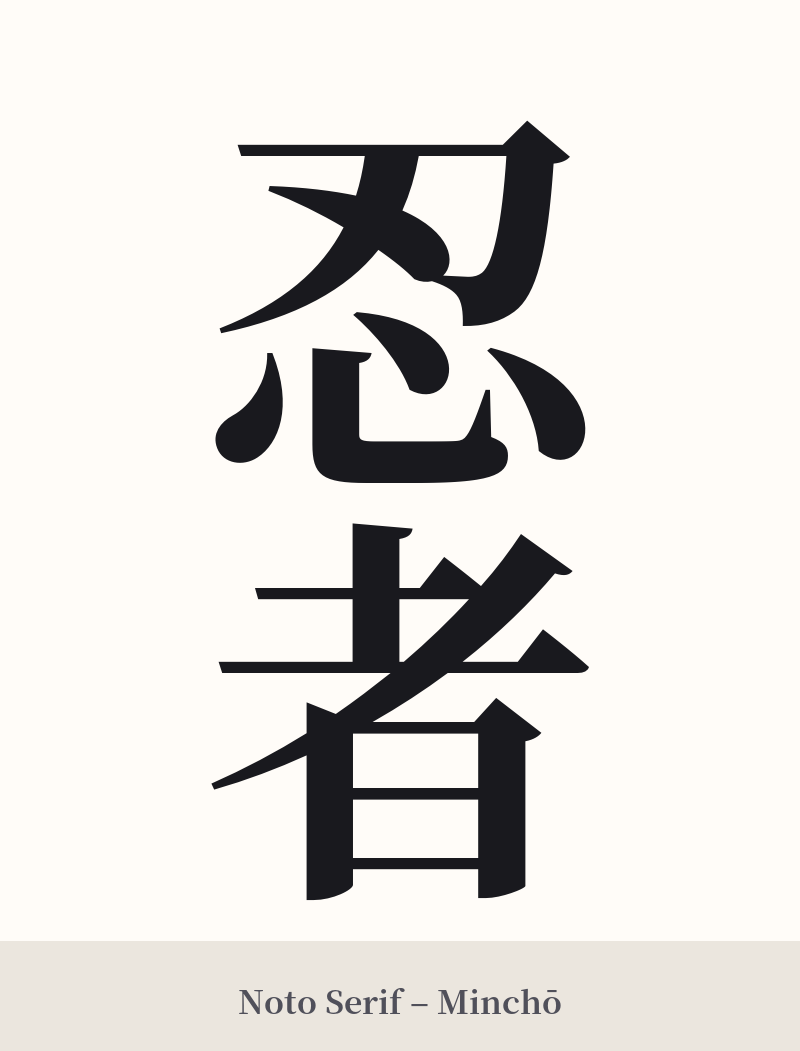
🎨 Tattoo Suitability
📐 Tattoo Design Guide
The kanji for Ninja is visually strong and offers great flexibility for a tattoo design. Its iconic status means it can stand powerfully on its own or be part of a larger composition.
For placement, a vertical alignment is traditional and works exceptionally well on the forearm, calf, or along the spine. This orientation emphasizes the flow of the characters. A horizontal placement looks powerful across the chest, upper back, or below the collarbone.
When it comes to style: – A dynamic, flowing brush script (Gyōsho or Sōsho) can capture the sense of movement, speed, and action associated with the ninja. – A clean, angular block font (Kaisho) will emphasize the discipline, precision, and tradition behind the concept. – Consider adding a single splash of color, like a red 'hanko' stamp seal or a background element, to make the black ink pop. The kanji is strong enough to not require other imagery, but if you do combine it, themes of shadows, smoke, or a crescent moon can complement the stealthy nature of the word.
Comments