✍️ 漢 (Kan) — Cultural Context
The kanji 漢 (Kan) is a character steeped in millennia of history, carrying the weight of a dynasty, a culture, and an identity. Its origins trace back to the Han River (漢水) in China, which lent its name to the Han Dynasty (漢朝), a golden age that unified China and established a cultural foundation so powerful that its influence endures to this day.
This dynasty's legacy was so profound that the dominant ethnic group in China began referring to themselves as the Han people (漢人). Consequently, the character 漢 became a direct signifier for China itself. This is deeply embedded in the Japanese language, where it is used to denote things of Chinese origin. For example, 漢字 (kanji) literally means 'Han characters,' referring to the writing system Japan adopted from China. Similarly, 漢方薬 (kanpōyaku) is traditional Chinese herbal medicine, and 漢詩 (kanshi) refers to classical Chinese poetry.
Beyond its connection to China, 漢 also carries a more classical, literary meaning of 'man' or 'masculine.' This usage is less common in modern daily conversation but appears in historical and literary contexts. It evokes a specific type of manliness—not just male, but a gallant, heroic, or rugged figure, often from an ancient tale. The term 漢 (otoko) can be used to describe a 'man's man,' someone with a strong spirit and integrity. This nuance is often contrasted with 和 (Wa), the character representing Japan and its associated ideals of harmony.
However, it's crucial to understand the modern baggage the character carries. In contemporary Japan, 漢 is a component of the word 痴漢 (chikan), a term for a groper or public pervert. This extremely negative association exists alongside its grand historical meanings, creating a complex and potentially problematic duality. Therefore, while 漢 represents a powerful historical concept, its modern usage requires careful consideration, as its meaning can shift dramatically depending on the context.
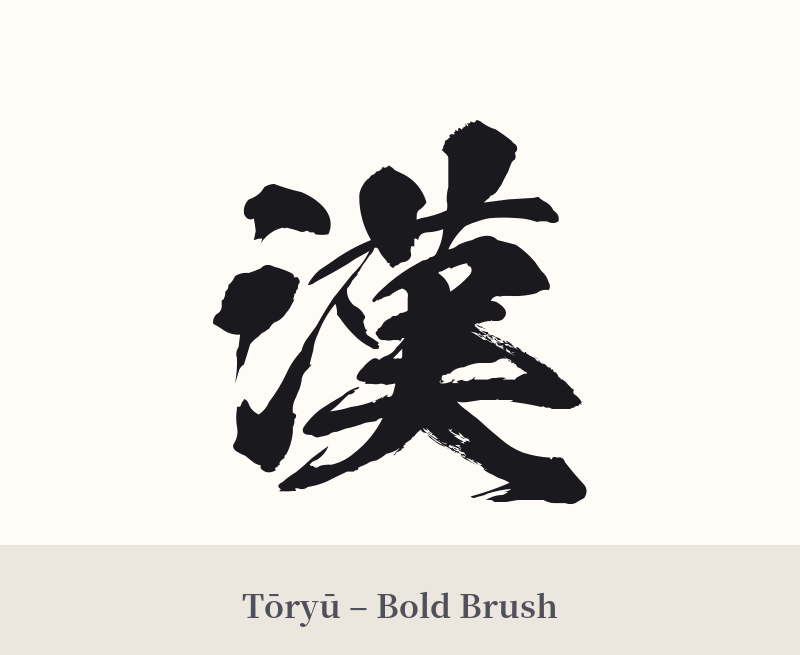
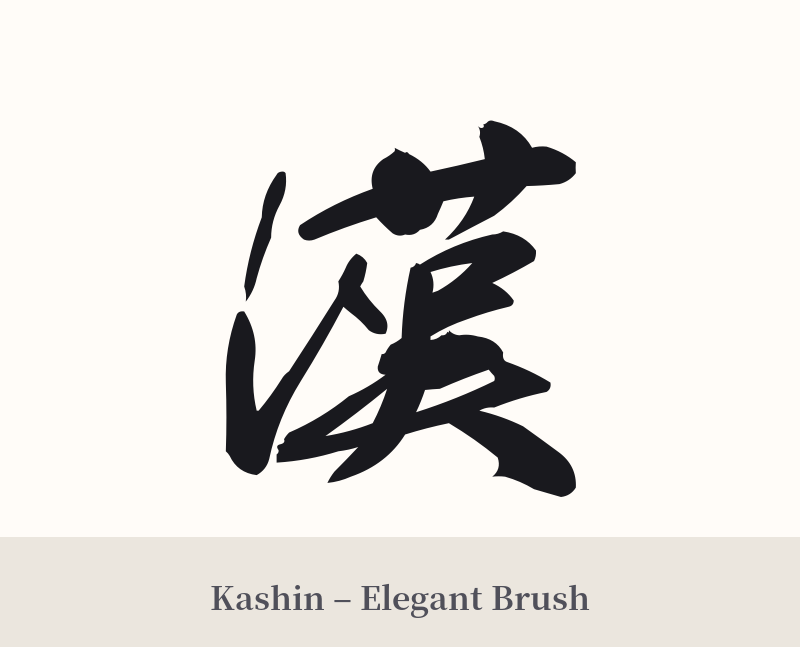
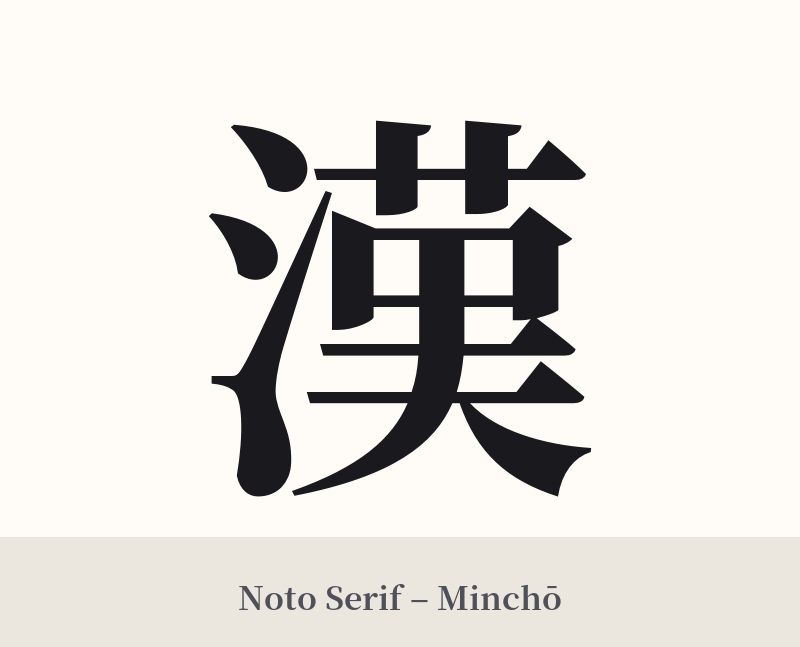
🖌️ Font Styles for 漢
The same kanji can look dramatically different depending on the calligraphy style. Choose a font that matches the mood you want for your tattoo or design.
🎨 Tattoo Suitability
📐 Tattoo Design Guide
The kanji 漢 has a strong, balanced structure that works well for tattoo designs. Its 13 strokes provide enough complexity to be visually interesting without becoming illegible at smaller sizes.
– Placement: Consider vertical placements like the forearm, calf, or along the spine to emphasize its natural proportions. It also works well on the back of the shoulder or chest.
– Font Styles: A bold, angular script like Kaisho (block script) will highlight its stability and strength, fitting the 'masculine' or 'dynastic' theme. For a more artistic and historical feel, a semi-cursive Gyōsho or fully cursive Sōsho style can evoke the flow of time and the character's ancient roots.
– Visual Tips: While 漢 stands on its own, pairing it with other elements can clarify its intended meaning. If focusing on the 'China' aspect, motifs like a dragon or a stylized landscape could work. If emphasizing the 'manliness' theme, you might consider abstract brushstrokes or a simple enso circle to frame it, though be mindful of cultural mixing if pairing with purely Japanese symbols.
Comments