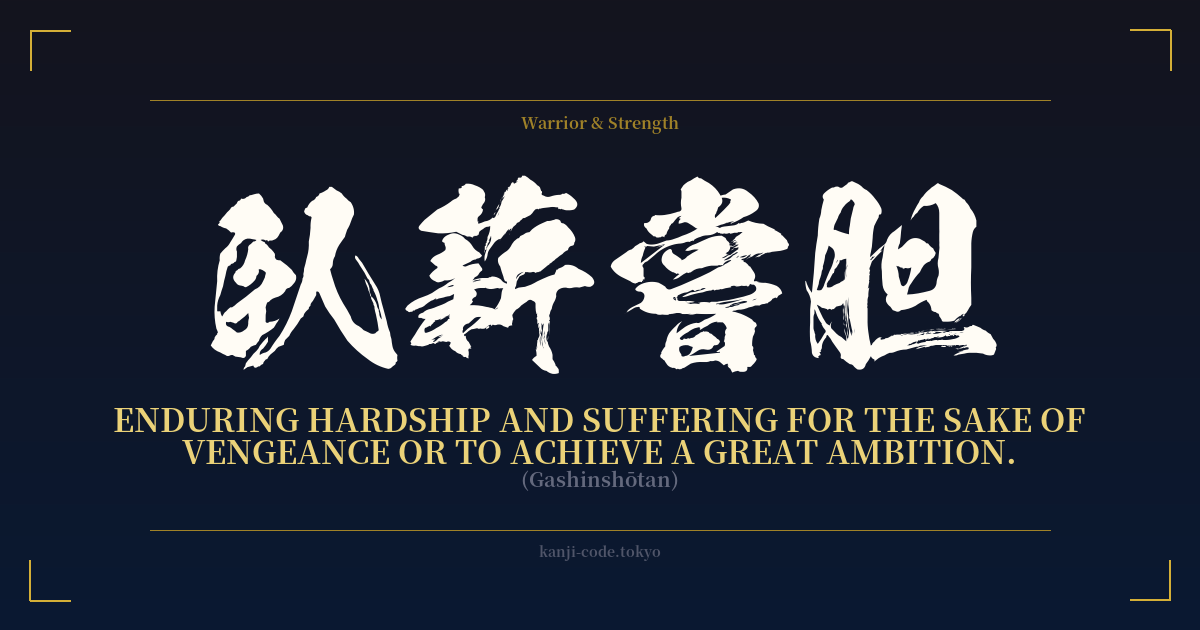
✍️ 臥薪嘗胆 (Gashinshōtan) — Cultural Context
臥薪嘗胆 (Gashinshōtan) is a powerful yojijukugo, or four-character idiom, that encapsulates the idea of suffering through immense hardship to achieve a long-term goal, often for the sake of vengeance. The phrase literally translates to "Sleeping on Firewood, Tasting Gall," a direct reference to its dramatic origin story from ancient China.
The tale comes from the Spring and Autumn period, chronicling the rivalry between two kingdoms: Wu and Yue. The story begins when King Goujian of Yue defeats and mortally wounds King Helü of Wu. On his deathbed, Helü makes his son, Fuchai, swear to avenge him. To keep this vow burning in his heart, Fuchai forces himself to sleep not in a comfortable bed, but on a pile of rough firewood. This act of self-inflicted discomfort, 臥薪 (gashin), served as a constant reminder of his mission. His determination paid off, and he eventually defeated Yue, capturing King Goujian.
Here, the story takes its second turn. Instead of executing Goujian, Fuchai makes him a servant. After years of humiliation, Goujian is allowed to return to his own kingdom. But he has not forgotten his defeat. To fuel his own quest for revenge, he hangs a bitter gallbladder from the ceiling of his room. Every single day, he would look at it and taste it, the act known as 嘗胆 (shōtan). The bitter taste was a visceral reminder of his shame and his burning desire to reclaim his honor.
For over a decade, Goujian secretly rebuilt his army and strengthened his kingdom, all while maintaining a facade of subservience to Fuchai. When the time was right, he launched a surprise attack and conquered the state of Wu, finally achieving his long-sought vengeance. The two separate stories of Fuchai and Goujian were combined to create this single, powerful idiom.
In modern Japan, Gashinshōtan is used to describe someone who endures great personal sacrifice and hardship with unwavering focus on a future victory. It's often invoked in the context of business, sports, or academics after a significant failure. It represents the ultimate comeback story—transforming a bitter defeat into the fuel for an eventual, triumphant success.
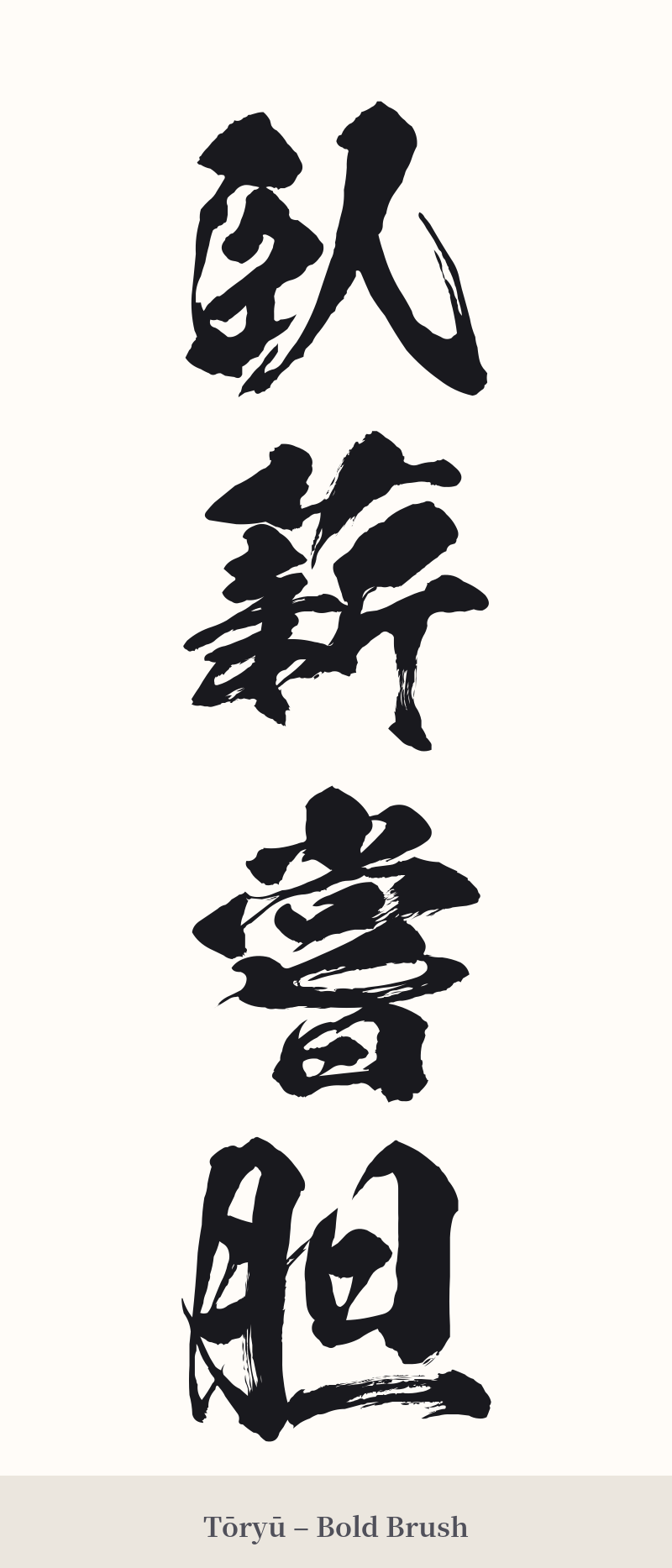
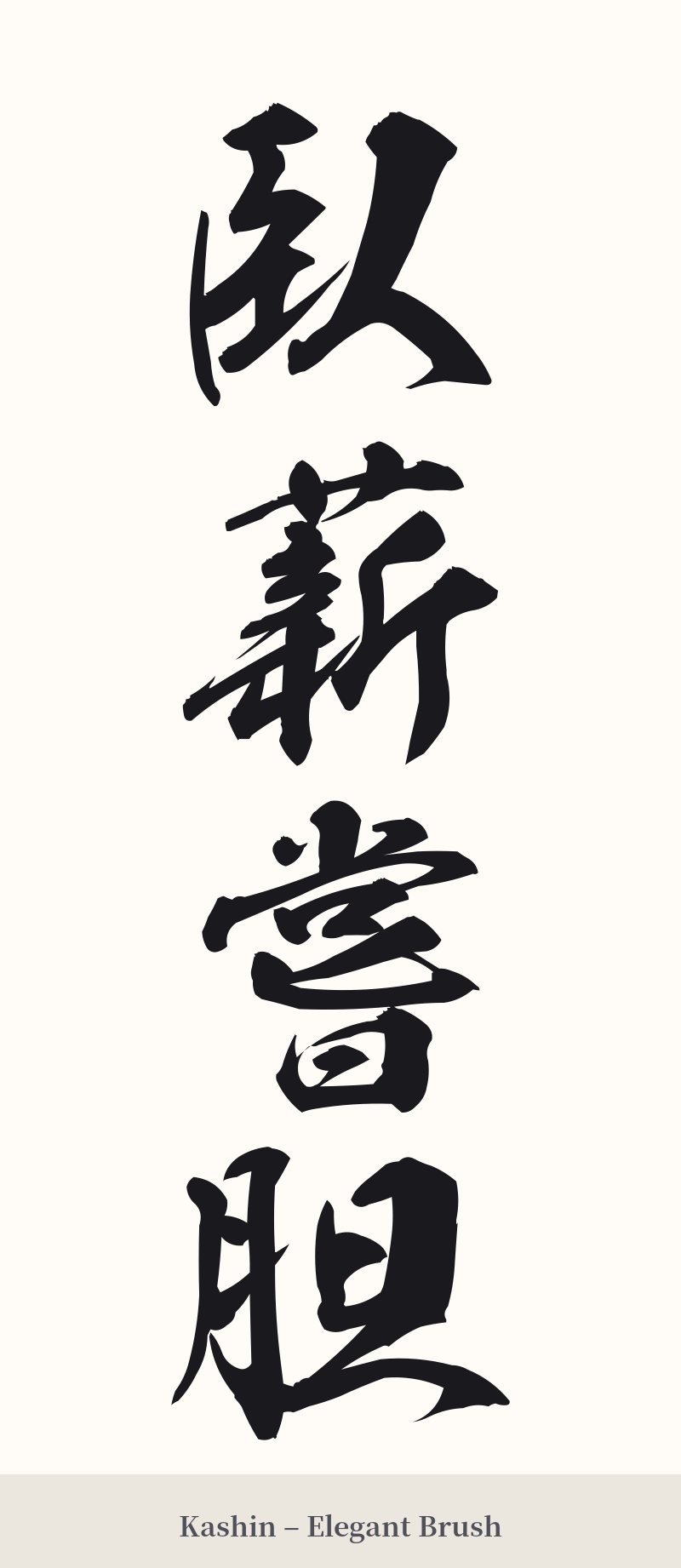
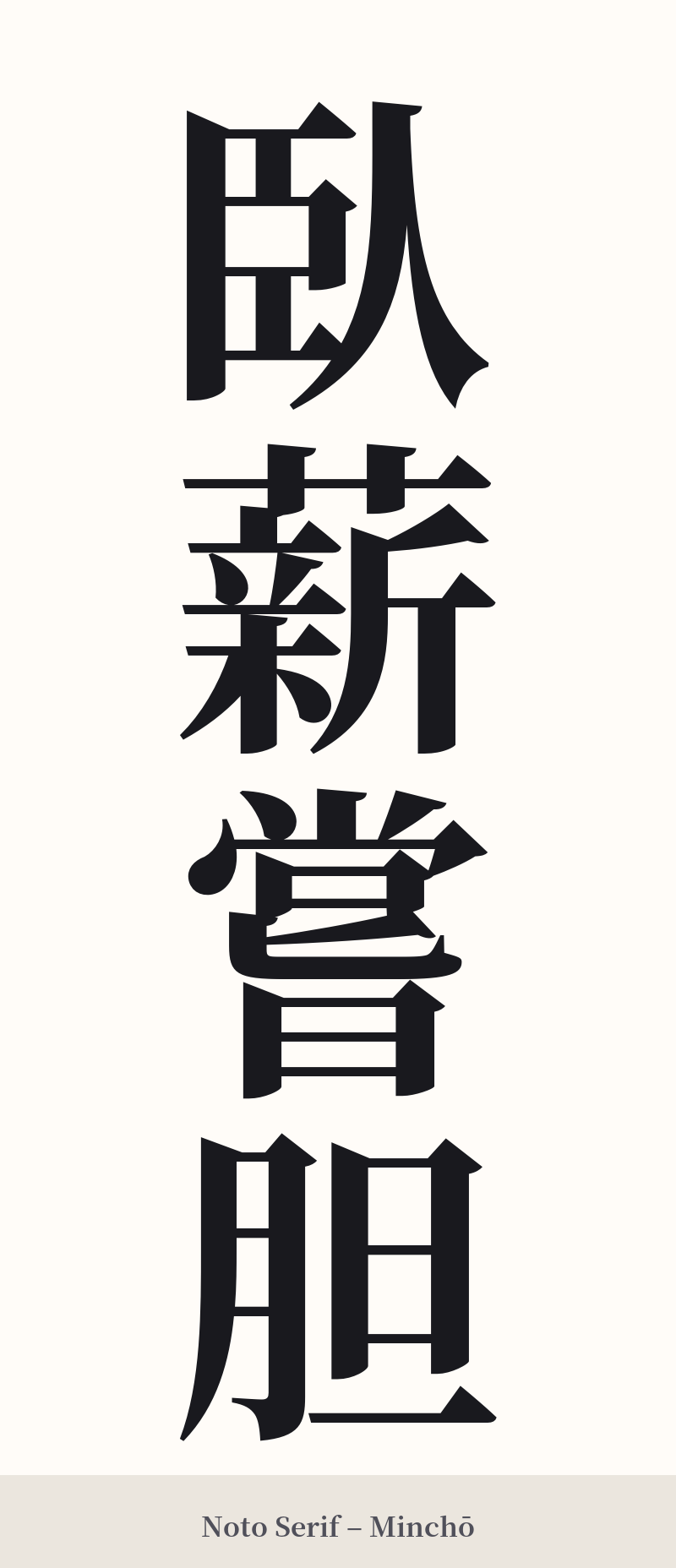
🖌️ Font Styles for 臥薪嘗胆
The same kanji can look dramatically different depending on the calligraphy style. Choose a font that matches the mood you want for your tattoo or design.
🎨 Tattoo Suitability
📐 Tattoo Design Guide
Gashinshōtan is a visually striking phrase that works best when its four characters are given space to be appreciated.
– Placement: A vertical column is the most traditional and aesthetically pleasing arrangement. This looks powerful along the spine, down the forearm, or on the calf. A horizontal placement across the chest or upper back can also be effective.
– Font Style: To capture the raw emotion and history of the idiom, a dynamic, semi-cursive brush script (gyosho) is an excellent choice. For a feeling of unshakeable determination and strength, a bold, angular block script (kaisho) is also highly suitable.
– Visual Tips: The characters 薪 (firewood) and 嘗 (to taste) are quite complex, with 16 and 14 strokes respectively. It is crucial that the tattoo is large enough to prevent the lines from blurring together over time. Avoid choosing a small size for this design. While the kanji alone is powerful, it could be complemented by subtle background elements like a wood grain texture or a dark, ink-wash splash to represent the bitterness of the gall.
Comments