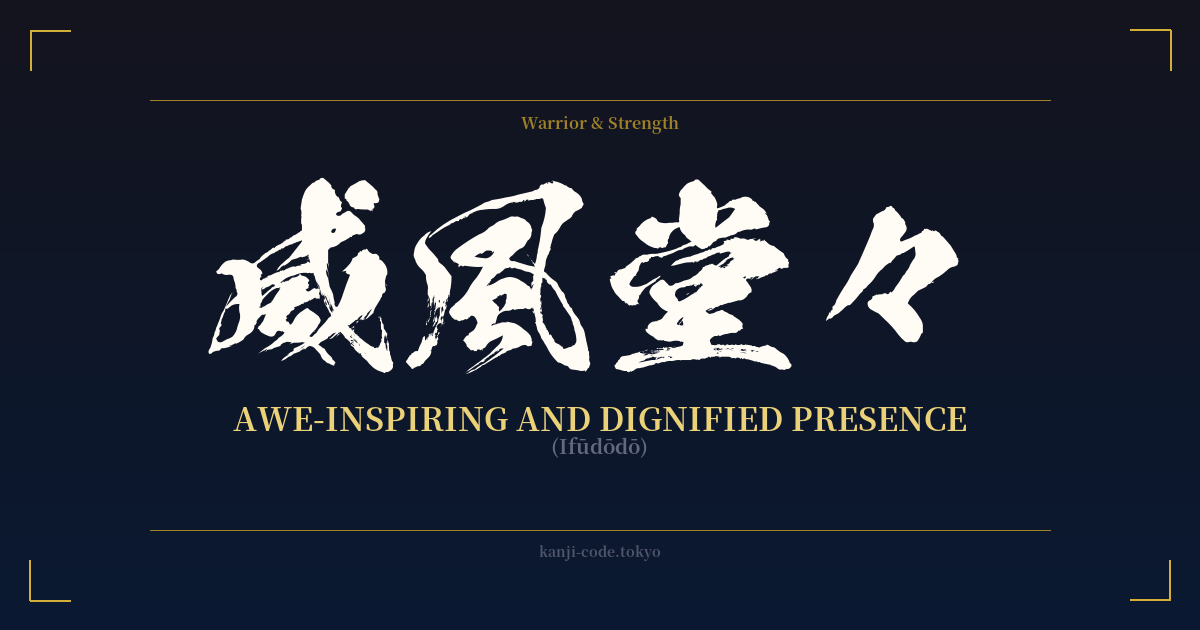
✍️ 威風堂々 (Ifūdōdō) — Cultural Context
威風堂々 (Ifūdōdō) is a Japanese four-character idiom, or Yojijukugo, that paints a vivid picture of grandeur and quiet confidence. It doesn't just mean 'powerful'; it describes a specific kind of power—one that is majestic, dignified, and commands respect without needing to resort to overt aggression or noise. It's the silent, unshakeable presence of a mountain, the grand entrance of a champion, or the noble bearing of a person with immense inner strength.
The literal breakdown offers a poetic glimpse into its meaning. 威 (i) means majesty or authority, 風 (fū) means wind but here implies style or manner, and 堂 (dō) refers to a large hall or temple. The final 々 is a repeater mark, so the phrase is literally "Majesty-Style-Hall-Hall." This paints a picture of a presence as grand and solid as a magnificent public hall, carried with a natural, flowing style. It’s an aura that fills the space around it, not with menace, but with undeniable dignity.
In Japanese culture, Ifūdōdō is often used to describe historical figures like samurai generals or feudal lords who possessed an imposing yet respected demeanor. You might hear it used to describe a sumo wrestler (rikishi) entering the ring, their sheer size and ritualized movements creating a perfect embodiment of the term. It can also describe non-human things, such as a magnificent castle standing against the skyline or a breathtaking piece of nature.
A significant cultural touchstone for this phrase in modern Japan is its use as the title for Sir Edward Elgar's "Pomp and Circumstance Marches." The translation is so fitting that for many Japanese people, the music and the phrase are inextricably linked, both evoking feelings of grand ceremony, national pride, and stately progression. This connection has cemented Ifūdōdō in the popular consciousness as a word for all things grand, dignified, and awe-inspiring.
🖌️ Font Styles for 威風堂々
The same kanji can look dramatically different depending on the calligraphy style. Choose a font that matches the mood you want for your tattoo or design.
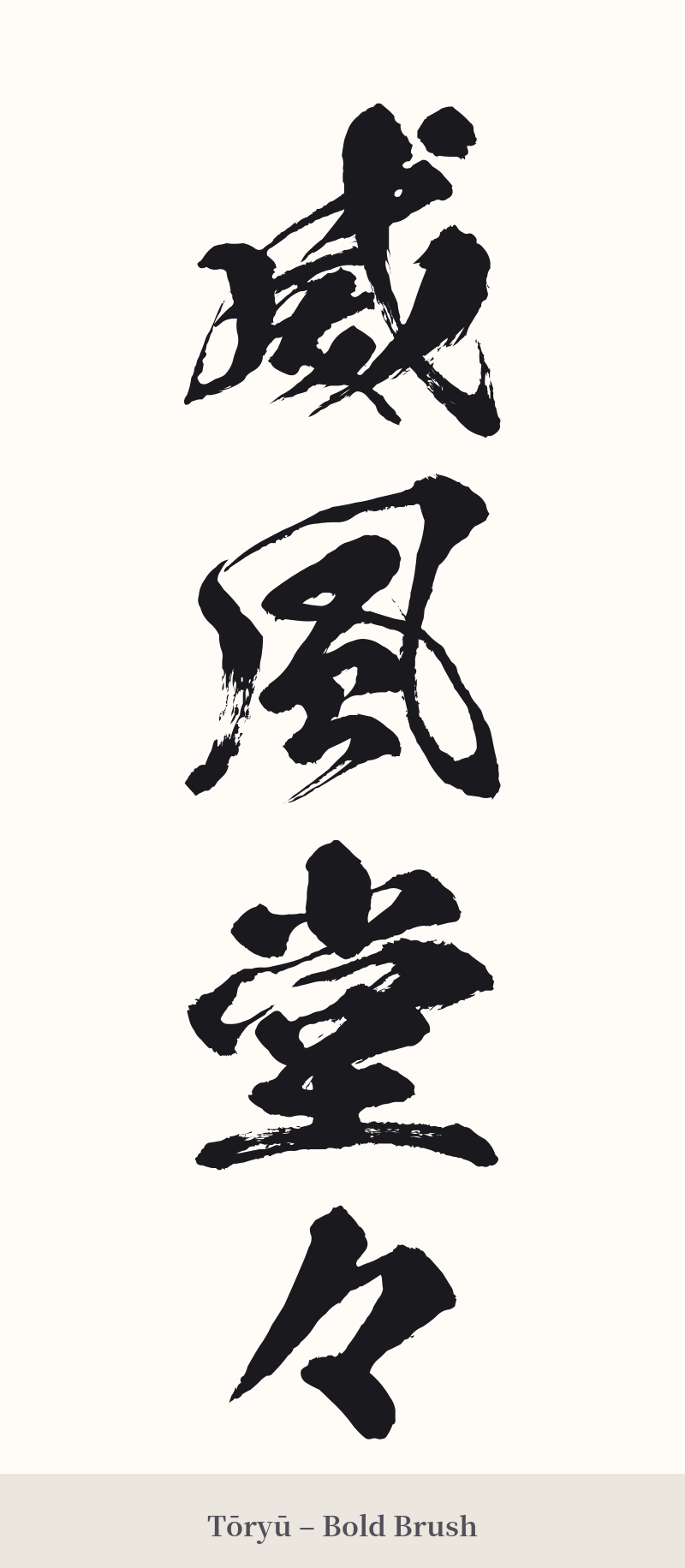
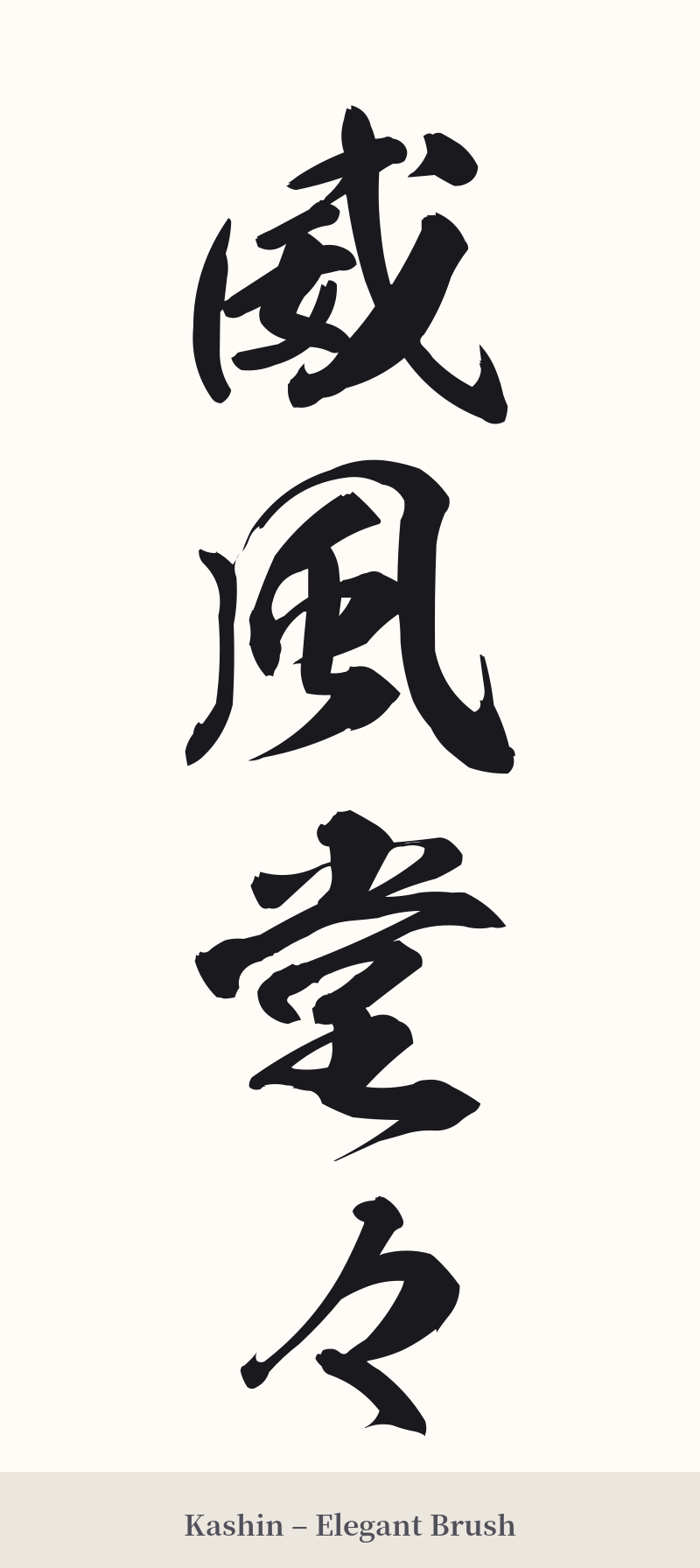
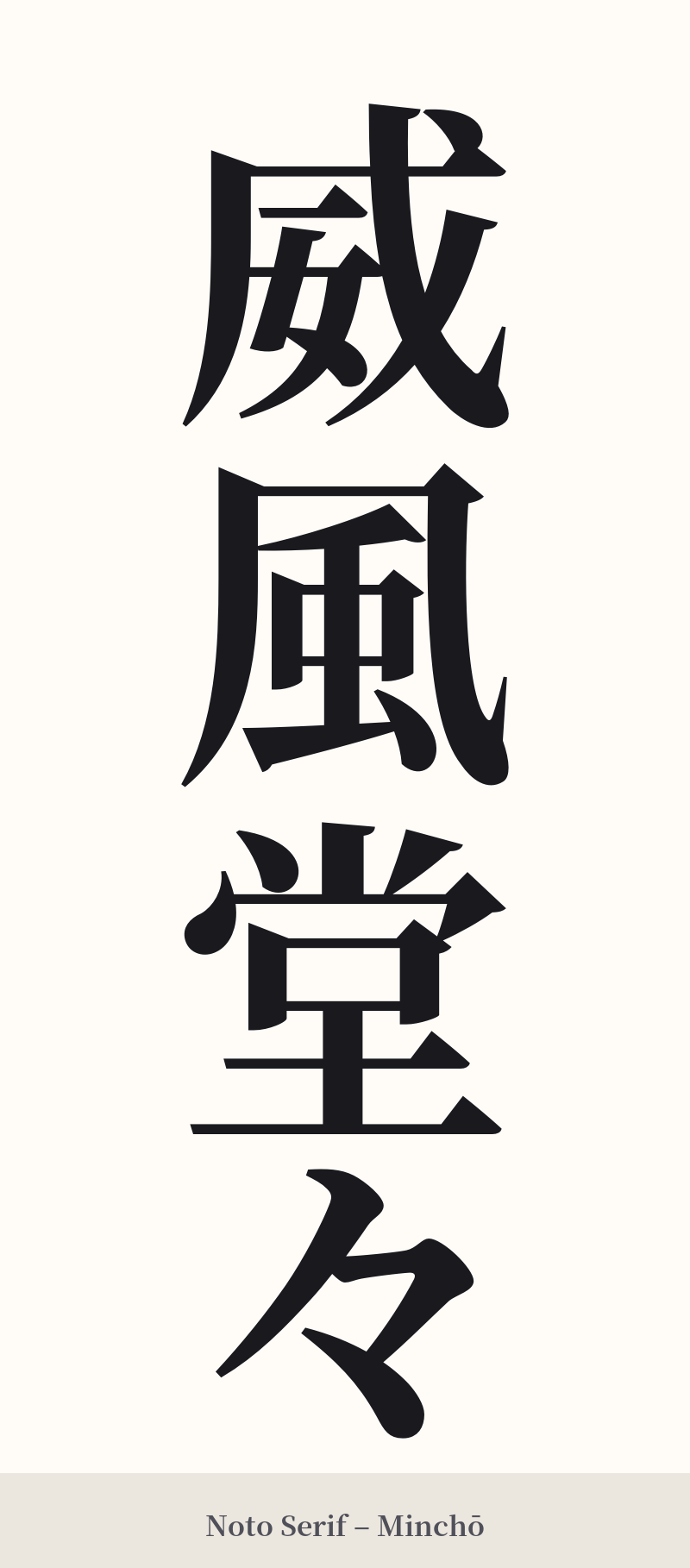
🎨 Tattoo Suitability
📐 Tattoo Design Guide
For a 威風堂々 tattoo, the arrangement and style are key to conveying its majestic meaning.
– Placement: Vertical alignment is the most classic and impactful choice for a four-character idiom. Common placements include the spine, the forearm (from elbow to wrist), or along the calf. A horizontal placement can also work well across the chest or upper back.
– Style: A bold Kaishotai (block script) font emphasizes the power and stability inherent in the phrase. For a more fluid and slightly less formal look, a Gyoshotai (semi-cursive script) can add a sense of grace and movement, echoing the '風' (style) character. Avoid overly complex or thin fonts that may become illegible over time.
– Visual Tips: The four characters should be balanced and evenly spaced. It is crucial to include the repeater symbol '々' as the fourth character; it is an integral part of the word. While the kanji alone is powerful, you could subtly incorporate background elements like wind bars or architectural lines, but be careful not to overcrowd the design.
Comments