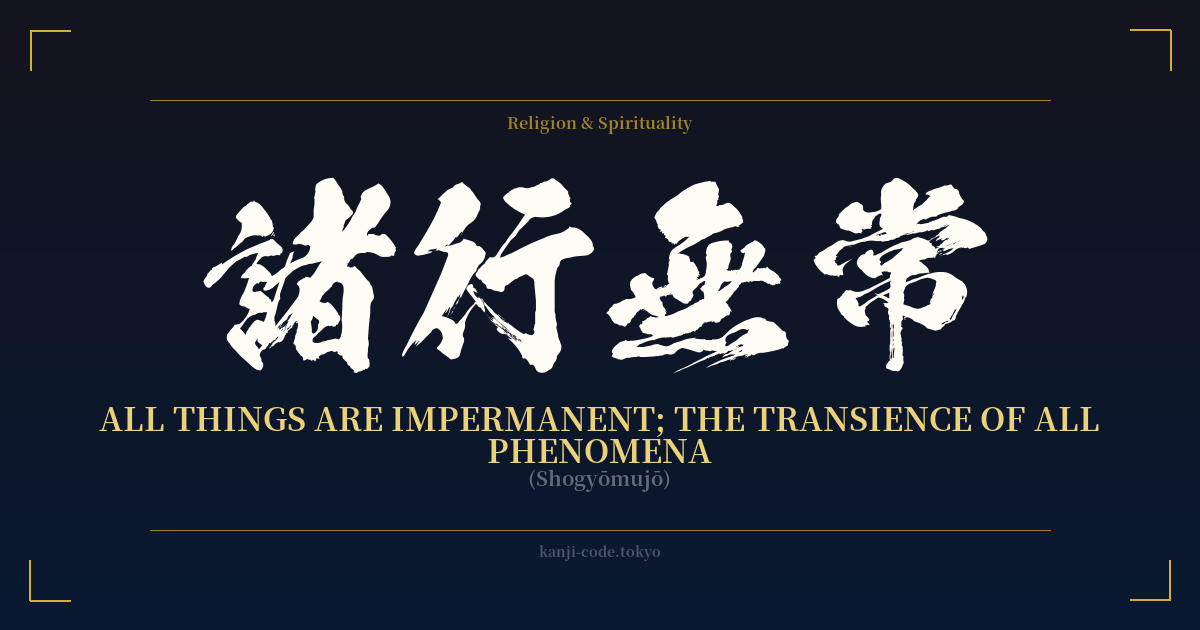
✍️ 諸行無常 (Shogyōmujō) — Cultural Context
諸行無常 (Shogyōmujō) is one of the most profound and influential concepts in Japanese thought, originating from the heart of Buddhist philosophy. It translates to "all things are impermanent" or "all conditioned phenomena are transient." This is not just a poetic phrase but a fundamental truth, one of the Three Marks of Existence (三法印, Sanbōin) in Buddhism, alongside the truths that all things are without a self (諸法無我, Shohōmuga) and that Nirvana is tranquility (涅槃寂静, Nehanjakujō).
The idea posits that everything in the world, from the grandest mountains to the smallest thought, is in a constant state of flux. Nothing is permanent. This realization is considered a crucial step towards enlightenment, as attachment to fleeting things is the primary source of suffering.
In Japan, the most famous and culturally resonant expression of Shogyōmujō comes from the opening lines of the classic epic, The Tale of the Heike (平家物語, Heike Monogatari). The passage reads: 「祇園精舎の鐘の声、諸行無常の響きあり。」 which translates to, "The sound of the Gion Shōja bells echoes the impermanence of all things." This line has cemented the phrase in the Japanese cultural consciousness, forever linking it to the poignant rise and fall of the mighty Taira clan and serving as a timeless reminder that even the greatest power is temporary.
This philosophy deeply permeates Japanese aesthetics and the national psyche. It is the intellectual backbone of concepts like mono no aware, the gentle, wistful sadness felt when observing the transience of beauty. The annual celebration of cherry blossoms (sakura) is a perfect embodiment of Shogyōmujō. The blossoms are admired for their breathtaking but brief beauty, a yearly national meditation on life, death, and renewal. Their inevitable fall is not seen as tragic, but as a natural and beautiful part of a cycle.
For many, embracing Shogyōmujō is not a pessimistic or nihilistic act. Instead, it is a call to live fully in the present moment. Recognizing that everything is temporary encourages a deeper appreciation for the here and now, fostering a sense of gratitude and reducing anxiety about the future or attachment to the past. It is a philosophy of acceptance and mindfulness, finding peace in the natural, unending flow of existence.
🖌️ Font Styles for 諸行無常
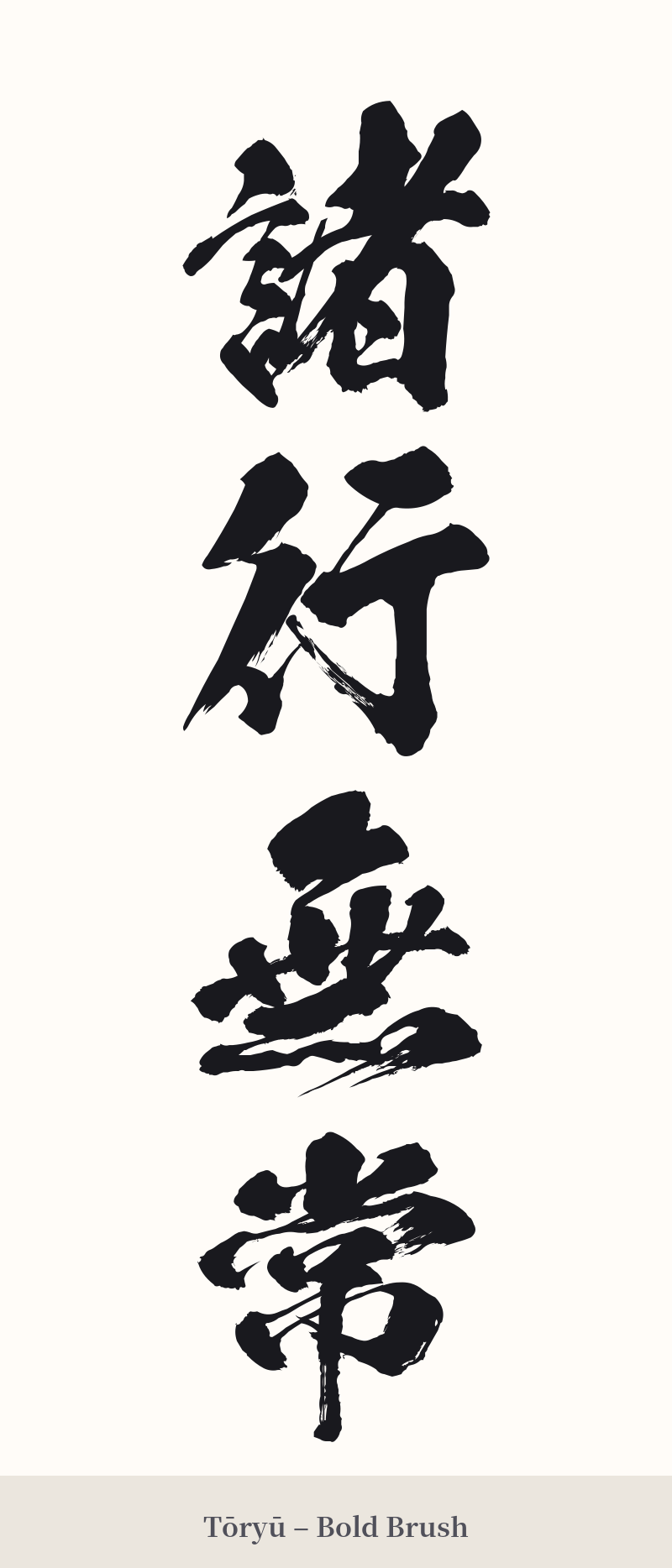
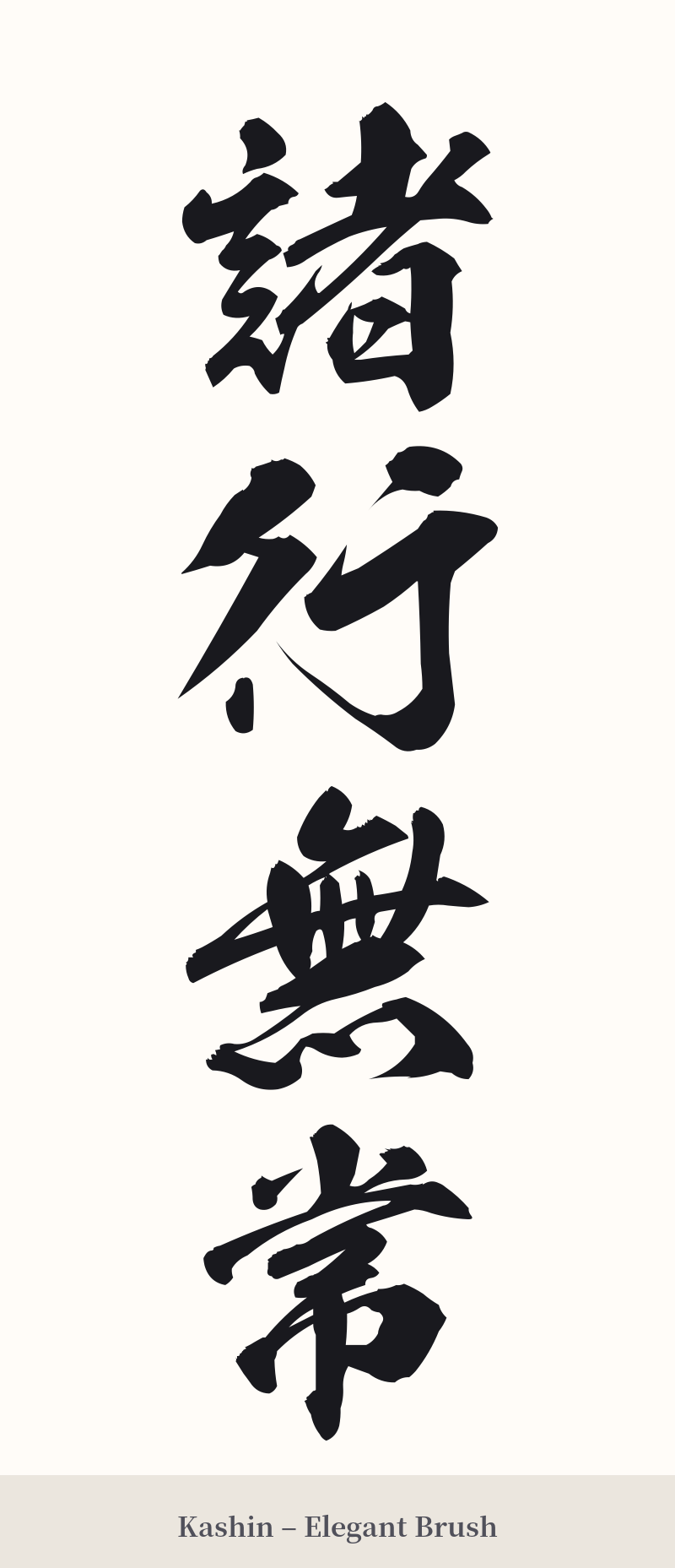
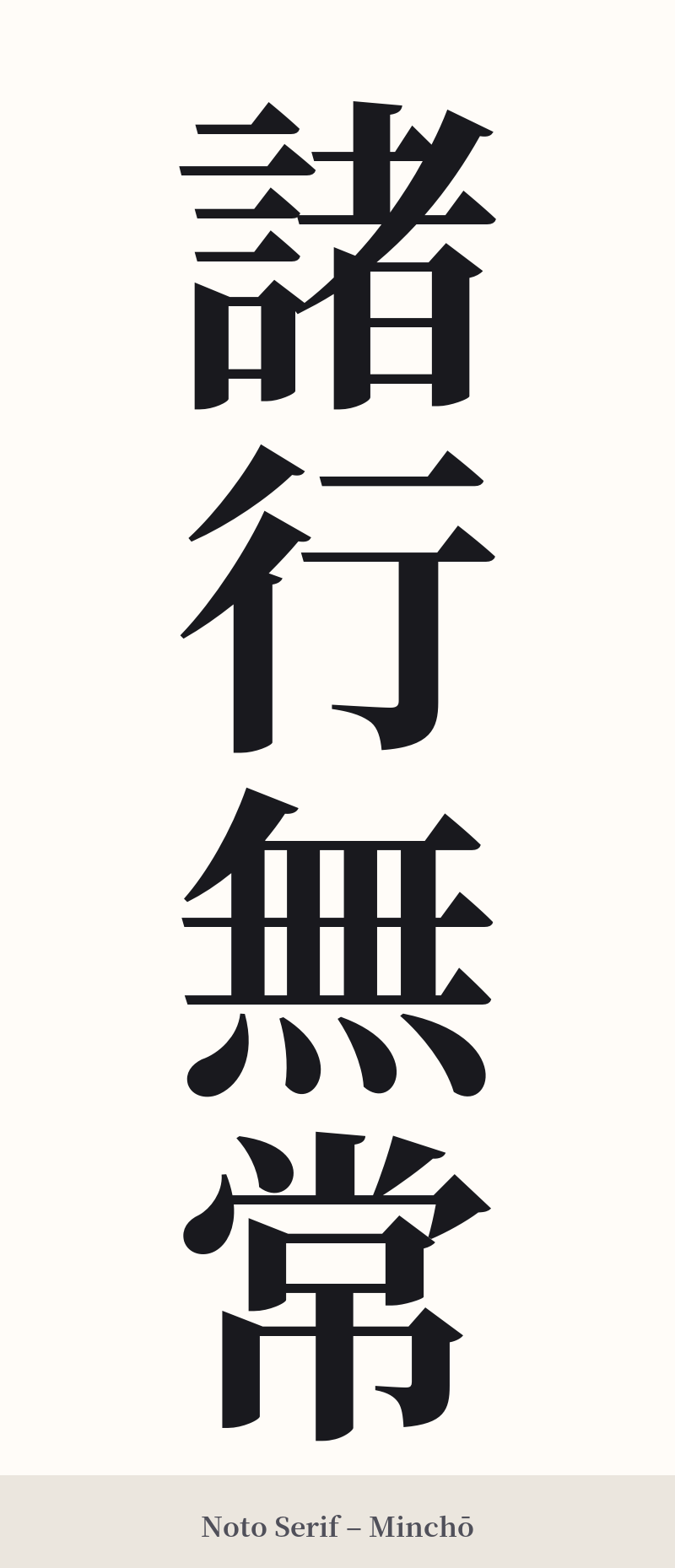
The same kanji can look dramatically different depending on the calligraphy style. Choose a font that matches the mood you want for your tattoo or design.
🎨 Tattoo Suitability
📐 Tattoo Design Guide
諸行無常 is a powerful and visually impressive phrase for a tattoo, carrying deep philosophical weight. Its four-character structure makes it ideal for a traditional vertical layout.
– Placement: This design works exceptionally well placed vertically along the forearm, the calf, or the spine. This orientation honors the traditional way Japanese is written and creates a strong, elegant line on the body.
– Font Style: For a classic and legible look, a clear Kaisho (block) script is recommended, as the characters have a high stroke count. For a more artistic and expressive feel, a Gyosho (semi-cursive) or Sosho (cursive) style can be used, but this requires a tattoo artist highly skilled in Japanese calligraphy to maintain readability.
– Visual Elements: To enhance the theme of transience, consider incorporating related imagery. Fading ink washes (like sumi-e painting), falling cherry blossom petals, a cracking Enso circle, or ripples in water can beautifully complement the kanji and reinforce its meaning.
Comments