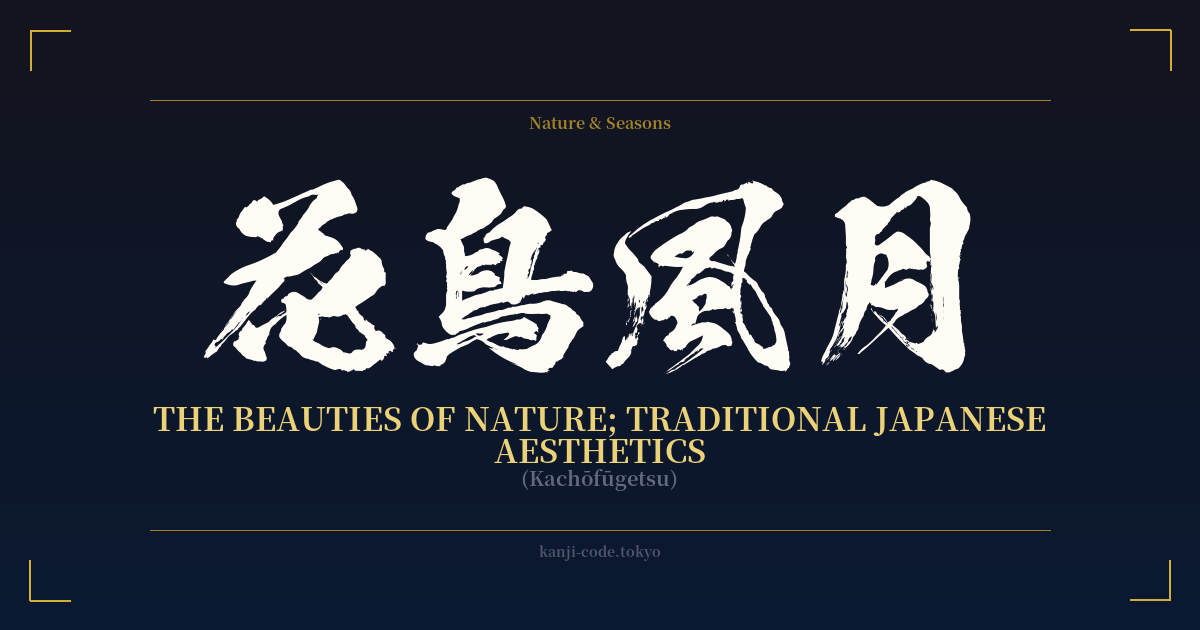
✍️ 花鳥風月 (Kachōfūgetsu) — Cultural Context
花鳥風月 (Kachōfūgetsu) is a quintessential Japanese four-character idiom (yojijukugo) that encapsulates the traditional aesthetic of appreciating nature's beauty. On the surface, it translates literally to "Flower, Bird, Wind, Moon." However, its true meaning goes far beyond a simple list of natural elements. It represents a philosophy, a state of mind, and an artistic pursuit all in one.
The phrase is a love letter to the subtle, transient beauties of the natural world. It speaks to the joy found in observing the blooming of flowers, the song of a bird, the feeling of the wind on your skin, and the serene light of the moon. Each element represents a classic theme in Japanese art and literature, evoking specific seasons and emotions.
Historically, the concept of Kachōfūgetsu has deep roots in classical Chinese and Japanese arts. It was a central theme for poets, painters, and nobles, particularly during the Heian period (794-1185). To engage in Kachōfūgetsu was not just to passively observe nature, but to actively seek out its beauty and use it as inspiration for creative works like poetry (waka and haiku) and painting (sumi-e).
This gives the term a dual meaning. First, it refers to the actual scenery of flowers, birds, wind, and moon. Second, it describes the elegant and refined act of creating art inspired by that scenery. It's about living a life of artistic elegance, finding inspiration in the world around you, and expressing it with grace.
Kachōfūgetsu is also deeply connected to other Japanese aesthetic concepts like 'mono no aware' (the pathos of things). The beauty it describes is often fleeting: flowers wilt, a bird's song ends, the wind dies down, and the moon's phase changes. The appreciation of this beauty is therefore tinged with a gentle sadness for its impermanence, making the experience all the more profound.
In modern Japan, Kachōfūgetsu is still a cherished concept. It is used to describe beautiful landscapes, referenced in song lyrics and anime, and invoked to express a longing for a more elegant, nature-focused way of life. It embodies a sense of nostalgia for traditional Japanese values and a deep, abiding respect for the natural world.
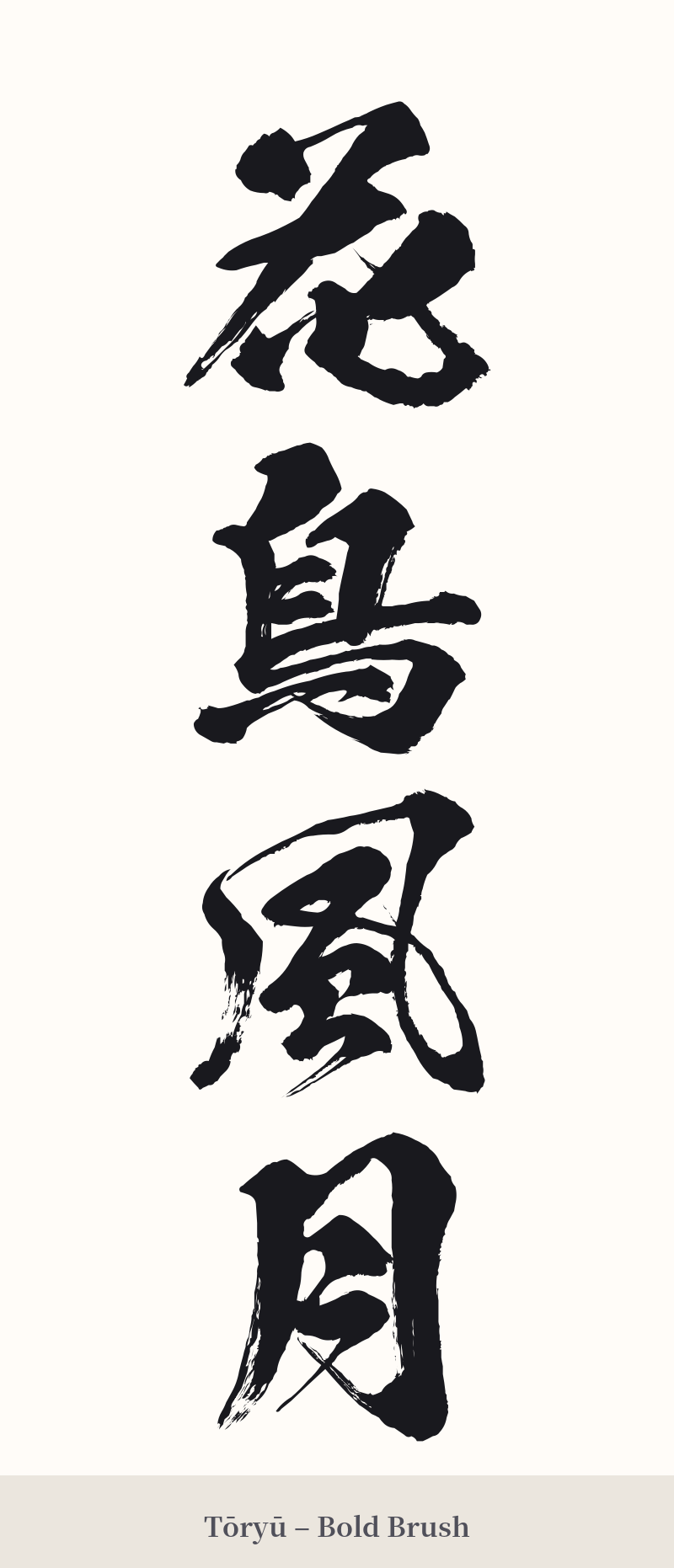
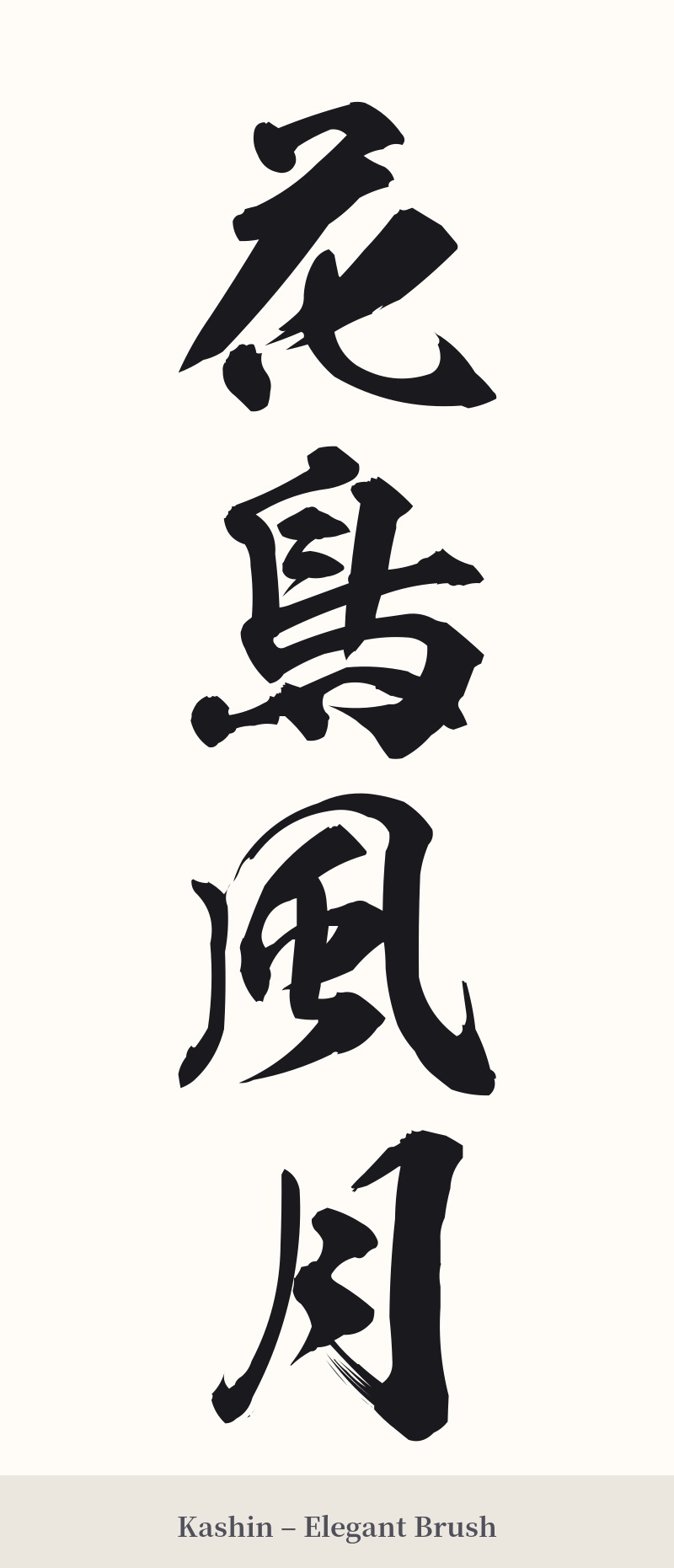
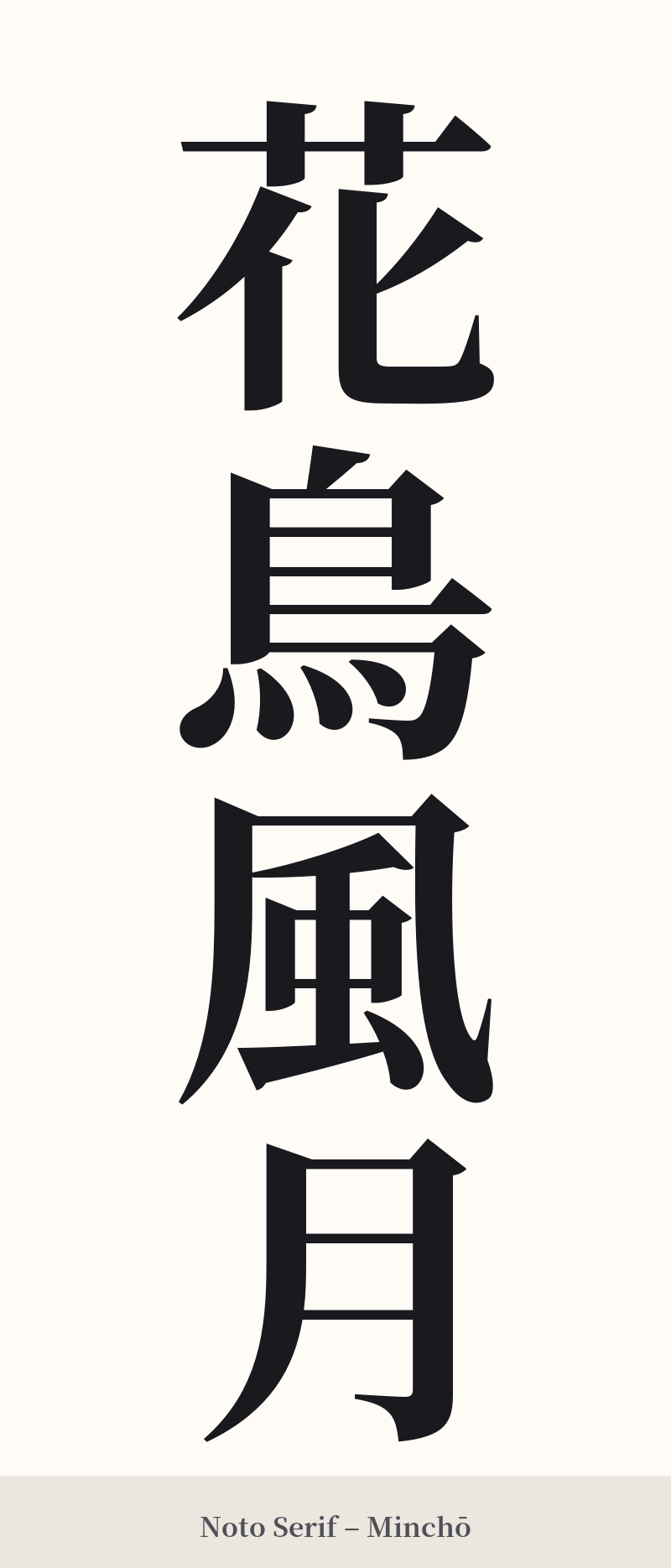
🖌️ Font Styles for 花鳥風月
The same kanji can look dramatically different depending on the calligraphy style. Choose a font that matches the mood you want for your tattoo or design.
🎨 Tattoo Suitability
📐 Tattoo Design Guide
Kachōfūgetsu offers wonderful versatility for a tattoo design, balancing visual elegance with deep meaning.
– Placement: A vertical alignment is the most traditional and visually striking orientation. This looks exceptional running down the forearm, the side of the calf, or along the spine. For a horizontal layout, the chest, upper back, or across the ribs are excellent choices.
– Font Style: A flowing, semi-cursive brush script (Gyōsho) perfectly captures the artistic and natural essence of the phrase. For a more formal and crisp appearance, a classic Mincho (serif) font highlights the elegance and history of the characters.
– Visual Tips: Consider a design that integrates the kanji with illustrative elements. The four characters could be woven into a scene featuring a cherry blossom branch, a small bird in flight, stylized wind bars, and a crescent or full moon. This creates a larger, more narrative piece. Alternatively, keeping the kanji clean and standalone makes a powerful, minimalist statement.
Comments