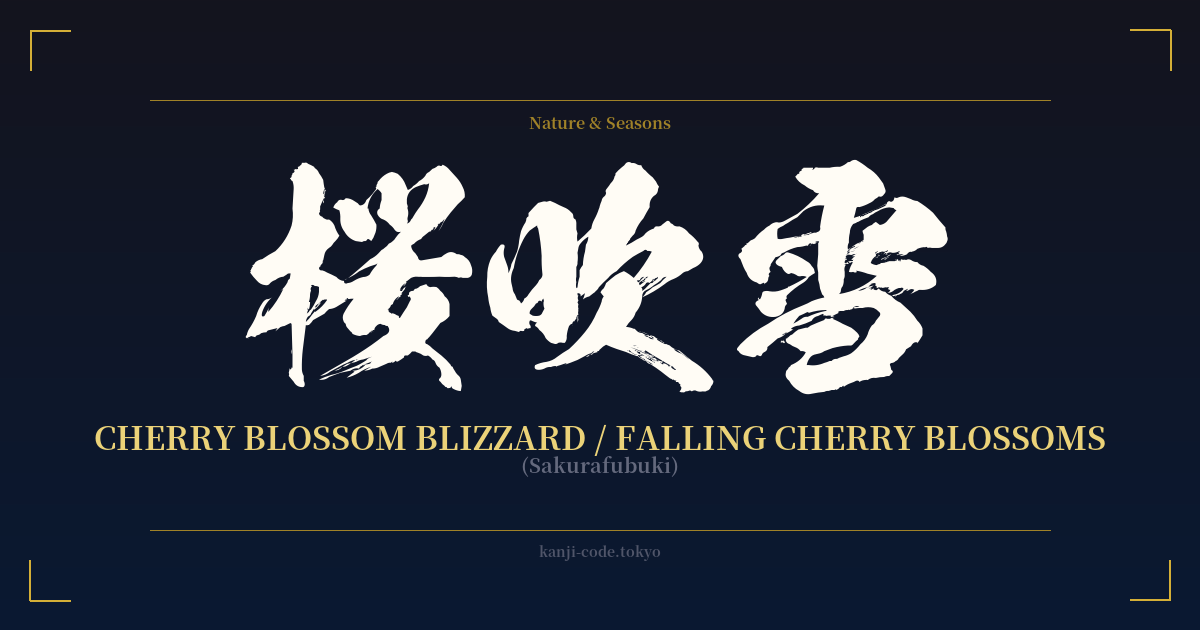
✍️ 桜吹雪 (Sakurafubuki) — Cultural Context
Sakurafubuki, or 'cherry blossom blizzard,' is one of the most evocative and poetic terms in the Japanese language. It doesn't just describe an event; it captures a feeling, a philosophy, and a cornerstone of Japanese aesthetics. The word refers to the breathtaking moment when cherry blossom petals, at the peak of their beauty, are swept from the trees by the wind, falling en masse like a flurry of pink and white snow.
This phenomenon is deeply tied to the concept of 'mono no aware' (物の哀れ), a gentle, bittersweet awareness of the transient nature of life. The cherry blossoms, or sakura, are celebrated for their intense but short-lived beauty. They bloom spectacularly for a week or two before they fall. The sakurafubuki is the climax of this cycle—a stunning, final display that is both a celebration of life and a graceful acceptance of its end. It reminds observers that beauty is magnificent precisely because it is fleeting.
Historically, the falling cherry blossoms held a special significance for the samurai. The life of a warrior was often compared to that of a sakura petal: living with brilliance and purpose, and facing death with grace and without regret. The image of petals scattering in the wind became a symbol of the ideal way to die, beautifully and decisively. This connection imbues sakurafubuki with a sense of dignity, honor, and acceptance of fate.
During hanami (flower viewing) season, witnessing a sakurafubuki is considered a particularly moving experience. Friends, families, and colleagues gather under the blooming trees to eat, drink, and appreciate the scenery. When the wind picks up and the petals begin to fall, a hush often falls over the crowd. It’s a shared moment of reflection, a collective pause to appreciate the poignant beauty of the present moment before it disappears.
In modern Japan, sakurafubuki continues to be a powerful motif in art, literature, anime, and film. It is often used to frame pivotal moments—graduations, farewells, the start of a new love, or a nostalgic memory. It perfectly encapsulates the feeling of a beautiful, significant moment that you know cannot last forever, making it a symbol of both beginnings and endings.
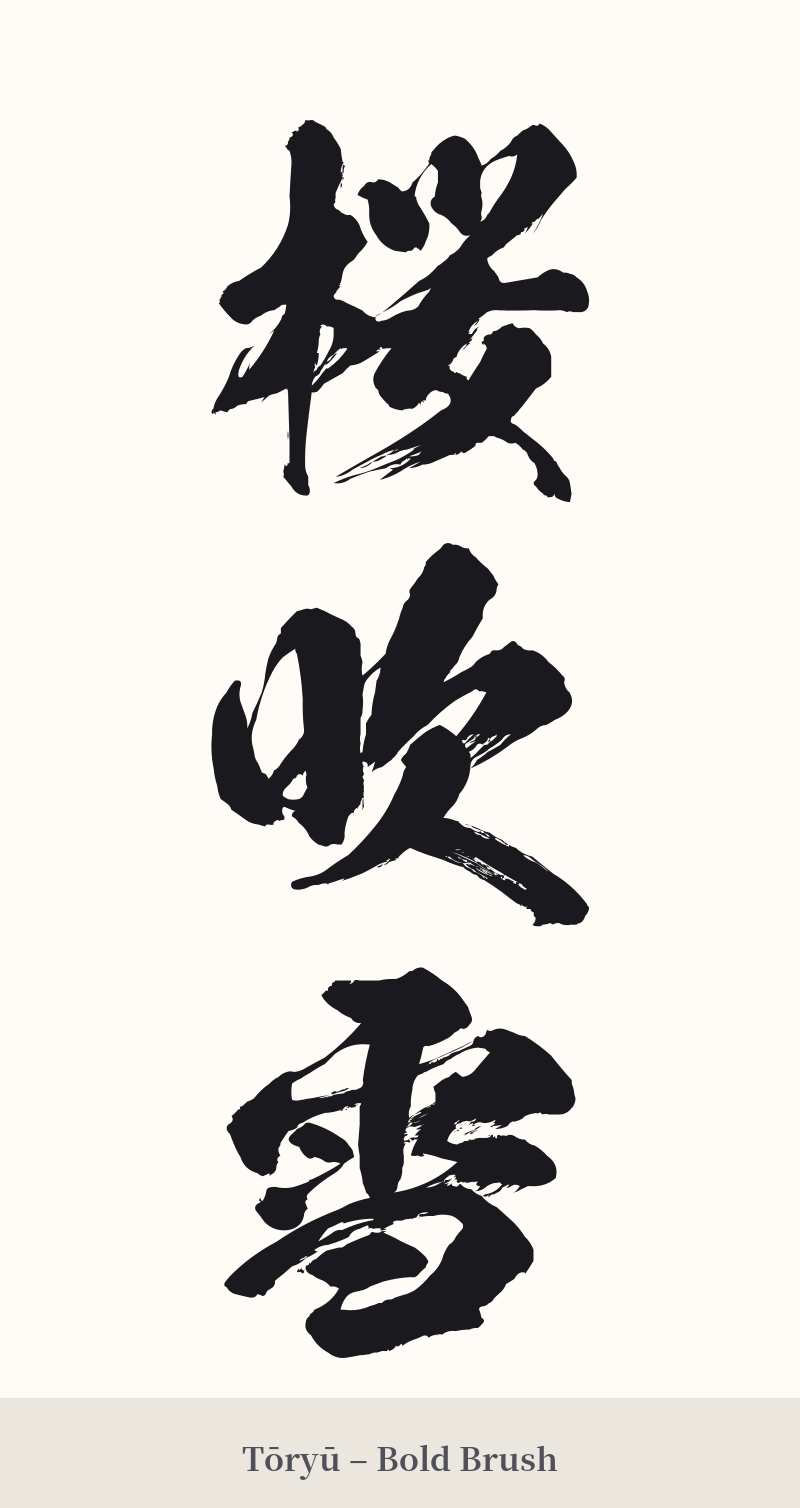
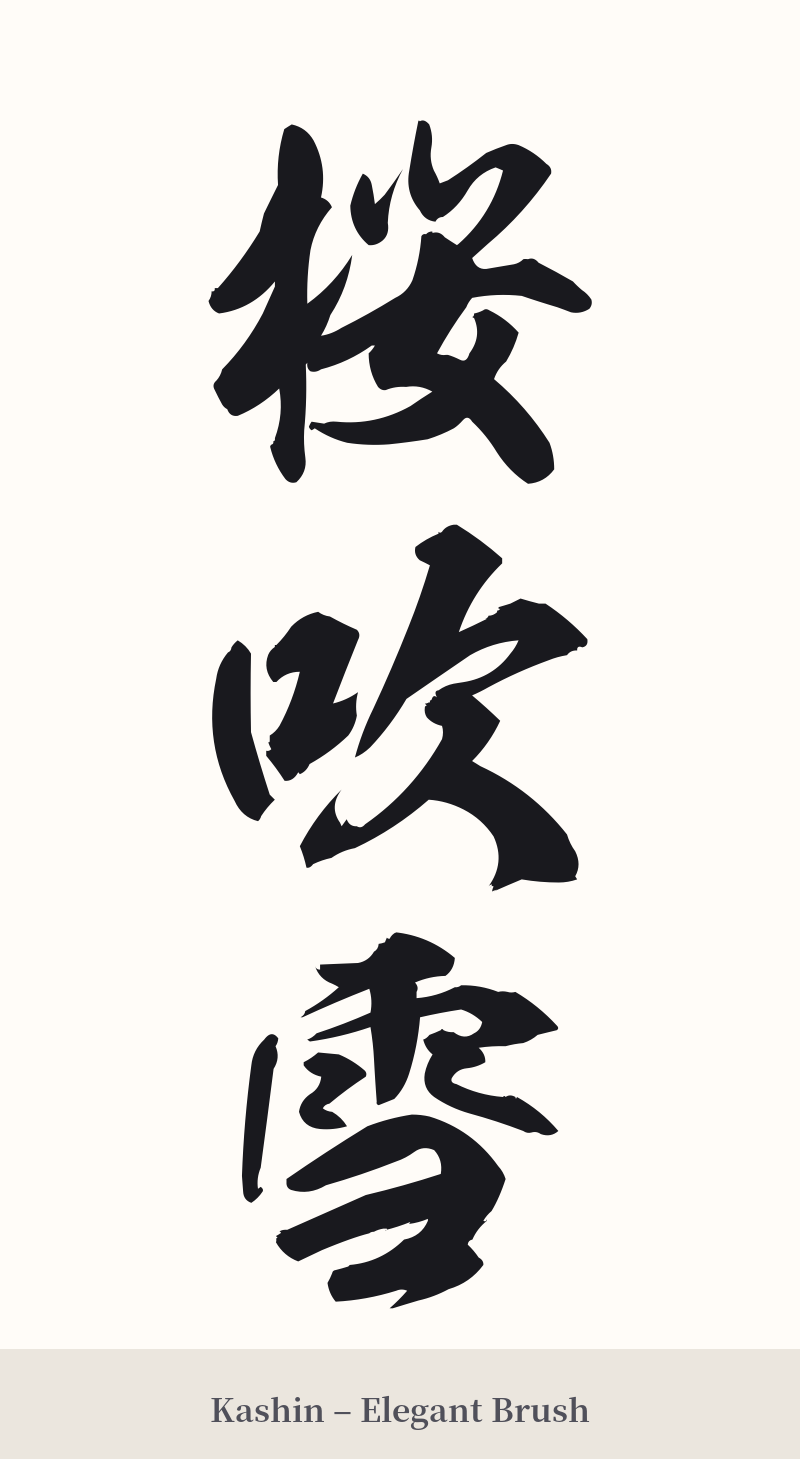
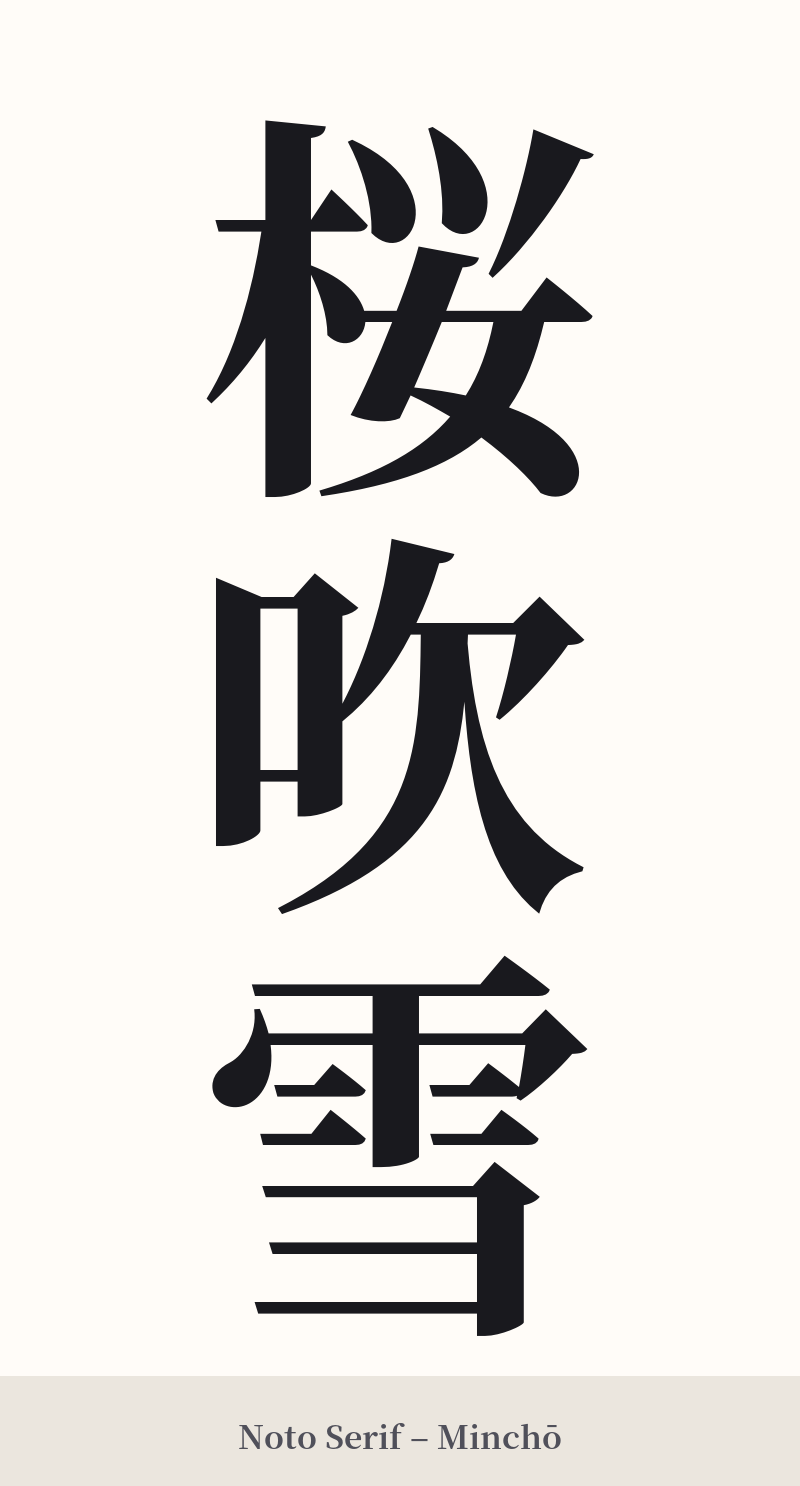
🖌️ Font Styles for 桜吹雪
The same kanji can look dramatically different depending on the calligraphy style. Choose a font that matches the mood you want for your tattoo or design.
🎨 Tattoo Suitability
📐 Tattoo Design Guide
Sakurafubuki offers wonderful creative potential for a tattoo design. Its poetic nature lends itself to artistic interpretations.
– Placement: A vertical arrangement down the spine, forearm, or calf is highly effective, as it mimics the natural downward motion of falling petals. A horizontal placement across the collarbone or upper back also works well, creating a sense of a sweeping vista.
– Font Style: To capture the feeling of movement, a semi-cursive (Gyosho) or full cursive (Sosho) script is an excellent choice. These styles have fluid, connected strokes that can evoke the feeling of wind and petals. For a stronger, more grounded statement, a crisp, bold block script (Kaisho) provides excellent legibility and impact.
– Visual Tips: Consider integrating the kanji with imagery. You could have the characters dissolving into a swirl of actual cherry blossom petals, or use a watercolor splash effect in shades of pink and white behind the kanji to create a soft, atmospheric background. The final character, 雪 (snow), can even be stylized to look more like a flurry of petals than a snowflake.
Comments