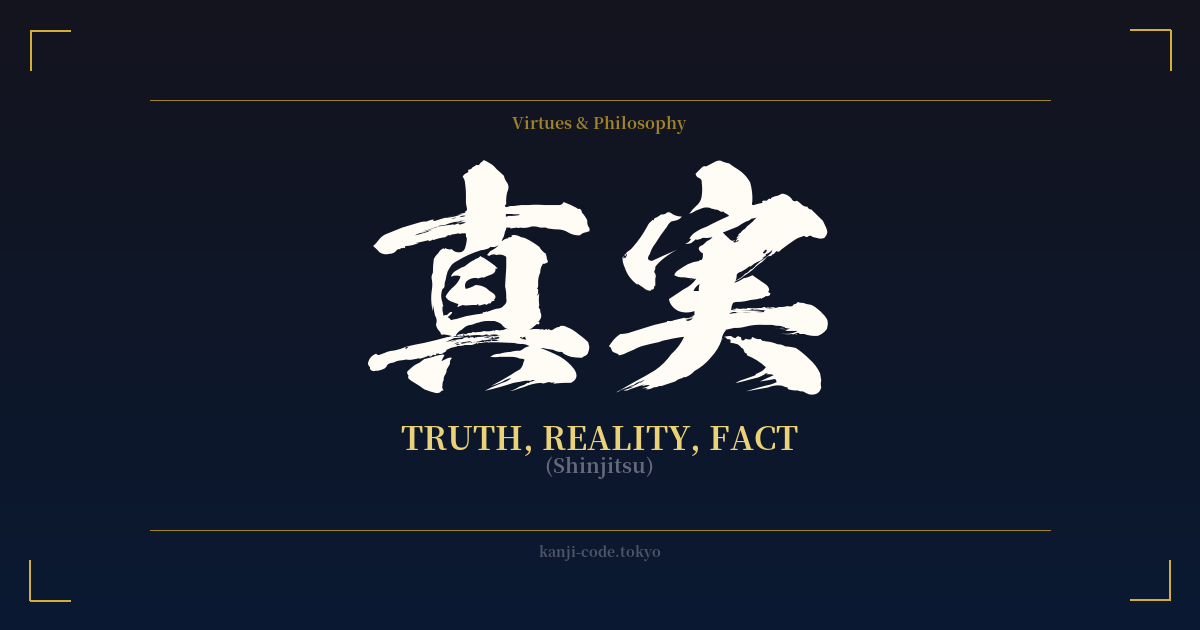
✍️ 真実 (Shinjitsu) — Cultural Context
In Japanese, the word 真実 (Shinjitsu) represents more than just a simple fact; it embodies the concept of an unvarnished, objective truth. While other words like `hontō` (本当) might be used to ask if a story is true, `Shinjitsu` carries a much deeper, more philosophical weight. It is the truth sought in a court of law, the reality uncovered by scientific inquiry, and the profound personal truth one might discover through introspection.
The power of this word is beautifully reflected in its component kanji. The first character, 真 (shin or makoto), means “true” or “reality.” It points to something genuine, authentic, and unfeigned. This character on its own is linked to the virtue of sincerity and is a cornerstone of concepts like `makoto`, the principle of acting with a true heart, which was highly valued in Bushido, the samurai code.
The second character, 実 (jitsu or mi), means “reality” but also “fruit” or “seed.” This adds a fascinating layer of meaning. It grounds the abstract concept of truth in something tangible and natural. The combination suggests that `Shinjitsu` is not just a fleeting idea but a “true fruit”—the result of something that has grown, ripened, and can now be seen and understood in its final, undeniable form. It is the outcome, the concrete evidence of what is real.
In a cultural context, the pursuit of `Shinjitsu` is a recurring theme. In Buddhist philosophy, it aligns with the quest to understand the true nature of existence, free from illusion. In modern Japan, you will see `Shinjitsu` used in serious contexts, from news reports aiming to uncover the truth (`事件の真実を追う` – to pursue the truth of the incident) to legal proceedings where telling the truth is paramount.
Therefore, `Shinjitsu` is not a soft or subjective truth. It is a solid, resolute concept representing a reality that exists independent of one's beliefs or desires. It speaks to a commitment to what is real, a powerful statement in any language, and a concept that resonates deeply within Japanese ethics and philosophy.
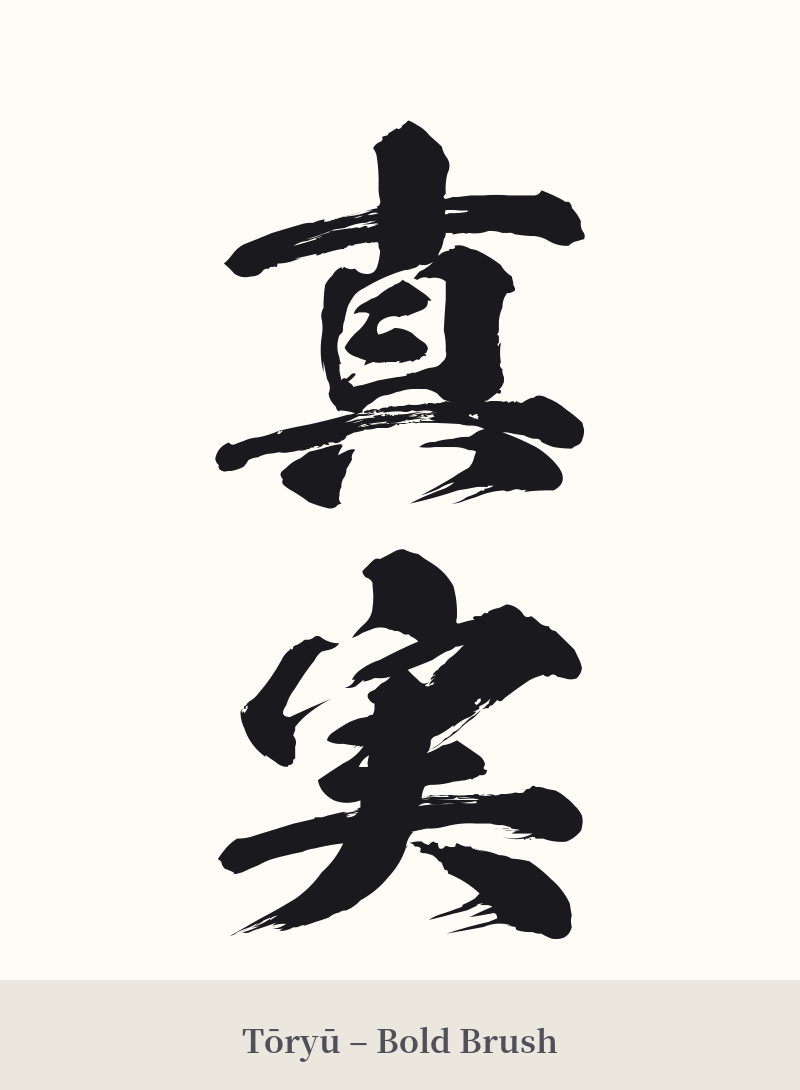
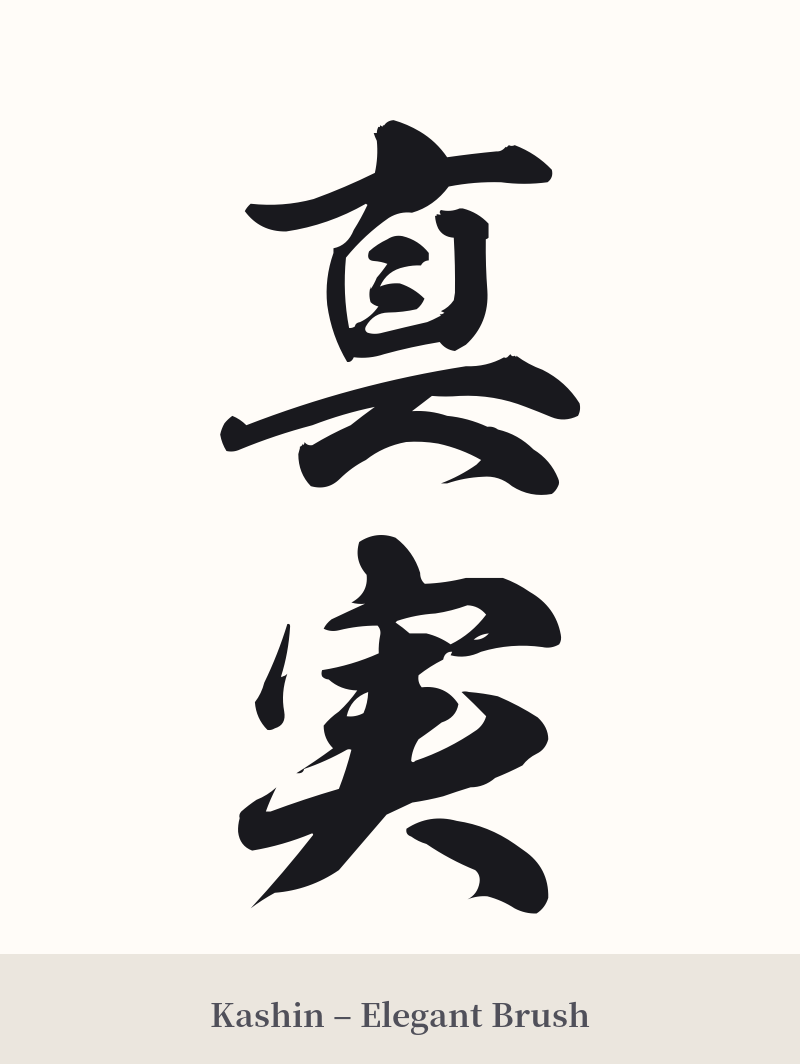
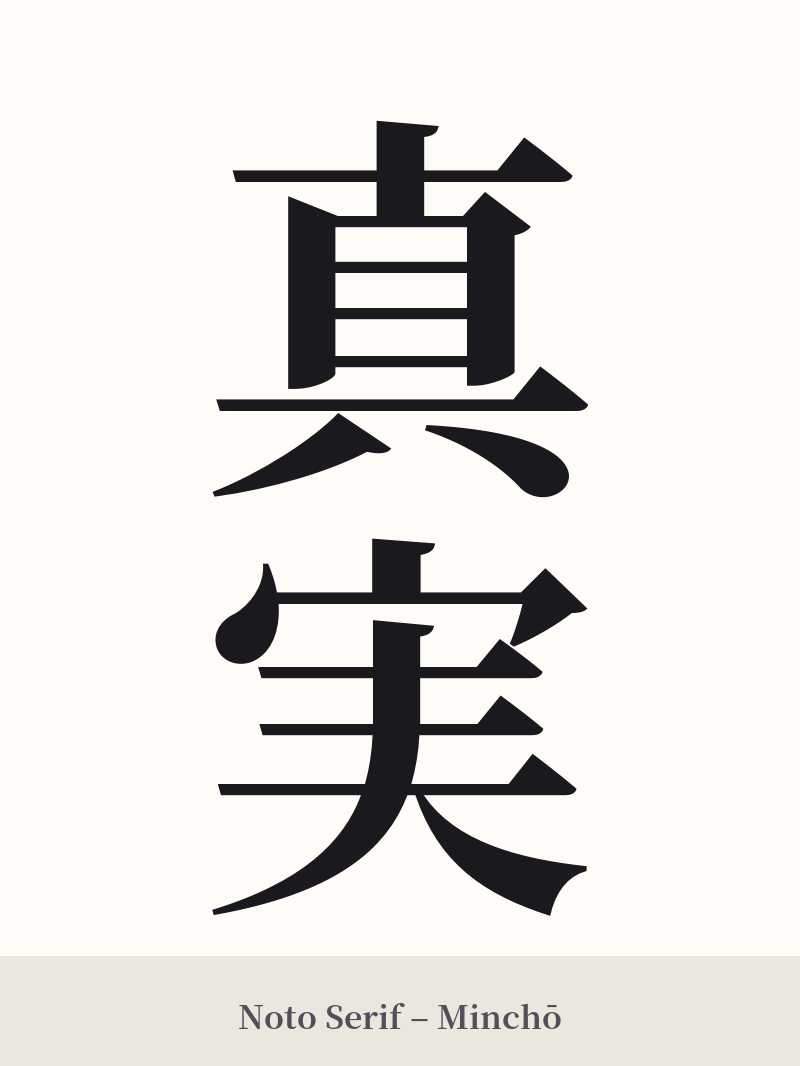
🖌️ Font Styles for 真実
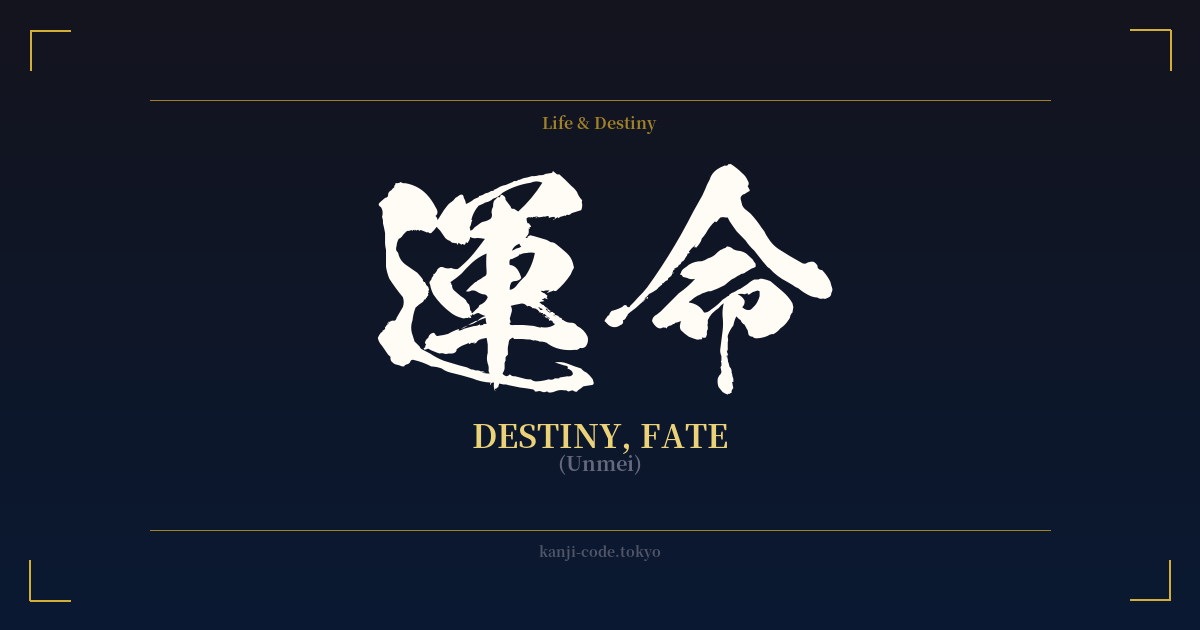
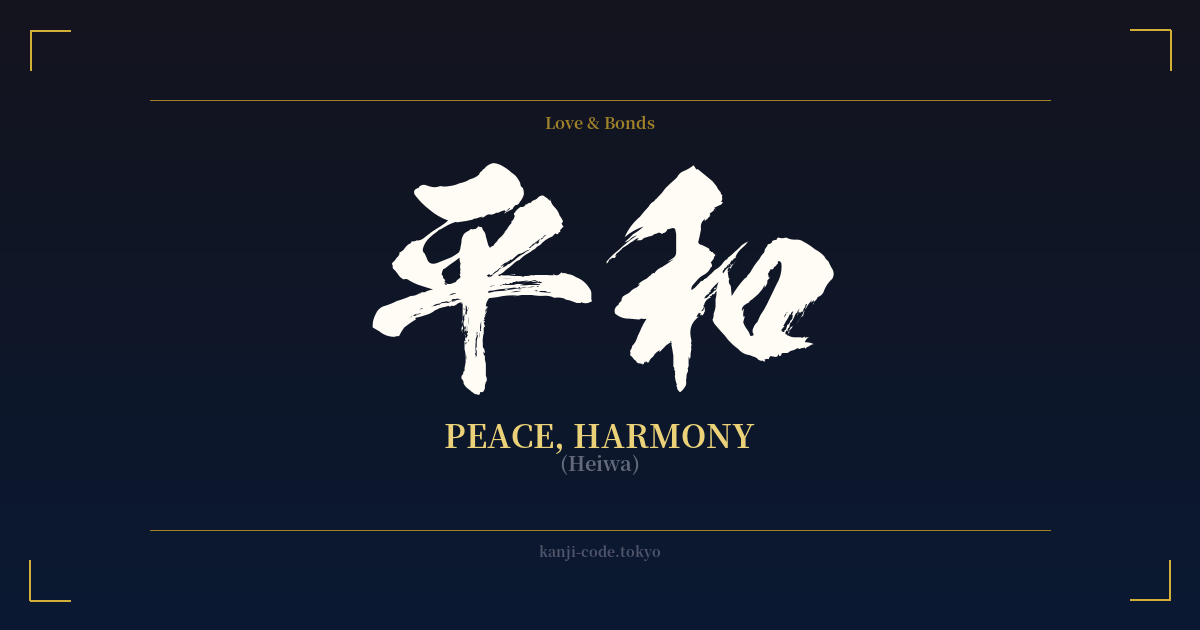
The same kanji can look dramatically different depending on the calligraphy style. Choose a font that matches the mood you want for your tattoo or design.
🎨 Tattoo Suitability
📐 Tattoo Design Guide
The word 真実 (Shinjitsu) is strong and balanced, lending itself well to a variety of tattoo designs. Its power lies in its clarity, so a design that honors this is often most effective.
– Placement: Vertical placement is classic for two-character kanji. Consider the spine, the inner forearm, or along the calf. For a horizontal design, the chest, upper back, or across the wrist are excellent choices.
– Font Style: The choice of script can dramatically alter the feel. For a bold, clear statement, a `Kaisho` (block) script is ideal. For a more artistic and personal touch, a flowing `Gyosho` (semi-cursive) script works beautifully. A `Mincho` style font gives it an elegant, almost literary quality.
– Visual Tips: While the characters are powerful on their own, they can be paired with symbolic imagery. Consider placing it alongside a mirror to represent reflecting the truth, or an Enso circle to symbolize the universe from which all truths emerge. However, avoid cluttering the design; the strength of `Shinjitsu` is its directness, and a minimalist approach is often the most impactful.
Comments