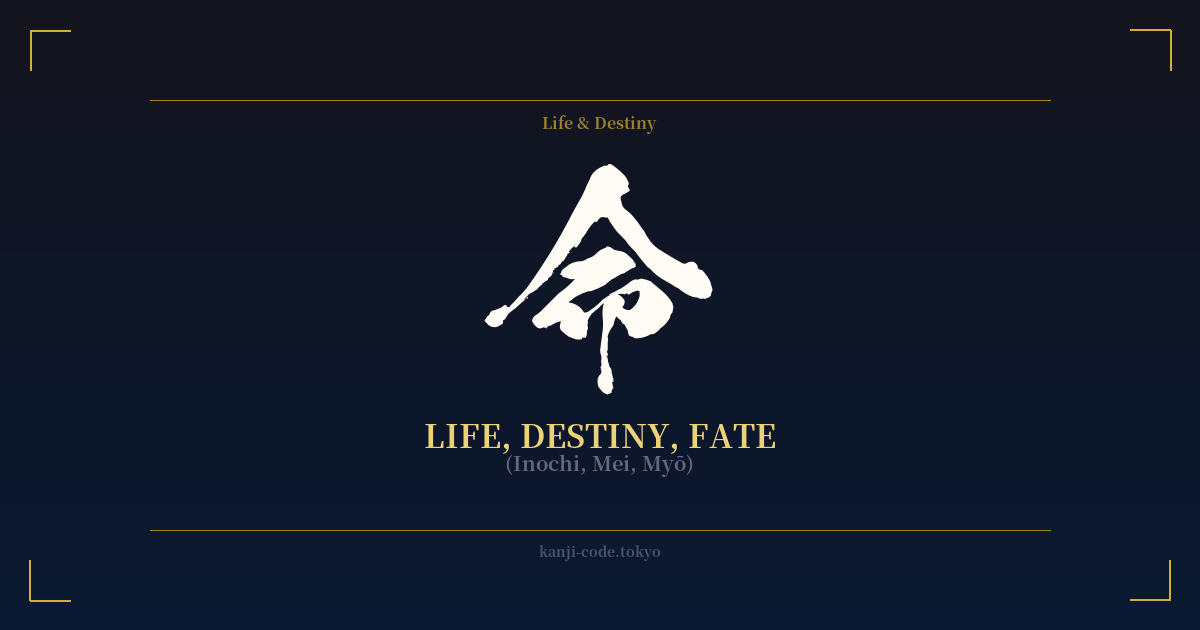
✍️ 命 (Inochi, Mei, Myō) — Cultural Context
The kanji 命, most commonly read as 'inochi', is one of the most profound and philosophically rich characters in the Japanese language. While its primary translation is 'life', this single word fails to capture the immense depth it holds within Japanese culture. It represents not just the biological state of being alive, but the entire, sacred, and often-predetermined journey of an existence.
The character's origin offers a glimpse into its dual nature. It is a compound ideogram, combining 口 (kuchi – mouth) and 令 (rei – order, command). This ancient construction paints a powerful picture: life as a divine command or decree issued from a higher power, the breath of existence bestowed upon a being. This etymology intrinsically links the concept of 'life' with 'fate' (運命, unmei) and 'destiny'—the path you are commanded to walk.
This duality is perfectly reflected in its two main readings. The native Japanese reading, 'inochi', is personal, emotional, and visceral. It is the lifeblood in your veins, the warmth of a living body, the precious existence you would fight to protect. Phrases like 'inochi o kakeru' (命を懸ける) mean 'to risk one's life', highlighting this tangible, high-stakes interpretation. It's the life you live and feel every day.
Conversely, the Sino-Japanese reading, 'mei', is more abstract, philosophical, and fatalistic. It appears in compound words that deal with concepts beyond individual control. 'Unmei' (運命) is destiny, 'shimei' (使命) is one's mission or calling, and 'jimyō' (寿命) is one's lifespan. 'Mei' is the life that is given, measured, and ultimately, taken away. It speaks to the grand, unchangeable blueprint of one's time on earth.
In Japanese spiritual traditions, 命 is held in the highest regard. In Shintoism, life is a precious gift from the kami (gods), and to live fully is to honor them. In Buddhism, it is a crucial component of the cycle of rebirth, a temporary vessel for a spirit on its long journey toward enlightenment. This spiritual weight makes the character far more than a simple descriptor; it's a statement of value and belief.
From the samurai who lived by a code where life was secondary to honor, to the modern expression 'isshōkenmei' (一生懸命, to do something with all one's might), the concept of 命 permeates every facet of Japanese thought. It embodies the beautiful, tragic, and powerful notion that life is a finite, precious, and decreed journey.
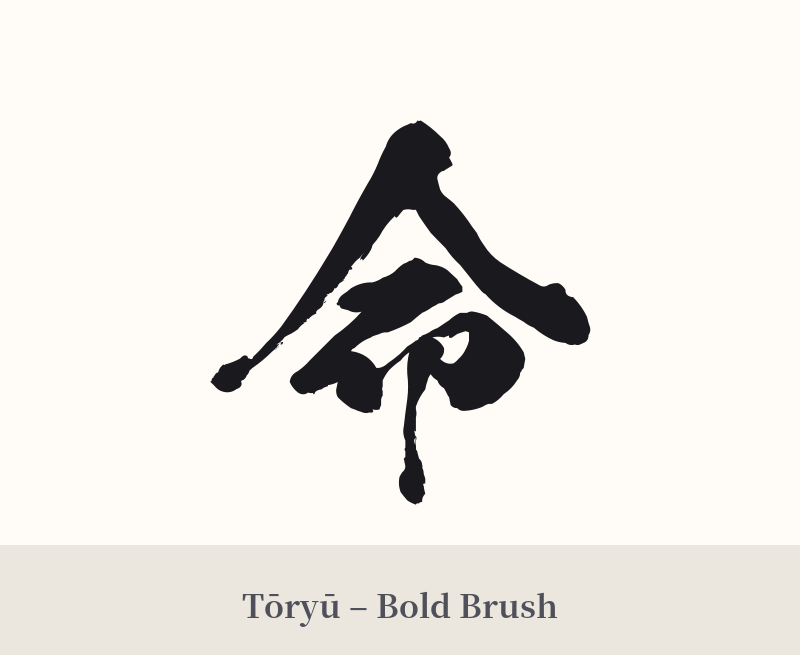
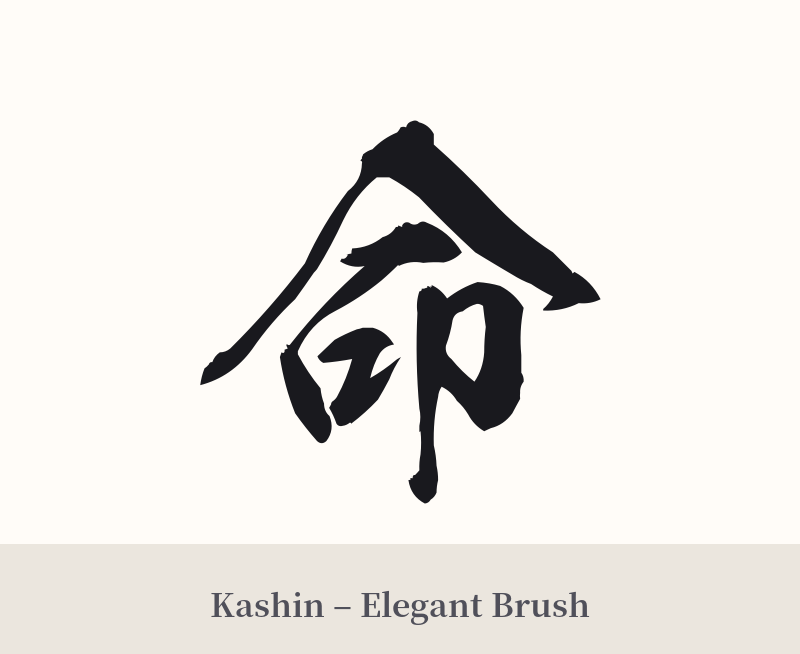
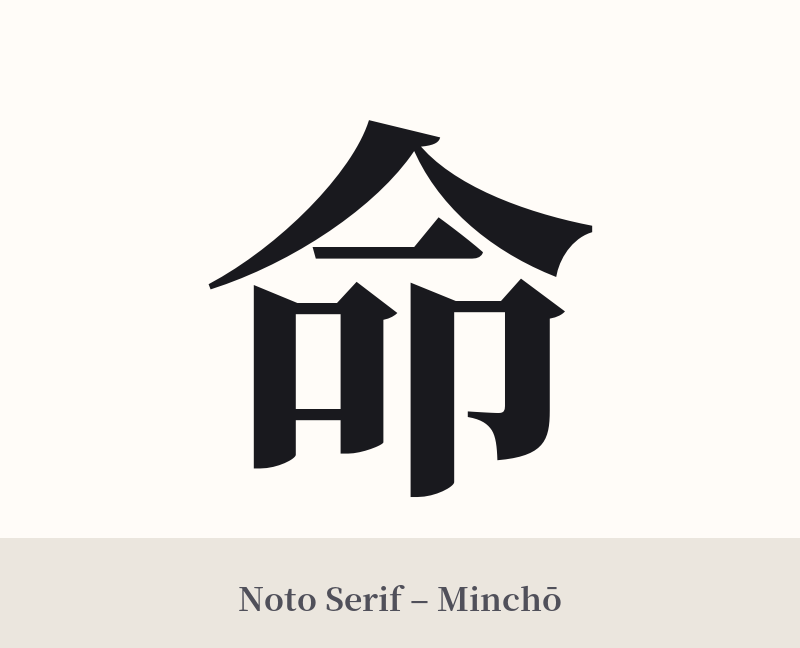
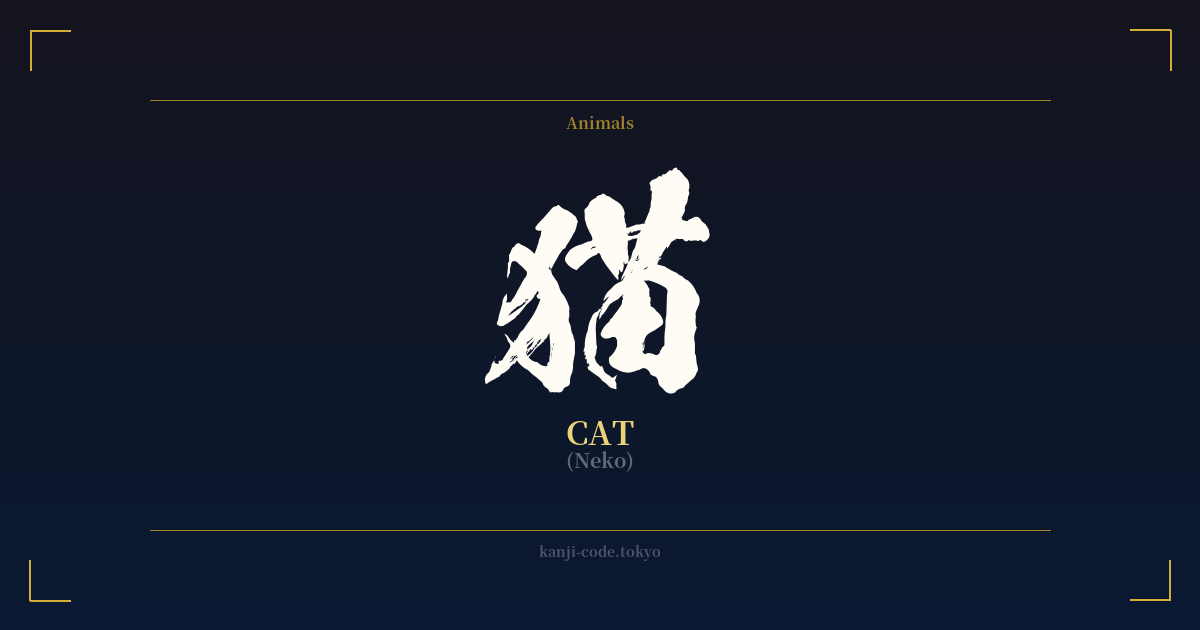
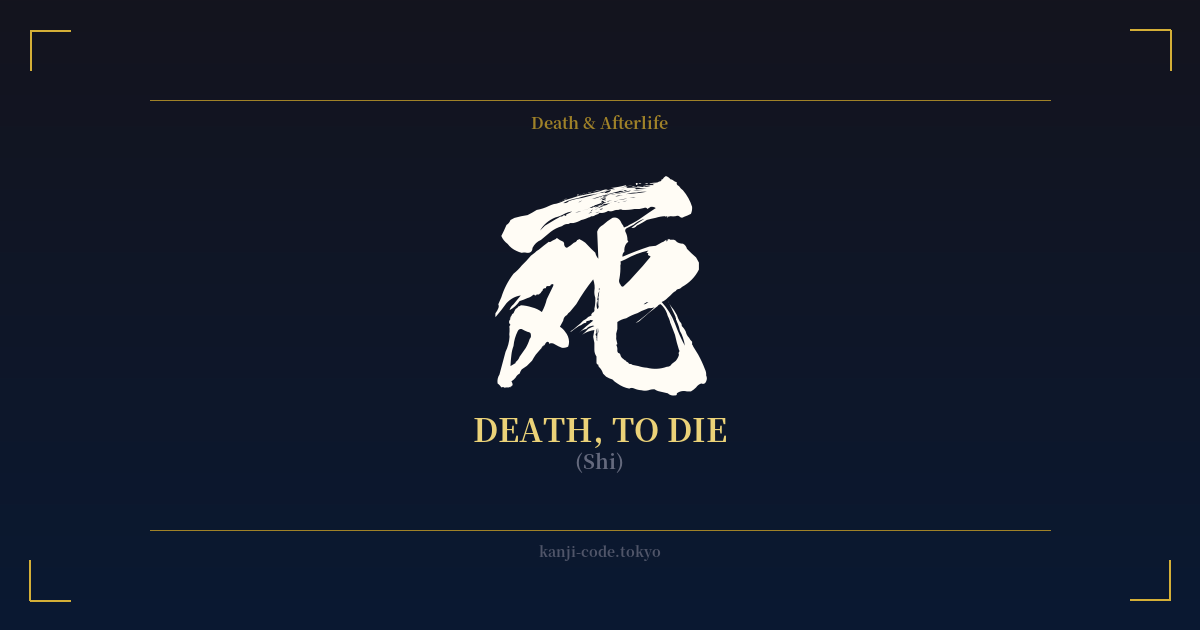
🖌️ Font Styles for 命
The same kanji can look dramatically different depending on the calligraphy style. Choose a font that matches the mood you want for your tattoo or design.
🎨 Tattoo Suitability
📐 Tattoo Design Guide
The kanji 命 offers wonderful versatility for a tattoo design due to its balanced structure and profound meaning.
– Placement: For a standalone piece, consider areas that allow for quiet contemplation, such as the inner forearm, the chest over the heart, or the back of the neck. These placements emphasize the personal significance of 'life' and 'destiny'. For a larger piece, it can serve as a powerful centerpiece on the back or shoulder.
– Style: Its 8-stroke structure is clear and elegant. It looks striking in a bold, calligraphic brushstroke (shodō) style, which can emphasize the vitality and energy of 'inochi'. For a more stoic or philosophical interpretation reflecting 'mei' (fate), a clean, crisp Mincho or Gothic font can provide a sense of permanence and decree.
– Visual Complements: Consider pairing 命 with other symbolic imagery. A classic combination is with cherry blossoms (sakura) to represent the beautiful but transient nature of life. A koi fish swimming upstream can symbolize the struggle and determination within one's life journey. An enso (Zen circle) surrounding the kanji can represent the totality and cyclical nature of life, destiny, and the universe.
Comments