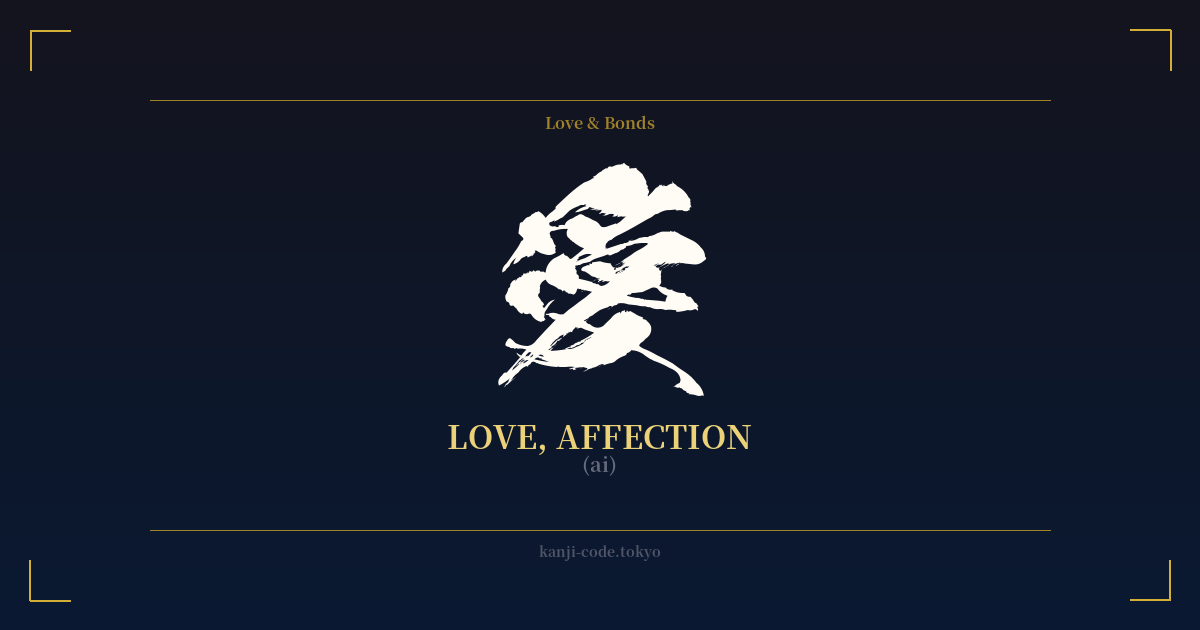
✍️ 愛 (ai) — Cultural Context
The kanji 愛 (ai) is arguably one of the most recognized and emotionally charged characters in the Japanese language. It embodies a vast spectrum of affection, from the fiery passion of romantic love to the deep, unconditional bond between family members and the broader humanitarian love for all beings.
Its ancient pictographic origins tell a beautiful story. The character is a composite of older forms, with the central component 心 (kokoro) representing the heart. The elements surrounding it originally depicted a person breathing out a sigh, or a hand reaching to embrace, suggesting a feeling that fills you up and pours out—a deep, heartfelt connection that involves both giving and receiving.
Interestingly, the concept of 'love' as understood in the West today is a relatively modern interpretation in Japan. Originally introduced with Buddhism, 'ai' carried a more complex, sometimes negative connotation. It was linked to 'aizen' (愛染), a form of worldly attachment or craving that could lead to suffering—something to be transcended rather than celebrated. It was a bond, but one that could trap you.
Everything changed during the Meiji Restoration in the late 19th century. As Japan opened to the West, it needed words to translate new concepts like 'love' in the Christian or romantic sense. The character 愛 was chosen and its meaning was transformed. It was imbued with the ideals of romantic love (恋愛, ren'ai), familial devotion (家族愛, kazoku-ai), and even philanthropy.
Today, 愛 is ubiquitous in Japanese culture. You'll hear it in countless J-pop ballads, see it in the names of beloved anime characters, and find it in common given names like Aiko (愛子), meaning 'child of love'. It's the central theme of the famous 24-hour telethon slogan, 「愛は地球を救う」 (Ai wa Chikyū o Sukuu), or 'Love Saves the Earth'.
This single character manages to hold the quiet warmth of a mother's hug, the electricity of a first kiss, and the steady loyalty of an old friend. It represents a connection that goes beyond mere liking, touching on a fundamental human need for belonging and affection. It is a powerful symbol of the ties that bind us and give life its deepest meaning.
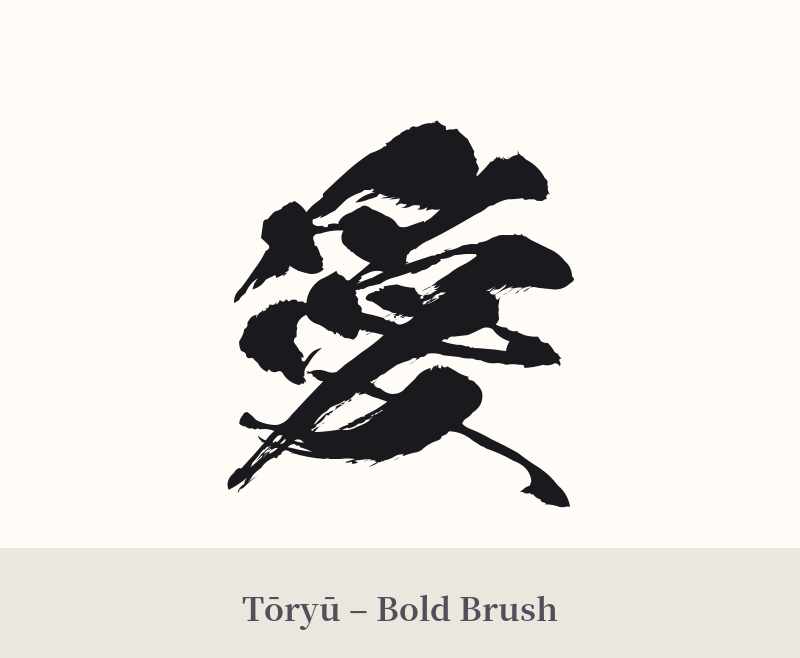
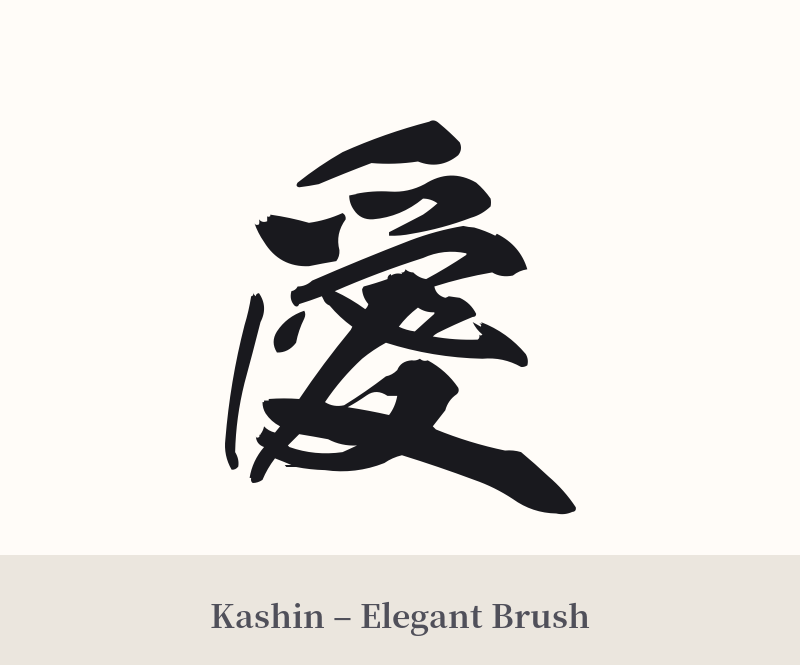
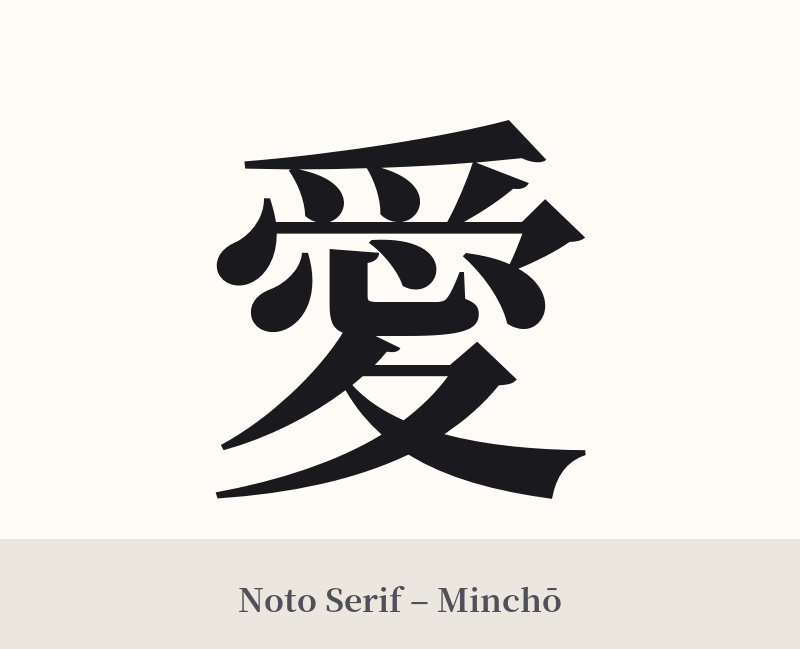
🖌️ Font Styles for 愛
The same kanji can look dramatically different depending on the calligraphy style. Choose a font that matches the mood you want for your tattoo or design.
🎨 Tattoo Suitability
📐 Tattoo Design Guide
The kanji 愛 is versatile and emotionally resonant, making it a fantastic choice for a tattoo. Its balanced form allows for a wide range of artistic interpretations.
– Placement Suggestions: For a subtle and personal statement, consider the inner wrist, behind the ear, or on the ankle. For a more prominent piece, the forearm, back of the neck, or across the shoulder blade provides a great canvas. Its vertical symmetry also makes it suitable for placement along the spine.
– Recommended Font Styles: To emphasize the emotional, flowing nature of love, a semi-cursive (gyōsho) or fully cursive (sōsho) calligraphy style is an excellent choice. These styles add a sense of movement and passion. For a bolder, more grounded feel, a clean block script (kaisho) in a thick brushstroke can make a powerful statement.
– Visual Embellishments: While 愛 is strong enough to stand alone, it pairs beautifully with other imagery. Consider weaving it with cherry blossoms (sakura) to represent the beauty and fleeting nature of life and love, or placing it within an ensō (Zen circle) to symbolize eternity and completeness. A watercolor splash effect behind the character can also add a modern, artistic touch that reflects its fluid meaning.
Comments