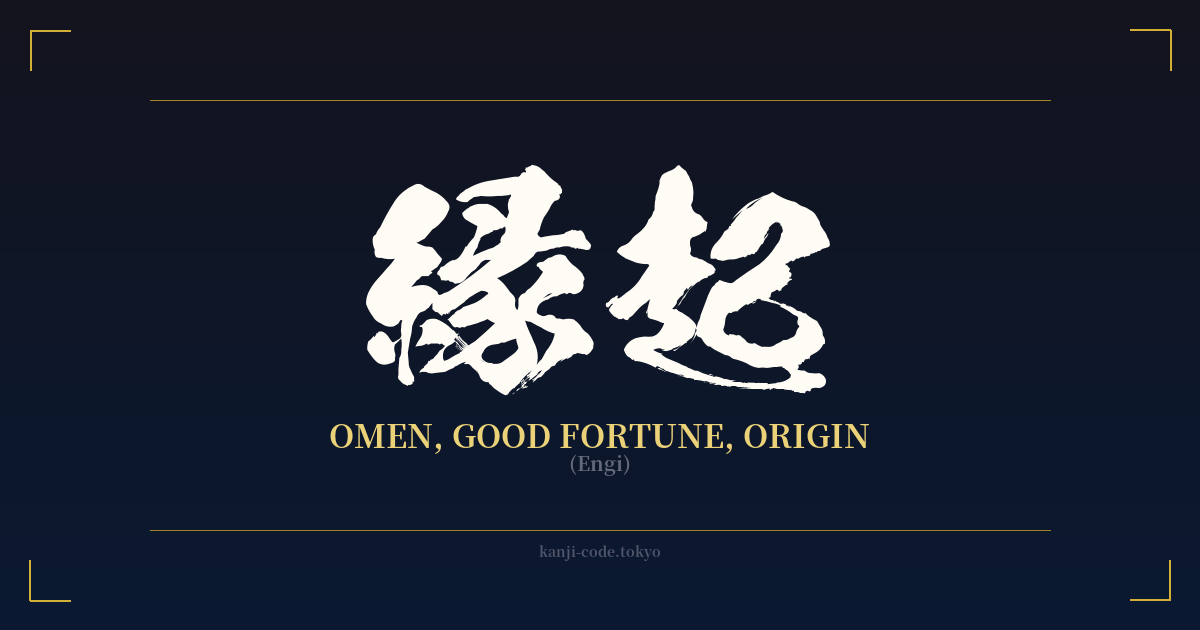
✍️ 縁起 (Engi) — Cultural Context
The word 縁起 (Engi) is most commonly understood in modern Japan as an "omen," typically a good one. To wish for something "engi ga ii" (縁起がいい) is to hope for a sign of good fortune. This everyday usage, however, belies a much deeper and more profound philosophical origin rooted in the heart of Buddhist thought.
Originally, 縁起 derives from the Buddhist term "pratītyasamutpāda" in Sanskrit, which translates to "dependent origination" or "interdependent co-arising." This is a core doctrine of Buddhism, explaining that all phenomena arise in dependence upon other phenomena. In simple terms: nothing exists in isolation; everything is part of a vast, interconnected web of cause and effect. This concept, known as "engi-hō" (縁起法) in Japan, was not about good or bad luck but was a fundamental description of the nature of reality itself.
So how did a complex philosophical term for causality become a simple word for a good luck charm? The evolution happened over centuries. Buddhist temples and shrines in Japan would often have scrolls or texts detailing their founding stories. These narratives, explaining the miraculous events, divine interventions, and auspicious signs that led to the temple's establishment, were called the temple's "engi."
These stories served as proof of the temple's spiritual power and its connection to deities or enlightened beings. People came to associate the term "engi" not with the abstract law of causality, but with the tangible blessings and miracles described in these founding tales. The word's meaning shifted from "origin story" to "the source of good fortune" described in that story.
This leads us to the modern concept of "engimono" (縁起物), literally "auspicious things" or good luck charms. These are objects believed to bring good fortune, sold at shrines, temples, and festivals across Japan. Famous examples include the Daruma doll, which helps one strive toward a goal; the Maneki-neko (beckoning cat), which invites wealth and customers; and O-mamori, small protective amulets. These items are all physical manifestations of the desire to attract positive "engi.
Therefore, 縁起 encapsulates a beautiful duality. It is at once a profound philosophical concept about the interconnectedness of the universe and a simple, hopeful wish for a good sign. It represents the belief that our actions create ripples and that by aligning ourselves with positive causes, we can hope for fortunate outcomes.
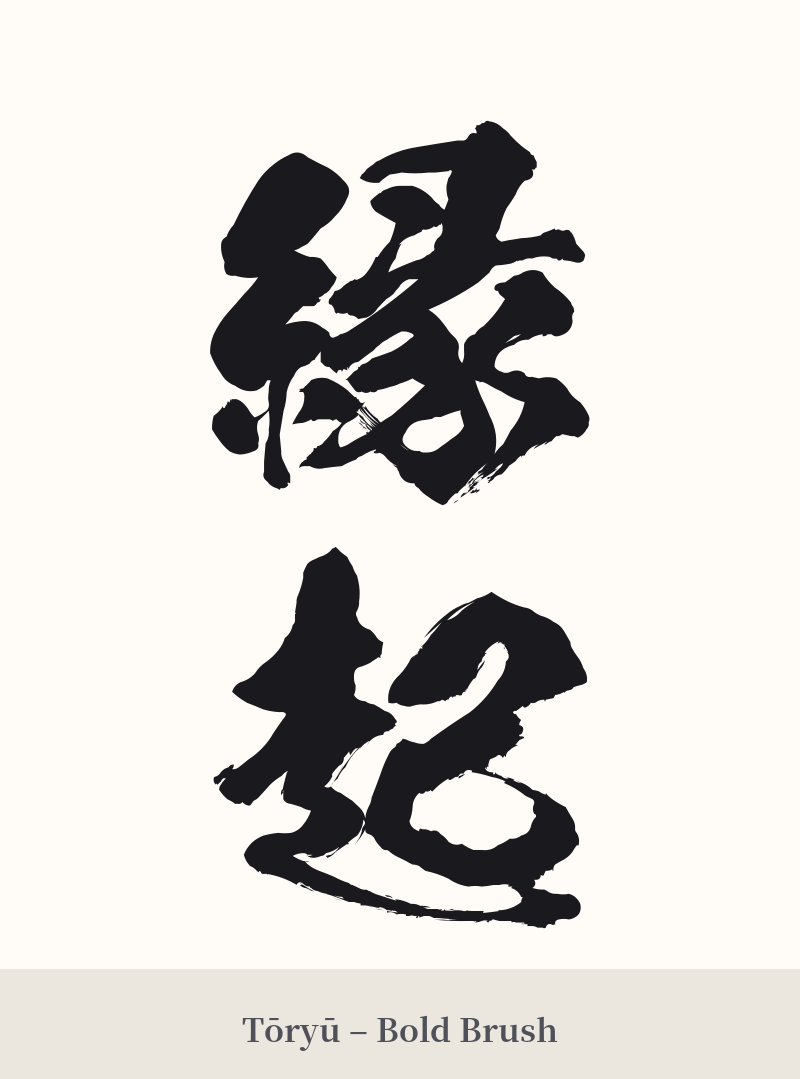
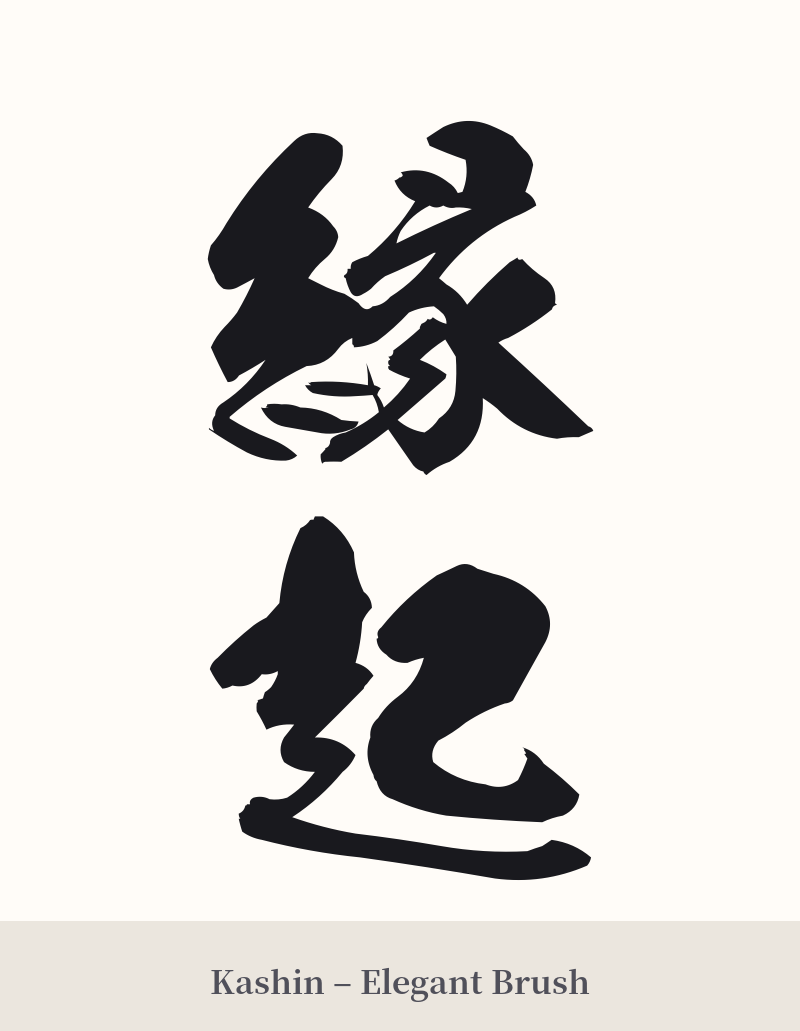
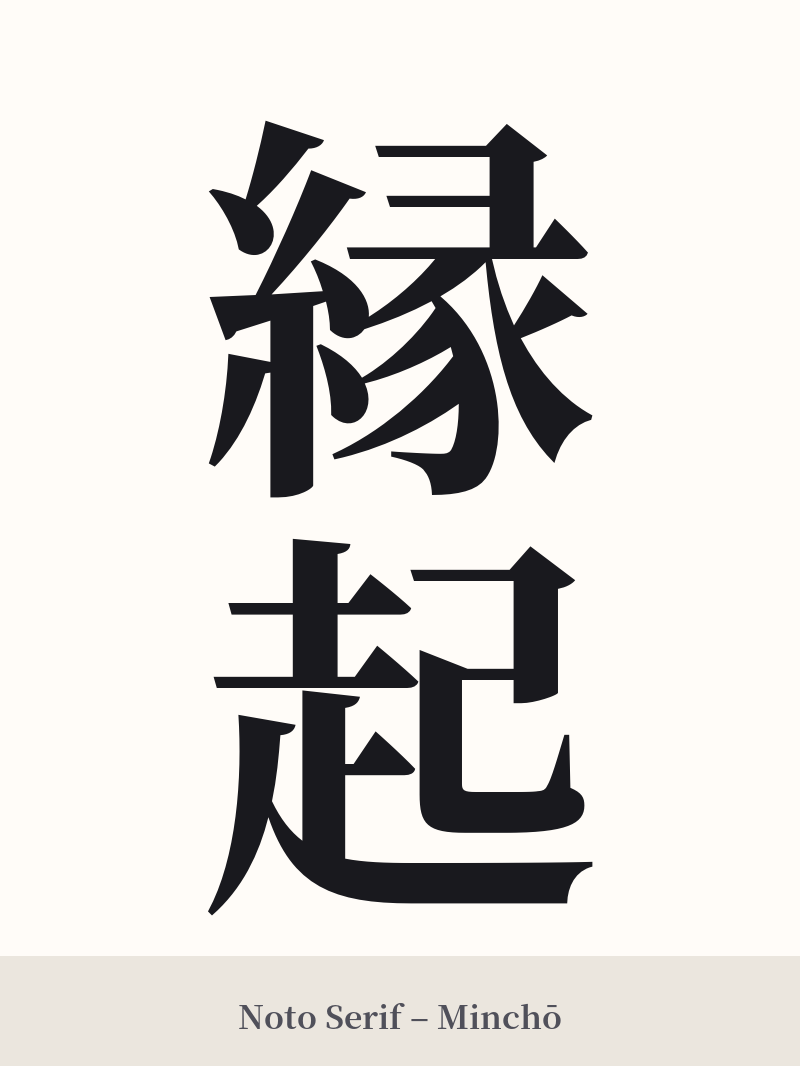
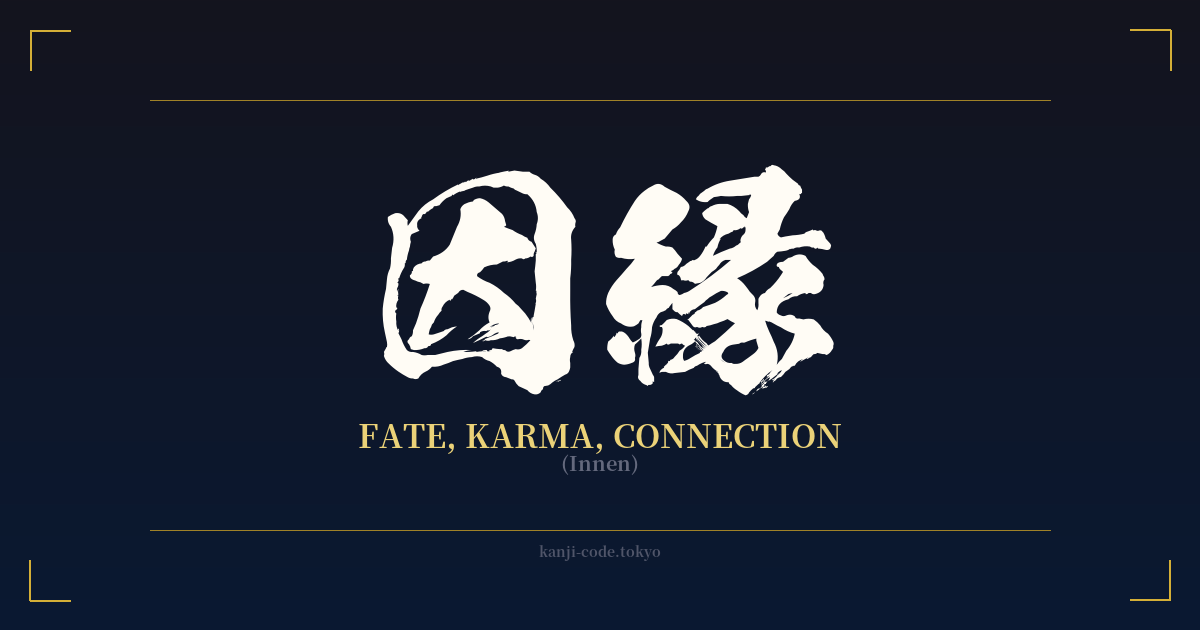
🖌️ Font Styles for 縁起
The same kanji can look dramatically different depending on the calligraphy style. Choose a font that matches the mood you want for your tattoo or design.
🎨 Tattoo Suitability
📐 Tattoo Design Guide
A tattoo of 縁起 (Engi) works wonderfully as a statement of hope and an appreciation for life's interconnectedness. Due to its two-character structure, it is best suited for a vertical alignment, which is the traditional way of writing in Japanese.
– Placement: A vertical design looks striking on the forearm, the calf, or along the spine or ribs. For a horizontal placement, the inner bicep or across the chest can also be effective.
– Style: A semi-cursive script (Gyōsho) can beautifully capture the flow and connection inherent in the word's meaning. For a more solid and traditional look, a clean block script (Kaisho) will emphasize the distinct forms of each character. A bolder, more expressive calligraphy style can also work, suggesting the powerful unfolding of destiny.
– Visual Elements: Consider pairing 縁起 with classic Japanese symbols of good fortune (engimono). A design could incorporate a Daruma doll, a Maneki-neko, a crane, or a turtle. It could also be woven into a background of cherry blossoms to represent the beautiful but transient nature of fortunate events.
Comments