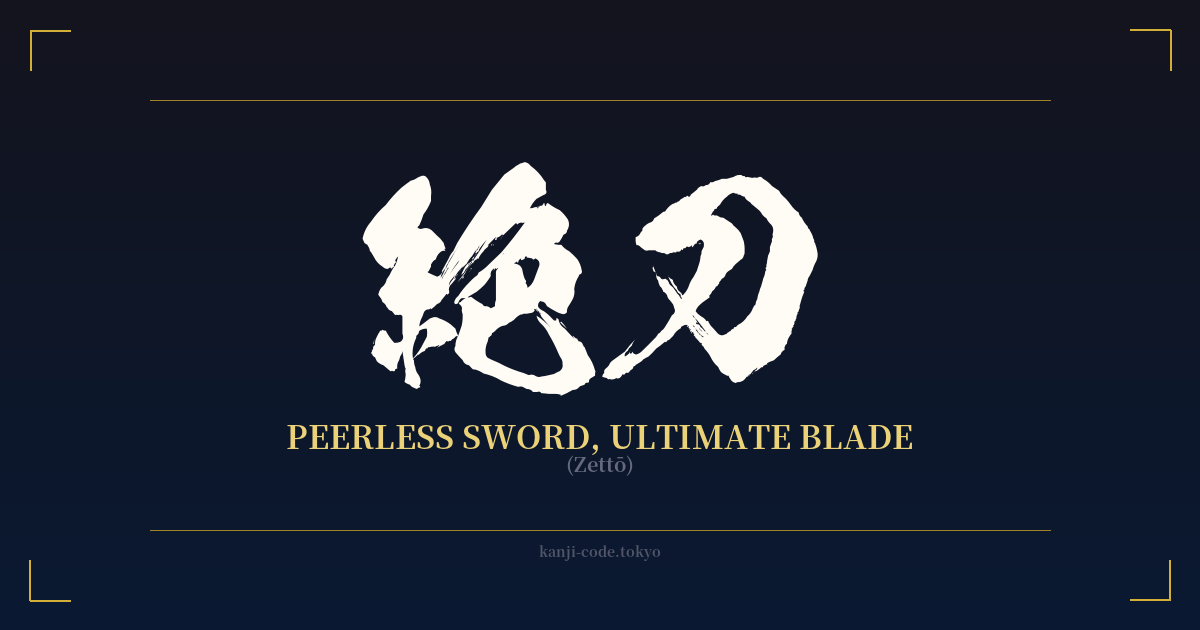
✍️ 絶刀 (Zettō) — Cultural Context
絶刀 (Zettō) is a potent and visually striking term that translates to "Peerless Sword" or "Ultimate Blade." It's a compound word formed from two powerful kanji: 絶 (zetsu), meaning "unparalleled, peerless, to sever," and 刀 (tō), meaning "sword" or "blade," specifically referring to the single-edged katana.
While grammatically sound and instantly understandable to a native Japanese speaker, 絶刀 is not a word you would find in classical samurai texts or hear in everyday conversation. Its domain is the world of modern popular culture—anime, manga, light novels, and video games. In these contexts, Zettō is often used as the name for a legendary, god-like weapon or a signature, unbeatable sword technique. It represents the absolute pinnacle of swordsmanship and the ultimate expression of a warrior's power.
The power of the word comes from its components. The character 絶 carries a sense of finality and absoluteness. It suggests something so extraordinary that it severs all comparison, standing alone at the apex. When paired with 刀, the quintessential symbol of the Japanese warrior, the result is a concept that resonates deeply with the ideals of the samurai spirit, even if the word itself is a modern construction.
The 刀, or katana, is far more than just a weapon in Japanese culture. It is revered as the "soul of the samurai," an object of incredible artistry and spiritual significance. The creation of a single blade involved painstaking ritual and metallurgical genius. Each sword was believed to have its own spirit and character. The term Zettō taps into this profound reverence, imagining a blade that transcends all others—a sword of mythic proportions.
Therefore, 絶刀 can be understood as a modern homage to this ancient legacy. It embodies the romanticized ideal of the ultimate warrior and their perfect weapon. It speaks to the relentless pursuit of mastery, a core concept in Japanese martial arts (budō) and traditional arts (geidō). To wield the Zettō is to have reached a level of skill that is beyond human, a force of nature that cannot be matched. It's a fantasy, but one deeply rooted in the cultural soil of the samurai legend.
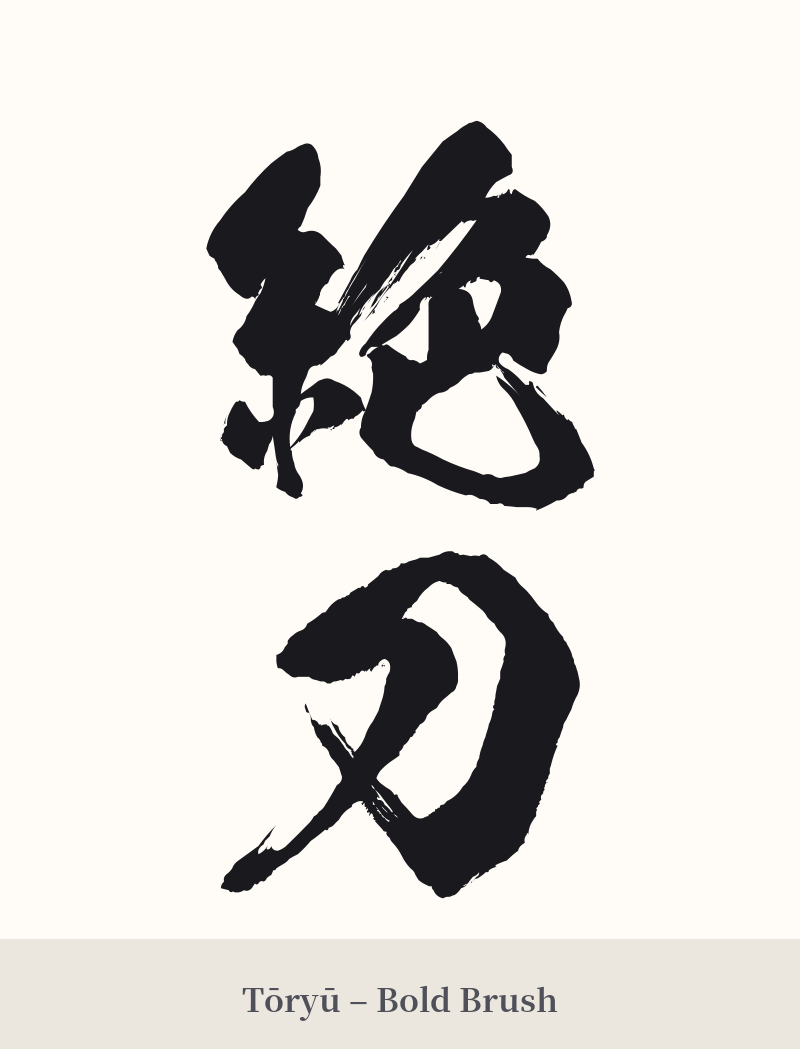
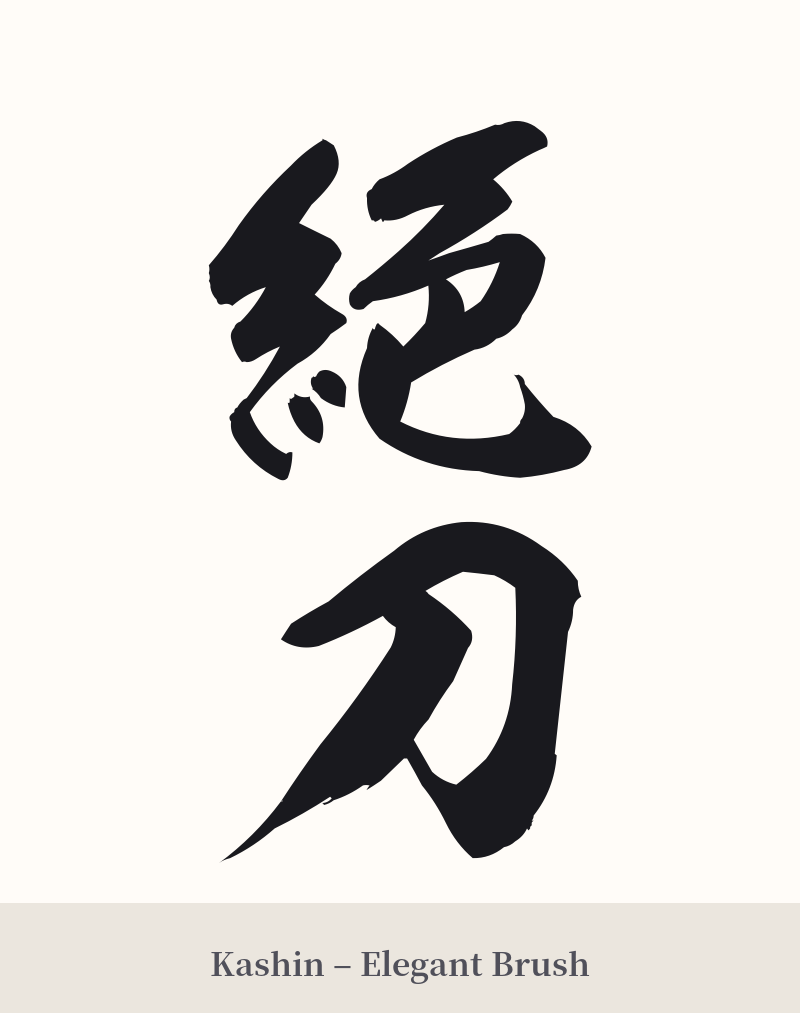
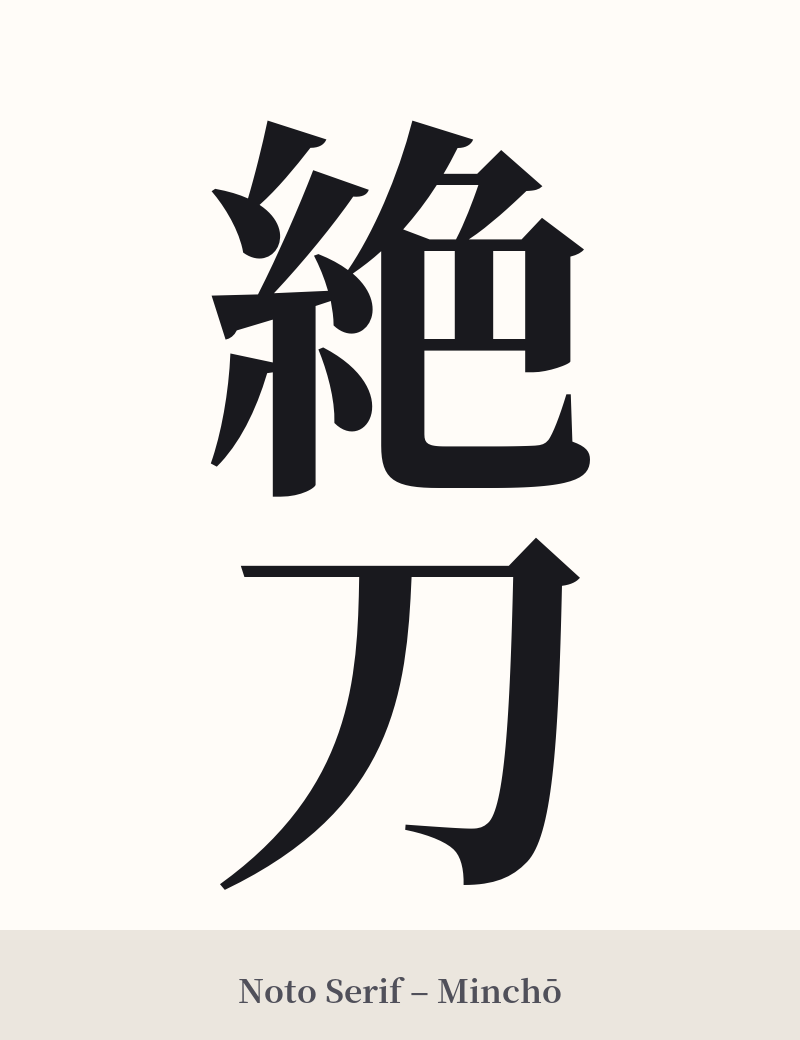
🖌️ Font Styles for 絶刀
The same kanji can look dramatically different depending on the calligraphy style. Choose a font that matches the mood you want for your tattoo or design.
🎨 Tattoo Suitability
📐 Tattoo Design Guide
The two characters of 絶刀 (Zettō) offer a fantastic visual contrast that works well for tattoo designs. The first character, 絶, is more complex and dense, while the second, 刀, is simple, iconic, and sharp.
– Placement: A vertical orientation is highly recommended to mimic the traditional writing style and the form of a sword itself. This makes it ideal for the spine, forearm, calf, or along the bicep.
– Style: A strong, bold calligraphy style is perfect for this term. A standard block script (Kaisho) will look clean and powerful. A semi-cursive style (Gyosho) can add a sense of movement and flair, as if capturing the motion of a sword strike.
– Visual Elements: While the kanji stands strong on its own, it can be integrated with other imagery. Consider having the characters inscribed onto the blade of a katana, or having a dragon coiling around the vertical text. A splash of red ink, like a seal (hanko) or a blood spatter, can add a dramatic accent.
Comments