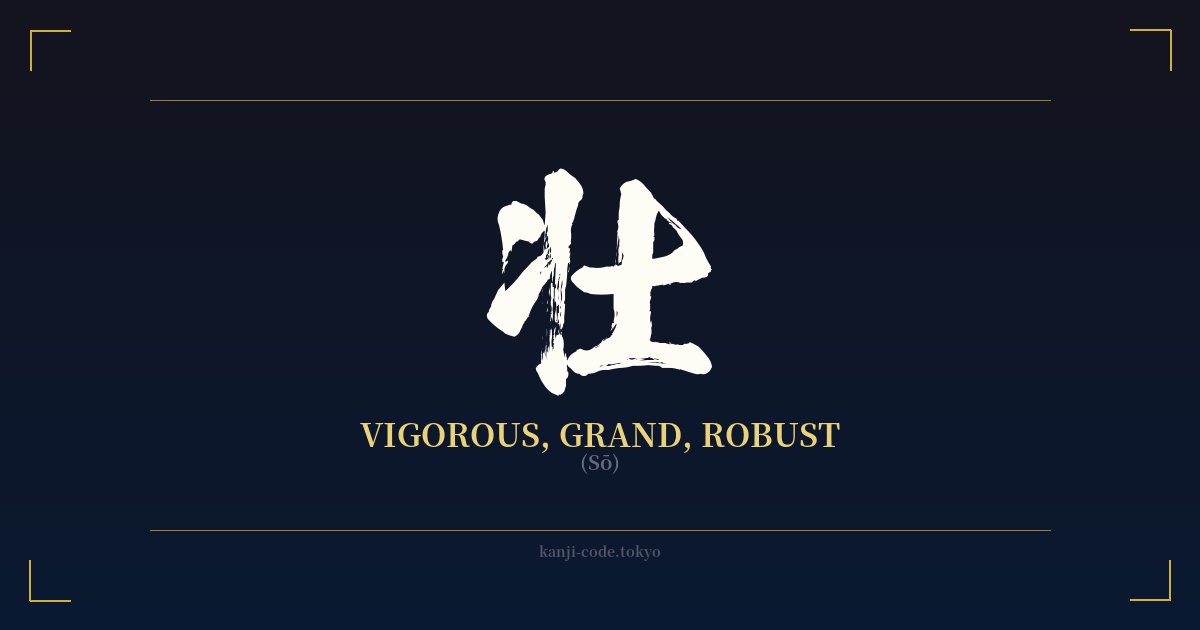
✍️ 壮 (Sō) — Cultural Context
The kanji 壮 (sō) is a powerful character that encapsulates the essence of vigor, grandeur, and strength at its peak. It’s not just about raw physical power, but about a more profound, magnificent vitality—the kind you see in a person in the prime of their life or in a vast, breathtaking landscape.
Delving into its origin, 壮 is a fascinating combination of two radicals. On the left is 爿 (shō), a pictograph of a sturdy wooden bed or bench. On the right is 士 (shi), which represents a scholar, a gentleman, or, in this context, a warrior or a man of status. The combined image paints a picture of a strong, healthy man rising from his rest, full of energy and ready for action. It speaks to a state of being that is robust, complete, and impressive.
In the Japanese language, this sense of grandeur and vitality is evident in the words it helps form. The term 壮大 (sōdai) means magnificent, grand, or epic. It’s used to describe anything from a symphony to a mountain range to an ambitious life plan. Another common word is 勇壮 (yūsō), which means heroic or brave, often describing the gallant spirit of warriors or epic tales. There's also 悲壮 (hisō), which captures a uniquely Japanese aesthetic of tragic heroism—a sense of solemn grandeur in the face of certain doom or sacrifice, a beauty found in noble struggle.
The character is also tied to the life cycle. The word 壮年 (sōnen) refers to the prime of one's life, typically a man in his 30s and 40s, a period seen as the peak of physical strength, experience, and career potential. It’s a time of doing, building, and achieving on a grand scale.
Culturally, 壮 resonates with the samurai ethos, where physical prowess was matched by a dignified and imposing presence. It embodies a spirit that is not just strong, but also expansive and impressive. It’s the difference between a simple rock and a majestic cliff face; both are stone, but 壮 describes the latter. It is the feeling of standing before something—or someone—truly magnificent and full of life.
🖌️ Font Styles for 壮
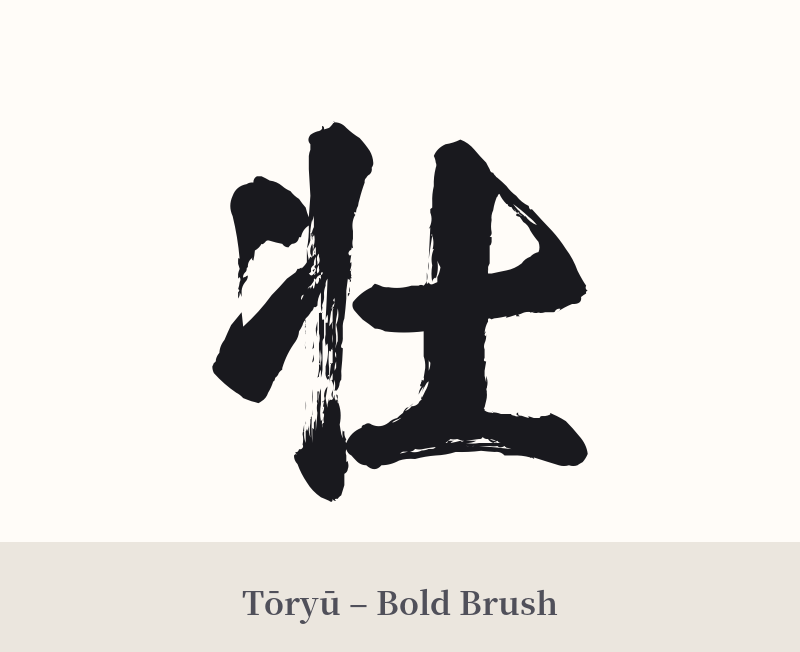
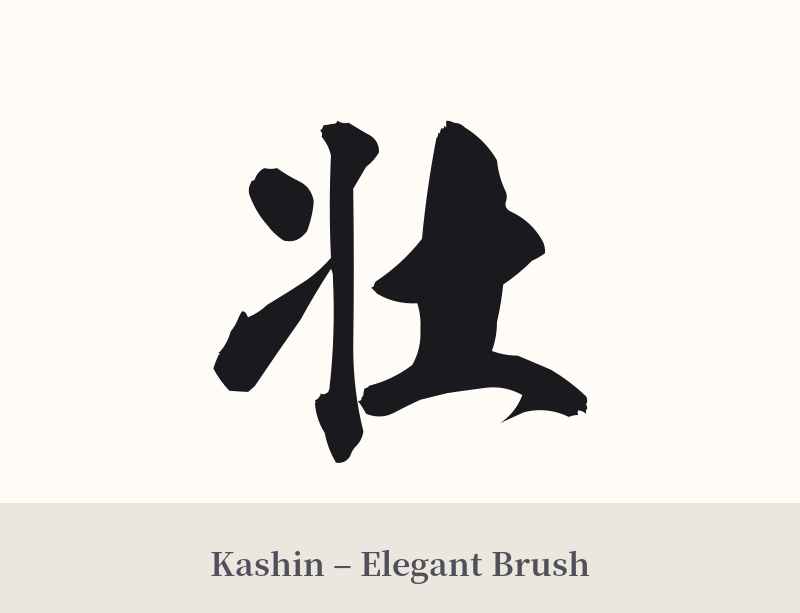
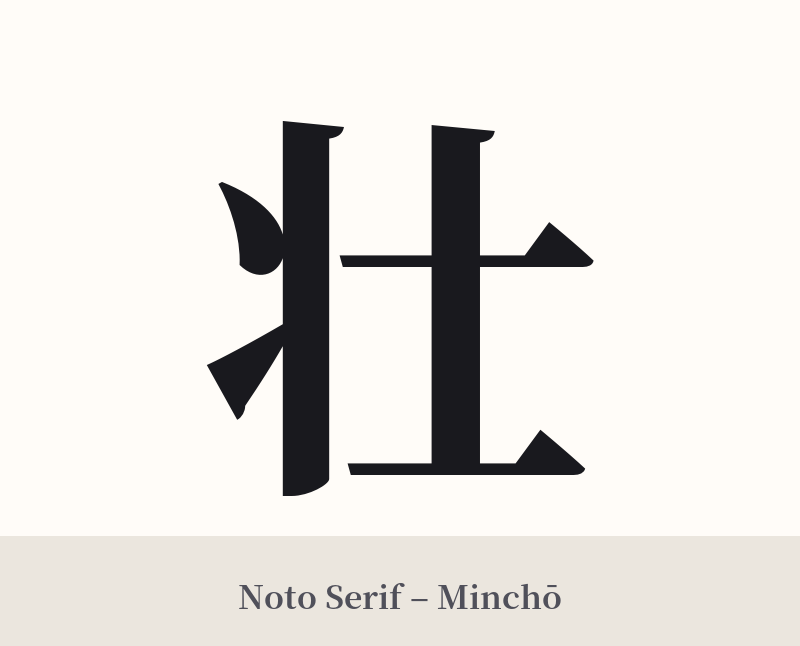
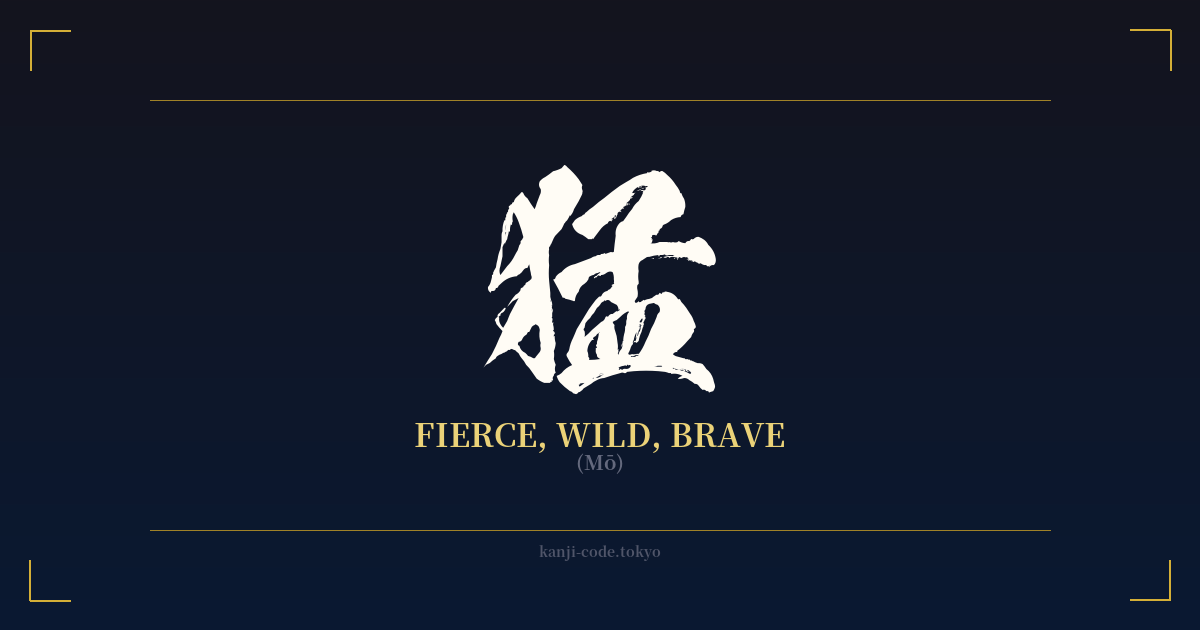
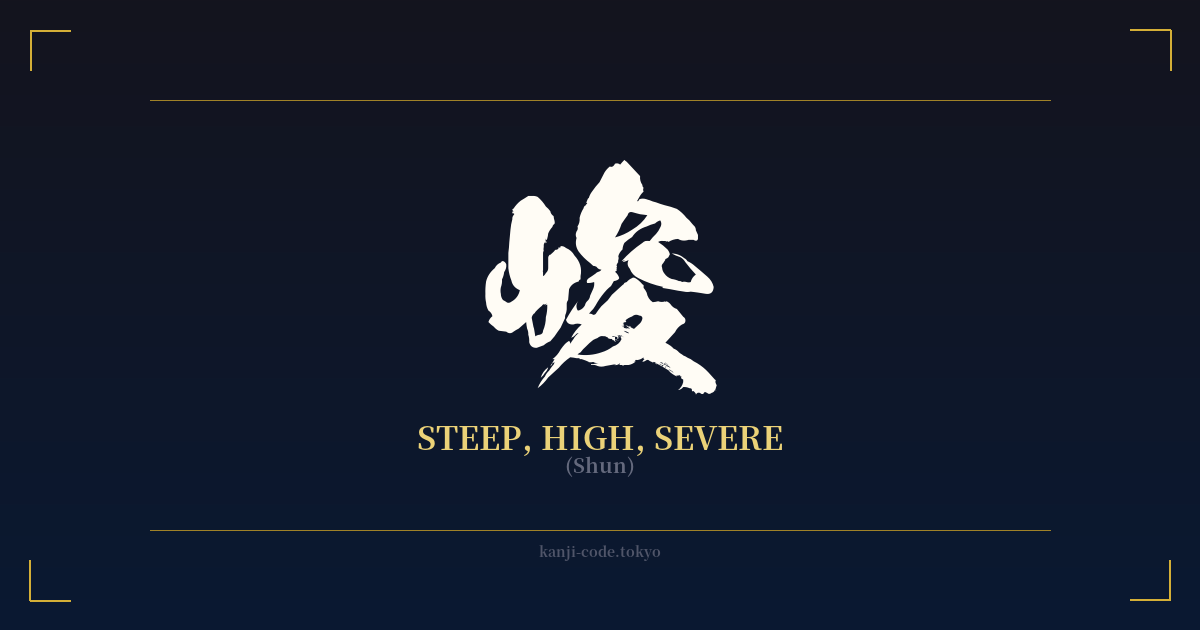
The same kanji can look dramatically different depending on the calligraphy style. Choose a font that matches the mood you want for your tattoo or design.
🎨 Tattoo Suitability
📐 Tattoo Design Guide
The kanji 壮 has a solid, balanced structure that works well for a tattoo. Its simplicity allows for versatility in design and placement.
– Placement: Consider areas that suggest strength and form, such as the forearm, bicep, calf, or the back of the shoulder. Its vertical balance also makes it suitable for the spine or along the ribs.
– Font Style: A bold, angular script like Kaisho (block script) will emphasize the 'robust' and 'sturdy' nature of the character. For a more dynamic feel that captures the sense of 'vigor,' a flowing Gyōsho (semi-cursive) or Sōsho (cursive) script can be very effective.
– Visual Tips: While powerful on its own, 壮 can be paired with imagery that enhances its meaning. Consider integrating it with elements that represent grandeur, such as mountains, a powerful ocean wave, or a majestic animal like a tiger or eagle. The key is to match its scale and energy.
Comments