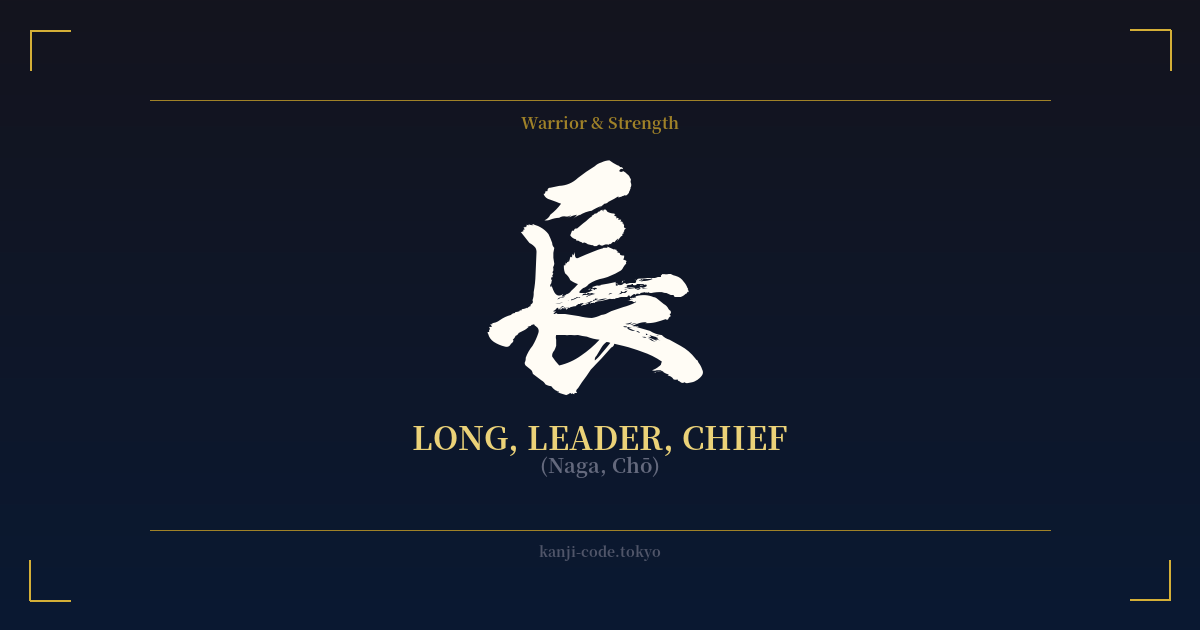
✍️ 長 (Naga, Chō) — Cultural Context
The kanji 長 is a cornerstone of the Japanese language, embodying two powerful and interconnected concepts: length and leadership. Its versatility makes it one of the most frequently used characters, appearing in words related to time, distance, and social structure.
Historically, the character is thought to have originated from a pictogram of a person with long, flowing hair, sometimes depicted with a walking stick. In many ancient cultures, long hair was a sign of age, wisdom, and authority. This visual origin story beautifully encapsulates the kanji's dual nature: the physical length of the hair and the seniority or status it implies.
In its first sense, read as 'nagai' (長い), it simply means long. This can refer to physical length, like a long road (長い道), or a long duration of time, such as a long time ago (長い間). This sense connects to the highly valued cultural concept of 'nagaiki' (長生き), or long life, making it a symbol of endurance, patience, and longevity.
In its second, equally important sense, read as 'chō', it signifies a leader, chief, or head. This is seen in countless titles within Japanese society. The head of a company is a 'shachō' (社長), a school principal is a 'kōchō' (校長), and a department manager is a 'buchō' (部長). In this context, 長 represents authority, responsibility, and the person at the top of a hierarchy. It speaks to a person's strengths and ability to guide others.
This duality is not a coincidence. The underlying idea is that leadership and seniority are earned over a 'long' time, through experience and perseverance. A true 'chō' is someone who has walked a 'long' path. This makes the kanji 長 a profound symbol of ambition, growth, and the journey toward mastery and wisdom. It represents not just a destination but the entire path taken to get there.
🖌️ Font Styles for 長
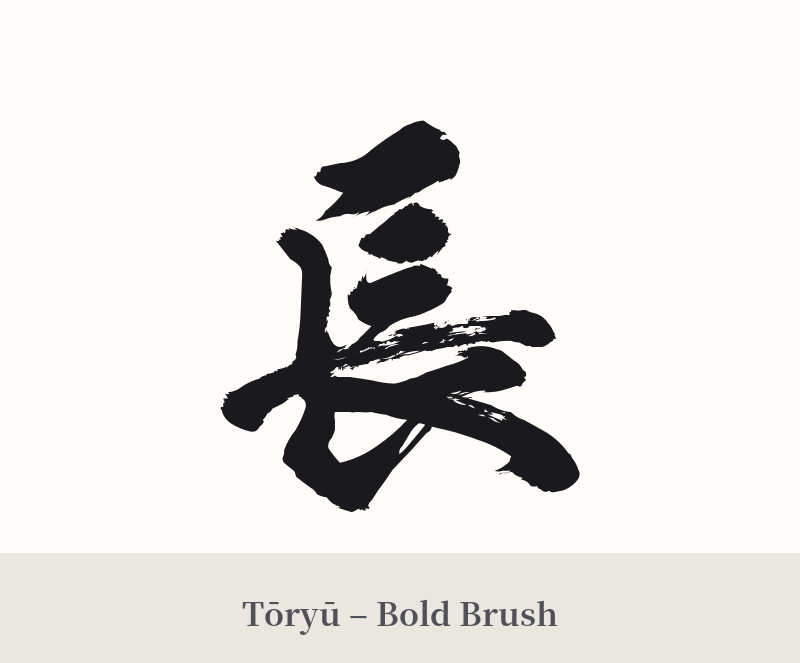
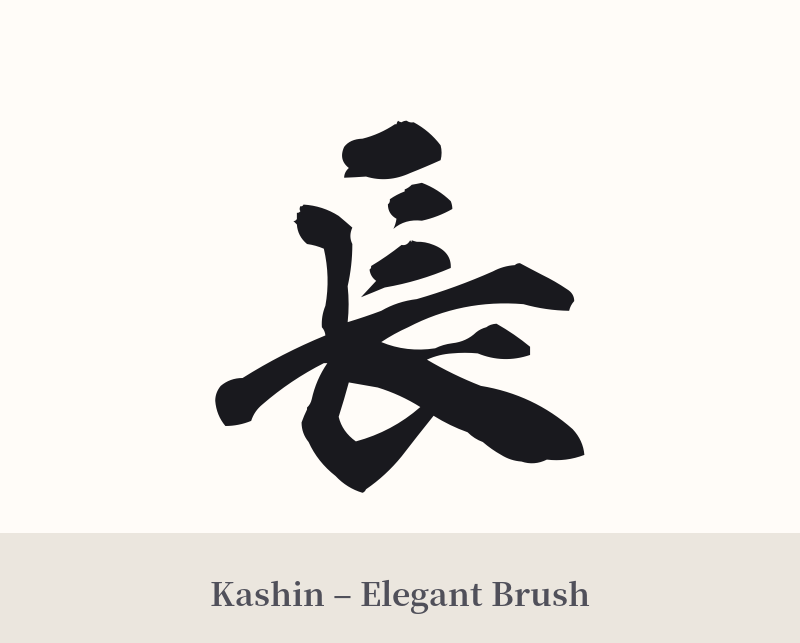
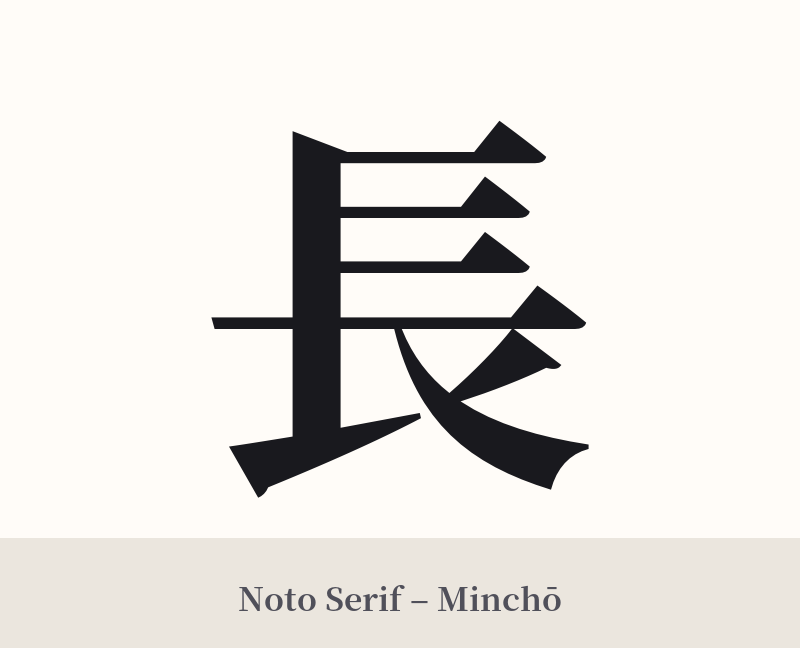
The same kanji can look dramatically different depending on the calligraphy style. Choose a font that matches the mood you want for your tattoo or design.
🎨 Tattoo Suitability
📐 Tattoo Design Guide
The kanji 長 offers great flexibility in tattoo design, allowing you to emphasize either its 'longevity' or 'leadership' aspect.
– Placement: For a design emphasizing length or a journey, consider linear placements like the forearm, calf, or along the spine. To highlight the 'leader' meaning, central placements like the chest, back of the neck, or upper back work well, creating a focal point of authority.
– Style: A bold, angular script like Kaisho (楷書) can give the character a feeling of strength, authority, and stability, perfect for the 'leader' concept. Conversely, a more flowing, slightly elongated script like Gyosho (行書) or Sosho (草書) can visually represent the idea of 'long' and 'flowing', suiting the theme of longevity or a long path.
– Visual Complements: While it stands strong on its own, 長 can be paired with other elements. Combining it with a dragon (竜) reinforces power and longevity. Placing it at the start of a stylized path or river visually represents a long journey. For a more personal touch, it could be subtly integrated into a larger piece that tells the story of your personal growth.
Comments