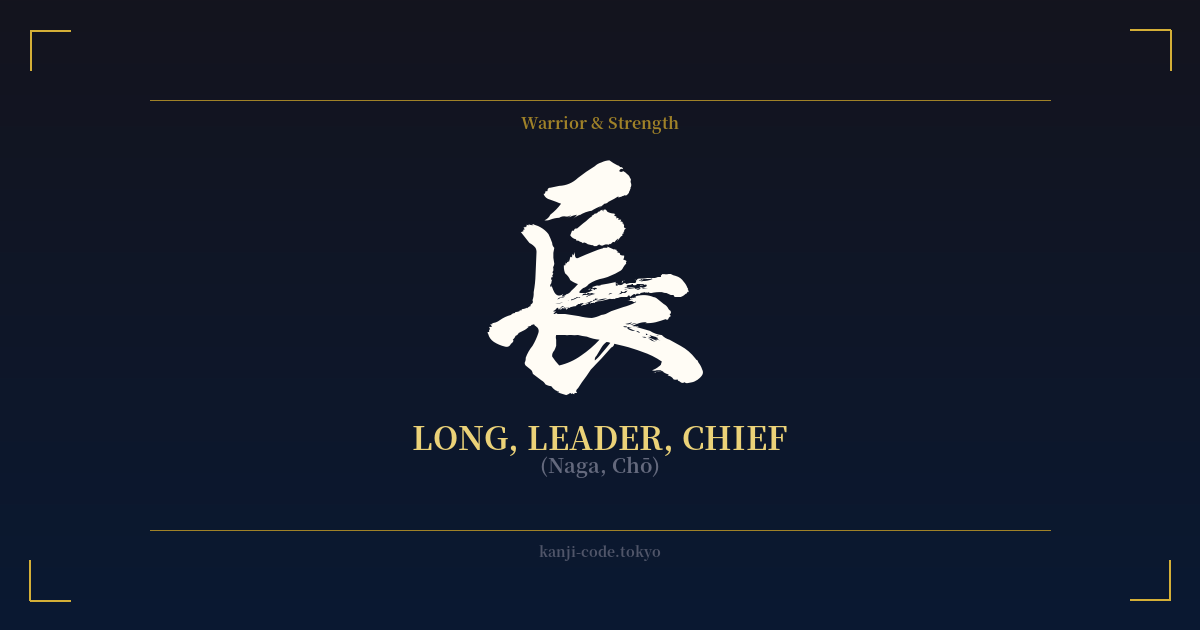
✍️ 長 (Naga, Chō) — Contexto cultural
El kanji 長 es un pilar fundamental del idioma japonés, que representa dos conceptos poderosos e interconectados: longitud y liderazgo. Su versatilidad lo convierte en uno de los caracteres más utilizados, apareciendo en palabras relacionadas con el tiempo, la distancia y la estructura social.
Históricamente, se cree que el carácter tiene su origen en un pictograma de una persona con cabello largo y suelto, a veces representada con un bastón. En muchas culturas antiguas, el cabello largo era un signo de edad, sabiduría y autoridad. Esta historia visual sobre su origen resume a la perfección la doble naturaleza del kanji: la longitud física del cabello y la antigüedad o el estatus que implica.
En su primer sentido, leído como 'nagai' (長い), simplemente significa largo. Esto puede referirse a una longitud física, como un camino largo (長い道), o a una larga duración, como hace mucho tiempo (長い間). Este sentido se relaciona con el concepto cultural muy valorado de 'nagaiki' (長生き), o larga vida, convirtiéndolo en un símbolo de resistencia, paciencia y longevidad.
En su segundo sentido, igualmente importante, leído como 'chō', significa líder, jefe o cabeza. Esto se observa en innumerables títulos dentro de la sociedad japonesa. El director de una empresa es un 'shachō' (社長), el director de una escuela es un 'kōchō' (校長) y el jefe de departamento es un 'buchō' (部長). En este contexto, 長 representa autoridad, responsabilidad y a la persona que se encuentra en la cima de una jerarquía. Habla de las fortalezas de una persona y su capacidad para guiar a otros.
Esta dualidad no es casualidad. La idea subyacente es que el liderazgo y la antigüedad se ganan a lo largo del tiempo, mediante la experiencia y la perseverancia. Un verdadero "chō" es alguien que ha recorrido un largo camino. Esto convierte al kanji 長 en un profundo símbolo de ambición, crecimiento y el camino hacia la maestría y la sabiduría. Representa no solo un destino, sino todo el camino recorrido para llegar a él.
🖌️ Estilos de fuente para 長
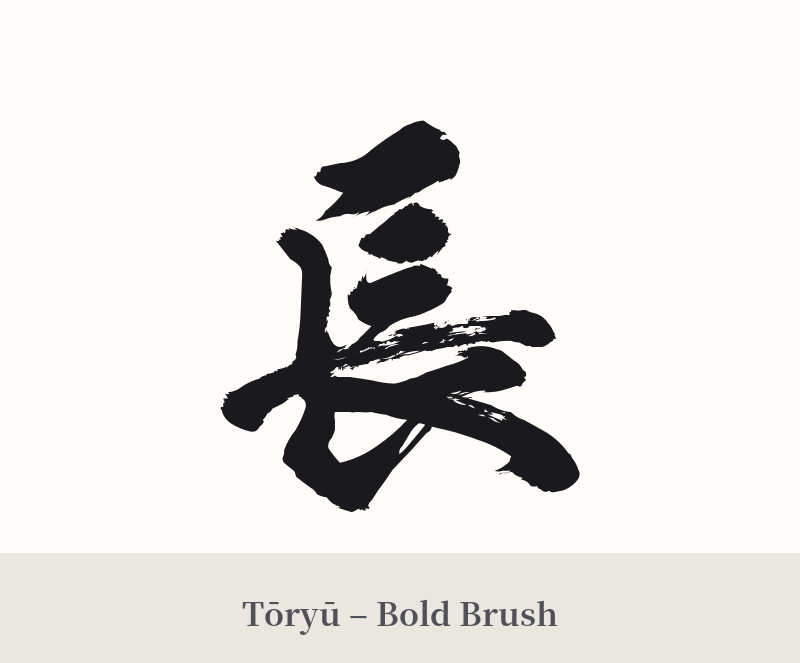
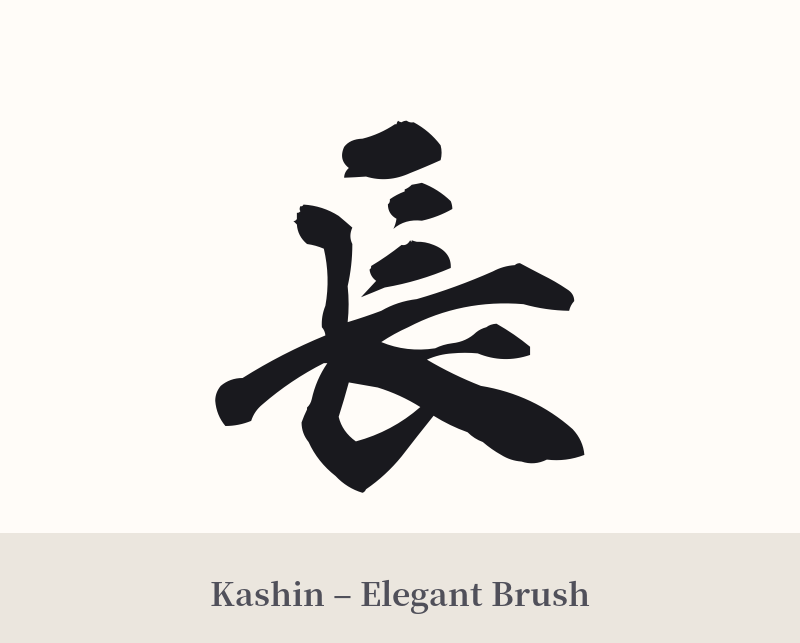
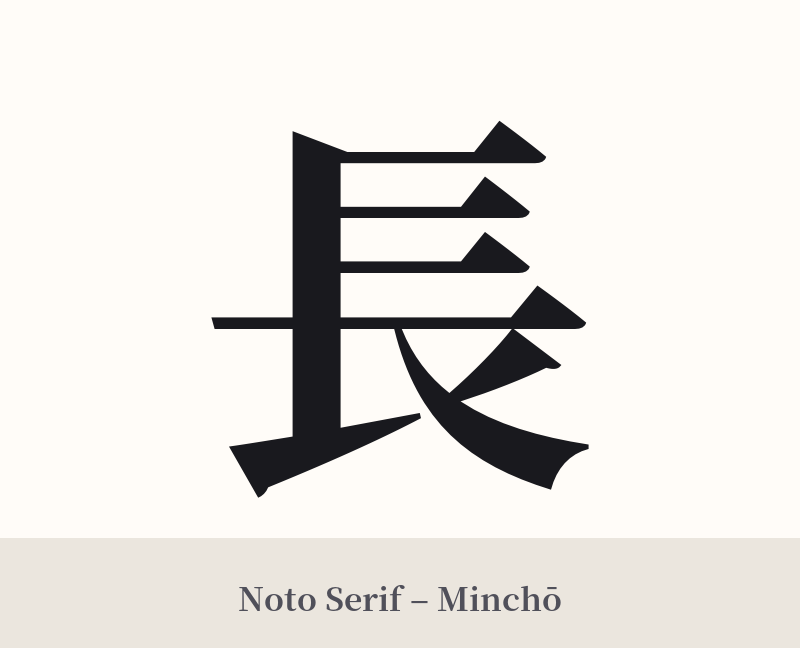
Los mismos caracteres kanji pueden verse muy diferentes según el estilo de caligrafía. Elige una fuente que se ajuste al ambiente que deseas para tu tatuaje o diseño.
🎨 Idoneidad para tatuajes
📐 Guía de diseño de tatuajes
El kanji 長 ofrece una gran flexibilidad en el diseño de tatuajes, permitiendo enfatizar tanto su aspecto de "longevidad" como el de "liderazgo".
– Ubicación: Para un diseño que enfatice la longitud o un recorrido, considere ubicaciones lineales como el antebrazo, la pantorrilla o a lo largo de la columna vertebral. Para resaltar el significado de "líder", las ubicaciones centrales como el pecho, la nuca o la parte superior de la espalda funcionan bien, creando un punto focal de autoridad.
Estilo: Una tipografía audaz y angular como Kaisho (楷書) puede transmitir una sensación de fuerza, autoridad y estabilidad, ideal para el concepto de "líder". Por el contrario, una tipografía más fluida y ligeramente alargada como Gyosho (行書) o Sosho (草書) puede representar visualmente la idea de "largo" y "fluidez", acorde con el tema de la longevidad o un largo camino.
– Complementos visuales: Si bien el símbolo 長 destaca por sí solo, puede combinarse con otros elementos. Su combinación con un dragón (竜) refuerza la idea de poder y longevidad. Colocarlo al inicio de un sendero o río estilizado representa visualmente un largo viaje. Para un toque más personal, puede integrarse sutilmente en una obra más grande que narre la historia de tu crecimiento personal.
Comentarios