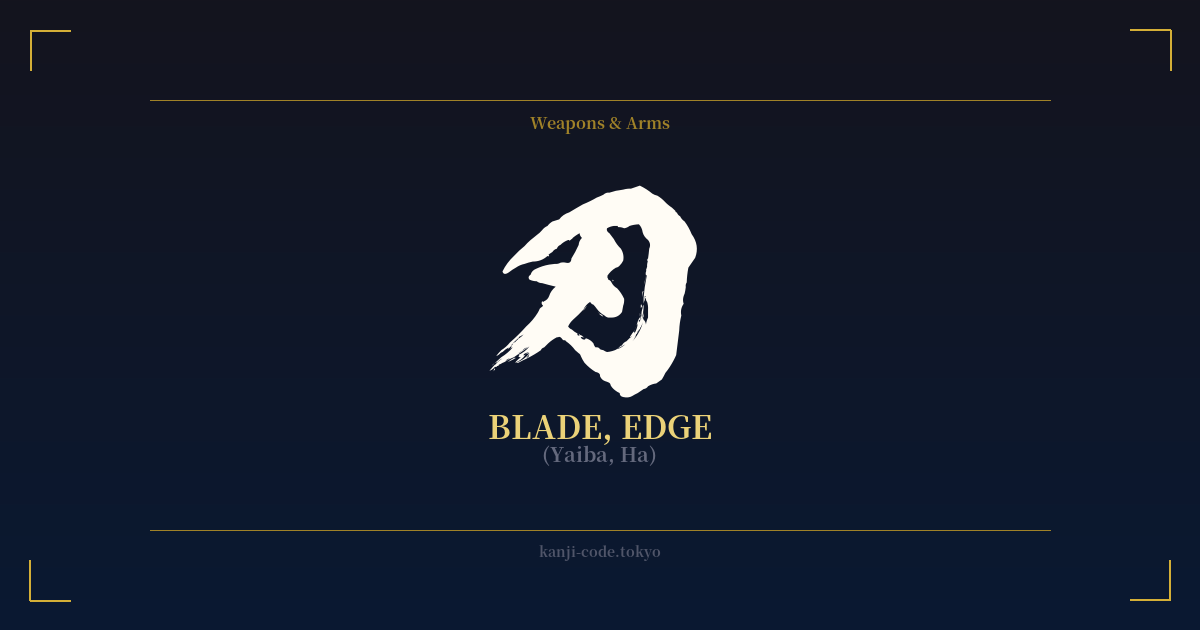
✍️ 刃 (Yaiba, Ha) — Cultural Context
The kanji 刃, read as 'yaiba' or 'ha,' is a character of beautiful and brutal simplicity. It means 'blade' or 'edge'—the very part of a tool or weapon that cuts. Its origin is a perfect example of Japanese ideographic logic. The character is derived from 刀 (katana), the kanji for 'sword' or 'knife.' By adding a single stroke or dot to 刀, the new character 刃 was created to specifically point out the sharpened edge, the most vital part of the blade.
This character is inseparable from the image of the samurai and their iconic sword, the katana. The 'ha' of a katana was not just a piece of sharpened metal; it was the culmination of a near-spiritual forging process. Swordsmiths would fold and hammer the steel thousands of times, creating a blade that was both incredibly hard and flexible. The visible temper line on the blade, known as the 'hamon,' is the physical manifestation of the hardened edge, the 'ha.' To a samurai, the integrity of their blade's edge was a matter of life, death, and honor.
Beyond its literal meaning, 刃 has carved its way into the Japanese language with potent figurative meanings. The phrase 諸刃の剣 (moroha no tsurugi), literally 'double-edged sword,' uses this kanji to describe something that can be both beneficial and harmful, a concept universally understood. It can also refer to the sharpness of one's intellect or the cutting nature of one's words. To be on the 'cutting edge' of a field captures a similar feeling of being at the forefront, sharp and advanced.
It's important to distinguish 刃 from similar kanji. While 刀 (katana) refers to the entire single-edged sword and 剣 (ken/tsurugi) refers to a double-edged sword, 刃 (yaiba/ha) focuses solely on the essence of their function: the edge. This makes it a more abstract and fundamental concept. It represents not the object itself, but the potential for action, the point of impact, and the very idea of sharpness. It is the soul of the cut.
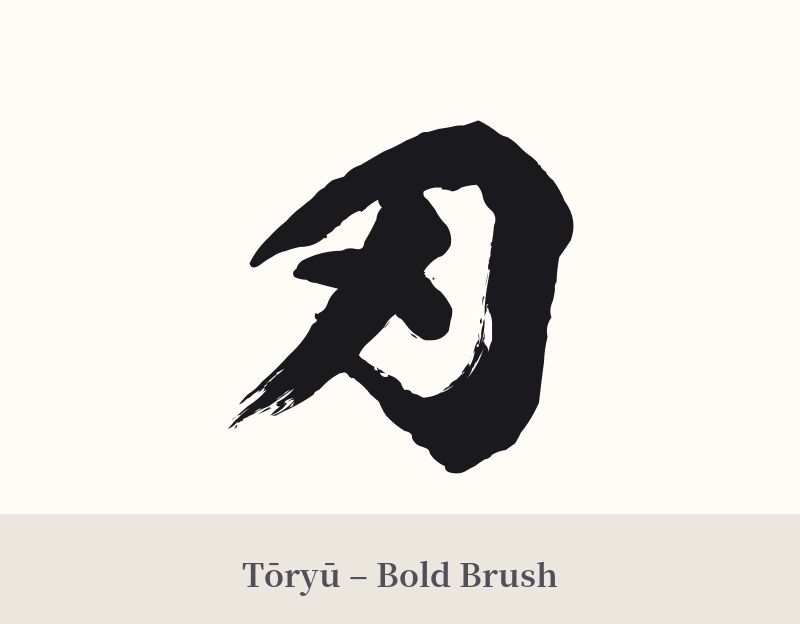
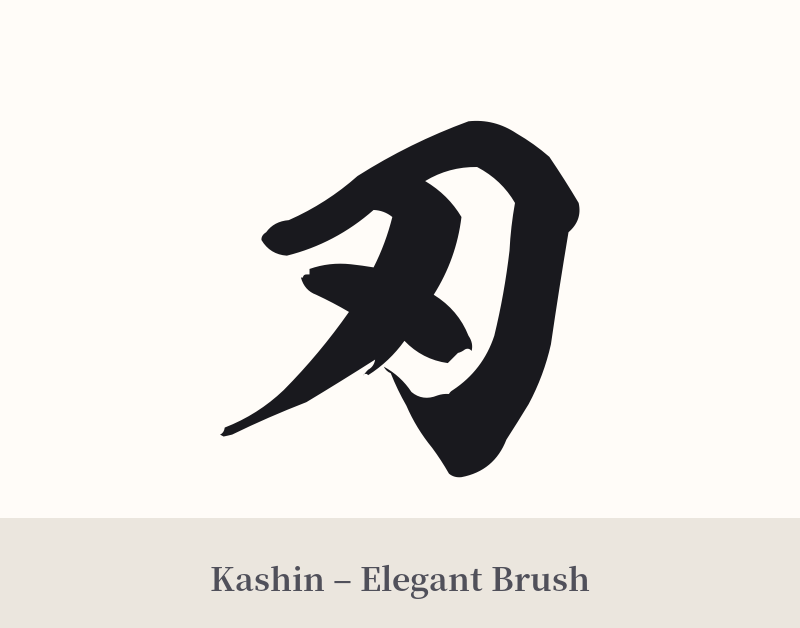
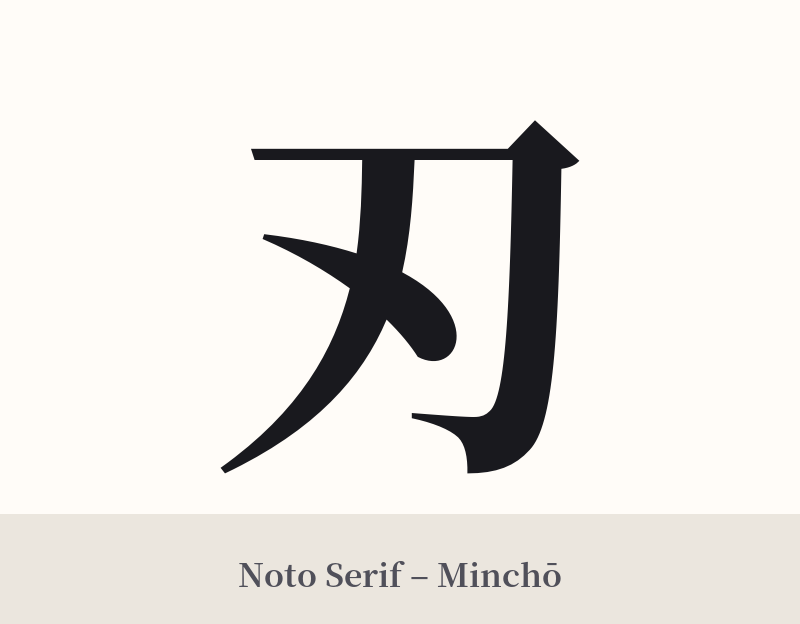
🖌️ Font Styles for 刃
The same kanji can look dramatically different depending on the calligraphy style. Choose a font that matches the mood you want for your tattoo or design.
🎨 Tattoo Suitability
📐 Tattoo Design Guide
For a tattoo, 刃 offers stark, minimalist appeal. Its clean lines and aggressive angles make a powerful statement despite its simplicity.
– Placement: Consider areas that emphasize its linear, cutting nature. The forearm, the back of the calf, along the ribs, or vertically down the spine are all excellent choices. For a smaller, more subtle design, the wrist or behind the ear can work well.
– Font Style: A crisp, angular Kaisho (block script) font will highlight its sharp, precise nature. For a more dynamic feel, a Gyosho (semi-cursive) or Sosho (cursive) brushstroke can evoke the fluid motion of a sword slash.
– Visual Tips: While it stands strong on its own, 刃 can be combined with other elements. A splash of red ink, as if from a cut, can add dramatic effect. It can also be integrated into a larger piece, perhaps held by a warrior or paired with a dragon, to define the theme of the entire design.
Comments