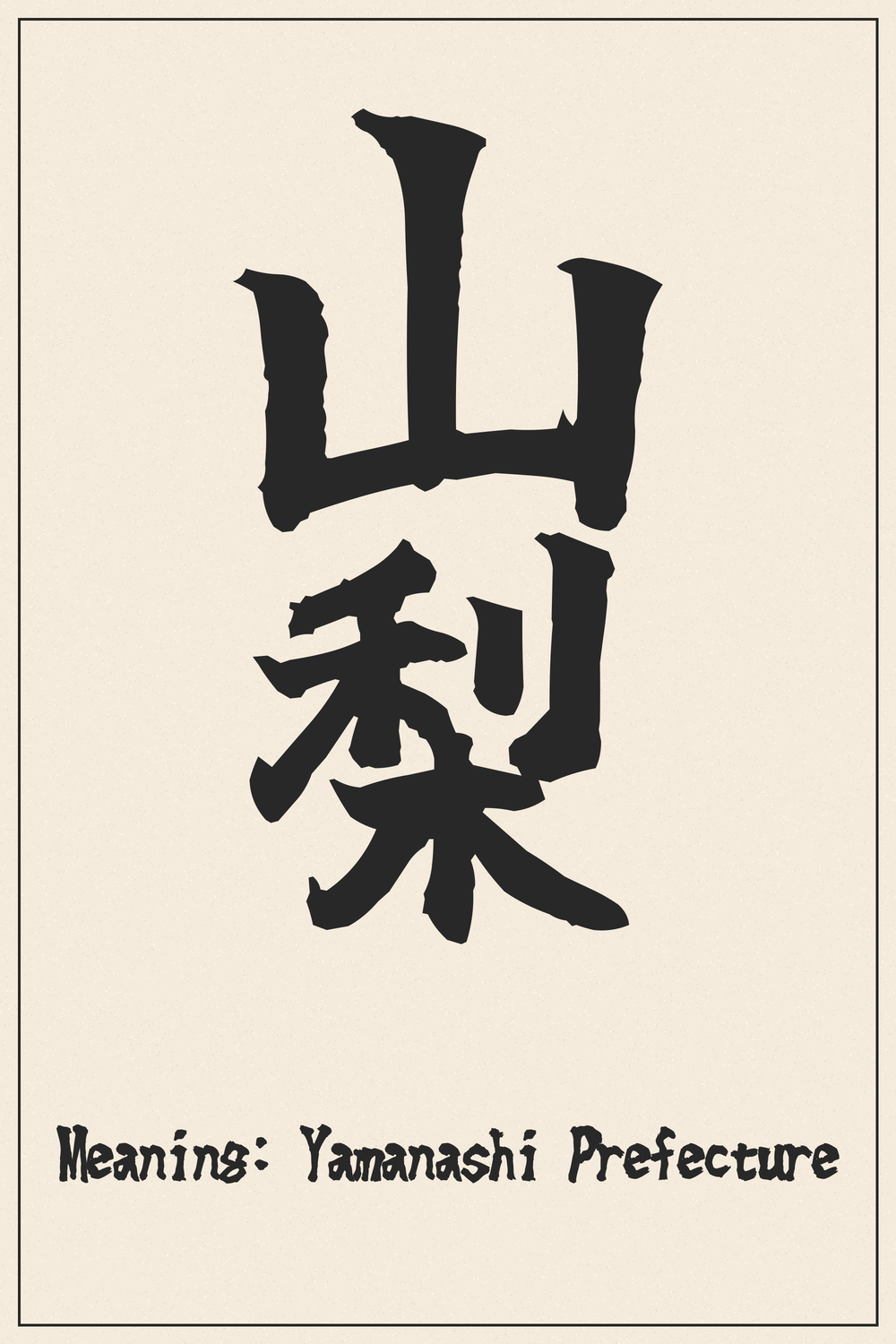
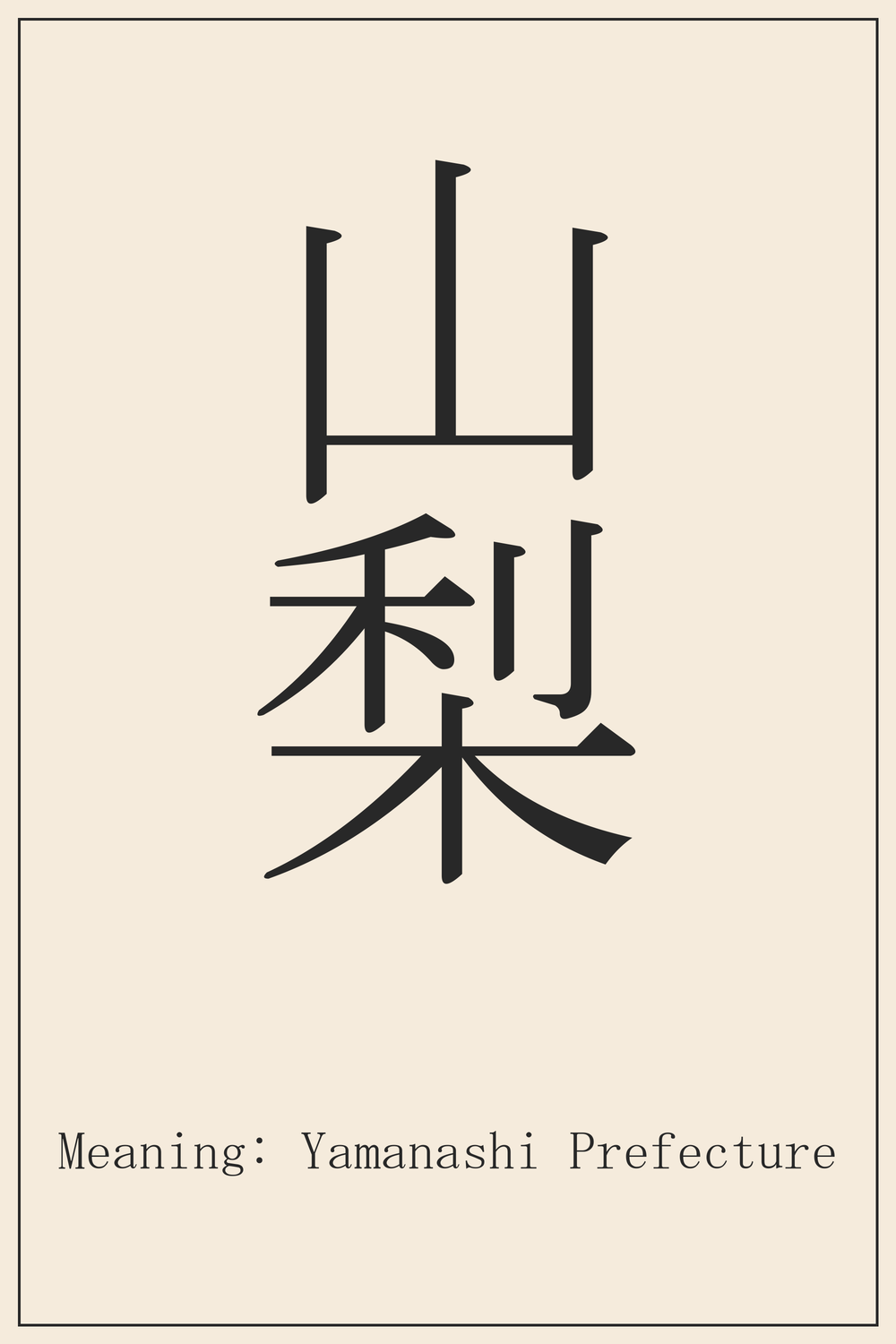
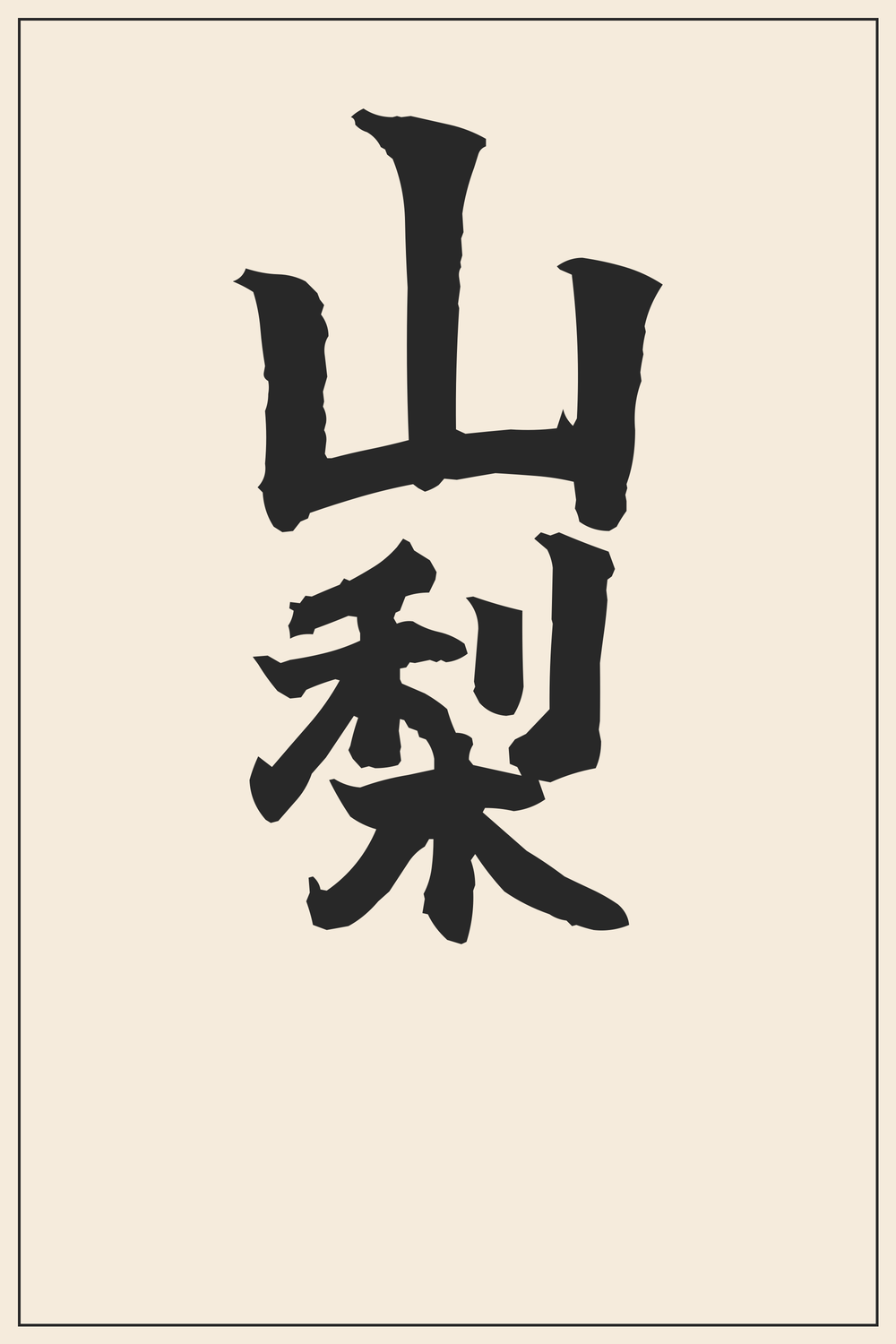
The Kanji ‘山梨’ beautifully encapsulates the essence of a distinct Japanese region. It represents a deep connection to its unique landscapes and cultural heritage, making it more than just a place name.
The atmosphere of a Kanji character changes dramatically depending on the font style. A character that looks elegant in a brush style might look bold and modern in a different font.
Recommendation:
Since a tattoo is permanent, we strongly recommend comparing various font styles beyond what is shown here. Use our designs as a trusted reference for the correct structure, but feel free to explore different artistic variations to find the perfect match for your vision.
The Deep Meaning Behind 山梨
The Kanji compound ‘山梨’ literally translates to ‘Mountain Pear.’ This name likely reflects the historical landscape dominated by mountains, combined with the abundance of pear trees, or specific types of wild pears, in the region. This nomenclature dates back centuries, embodying the natural characteristics that defined the area.
Yamanashi is renowned for its natural beauty, including being home to a significant portion of Mount Fuji, the Fuji Five Lakes, and the Southern Japanese Alps. It’s also famous for its fruit cultivation, particularly grapes and peaches, and its burgeoning wine industry, making it a region of both scenic and agricultural importance in Japan.
Kanji Breakdown
The compound ‘山梨’ is formed from two distinct Kanji, each contributing to its overall meaning and regional identity.
Meaning: Mountain. This character is a pictograph depicting three mountain peaks, symbolizing grandeur, stability, and a deep connection to nature. In the context of Yamanashi, it refers to the region’s mountainous terrain, including the iconic Mount Fuji and the Southern Japanese Alps.
Meaning: Pear. This character is a phono-semantic compound. It combines the radical 木 (ki/tree) with the phonetic component 利 (ri/profit, benefit). It signifies a tree that yields beneficial or profitable fruit, specifically referring to the pear tree, which was historically abundant in the region.
Conclusion
The Kanji ‘山梨’ captures the essence of a region defined by its majestic mountains and fertile lands, traditionally abundant in pear trees. It symbolizes a connection to Japan’s rich natural landscapes and its agricultural heritage, embodying both natural beauty and productivity.
For those with a deep appreciation for the natural beauty of Japan, a personal connection to the Yamanashi region, or a fondness for its famous fruits, this Kanji offers a meaningful and visually appealing tattoo choice that represents a cherished place and its inherent qualities.
Comments