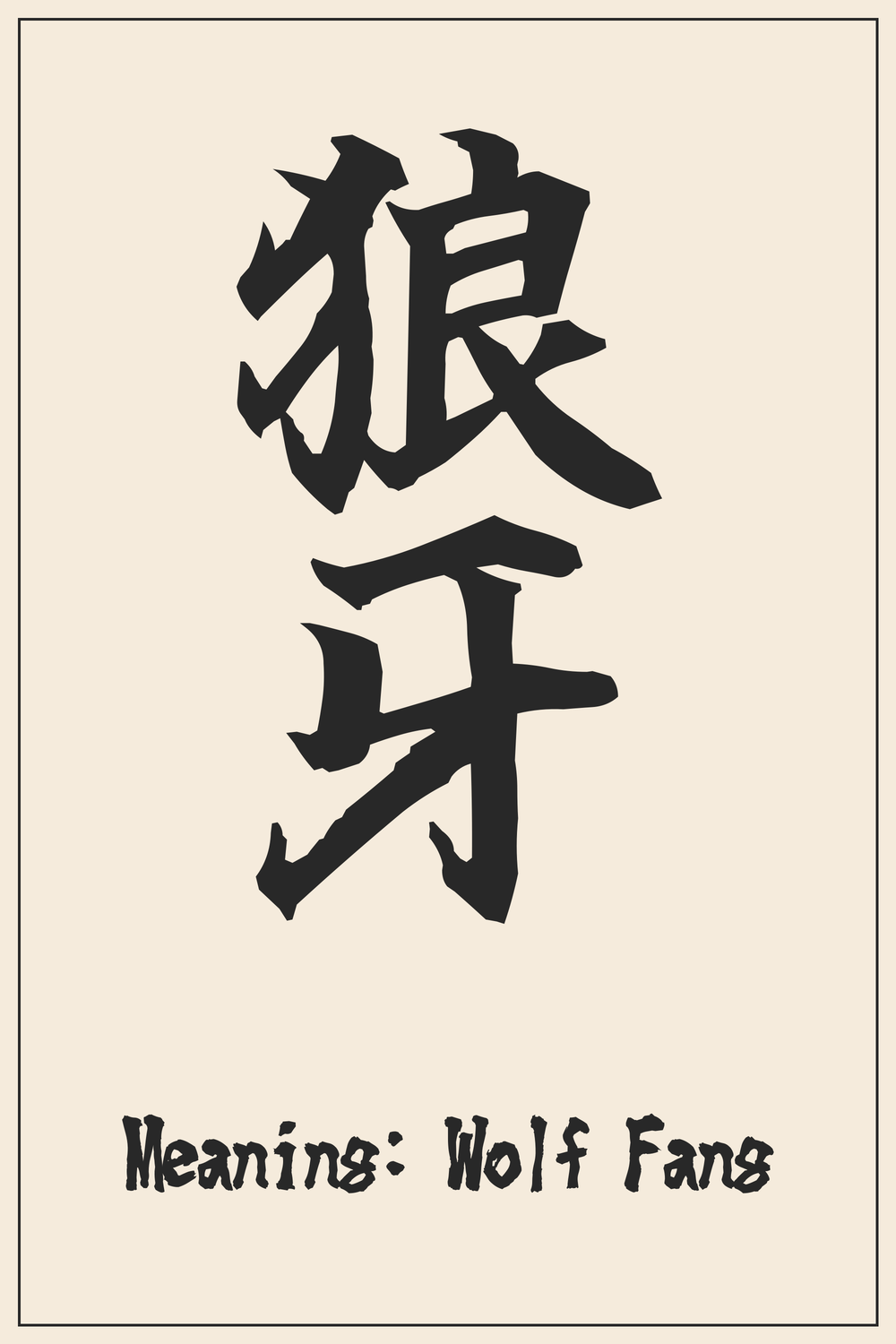
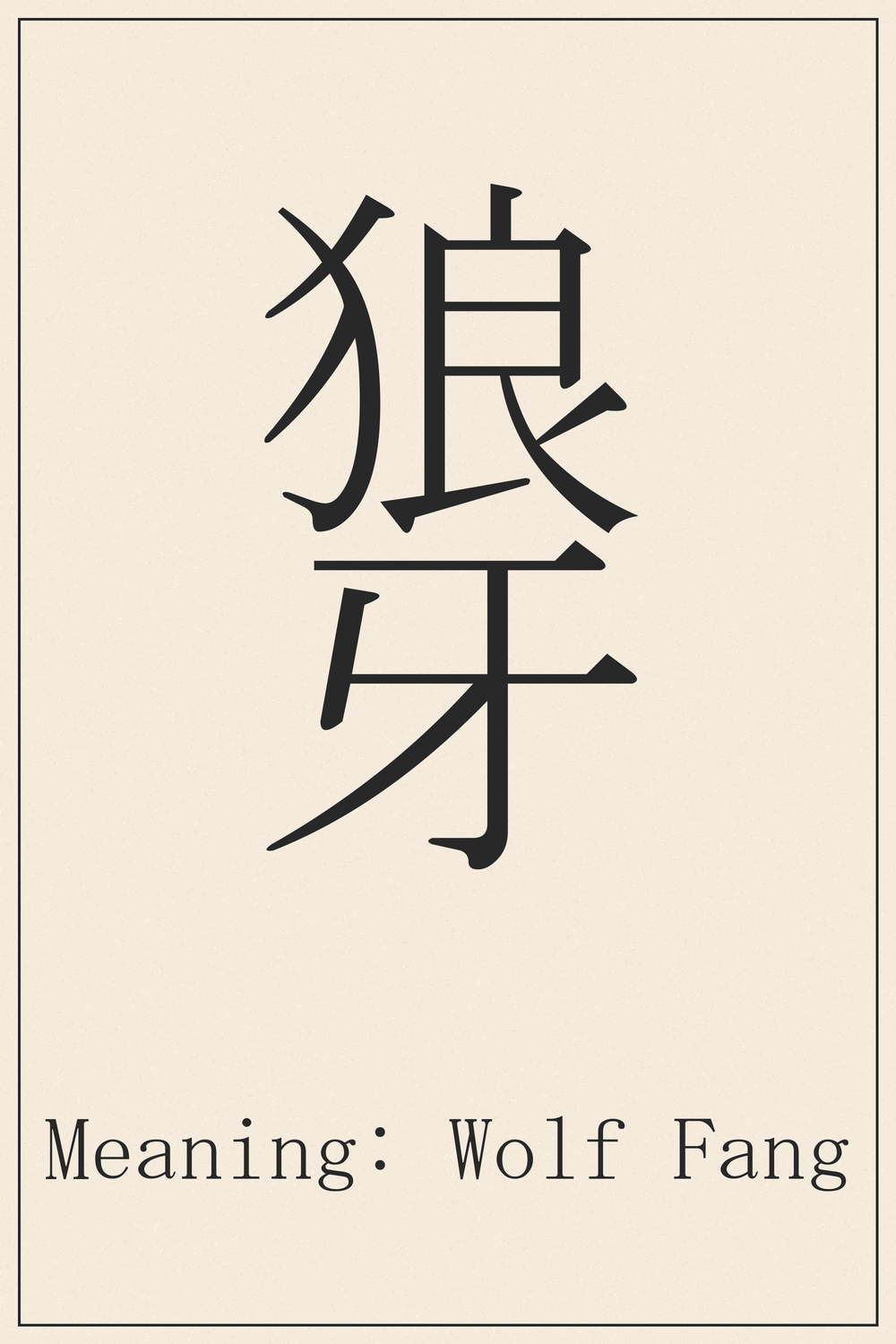
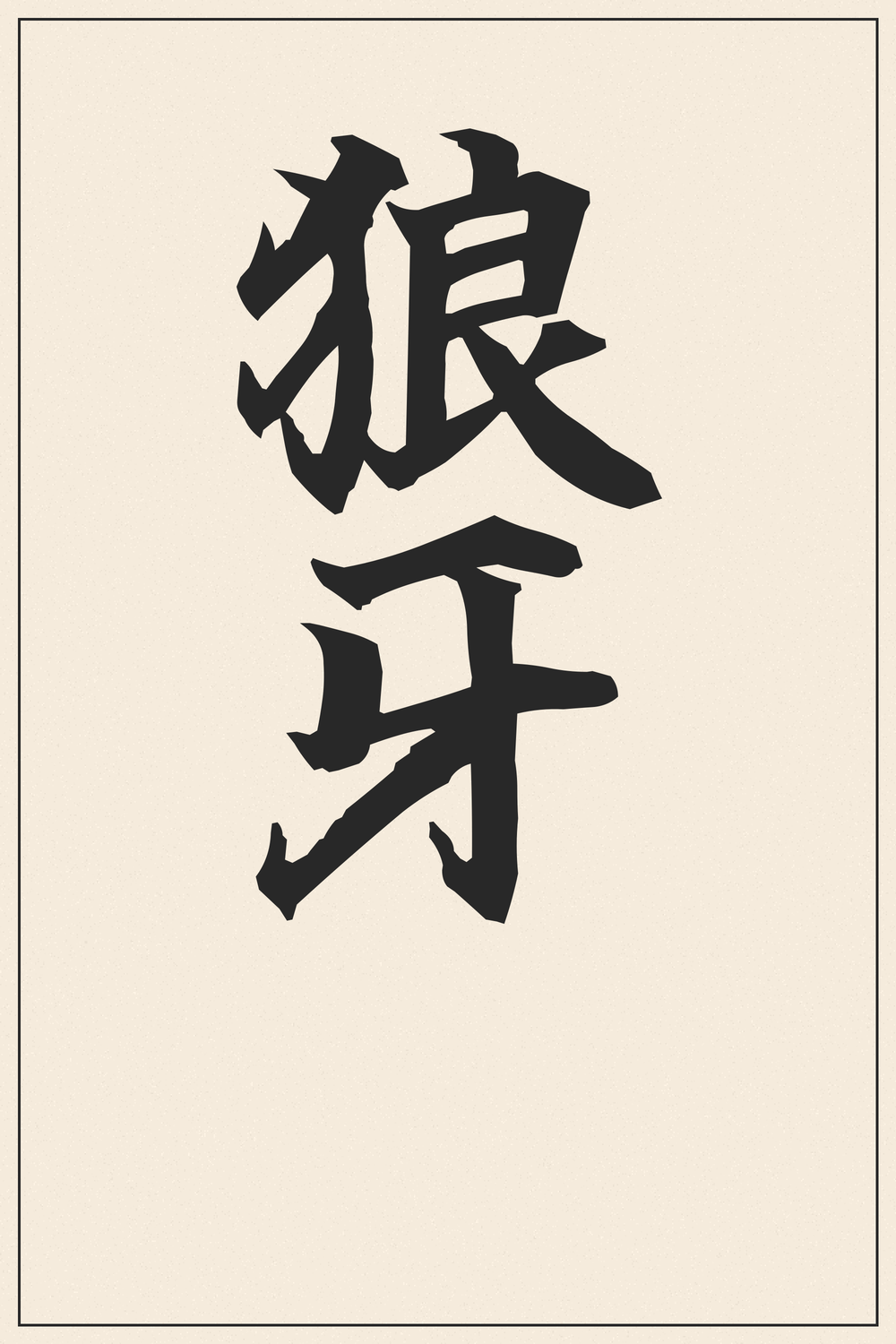
Wolf Fang (狼牙) embodies the raw power and untamed spirit of the wilderness. This Kanji compound symbolizes fierce protection and an indomitable will, echoing the primal strength found in nature.
The atmosphere of a Kanji character changes dramatically depending on the font style. A character that looks elegant in a brush style might look bold and modern in a different font.
Recommendation:
Since a tattoo is permanent, we strongly recommend comparing various font styles beyond what is shown here. Use our designs as a trusted reference for the correct structure, but feel free to explore different artistic variations to find the perfect match for your vision.
The Deep Meaning Behind 狼牙
“狼牙” (Rouga) is a compound Kanji meaning “wolf fang.” The character 狼 (rou) derives from 犬 (dog/canine) and 良 (good/well), with 良 suggesting the animal’s powerful howl or formidable nature. 牙 (ga) is a pictograph representing a tusk or fang, vividly depicting the sharp, pointed weapon of an animal.
In Japanese culture, wolves (狼) are often seen as symbols of the wilderness, protection, and fierce strength, sometimes associated with mountain spirits or guardian deities. The addition of 牙 emphasizes their predatory nature, representing an unyielding spirit and the capacity for both defense and decisive action.
Kanji Breakdown
The compound 狼牙 is formed by two distinct and powerful Kanji, each contributing to its overall formidable meaning.
Meaning: Wolf
Composed of 犬 (inu/dog, a general canine radical) and 良 (ryō/good, here used phonetically and possibly to imply a ‘good’ or fierce beast). It represents the powerful and often solitary animal, the wolf.
Meaning: Fang, Tusk
A pictograph depicting a sharp, pointed tooth or tusk. It directly conveys the idea of a weapon or tool for biting, symbolizing sharpness, power, and predatory nature.
Conclusion
“狼牙” encapsulates the untamed essence of the wolf, representing not just physical strength but also the instinctual wisdom and fierce protectiveness inherent in the wild. It stands for an unwavering spirit and the raw power to overcome challenges.
For those seeking a tattoo that symbolizes primal power, protective instinct, and an unyielding will, “狼牙” is an excellent choice. Its bold characters and profound meaning make for a striking and deeply symbolic design, perfect for embodying inner strength.
Comments