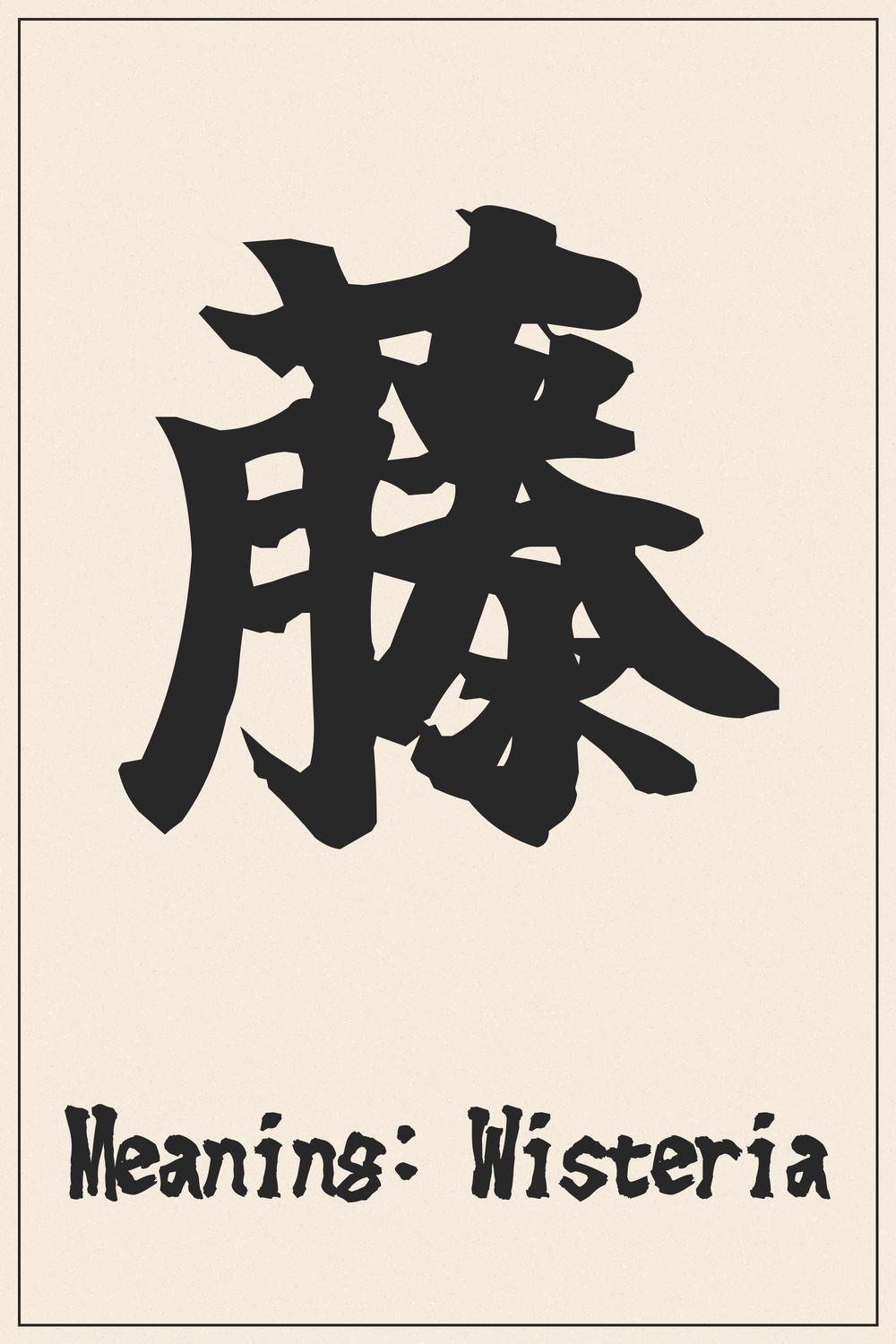
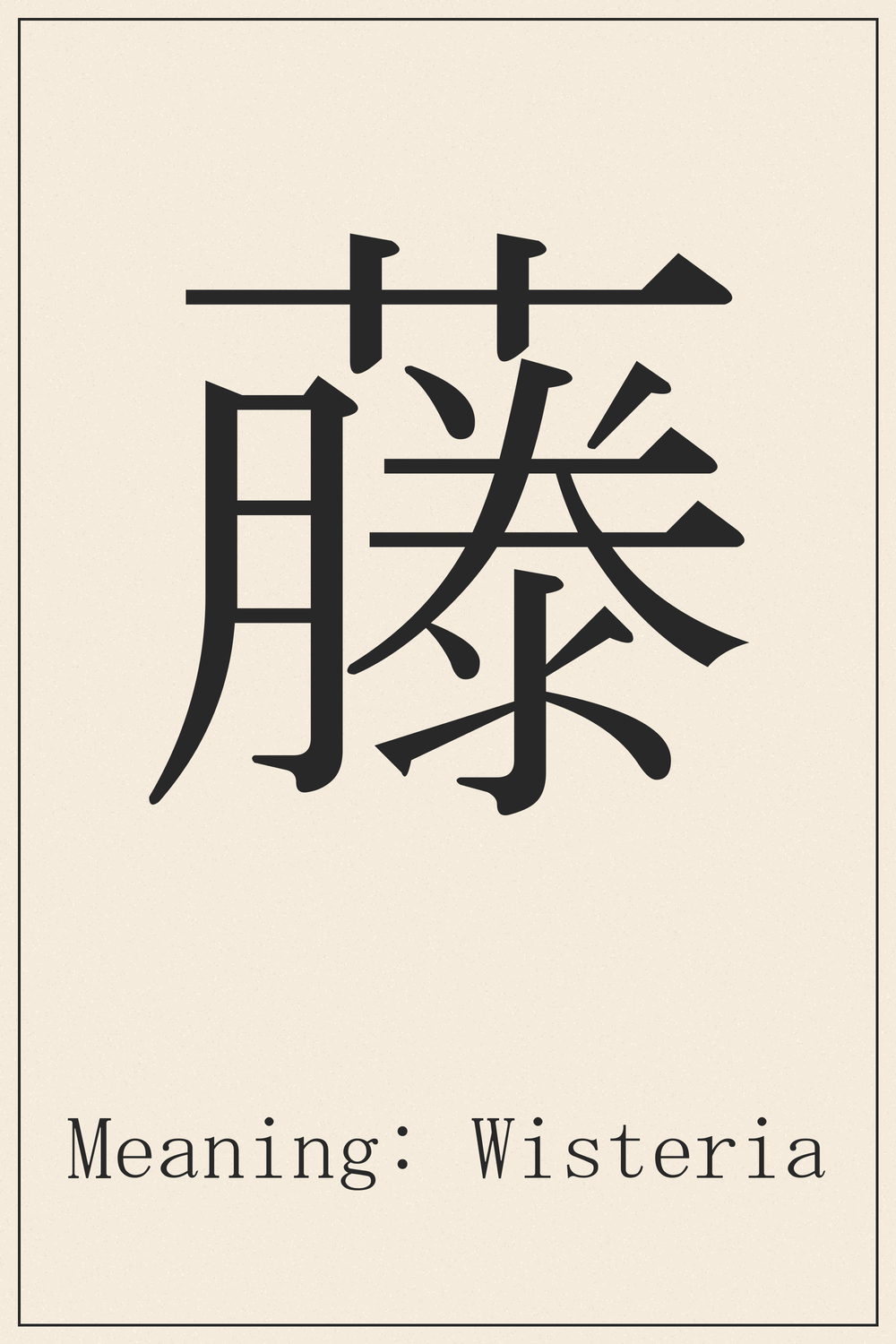
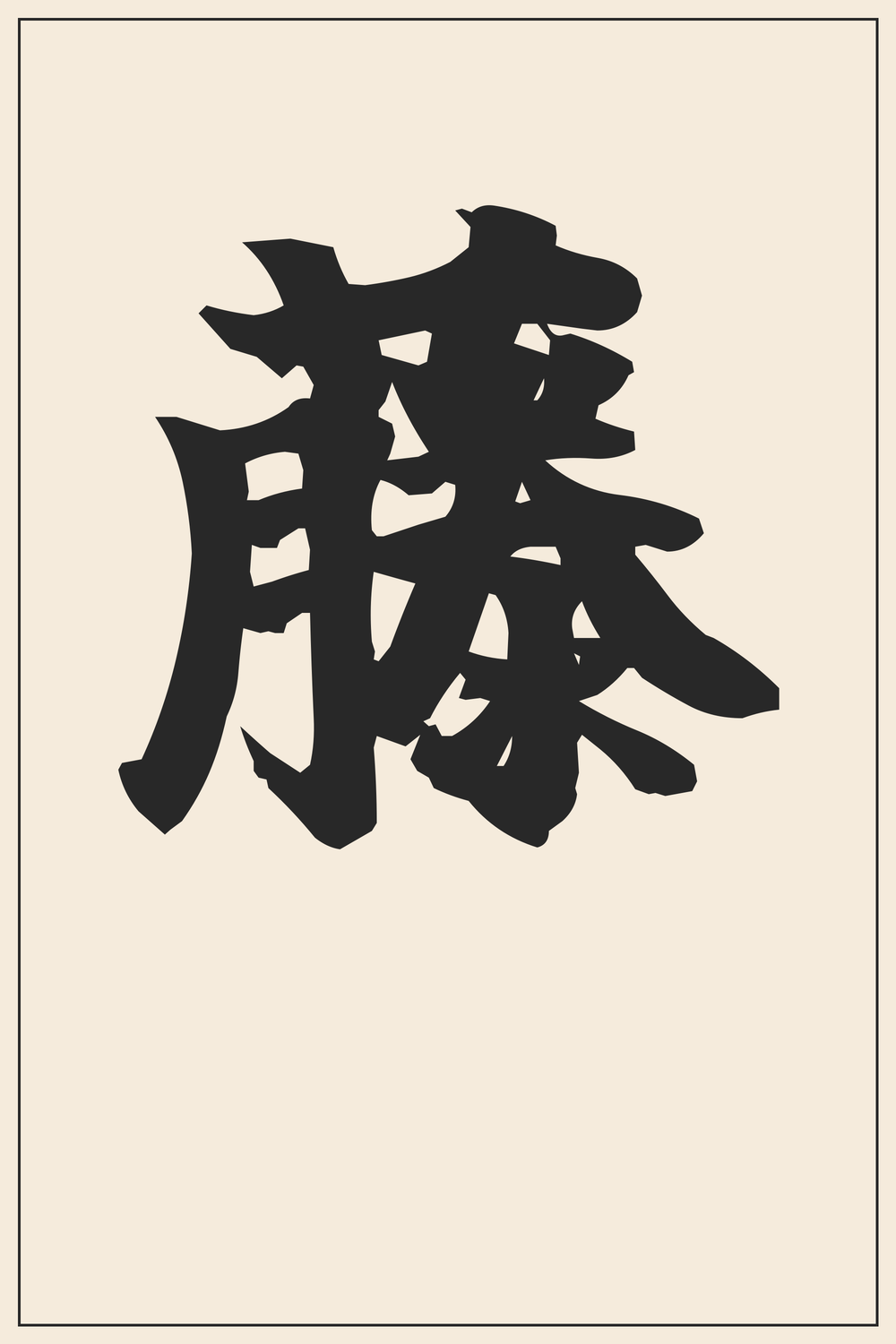
The Kanji for Wisteria, 藤, captures the exquisite beauty and enduring spirit of one of Japan’s most beloved flowering vines. This character embodies a rich cultural heritage, symbolizing elegance, resilience, and deep historical roots.
The atmosphere of a Kanji character changes dramatically depending on the font style. A character that looks elegant in a brush style might look bold and modern in a different font.
Recommendation:
Since a tattoo is permanent, we strongly recommend comparing various font styles beyond what is shown here. Use our designs as a trusted reference for the correct structure, but feel free to explore different artistic variations to find the perfect match for your vision.
The Deep Meaning Behind 藤
The character 藤 combines the radical 艹 (kusakanmuri), representing grass or plants, with 滕, a phonetic component. This latter component suggests the idea of “spreading” or “proliferating,” aptly describing the vigorous growth and trailing nature of the wisteria vine.
In Japan, wisteria (fuji) is deeply symbolic, often associated with beauty, longevity, and immortality. It has been celebrated in classical poetry, art, and is famously linked to the Fujiwara clan, one of Japan’s most powerful aristocratic families, giving it a connotation of nobility and prestige.
Kanji Breakdown
The Kanji 藤 is beautifully composed, reflecting its botanical meaning and intricate form.
Grass/Plant Radical: This top radical, known as kusakanmuri, signifies the character’s association with vegetation, categorizing wisteria as a plant.
Spreading/Trailing Component: This intricate lower section primarily functions as a phonetic element but also visually suggests the wisteria’s characteristic long, trailing vines and its expansive growth.
Conclusion
The Kanji 藤 beautifully encapsulates the essence of the wisteria flower: its flowing grace, tenacious growth, and deep cultural resonance. It stands as a powerful symbol of natural beauty, resilience, and historical elegance.
Choosing 藤 for a tattoo means embracing a symbol that is both visually stunning and profoundly meaningful. Its detailed form requires a skilled hand, ensuring that the elegance and complexity of the wisteria are perfectly captured on your skin.
Comments