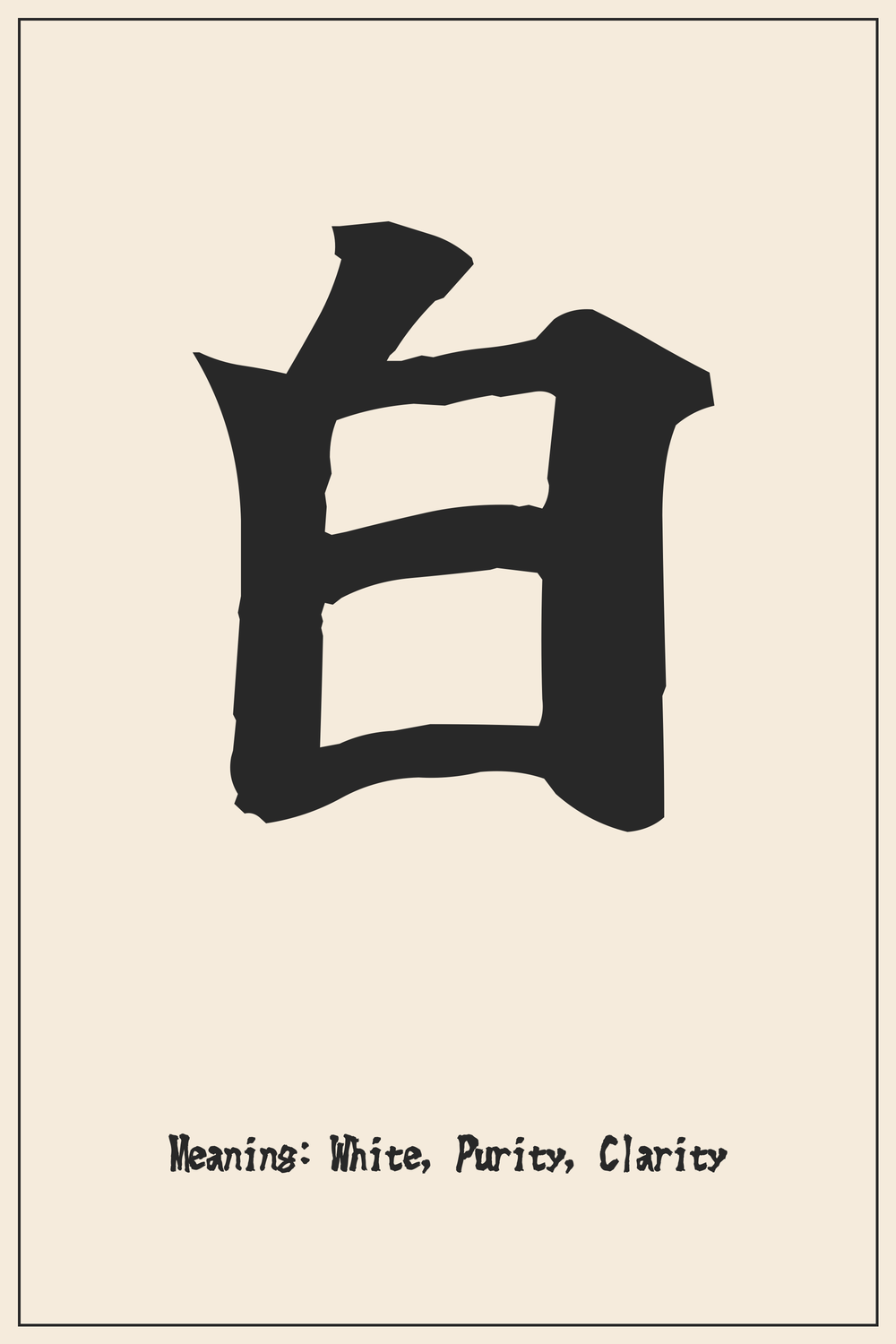
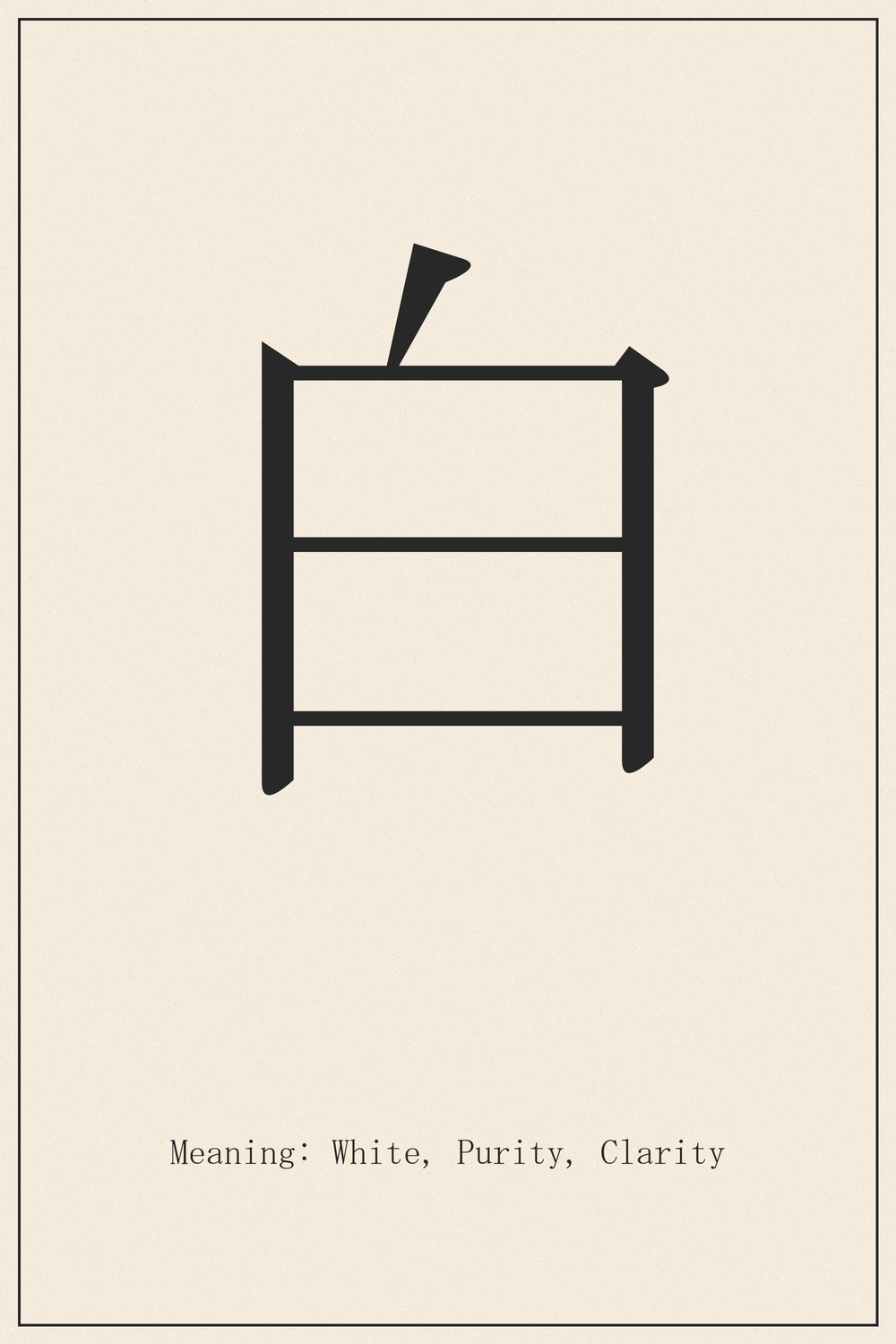
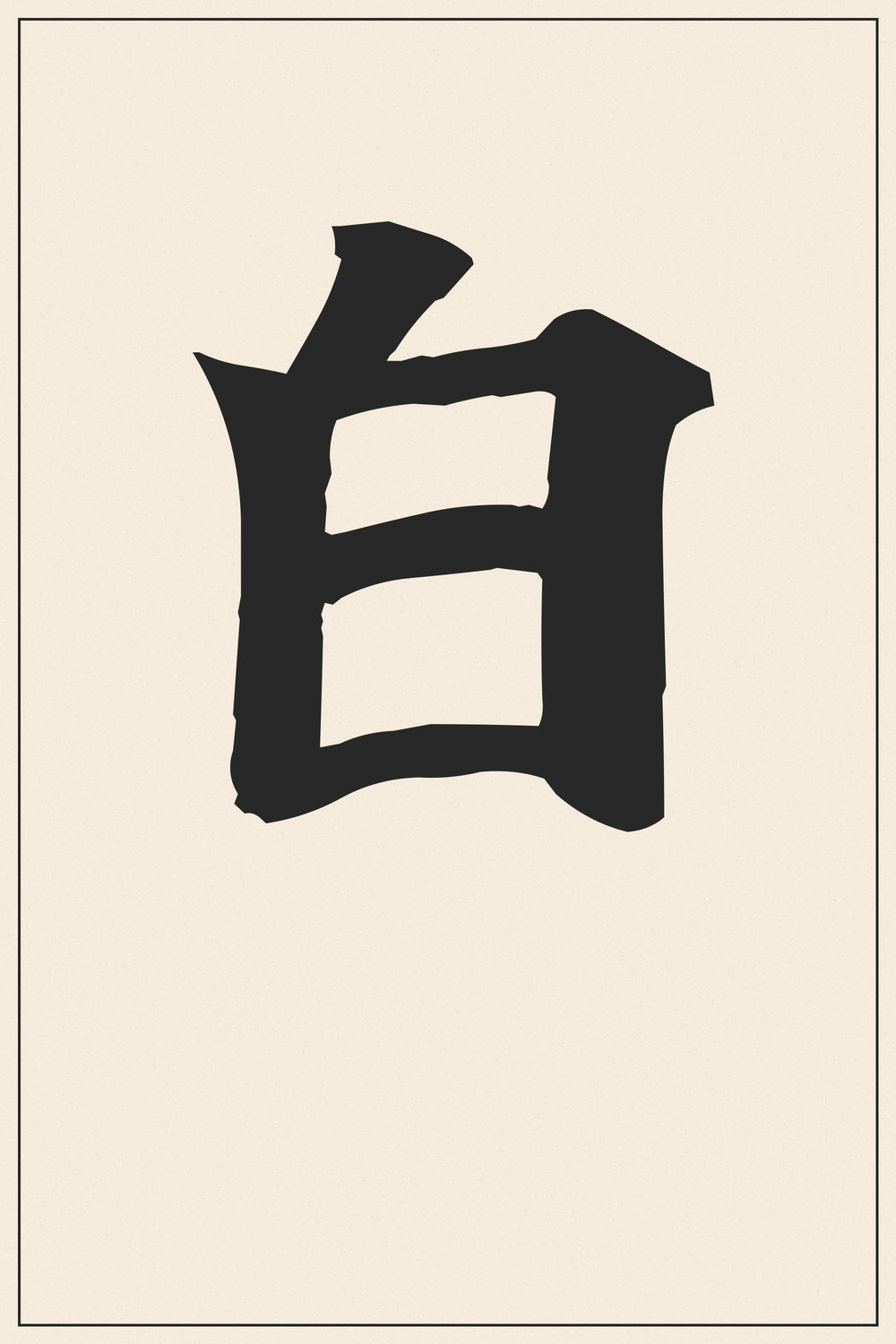
The Kanji 白 embodies the serene essence of ‘white’, a color deeply interwoven with concepts of purity and new beginnings. Its simple form belies a profound symbolism that resonates across Japanese culture.
The atmosphere of a Kanji character changes dramatically depending on the font style. A character that looks elegant in a brush style might look bold and modern in a different font.
Recommendation:
Since a tattoo is permanent, we strongly recommend comparing various font styles beyond what is shown here. Use our designs as a trusted reference for the correct structure, but feel free to explore different artistic variations to find the perfect match for your vision.
The Deep Meaning Behind 白
The Kanji 白, pronounced ‘shiro’ or ‘haku’, is an ideogram that traditionally represented a white acorn or possibly a pictograph of a human thumb, often painted white for ancient rituals. Over time, its meaning evolved to universally signify ‘white’, associating directly with brightness and luminosity.
In Japanese culture, 白 holds deep significance, primarily symbolizing purity, innocence, and sacredness. It is prominently featured in Shinto rituals, where white garments and offerings signify cleanliness and sincerity. White also represents new beginnings, often seen in bridal attire, and is sometimes associated with truth and clarity of mind, making it a compelling symbol beyond its literal color definition.
Kanji Breakdown
The character 白 is a fundamental single ideogram.
Meaning: This character itself means ‘white’. Its ancient form is believed to depict a bright object or a thumb painted white, signifying luminosity and purity.
Conclusion
The Kanji 白 is more than just a color; it encapsulates profound concepts of purity, clarity, and sacredness deeply ingrained in Japanese thought. It represents a clean slate, spiritual sincerity, and the unblemished truth, making it a powerful emblem for personal values.
For a tattoo, 白 serves as a timeless and elegant declaration of one’s commitment to these virtues. Its simple, balanced strokes offer a visually striking design that carries significant depth and meaning, making it an excellent choice for those seeking a symbol of inner clarity and pure intention.
Comments