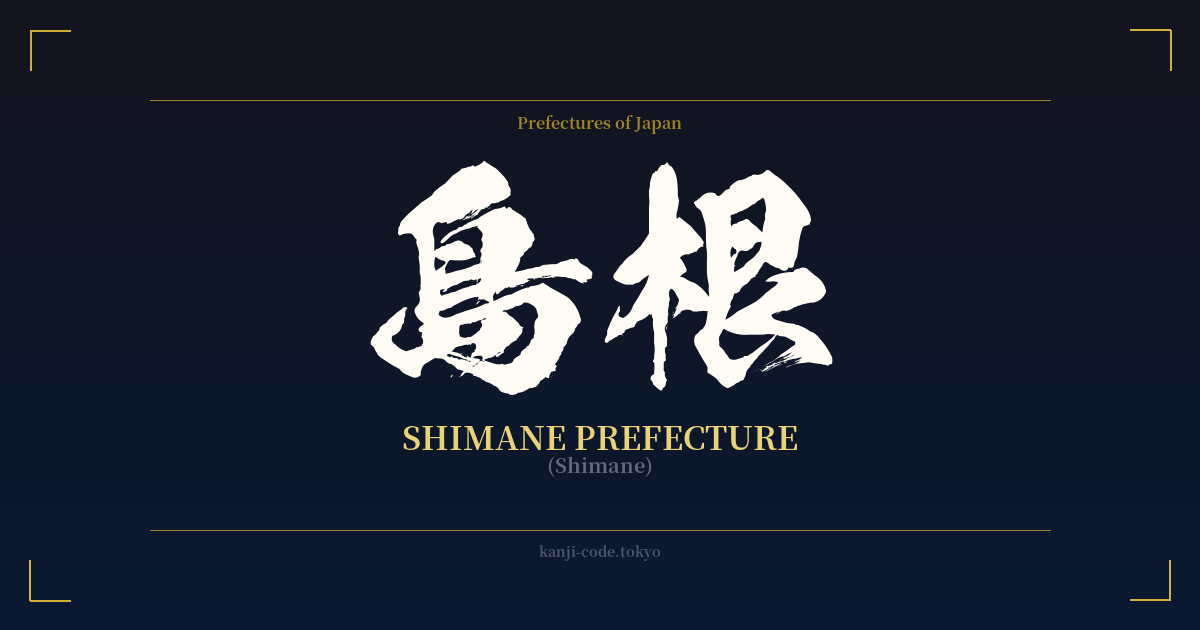
✍️ 島根 (Shimane) — Cultural Context
The name 島根 (Shimane) literally translates to "island root." This simple yet evocative name belongs to a prefecture on the Sea of Japan coast, a region steeped in the very oldest layers of Japanese mythology and history. Far from the bustling metropolises of Tokyo and Osaka, Shimane is often called "Kami-gami no Kuni"—the Land of the Gods.
This title is not mere hyperbole. Shimane is home to the Izumo Taisha, or Izumo Grand Shrine, one of the most ancient and significant Shinto shrines in all of Japan. According to the nation's oldest chronicles, the Kojiki and Nihon Shoki, the gods of Japan gather here once a year, in the tenth month of the traditional lunar calendar. While the rest of Japan calls this month Kannazuki (the month without gods), in the Izumo region, it is known as Kamiarizuki—the month with gods.
The mythology of this land centers around powerful deities like Susanoo-no-Mikoto and Ōkuninushi, the latter of whom is said to have surrendered his rule over the earthly realm to the heavenly deities in exchange for the magnificent shrine at Izumo. This act establishes the region as a foundational point of contact between the human and divine worlds, a spiritual origin for the Japanese nation.
The name "Island Root" perfectly captures this essence. 島 (shima) means "island," a direct reference to the Japanese archipelago. 根 (ne) means "root," signifying an origin, a foundation, or a source. Together, 島根 can be interpreted as the spiritual root of the islands of Japan. It speaks to a place where the country's identity is anchored in myth, nature, and ancient tradition.
Beyond its mythological weight, Shimane's landscape reinforces this feeling of timelessness. It features a rugged, dramatic coastline, misty mountains, and the remote Oki Islands. This geography has historically isolated the region, preserving its unique cultural heritage and fostering a deep connection to the natural world. Choosing the name 島根 is to invoke this profound sense of history, spirituality, and foundational identity.
🖌️ Font Styles for 島根
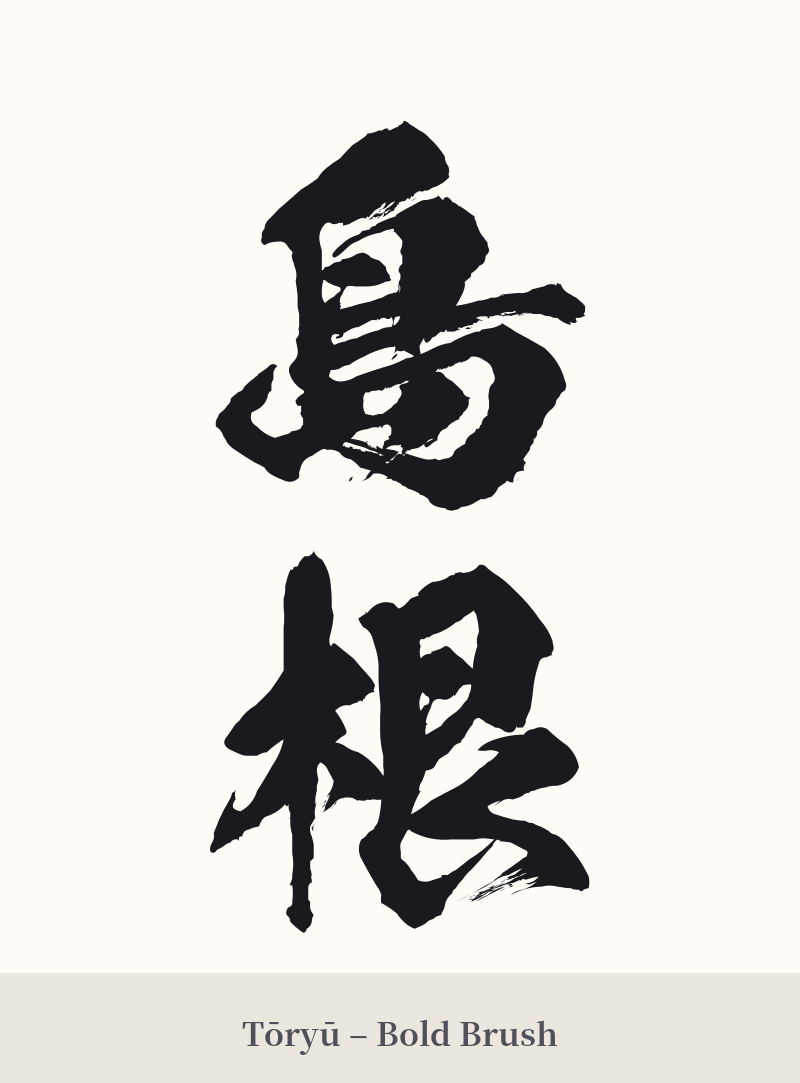
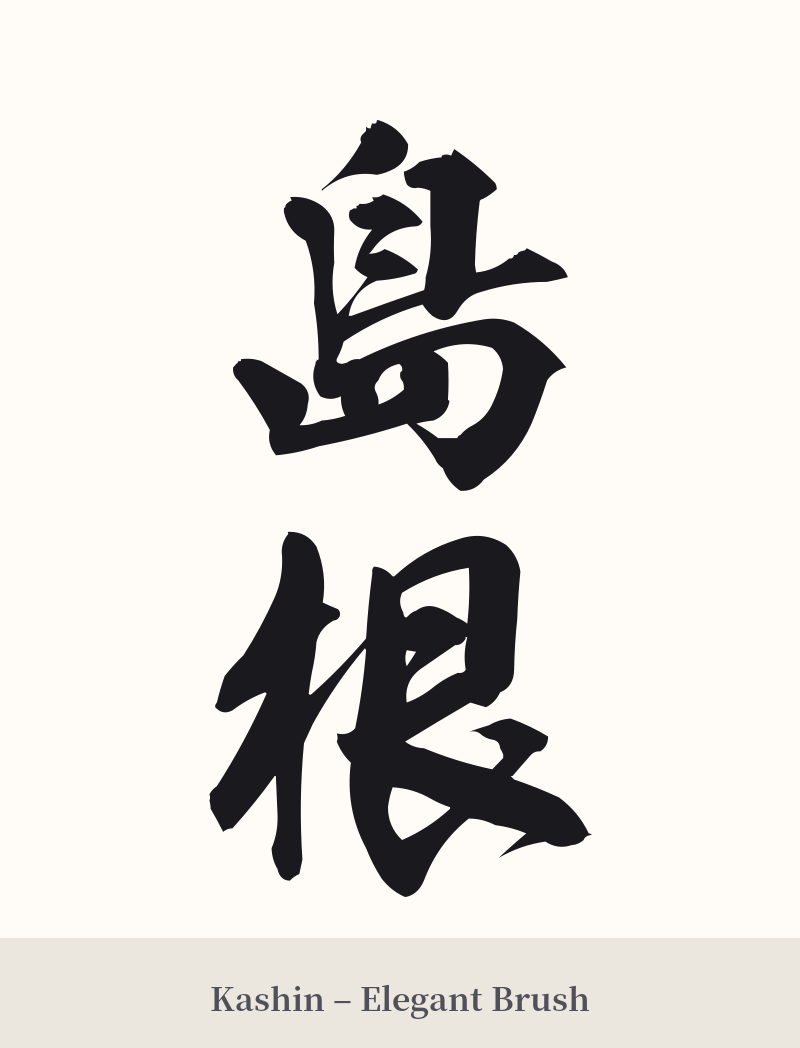
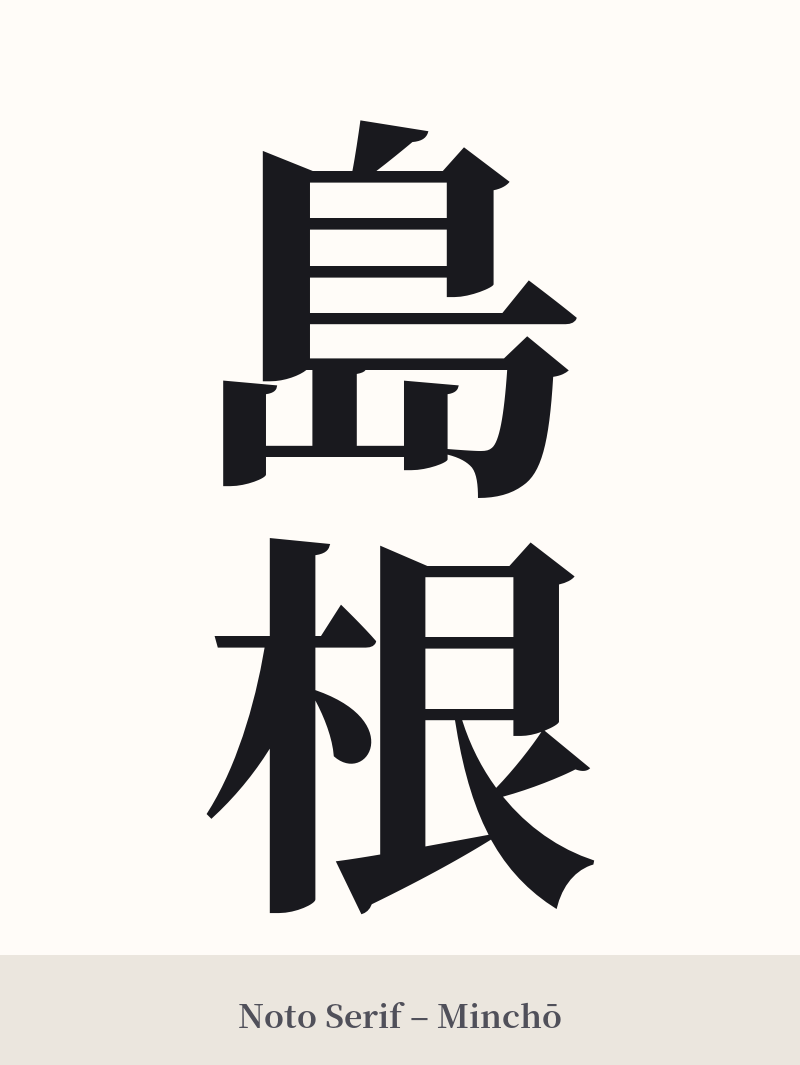
The same kanji can look dramatically different depending on the calligraphy style. Choose a font that matches the mood you want for your tattoo or design.
🎨 Tattoo Suitability
📐 Tattoo Design Guide
The two characters in 島根 (Shimane) offer a balanced and stable visual. For a tattoo, a vertical alignment is highly recommended, as it mirrors traditional Japanese writing and creates an elegant flow.
– Placement: A vertical design works well on the forearm, calf, or along the spine. For a horizontal layout, the chest or upper back are suitable locations.
– Font Style: To honor its mythological roots, a semi-cursive (gyōsho) or cursive (sōsho) calligraphy style would be ideal. These styles add a sense of history and fluidity. For a more modern and stark look, a crisp Mincho (serif) font can also be effective, emphasizing the clean lines of the characters.
– Visual Elements: Consider pairing the kanji with imagery related to the region. Common motifs include stylized clouds (referencing Izumo, the 'land of rising clouds'), a silhouette of the Izumo Grand Shrine's unique architecture, or waves from the Sea of Japan to frame the characters.
Comments