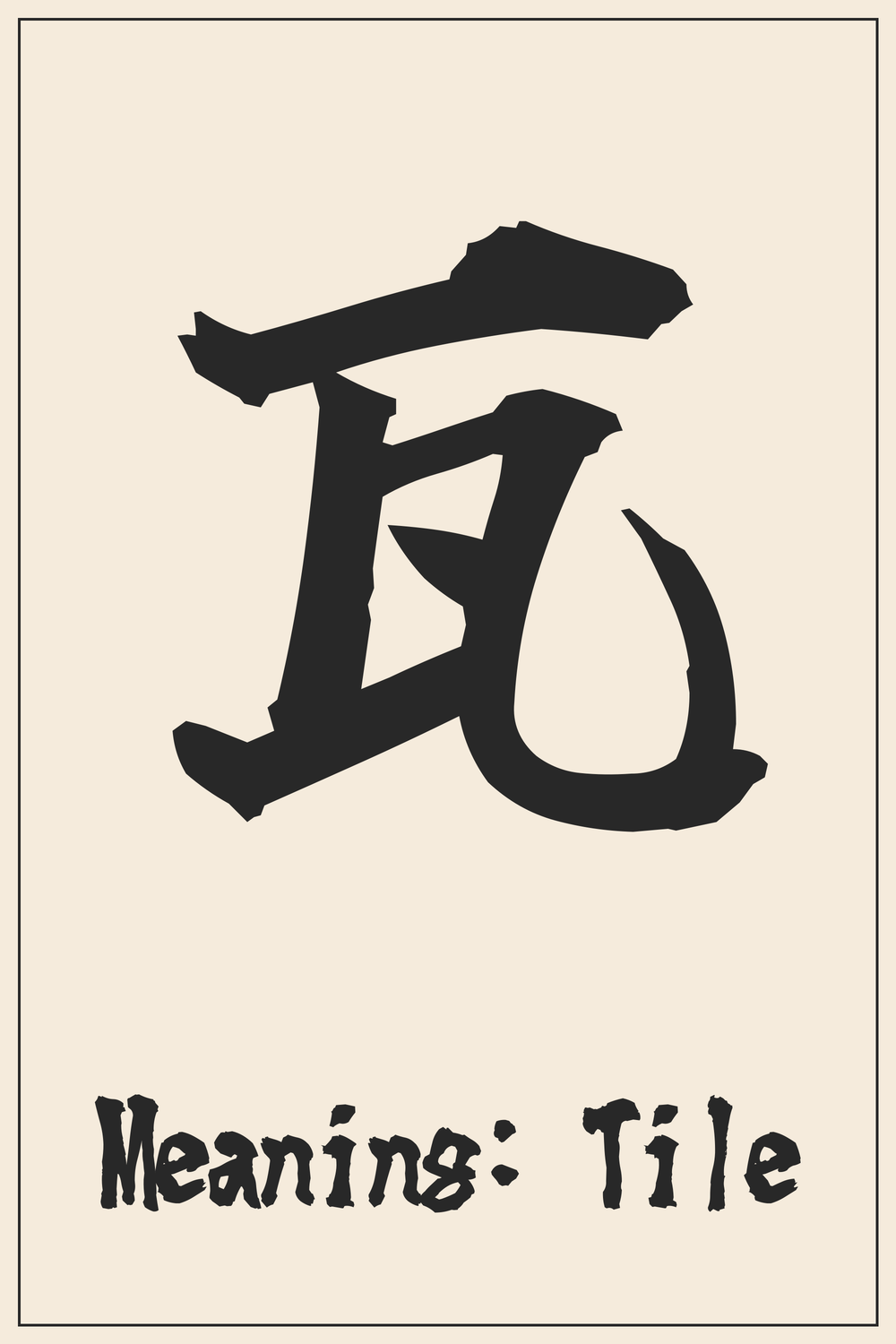
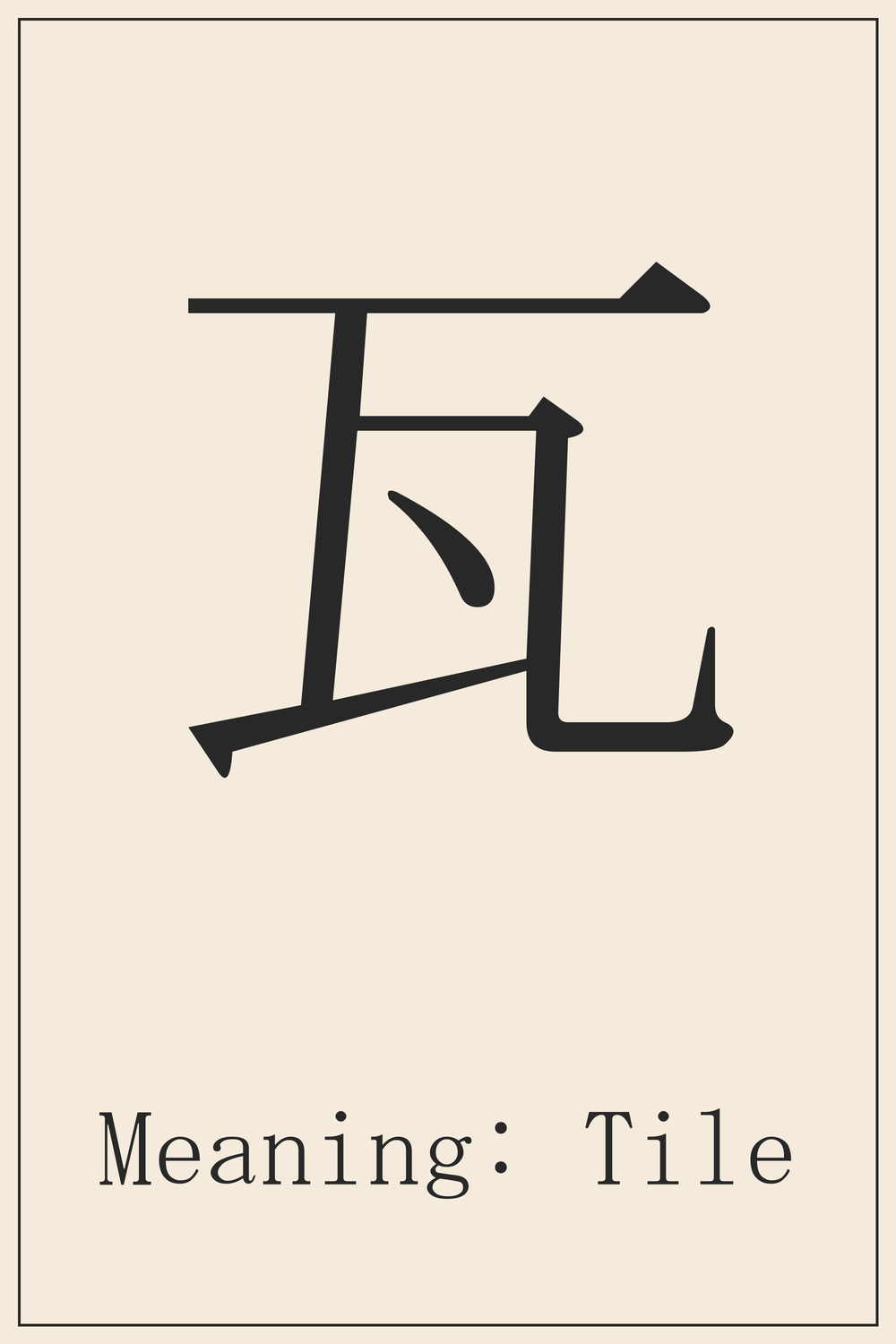
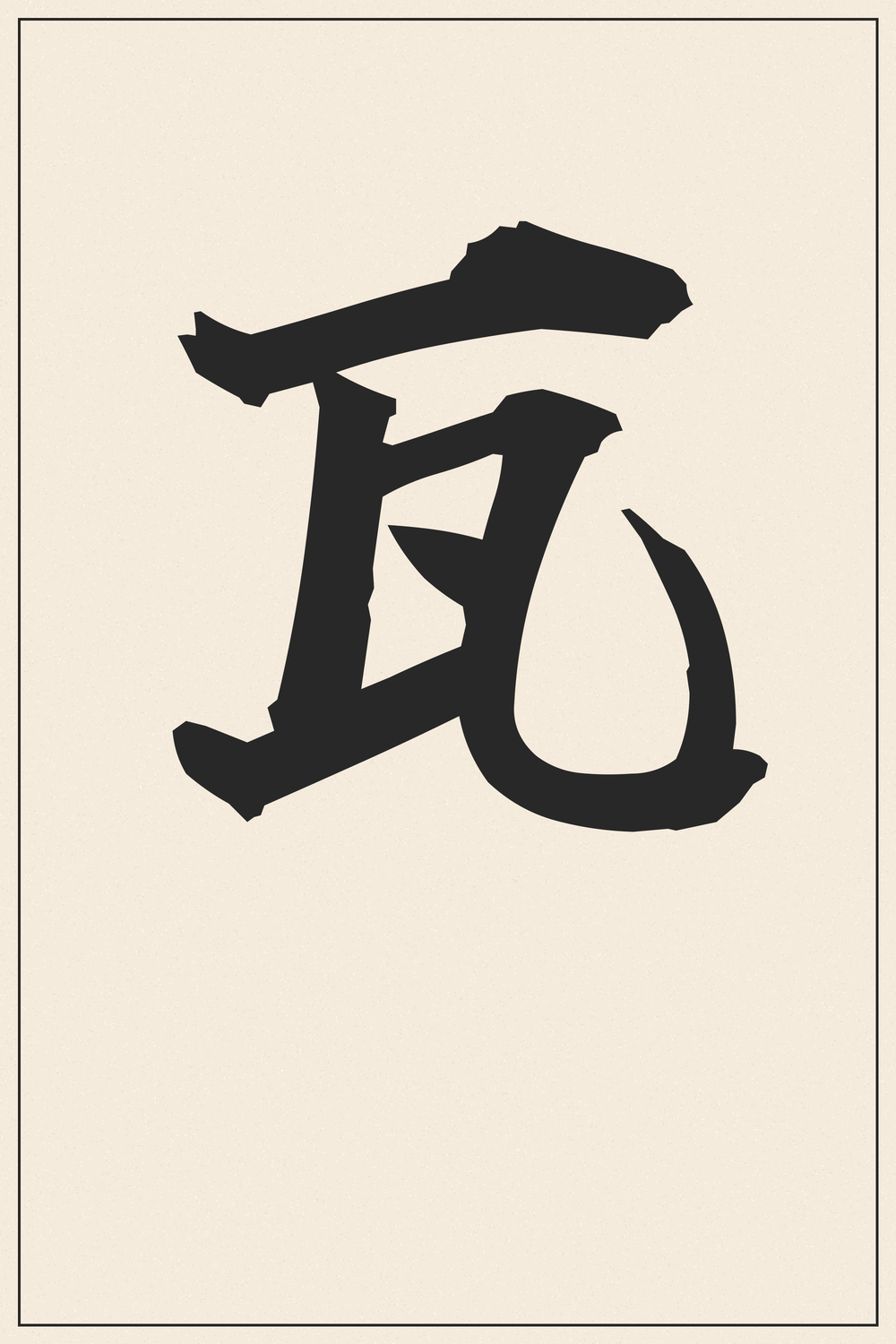
The Kanji 瓦 (Kawara) embodies the quiet strength and enduring beauty of traditional Japanese architecture. It represents not just a material object, but a cultural cornerstone that protects and defines the landscape.
The atmosphere of a Kanji character changes dramatically depending on the font style. A character that looks elegant in a brush style might look bold and modern in a different font.
Recommendation:
Since a tattoo is permanent, we strongly recommend comparing various font styles beyond what is shown here. Use our designs as a trusted reference for the correct structure, but feel free to explore different artistic variations to find the perfect match for your vision.
The Deep Meaning Behind 瓦
The Kanji 瓦 is a pictograph depicting a roof tile. Its ancient form clearly illustrates the curved shape of a traditional tile, demonstrating its utilitarian origin. This direct visual connection establishes the character’s core meaning.
In Japan, 瓦 (kawara) roof tiles are iconic, especially for temples, shrines, and traditional houses. Made from natural clay, they symbolize durability, protection, and the rich architectural heritage of the nation, providing a distinct aesthetic that blends seamlessly into the natural landscape through all seasons.
Kanji Breakdown
The Kanji 瓦 is a single character that inherently represents its meaning, serving as both a character and a radical.
Meaning: Tile, earthenware.
The character itself is a radical and a pictographic representation of a roof tile, conveying its meaning directly through its shape, which evokes the curved form of a traditional ceramic tile.
Conclusion
The Kanji 瓦, while seemingly simple, carries the essence of enduring Japanese craftsmanship and architectural tradition. It speaks of shelter, resilience, and the beauty found in functional design, deeply connected to the earth from which it originates and the elements it withstands.
For a tattoo, 瓦 might appeal to those who appreciate the subtle strength of heritage, the artistry of everyday objects, or a connection to traditional Japanese aesthetics. It offers a unique symbol of foundational integrity and protection, a quiet testament to enduring form.
Comments