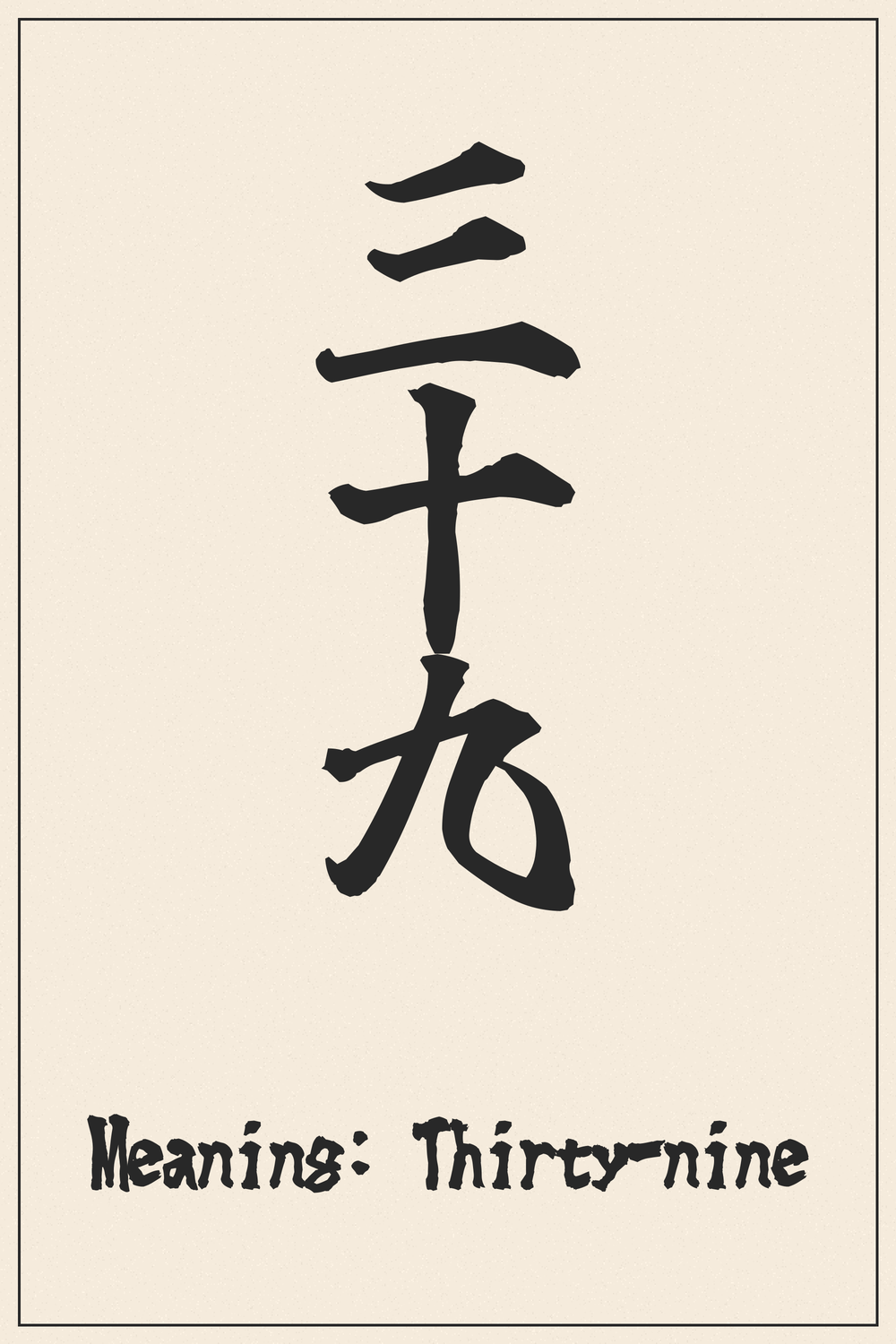
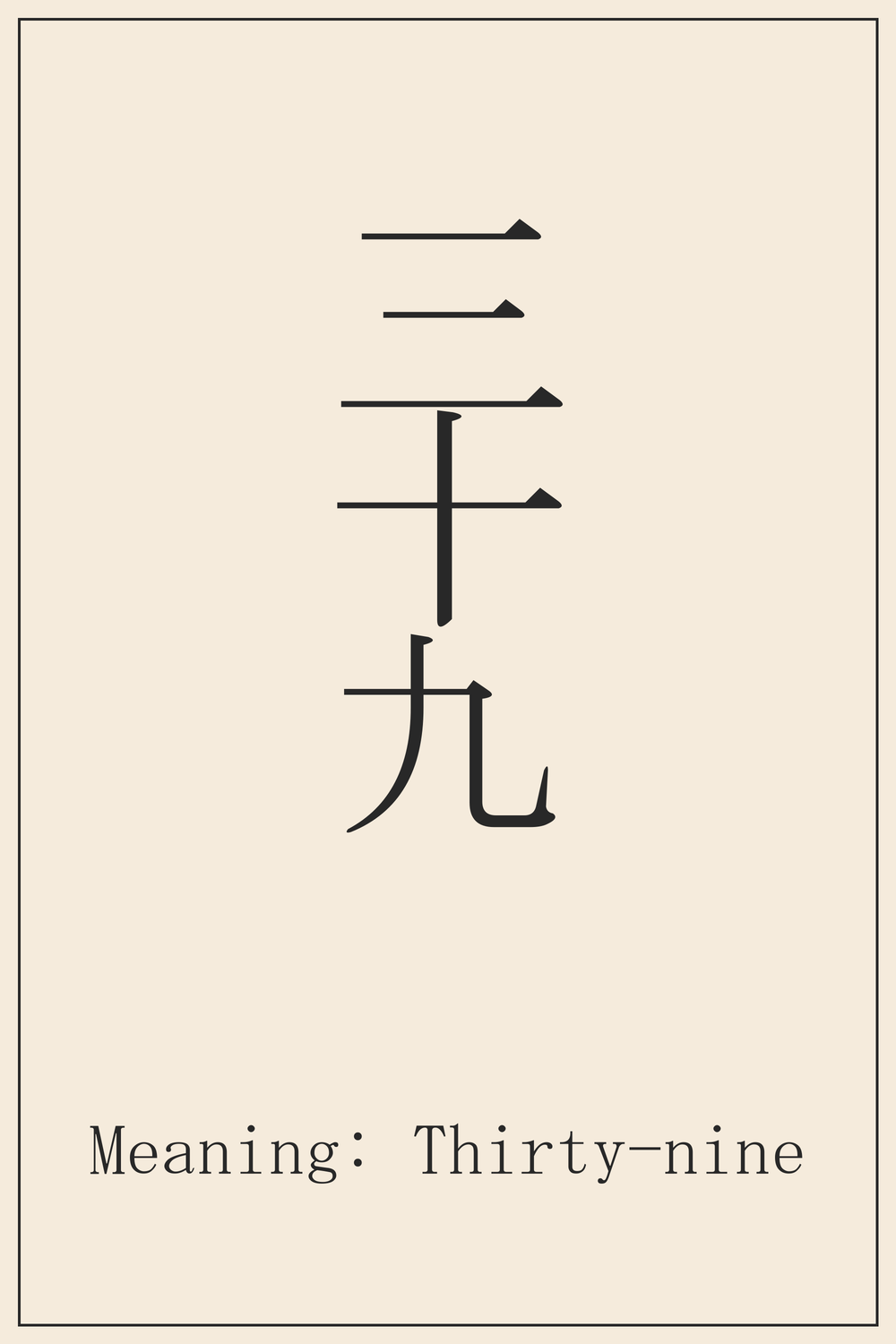

The kanji compound ‘三十九’ precisely represents the numerical value of thirty-nine, embodying clarity and directness in its meaning. It stands as a straightforward symbol of quantity, free from complex interpretations.
The atmosphere of a Kanji character changes dramatically depending on the font style. A character that looks elegant in a brush style might look bold and modern in a different font.
Recommendation:
Since a tattoo is permanent, we strongly recommend comparing various font styles beyond what is shown here. Use our designs as a trusted reference for the correct structure, but feel free to explore different artistic variations to find the perfect match for your vision.
The Deep Meaning Behind 三十九
三十九 (Sanjuukyuu) is a direct numerical representation in Japanese, combining the kanji for ‘three’ (三), ‘ten’ (十), and ‘nine’ (九). This compound structure forms ‘three tens and nine,’ precisely translating to thirty-nine.
Each character holds an ancient origin as a cardinal number, with 三 being a simple pictogram of three horizontal lines, 十 likely a tally mark for ten, and 九 an ancient symbol for nine. Their combination adheres to the classical East Asian method of forming larger numbers.
Kanji Breakdown
The compound ‘三十九’ is formed by three fundamental numerical kanji, each contributing to its precise quantitative meaning.
Three: This kanji is a simple pictogram of three horizontal lines, directly representing the number three. Its ancient form is largely unchanged, embodying clarity and fundamental quantity.
Ten: Representing the number ten, this kanji may have originated from a vertical tally mark crossed to indicate completion or a bundle of ten. It signifies a complete unit in numerical systems.
Nine: This character signifies the number nine. Its ancient etymology is less clear but it has consistently represented this cardinal value throughout history, symbolizing completeness before a new cycle of ten.
Conclusion
The kanji ‘三十九’ offers a clear and unambiguous representation of the number thirty-nine. It is a symbol of directness, indicating a specific quantity without hidden layers of meaning, embodying precision and numerical truth.
Choosing ‘三十九’ for a tattoo is a statement of numerical precision and simplicity. Its clean lines and balanced composition make it an aesthetically pleasing choice for those who appreciate straightforward symbolism or a personally significant number, serving as a constant reminder of a specific count or moment.
Comments