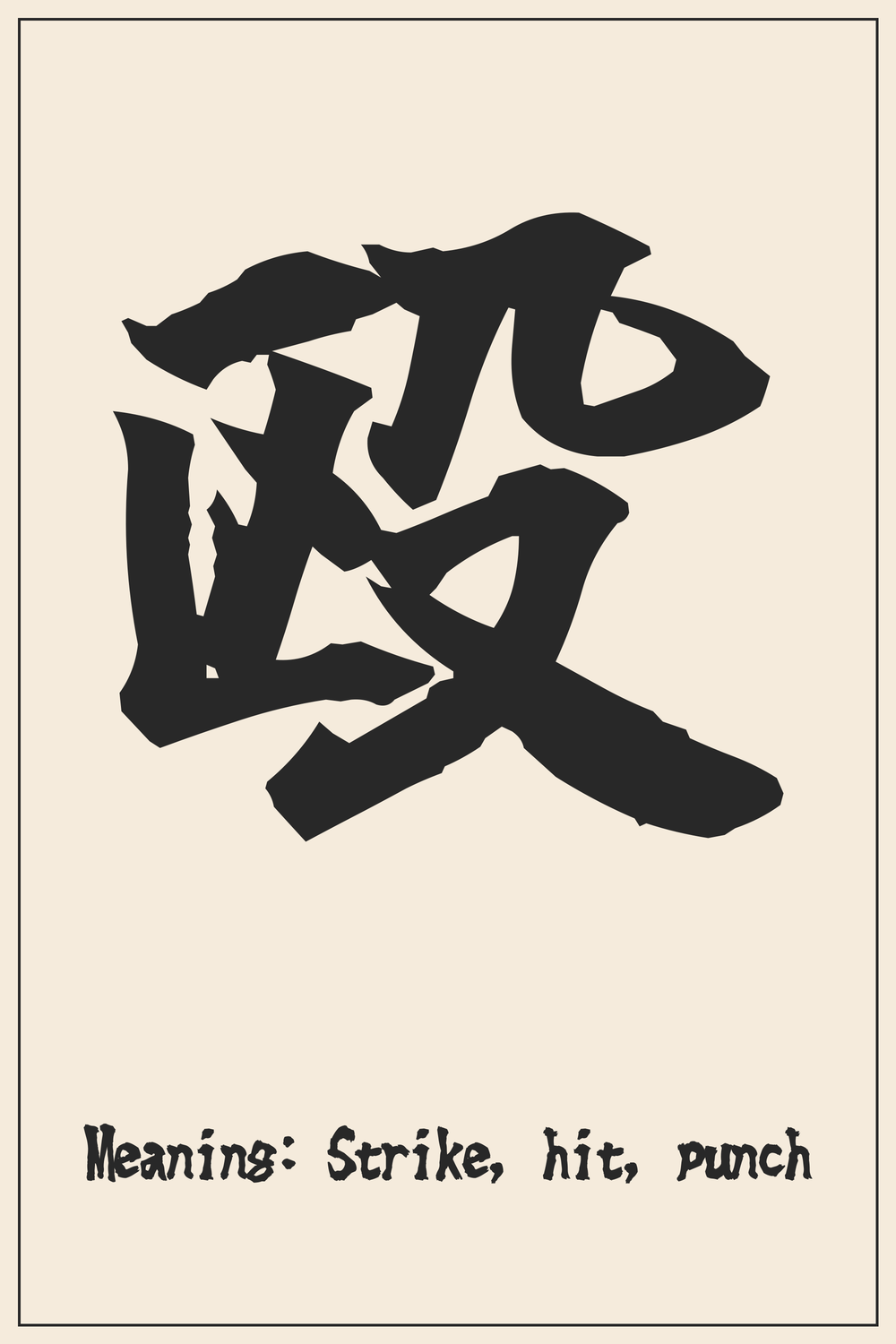
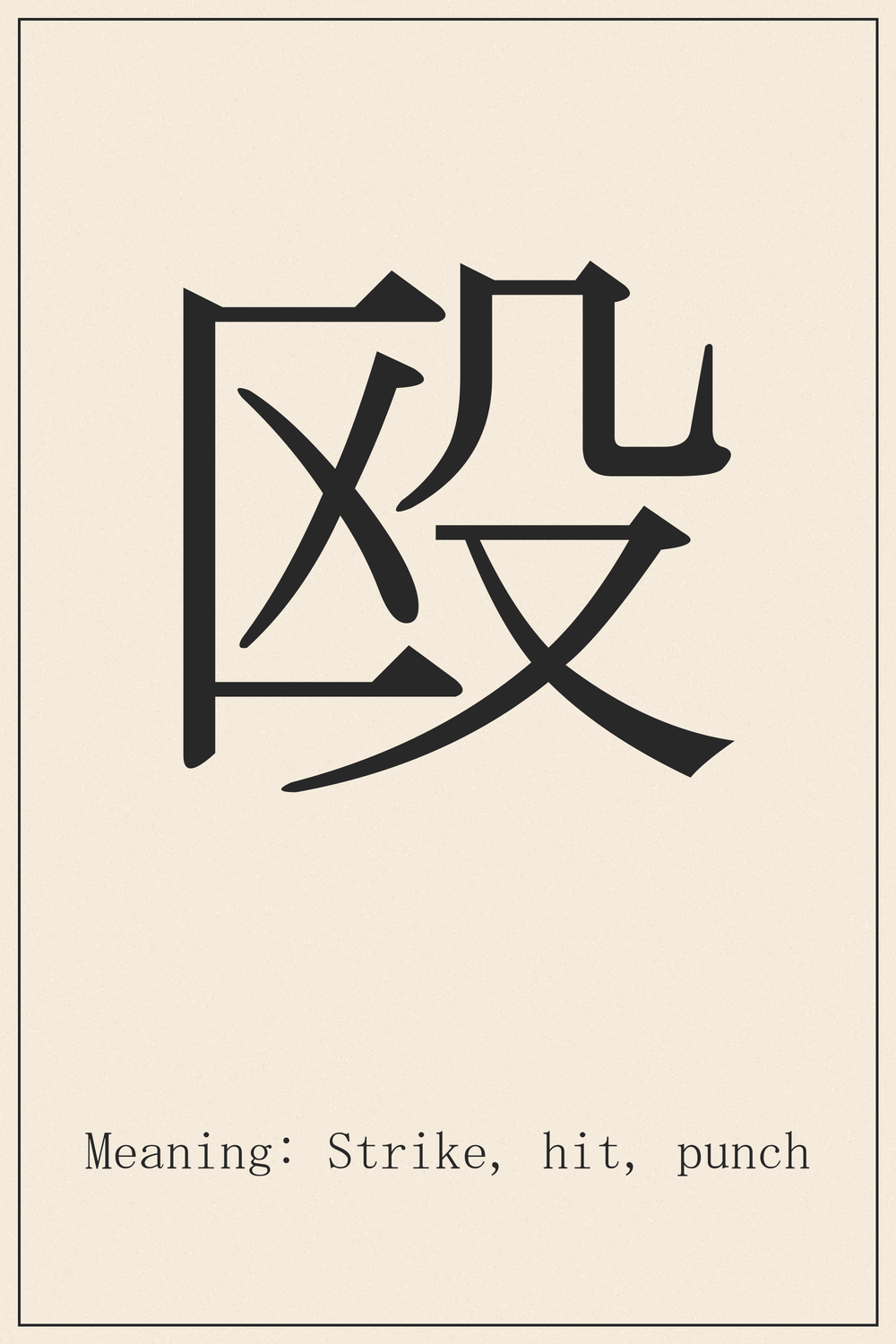
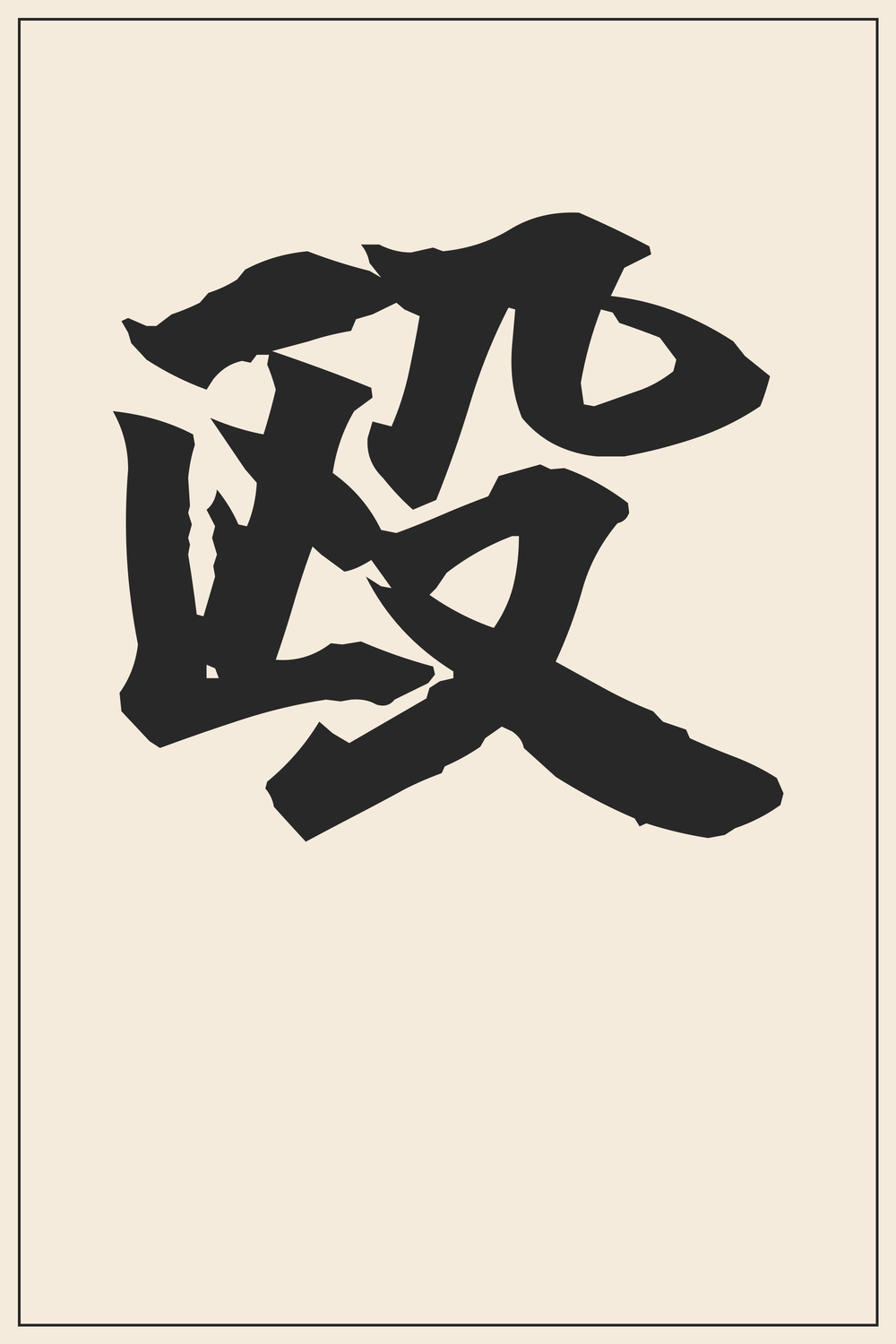
The Kanji 殴 embodies the raw, impactful action of striking. It represents a direct physical confrontation, a forceful assertion of power through a blow.
The atmosphere of a Kanji character changes dramatically depending on the font style. A character that looks elegant in a brush style might look bold and modern in a different font.
Recommendation:
Since a tattoo is permanent, we strongly recommend comparing various font styles beyond what is shown here. Use our designs as a trusted reference for the correct structure, but feel free to explore different artistic variations to find the perfect match for your vision.
The Deep Meaning Behind 殴
The character 殴 (naguru) is formed by combining 殳 (hoko-zukuri), a radical related to hitting or striking with a weapon, and 区 (ku), which acts as a phonetic component but also subtly implies division or separation, potentially referencing the impact of a blow.
Historically, 殳 depicts a hand holding a weapon, emphasizing forceful action and direct engagement. This visual foundation reinforces the Kanji’s primary meaning of striking. In Japanese culture, 殴 is almost exclusively used in contexts referring to physical assault or fighting.
It lacks any positive or metaphorical interpretations, making its usage straightforward and unambiguous. Unlike Kanji that symbolize strength in a virtuous sense, 殴 represents a destructive application of force, deeply rooted in the concept of inflicting a physical blow.
Kanji Breakdown
The Kanji 殴 is composed of two primary elements that convey its meaning of striking and hitting.
Weapon/Strike: This radical fundamentally signifies an act of hitting, often with a tool or weapon. It forms the core semantic component of 殴.
Division/Sound: While primarily a phonetic component guiding the pronunciation, 区 also carries nuances of dividing or separating, which can be metaphorically linked to the impact of a strike separating objects or causing a rift.
Conclusion
The Kanji 殴 explicitly denotes the act of striking or punching, embodying physical confrontation and aggression without ambiguity. Its etymological roots firmly establish its connection to forceful impact.
Due to its direct association with violence, this kanji is widely considered unsuitable for tattoos. A Kanji tattoo typically seeks to convey positive, empowering, or philosophical messages, making 殴 a choice that would likely be misinterpreted or carry an undesirable resonance.
Comments