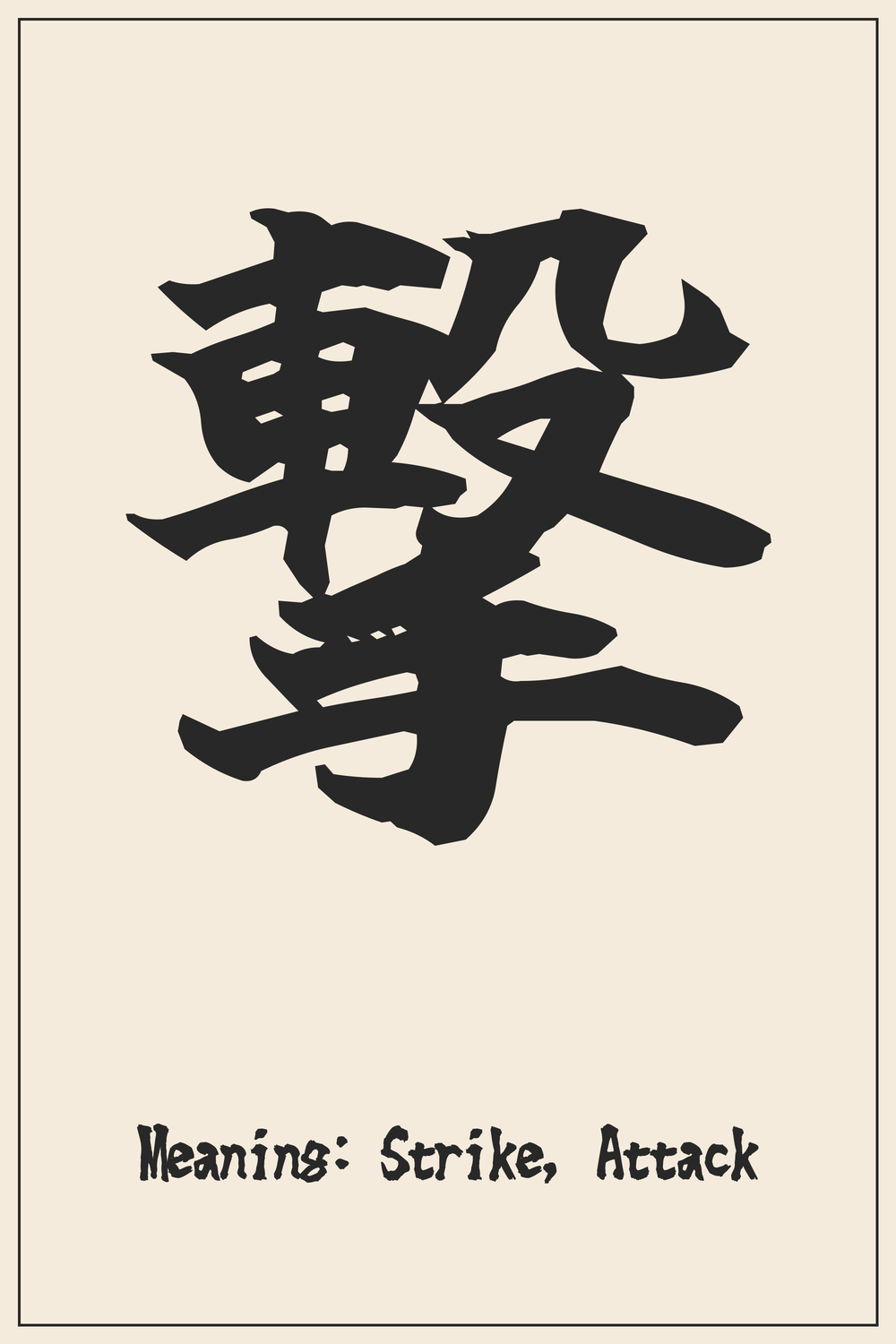
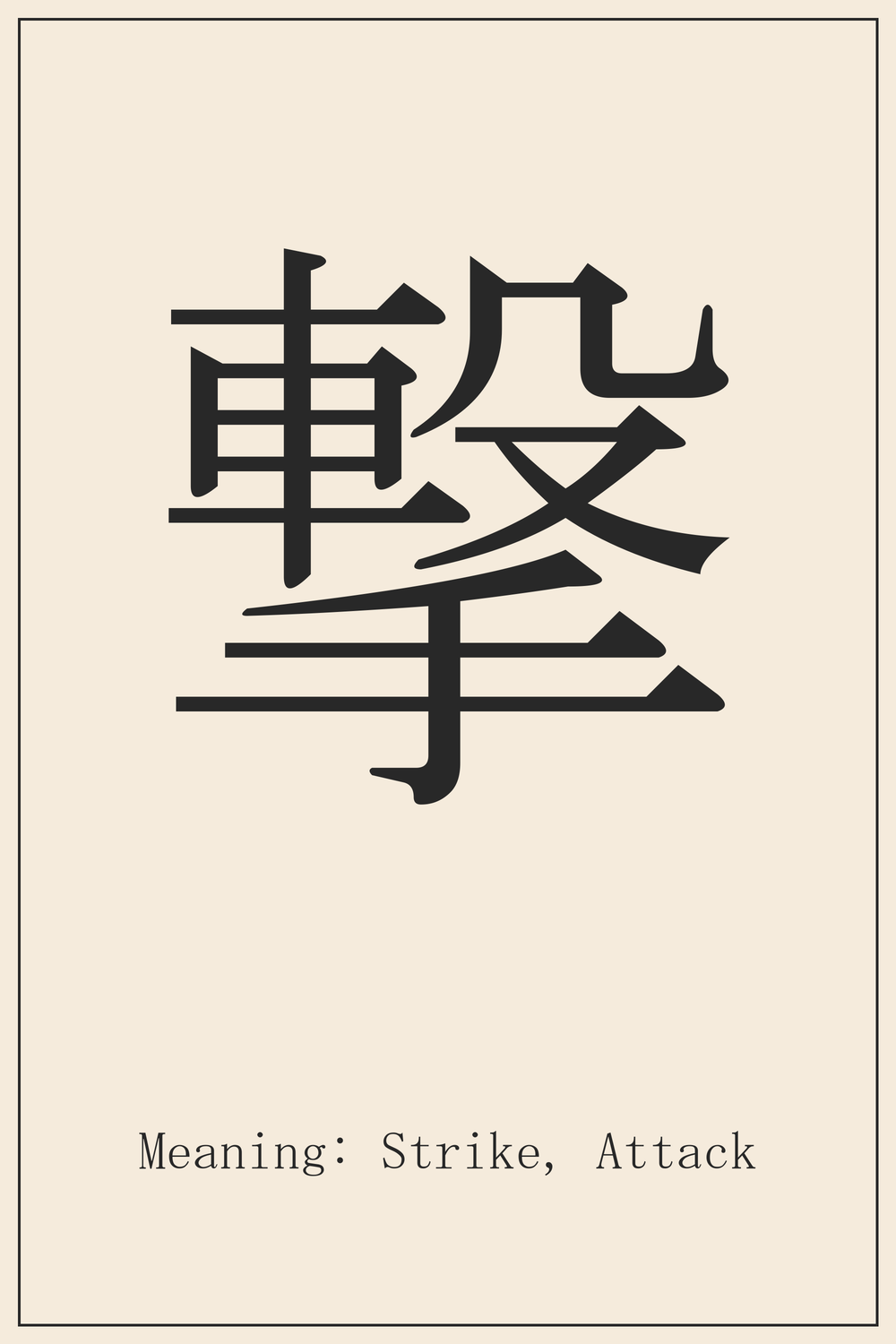
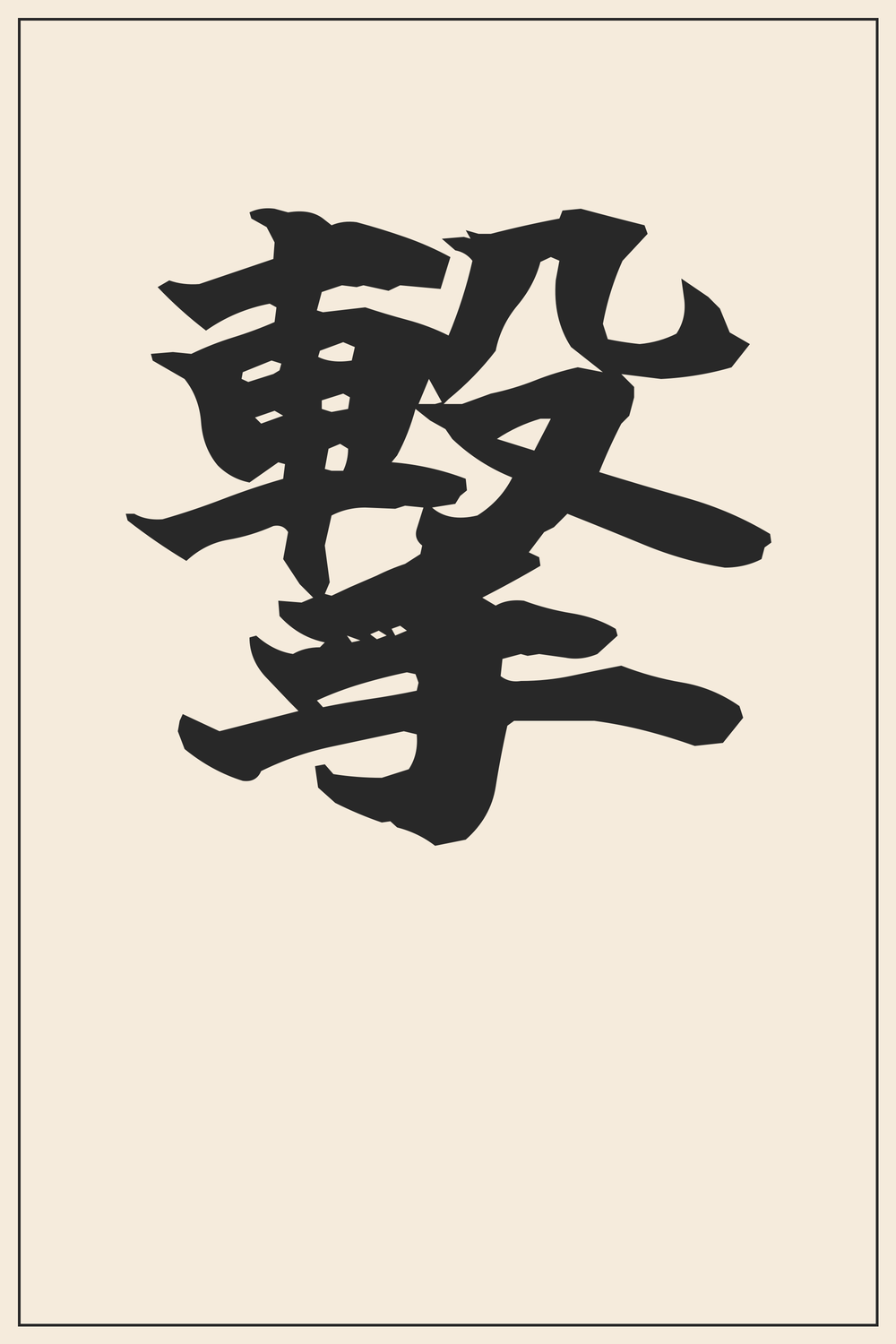
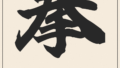
The Kanji 撃 embodies raw power and decisive action, representing the fundamental act of striking or attacking. It is a symbol of impact, force, and direct confrontation.
The atmosphere of a Kanji character changes dramatically depending on the font style. A character that looks elegant in a brush style might look bold and modern in a different font.
Recommendation:
Since a tattoo is permanent, we strongly recommend comparing various font styles beyond what is shown here. Use our designs as a trusted reference for the correct structure, but feel free to explore different artistic variations to find the perfect match for your vision.
The Deep Meaning Behind 撃
The character 撃 combines the radical 扌 (tehen), meaning “hand” or indicating an action performed with the hand, with the component 毄. This structure immediately conveys a physical, direct engagement.
The component 毄 itself graphically represents the act of striking, originally combining 殳 (a hand holding a weapon or stick) and 𠙵 (often interpreted as a target or a mouth/sound component). Together, these elements crystallize the meaning of a forceful impact.
Kanji Breakdown
The Kanji 撃 is composed of two primary elements that convey its core meaning of striking and attacking.
Meaning: Hand radical (Tehen)
Explanation: This radical signifies actions or objects related to the hand, emphasizing the physical act involved in “striking.”
Meaning: Strike, Hit
Explanation: This complex component carries the primary semantic and phonetic weight for “strike” or “hit,” depicting the action of impacting something with force.
Conclusion
The Kanji “撃” powerfully conveys the essence of striking, attacking, and making a decisive impact. It represents the ability to act with force and determination, whether in combat or in confronting life’s challenges.
For a tattoo, 撃 serves as a profound reminder of one’s inner strength and the courage to face obstacles head-on. Its bold strokes and clear meaning make it an excellent choice for a design that symbolizes power, action, and resolve.
Comments