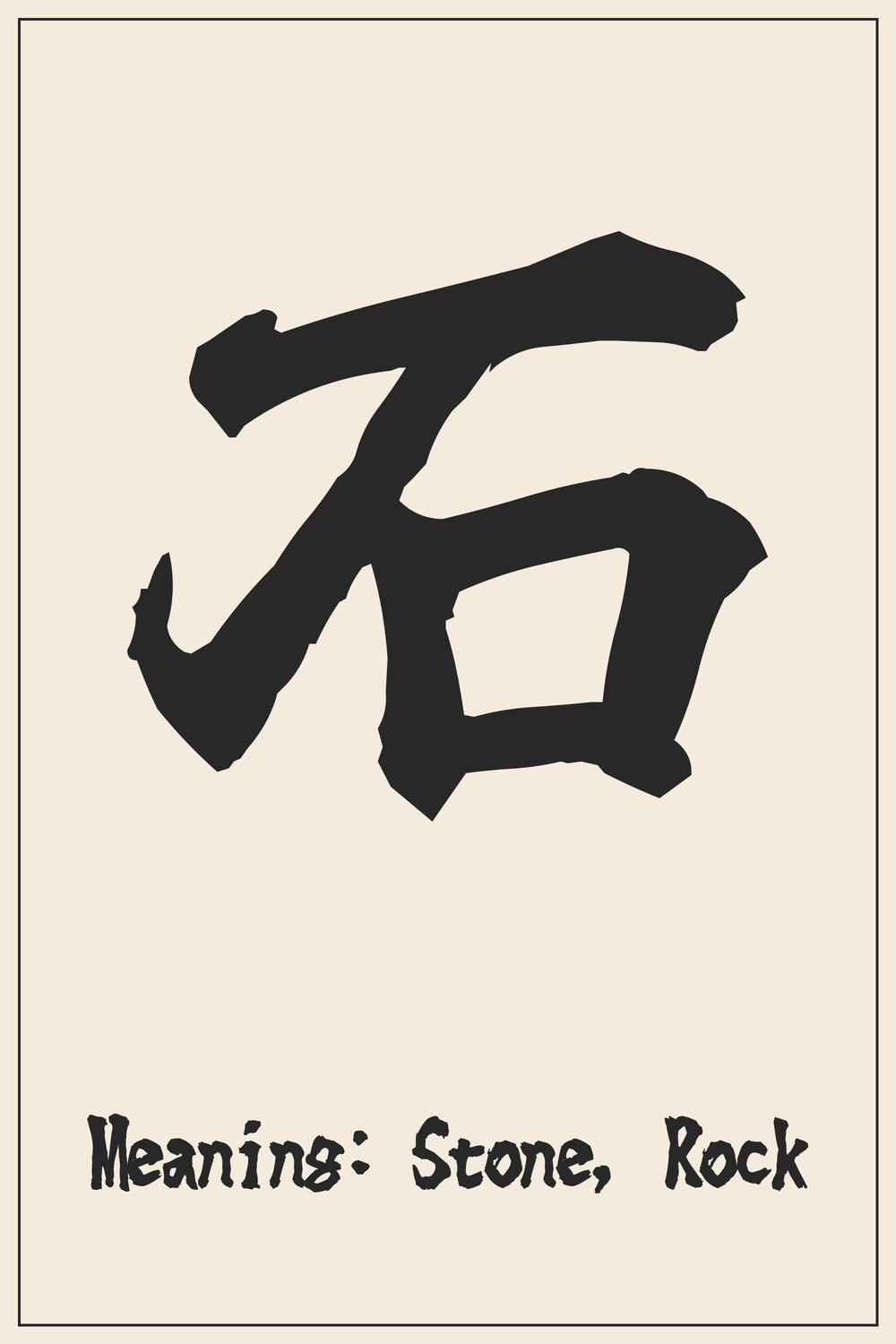
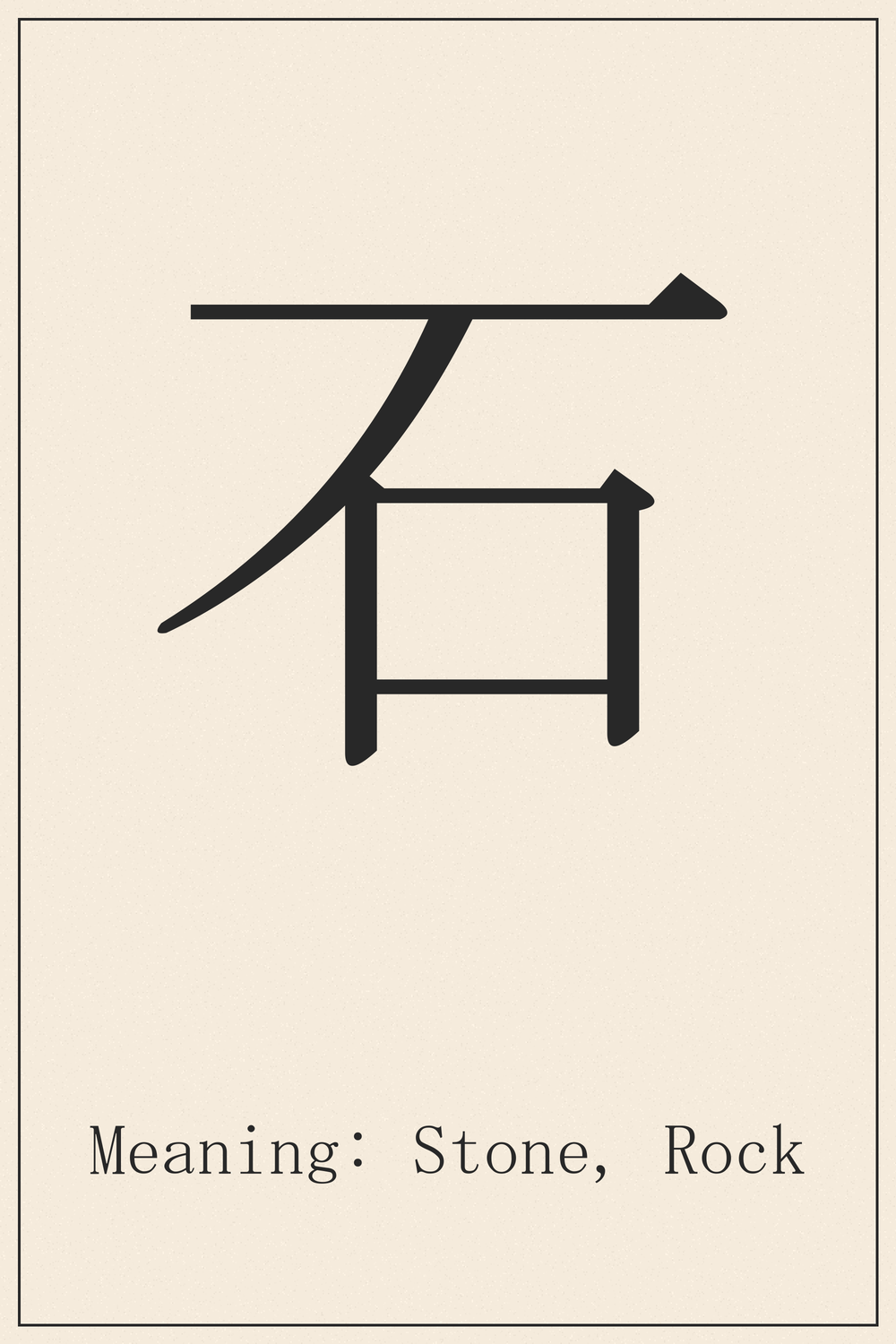
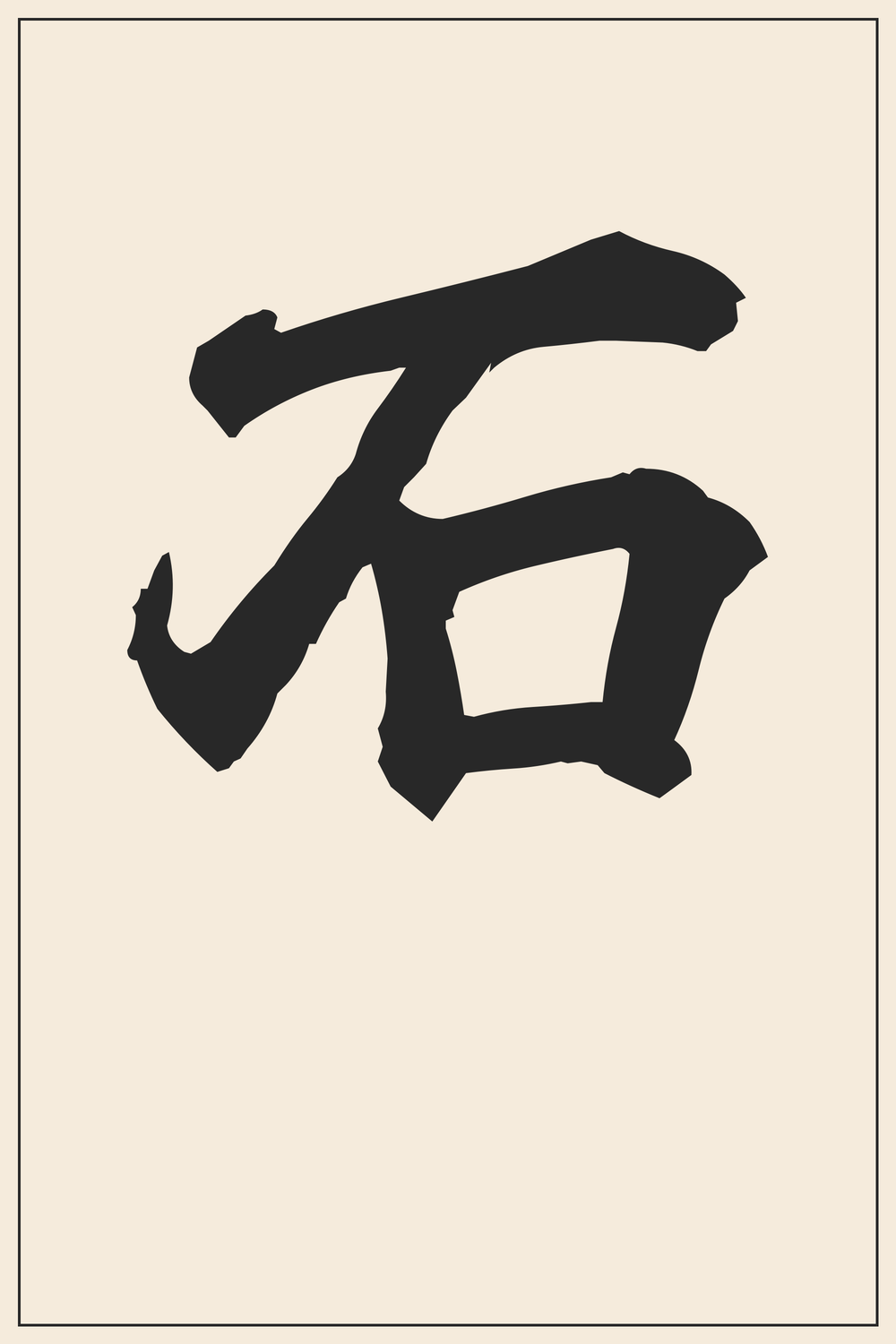
The kanji 石 (ishi) represents the fundamental essence of stone and rock, embodying timelessness and raw natural power. It is a symbol of endurance and the unyielding strength found in nature itself.
The atmosphere of a Kanji character changes dramatically depending on the font style. A character that looks elegant in a brush style might look bold and modern in a different font.
Recommendation:
Since a tattoo is permanent, we strongly recommend comparing various font styles beyond what is shown here. Use our designs as a trusted reference for the correct structure, but feel free to explore different artistic variations to find the perfect match for your vision.
The Deep Meaning Behind 石
The kanji 石 is a pictographic character, originally depicting a cliff or mountain with a rock resting or falling beneath it. This ancient representation directly conveys the physical form and context of a stone in its natural environment, highlighting its enduring presence.
In Japanese culture, stone holds deep significance, from the meticulously arranged rocks in Zen gardens, symbolizing natural landscapes and meditation, to its use in traditional architecture and tools. It represents durability, steadfastness, and the quiet power of nature.
Kanji Breakdown
The kanji 石 is a character in its own right, functioning as both a radical and a complete character.
Stone: This character is a pictograph illustrating a stone, often depicted as a rock under a cliff or within a mountainous landscape. It visually encapsulates the essence of a natural, durable rock.
Conclusion
The kanji 石 profoundly captures the essence of stone and rock—a symbol of enduring strength, stability, and the unyielding forces of nature. It represents the foundational elements that shape our world and withstand the test of time.
Choosing 石 for a tattoo is a homage to simplicity, permanence, and the quiet power of the earth. Its clean lines and elemental meaning make it a subtle yet strong statement for those connected to natural resilience and an appreciation for the world’s basic building blocks.
Comments