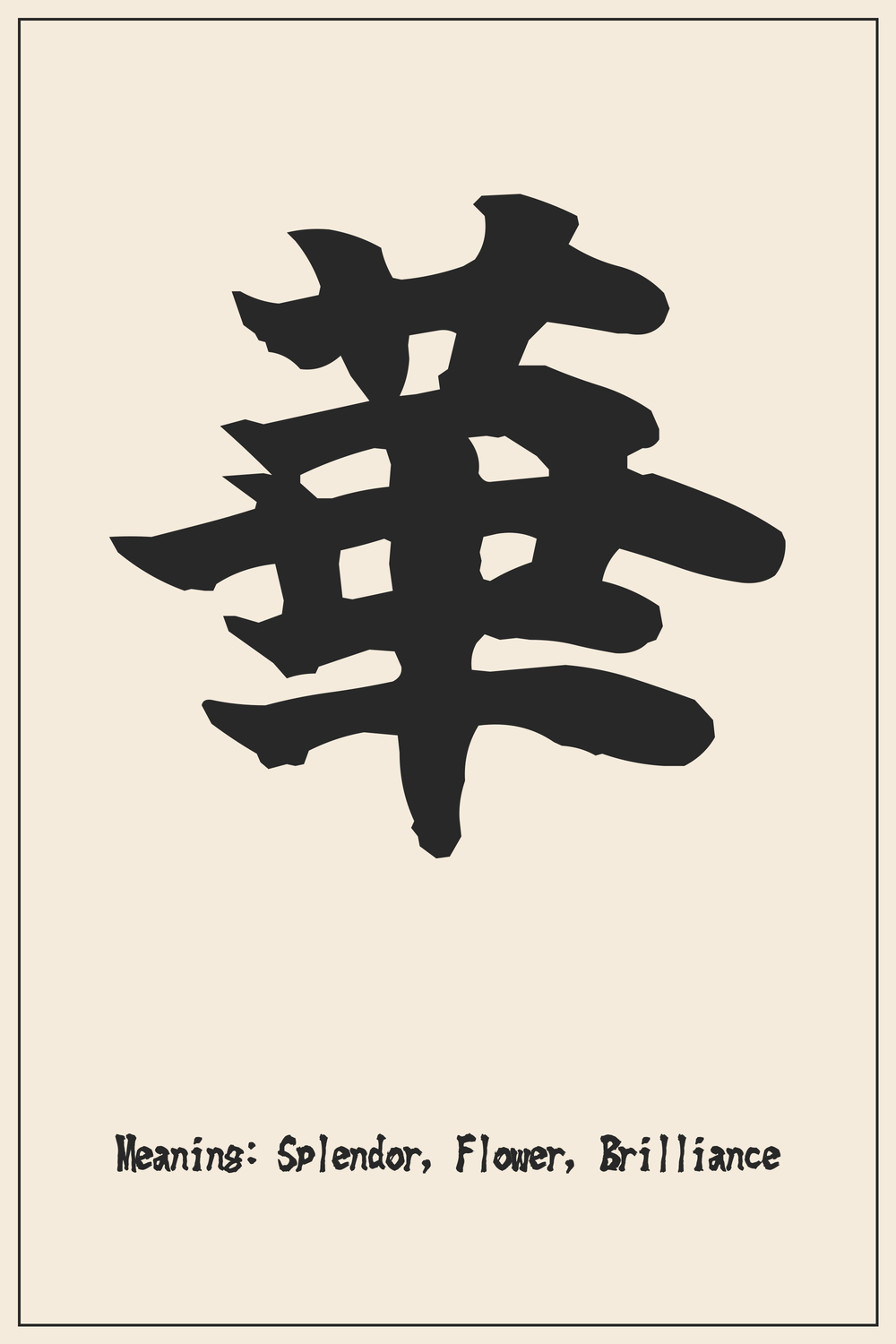
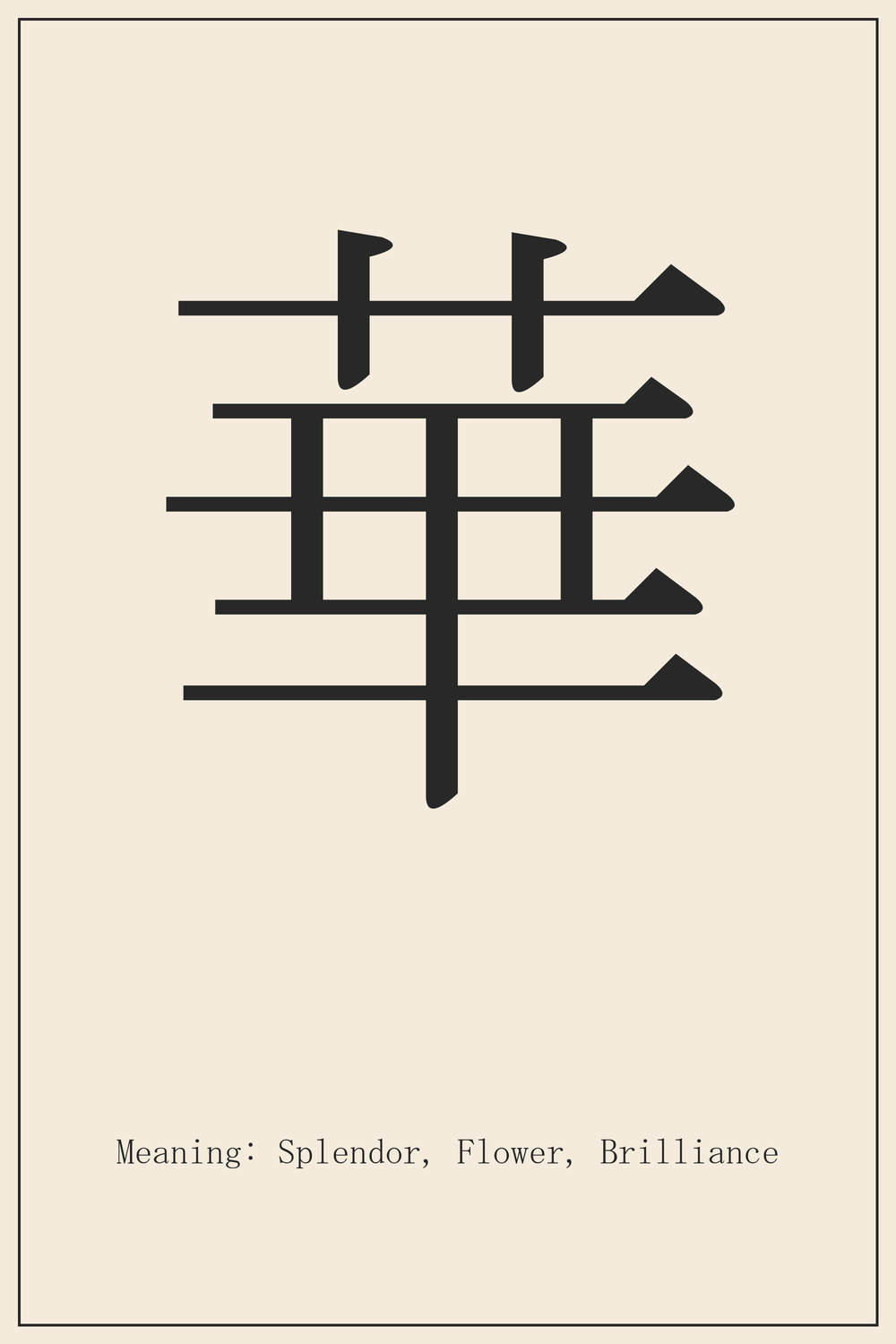
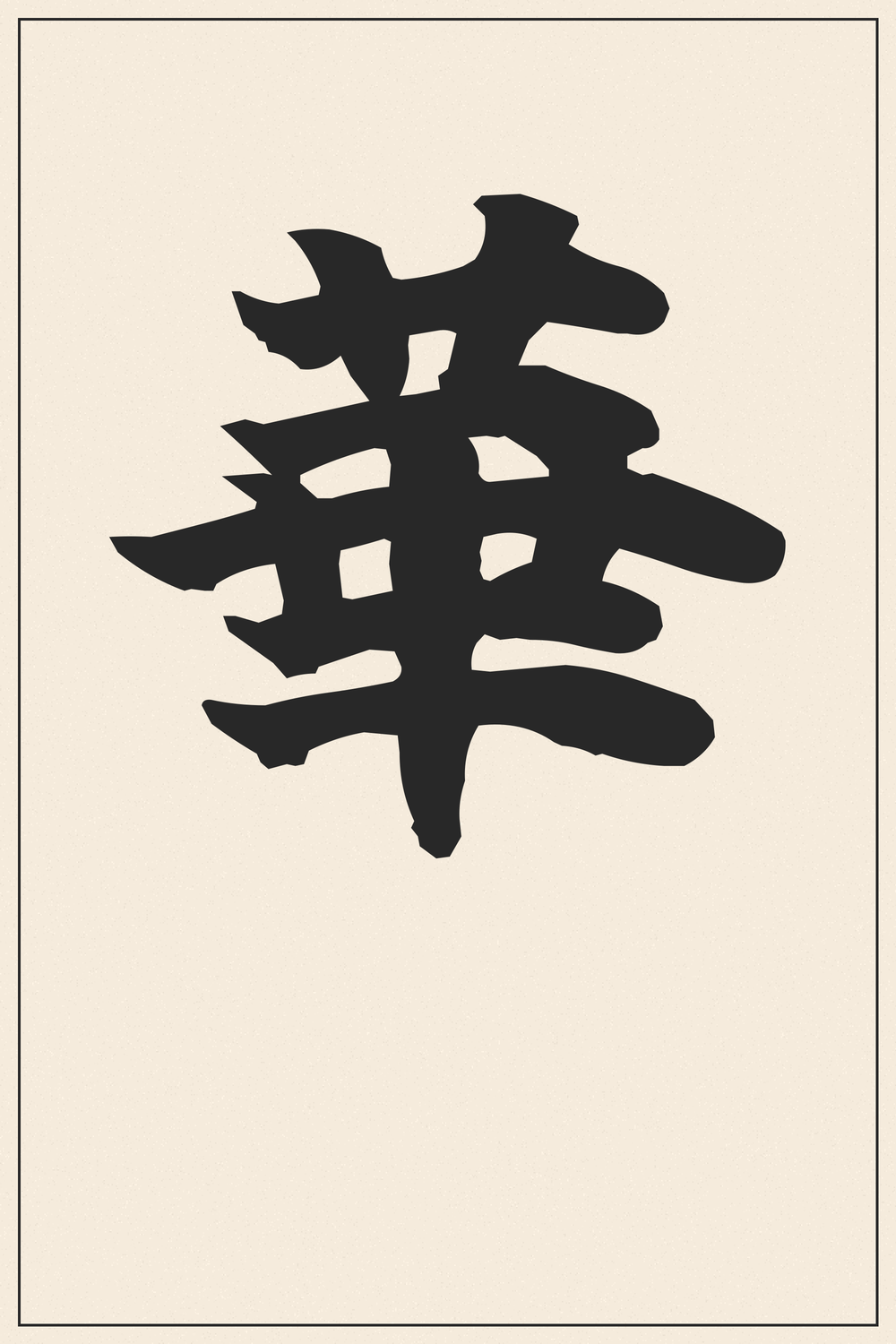
The Kanji ‘華’ embodies profound beauty and brilliance, representing not just a flower, but also the essence of splendor and fleeting elegance. Its powerful symbolism makes it a cherished motif in Japanese culture and art.
The atmosphere of a Kanji character changes dramatically depending on the font style. A character that looks elegant in a brush style might look bold and modern in a different font.
Recommendation:
Since a tattoo is permanent, we strongly recommend comparing various font styles beyond what is shown here. Use our designs as a trusted reference for the correct structure, but feel free to explore different artistic variations to find the perfect match for your vision.
The Deep Meaning Behind 華
The Kanji ‘華’ originally depicted a flowering plant or an ornate headdress, symbolizing beauty, flourishing, and brilliance. Over time, its meaning expanded to encompass not just physical bloom, but also a sense of magnificence and splendor.
In Japanese culture, ‘華’ is intrinsically linked to aesthetics and the appreciation of transient beauty, famously exemplified by cherry blossoms (桜の花, sakura no hana). It speaks to the idea of a fleeting yet intense moment of glory and elegance, often found in traditional arts like Ikebana (生け花, flower arranging) and Kado (華道, the way of flowers).
Kanji Breakdown
The Kanji ‘華’ is a complex character whose structure beautifully conveys its meaning of a flourishing flower or splendor.
Grass Radical: This radical commonly appears at the top of characters related to plants, herbs, or flowers, immediately indicating the natural origin of ‘華’.
Ornamental Bloom: This intricate component depicts the visual essence of a beautiful, blooming flower or a decorative, flourishing element. Combined with the grass radical, it vividly portrays the character’s core meaning.
Conclusion
The Kanji ‘華’ is a symbol of breathtaking beauty, transient glory, and the profound splendor found in nature and existence. It encapsulates an aesthetic deeply woven into Japanese sensibilities, reflecting both vibrancy and a gentle melancholy for impermanence.
Choosing ‘華’ for a tattoo is to embrace a powerful emblem of elegance and life’s exquisite moments. It serves as a personal reminder to appreciate beauty in all its forms, making it a truly meaningful and visually captivating choice.
Comments