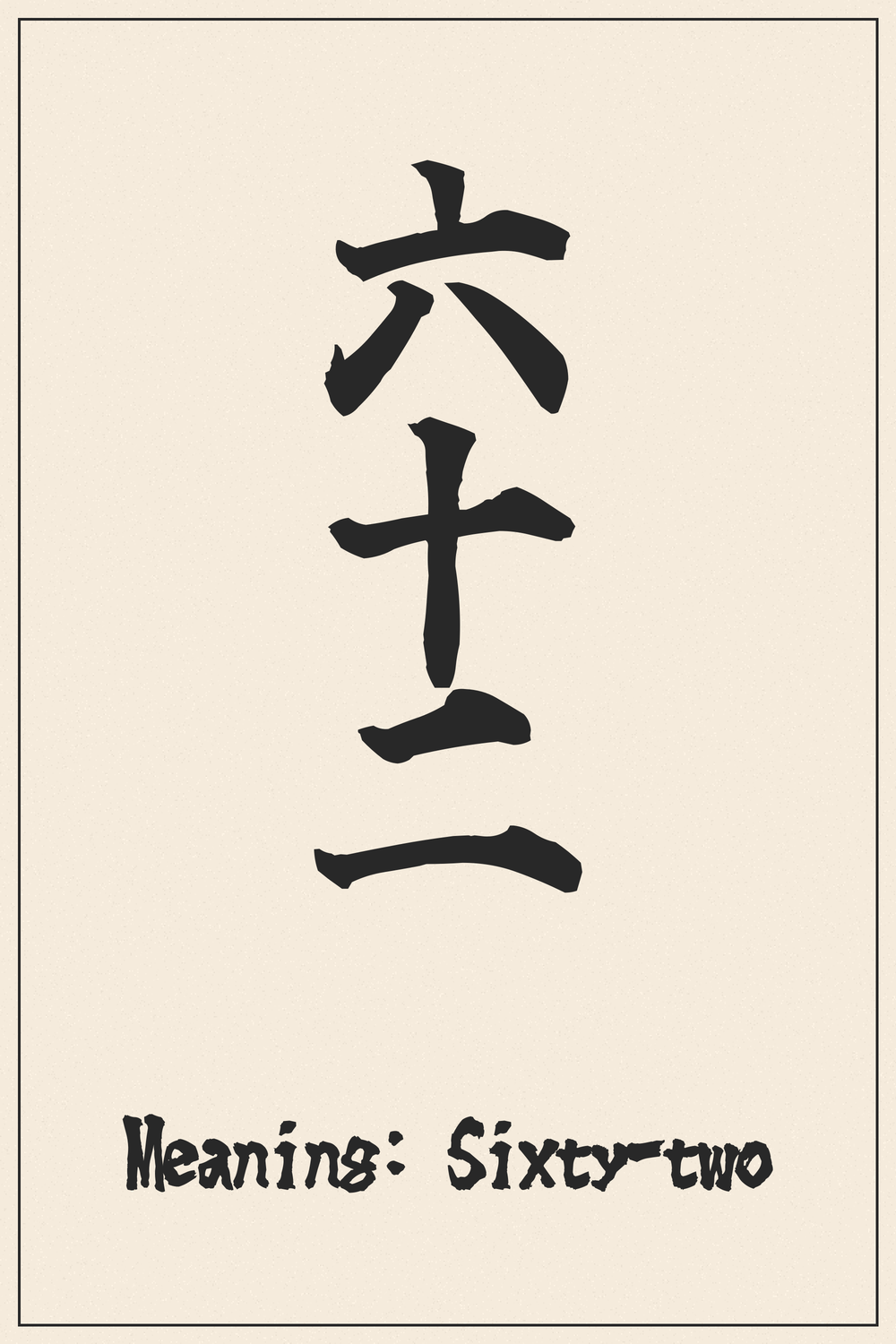
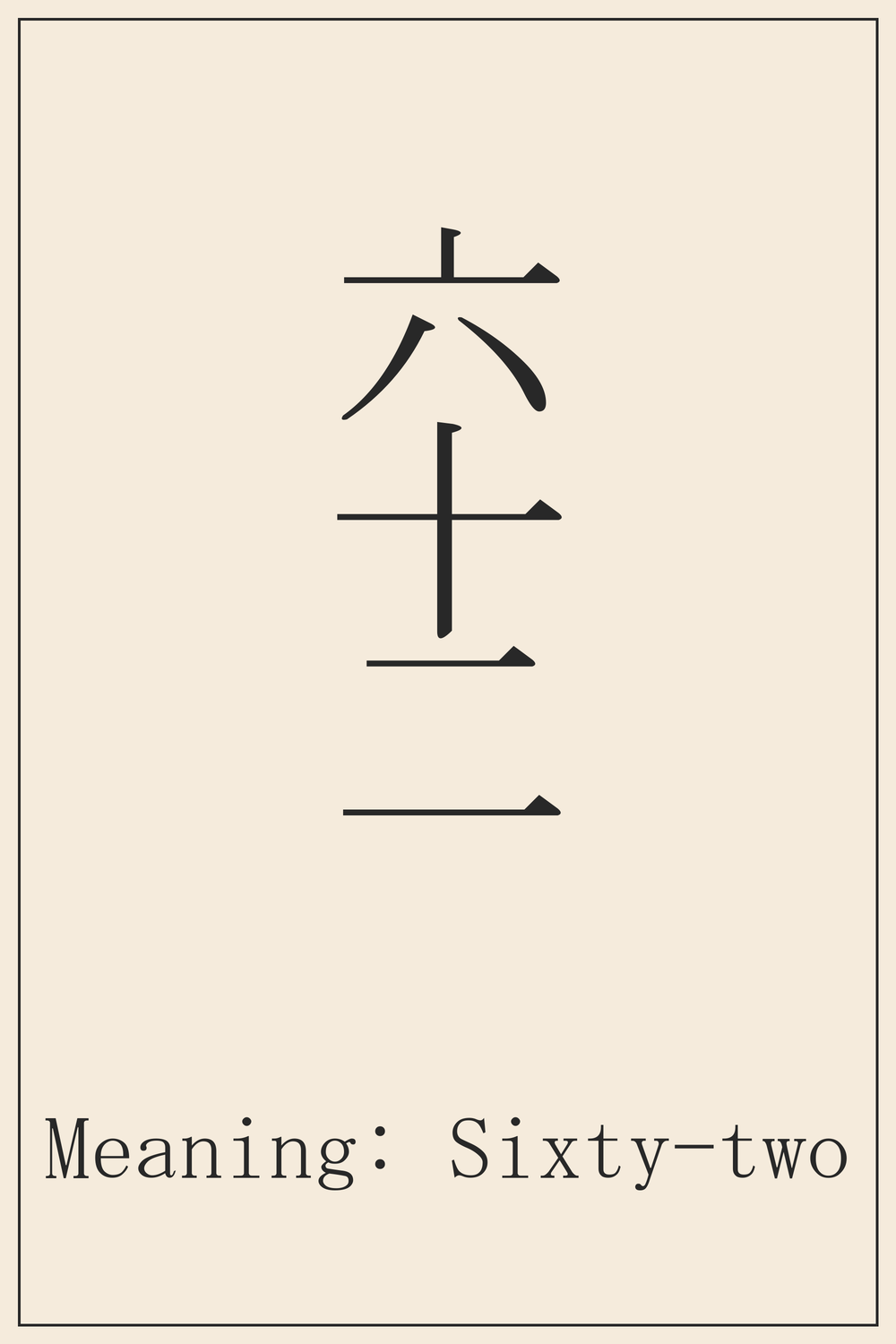
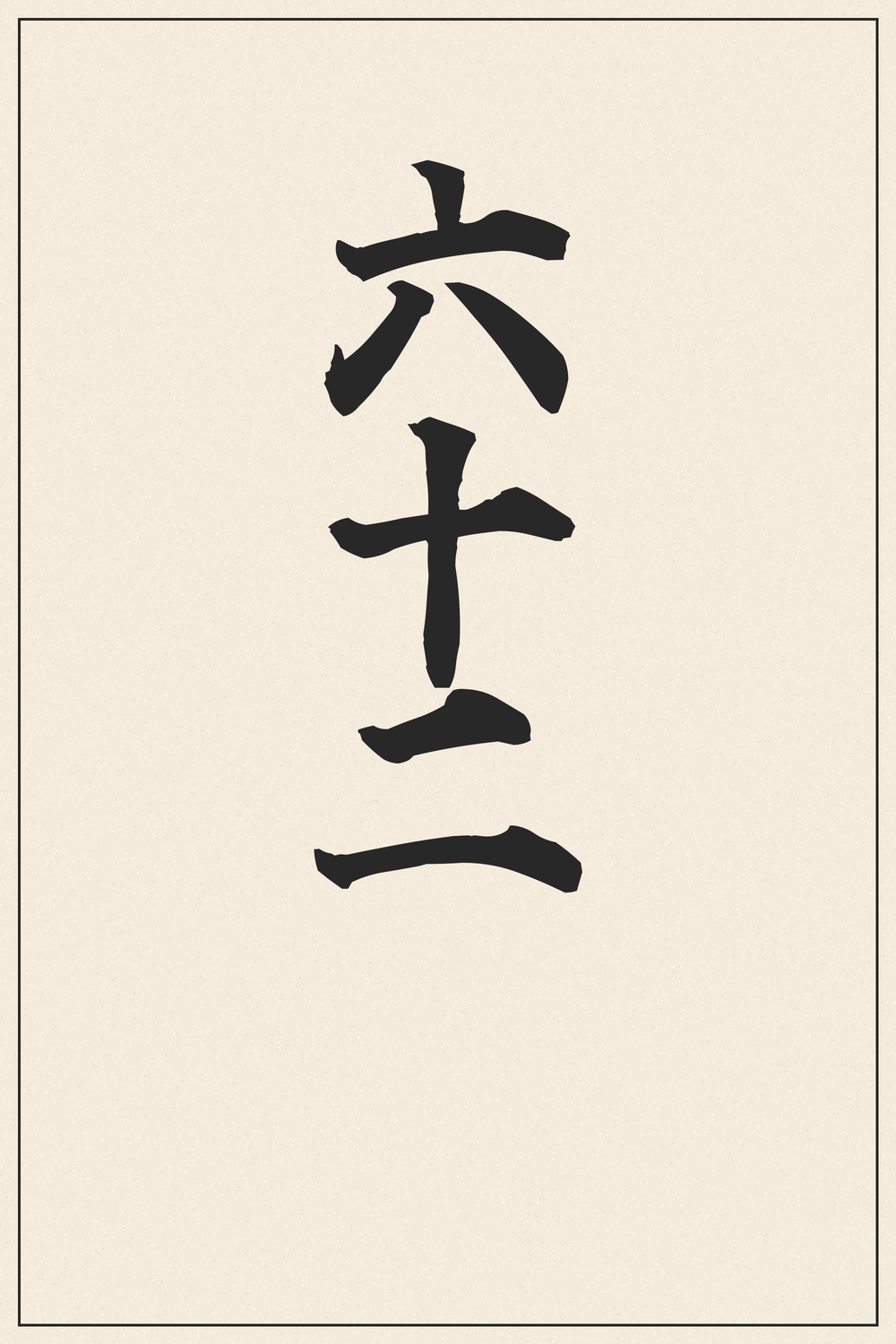
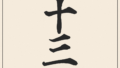
Numbers in Japanese calligraphy hold a unique simplicity, yet they can encapsulate profound personal milestones or significant counts. The Kanji 六十二 (rokujuuni), meaning ‘sixty-two’, offers a clear, elegant representation of a specific quantity.
The atmosphere of a Kanji character changes dramatically depending on the font style. A character that looks elegant in a brush style might look bold and modern in a different font.
Recommendation:
Since a tattoo is permanent, we strongly recommend comparing various font styles beyond what is shown here. Use our designs as a trusted reference for the correct structure, but feel free to explore different artistic variations to find the perfect match for your vision.
The Deep Meaning Behind 六十二
The Kanji 六十二 is a direct numerical compound, combining 六 (roku, ‘six’), 十 (juu, ‘ten’), and 二 (ni, ‘two’). This formation is standard in Japanese, where numbers are constructed by combining base units. Each character has ancient origins representing basic counts or markers.
While not possessing deep philosophical meaning on its own, a number like sixty-two often gains significance through personal context. It might represent a milestone age, a significant date, or a count of something deeply meaningful in one’s life journey, reflecting a specific point in time or achievement.
Kanji Breakdown
The composition of 六十二 is a classic example of how individual numerical Kanji combine to form larger values. Let’s examine its components:
Meaning: Six. An ancient pictograph depicting a shelter or house, which later evolved to mean ‘six’ phonetically.
Meaning: Ten. Originally a pictograph of a vertical line crossing a horizontal line, symbolizing a tally mark or completion of a count, leading to ‘ten’.
Meaning: Two. A simple pictograph of two horizontal lines, directly representing the concept of ‘two’.
Conclusion
六十二, or sixty-two, is a Kanji compound that clearly and elegantly denotes a specific numerical value. Its beauty lies in its directness and the personal significance it can acquire.
For a tattoo, 六十二 serves as a precise and meaningful reminder of an age, a date, or a significant count. It is a subtle yet powerful mark for those who appreciate clarity and personal milestones in their ink.
Comments