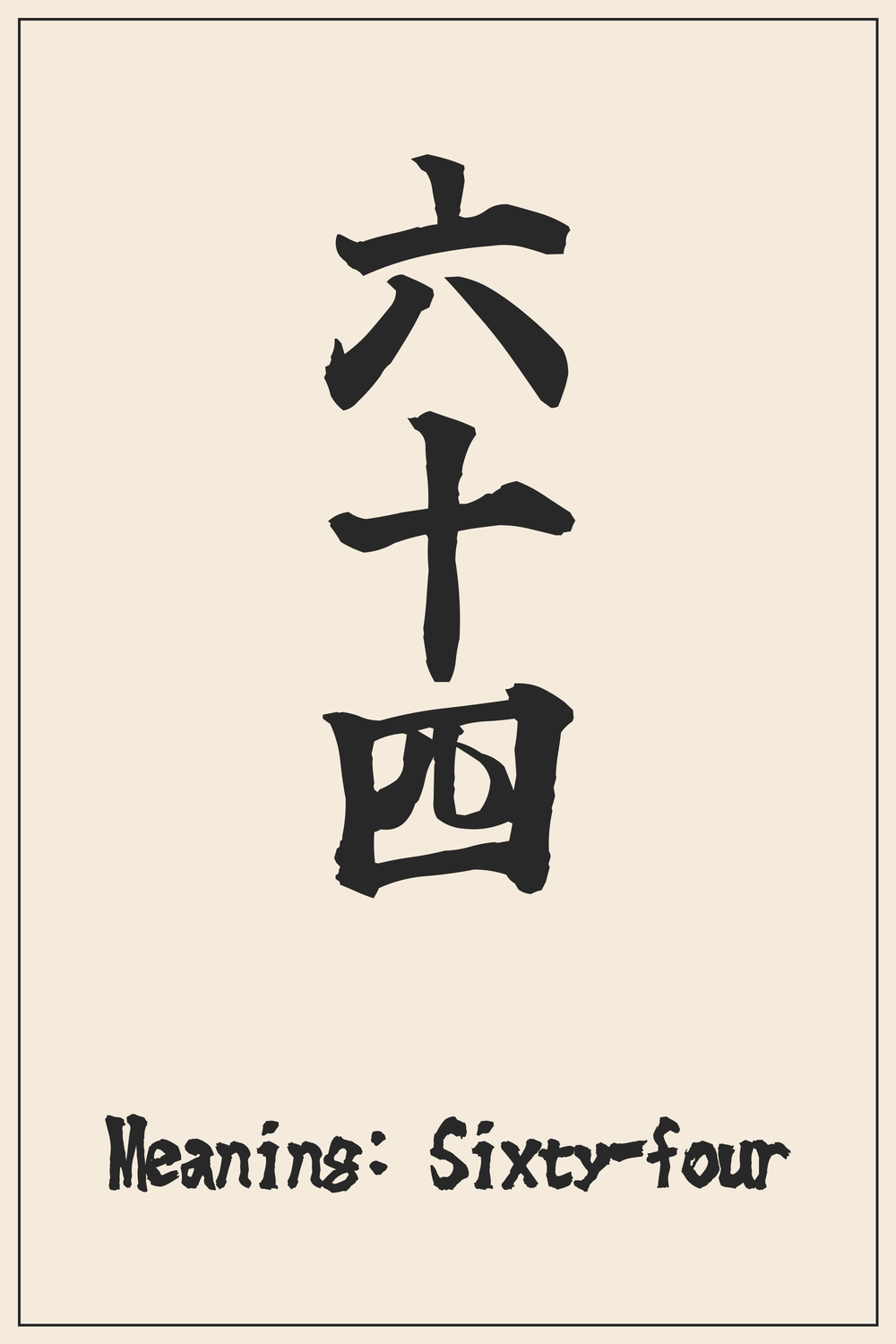
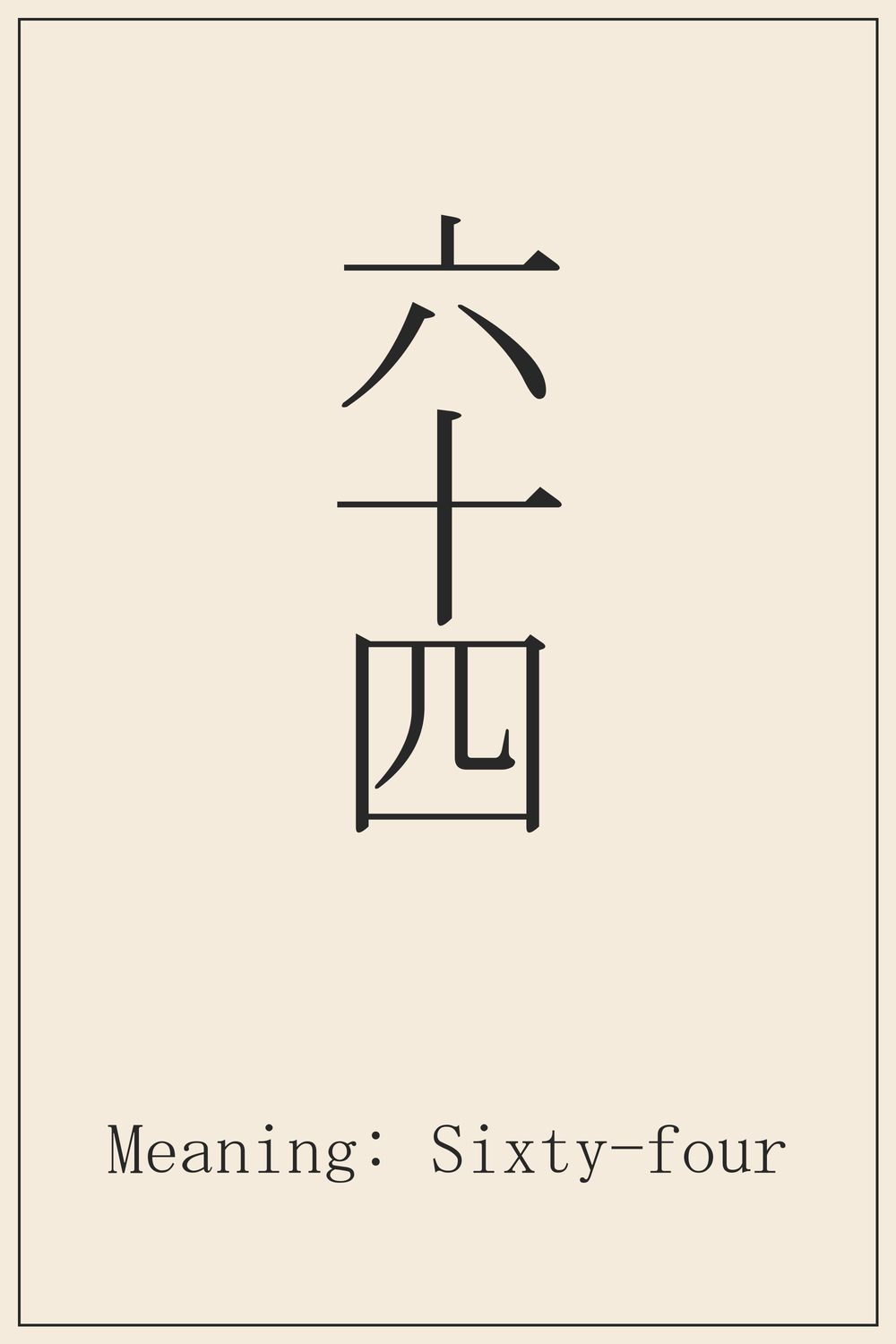
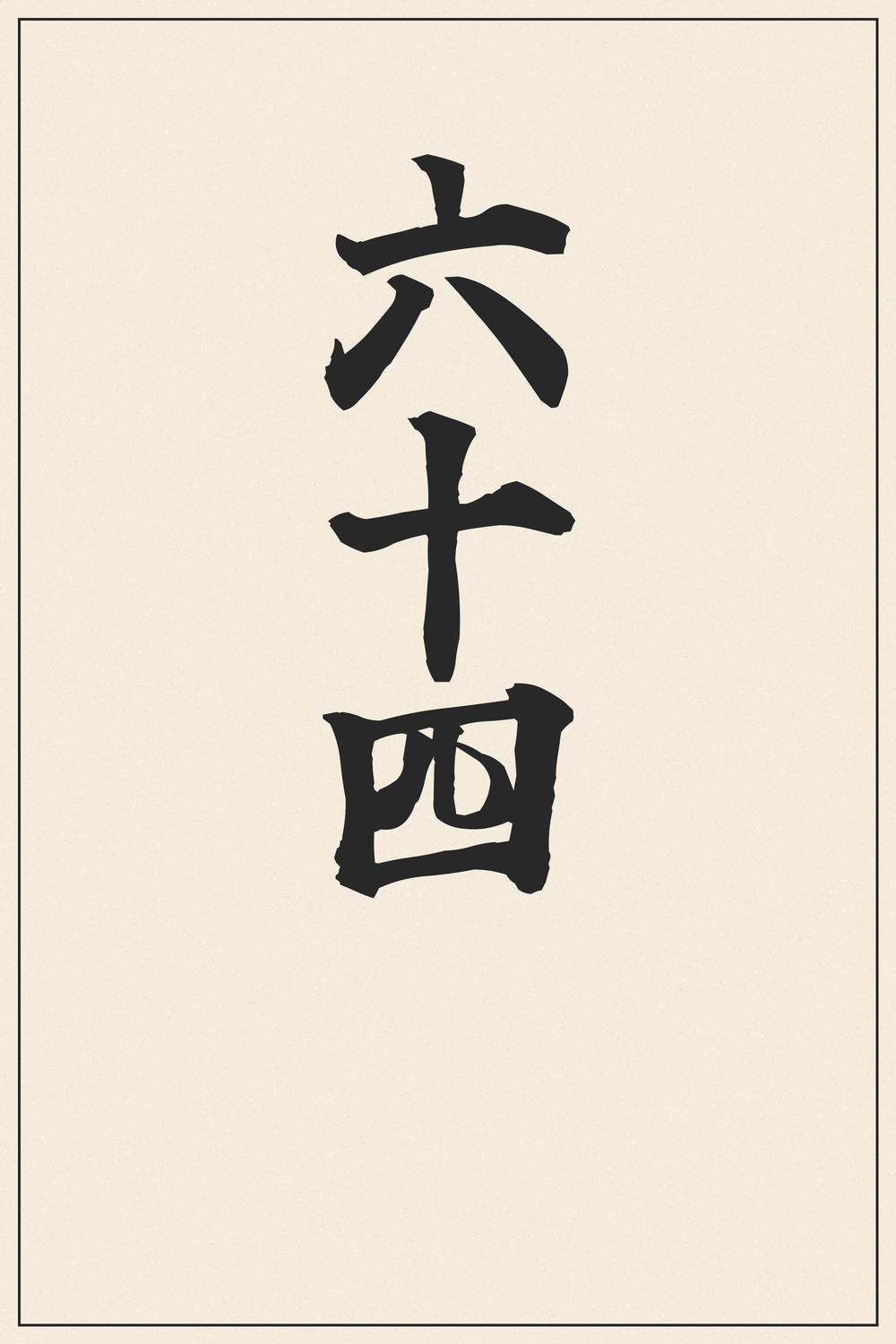
The Kanji combination 六十四 represents the numerical value ‘sixty-four’, a fundamental concept in counting and measure. While simple in appearance, it carries the weight of specific quantity and order in the Japanese language.
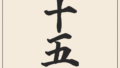
The atmosphere of a Kanji character changes dramatically depending on the font style. A character that looks elegant in a brush style might look bold and modern in a different font.
Recommendation:
Since a tattoo is permanent, we strongly recommend comparing various font styles beyond what is shown here. Use our designs as a trusted reference for the correct structure, but feel free to explore different artistic variations to find the perfect match for your vision.
The Deep Meaning Behind 六十四
The Kanji 六 (roku) means ‘six’, 十 (juu) means ‘ten’, and 四 (yon) means ‘four’. Combined, they form ‘six-ten-four’, which is the Japanese way of expressing sixty-four. Each character is a fundamental building block of the Japanese numerical system, rooted in ancient Chinese counting methods.
While ‘sixty-four’ itself does not carry profound philosophical or spiritual weight in Japanese culture beyond its numerical value, numbers play a critical role in various aspects of daily life, from calendrical systems to architectural measurements and game theory, like in Shogi or Go boards.
Kanji Breakdown
This Kanji compound is formed by three fundamental numerical characters, each with a clear, concise meaning.
Meaning: Six. Its ancient form depicted a small hut or enclosure, suggesting a collection or grouping.
Meaning: Ten. Originally a pictograph of a vertical line with a dot at its center, or a needle, it evolved to the cross shape signifying completeness or all-encompassing.
Meaning: Four. Historically, its form alluded to a closed-in, complete space, signifying the four cardinal directions or a full grouping.
Conclusion
The Kanji 六十四 precisely conveys the numerical value of sixty-four. It is a testament to the structured and logical nature of the Japanese writing system, where complex numbers are built from simple components.
For those seeking to mark a specific quantity, a significant age, or a personal numerical connection, 六十四 offers a clear and timeless representation. Its clean design ensures a striking and meaningful tattoo.
Comments