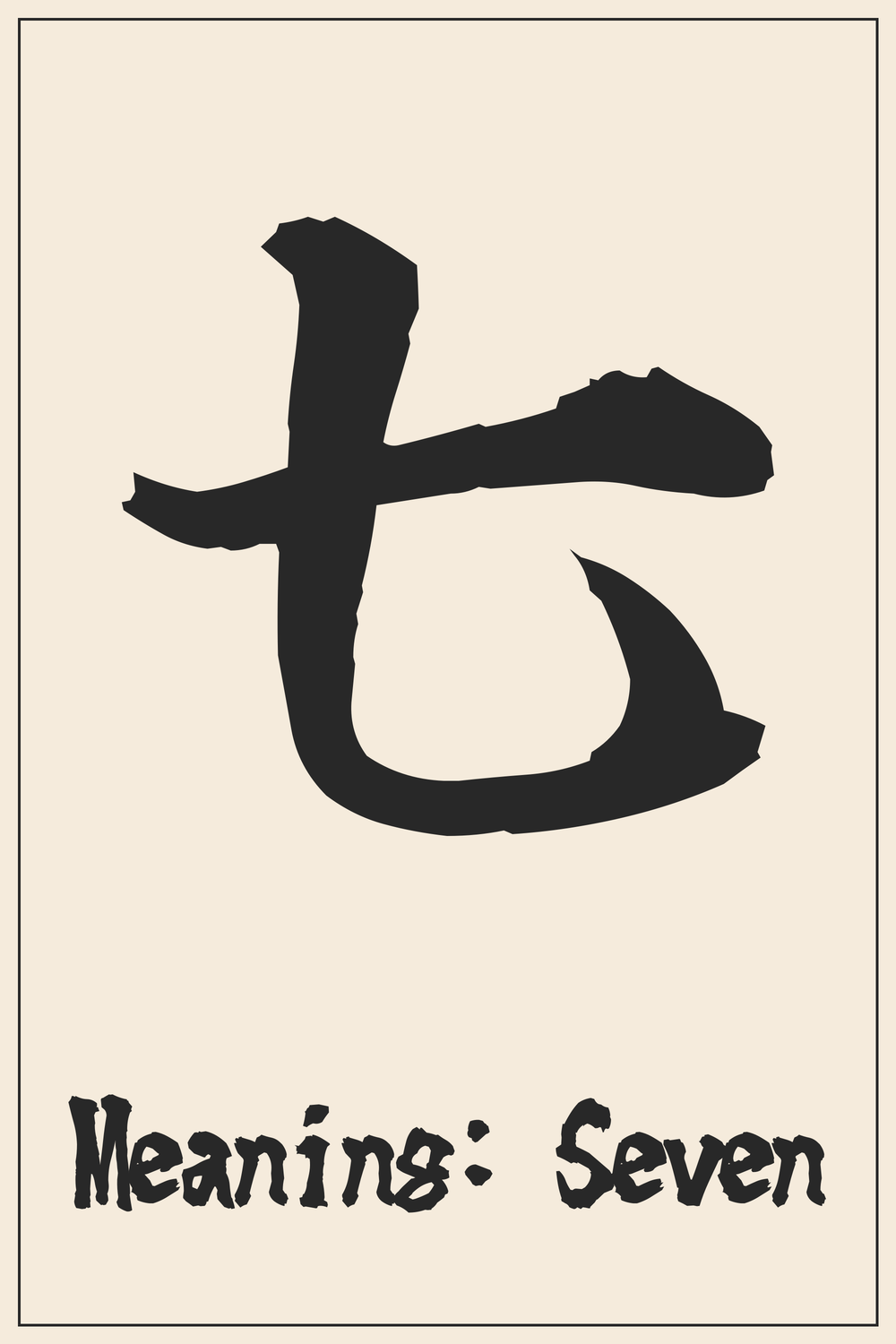
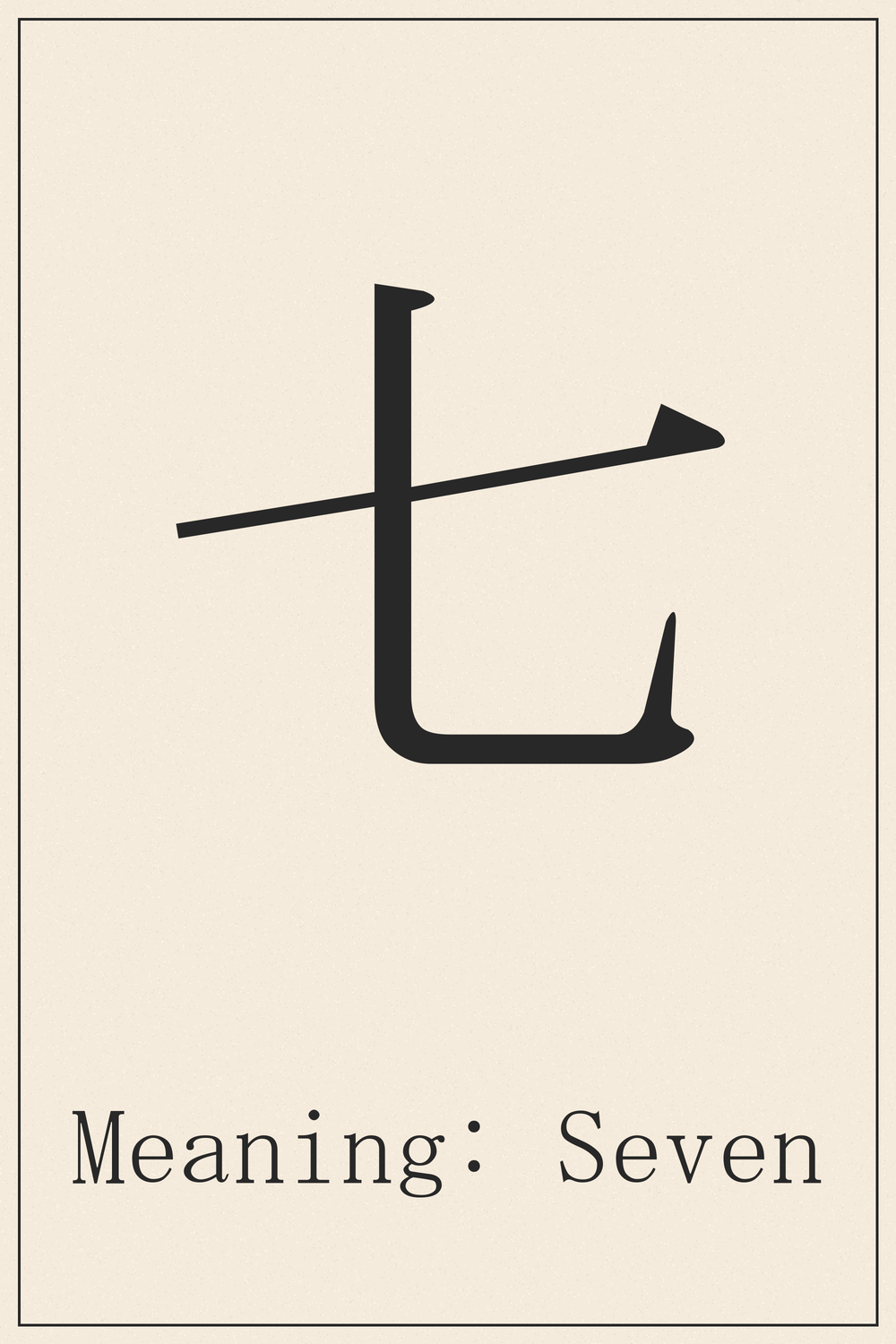
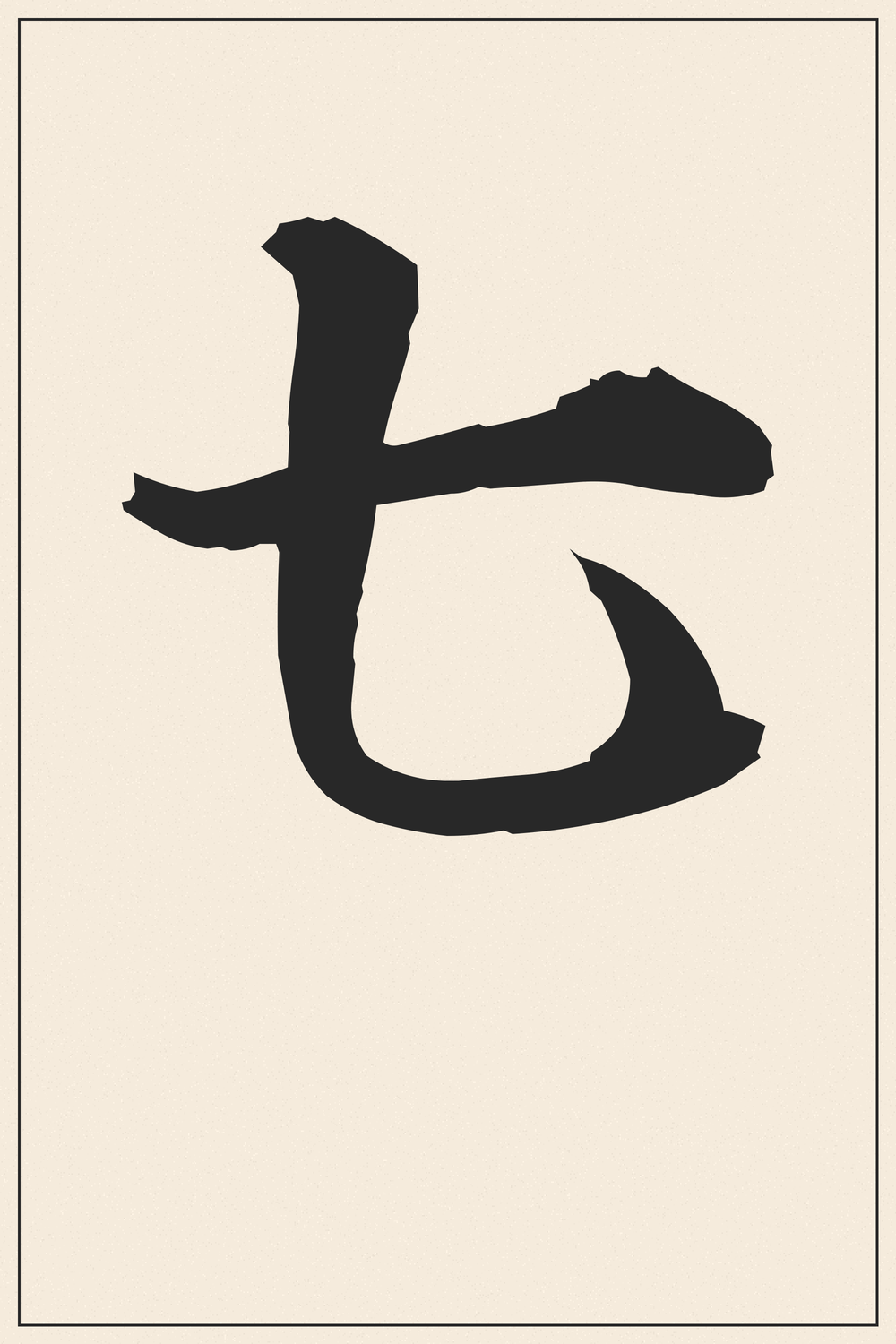
The Kanji 七 (Shichi, Nana) represents the number seven, a figure often imbued with profound cultural and symbolic significance across the globe. Simple yet powerful, it speaks to concepts of completion, fortune, and mystical associations.
The atmosphere of a Kanji character changes dramatically depending on the font style. A character that looks elegant in a brush style might look bold and modern in a different font.
Recommendation:
Since a tattoo is permanent, we strongly recommend comparing various font styles beyond what is shown here. Use our designs as a trusted reference for the correct structure, but feel free to explore different artistic variations to find the perfect match for your vision.
The Deep Meaning Behind 七
The character 七 is an ancient pictogram. Early forms depicted a cross-like shape, believed to represent a cutting or crossing action, from which the meaning of ‘seven’ eventually derived through phonetic borrowing and standardization. Its simplicity reflects its fundamental nature as a count.
In Japanese culture, the number seven holds various positive connotations, such as in the ‘Shichifukujin’ (七福神), the Seven Gods of Fortune. It also appears in significant life events and traditional arts, signifying good luck and completeness, even if the Kanji itself is primarily a numerical designator.
Kanji Breakdown
The Kanji 七 is a standalone character, representing the numeral seven. Its elegant and straightforward form is not typically broken down into separate radicals for its meaning in modern contexts, but its historical evolution reveals its fundamental nature.
Seven: This character itself is the numeral ‘seven,’ originating from ancient pictographs that eventually simplified into its current form. It functions as a basic building block for counting and numerical representation.
Conclusion
The Kanji 七 embodies the universal concept of the number seven, a digit that resonates with ideas of luck, spiritual insight, and completeness in various cultures, including Japan. Its concise form conveys a depth beyond mere quantity.
Choosing 七 as a tattoo signifies an appreciation for numerical symbolism, good fortune, or personal milestones associated with the number seven. Its clean lines ensure a sophisticated and meaningful design that is both visually appealing and rich in potential interpretation.
Comments