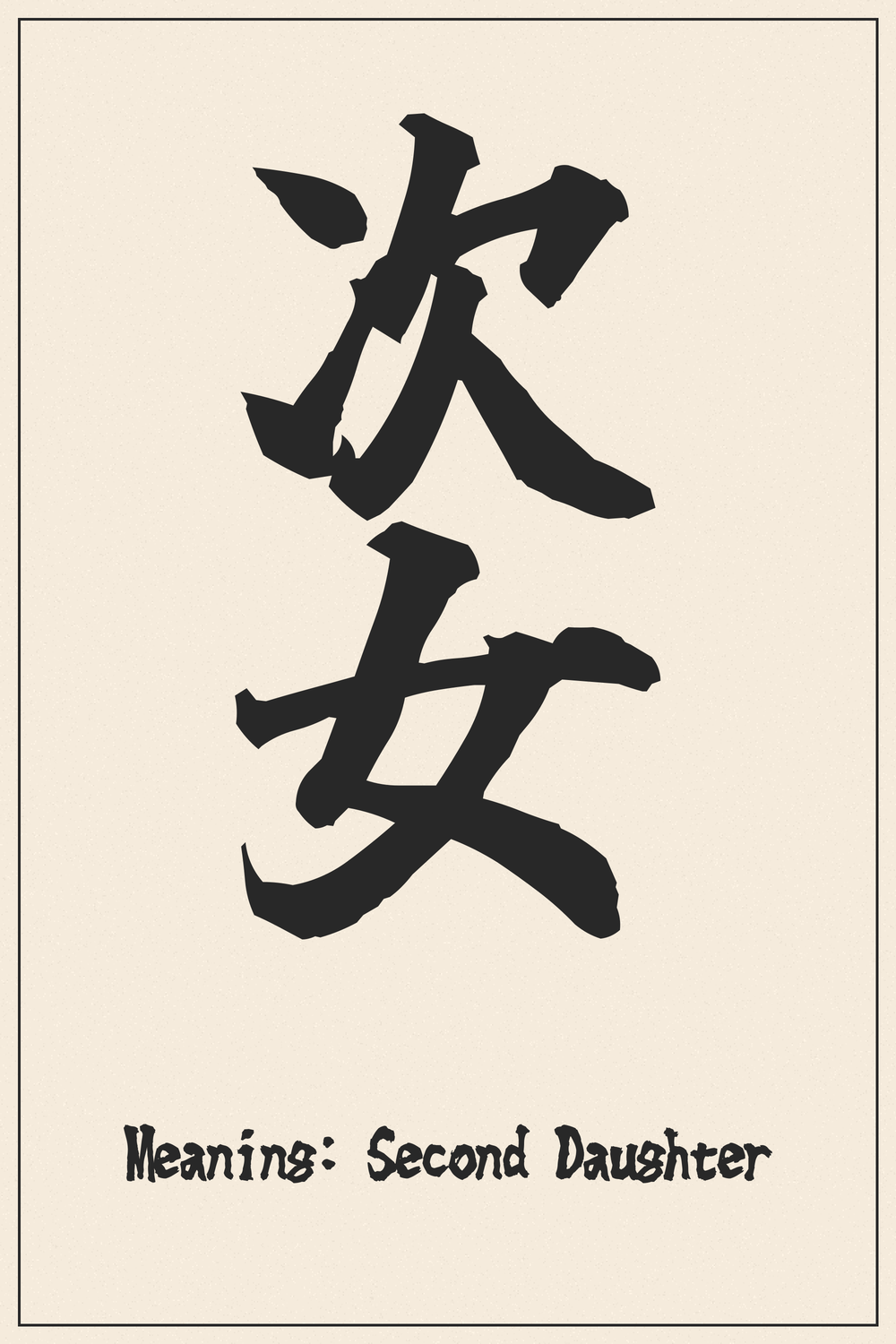
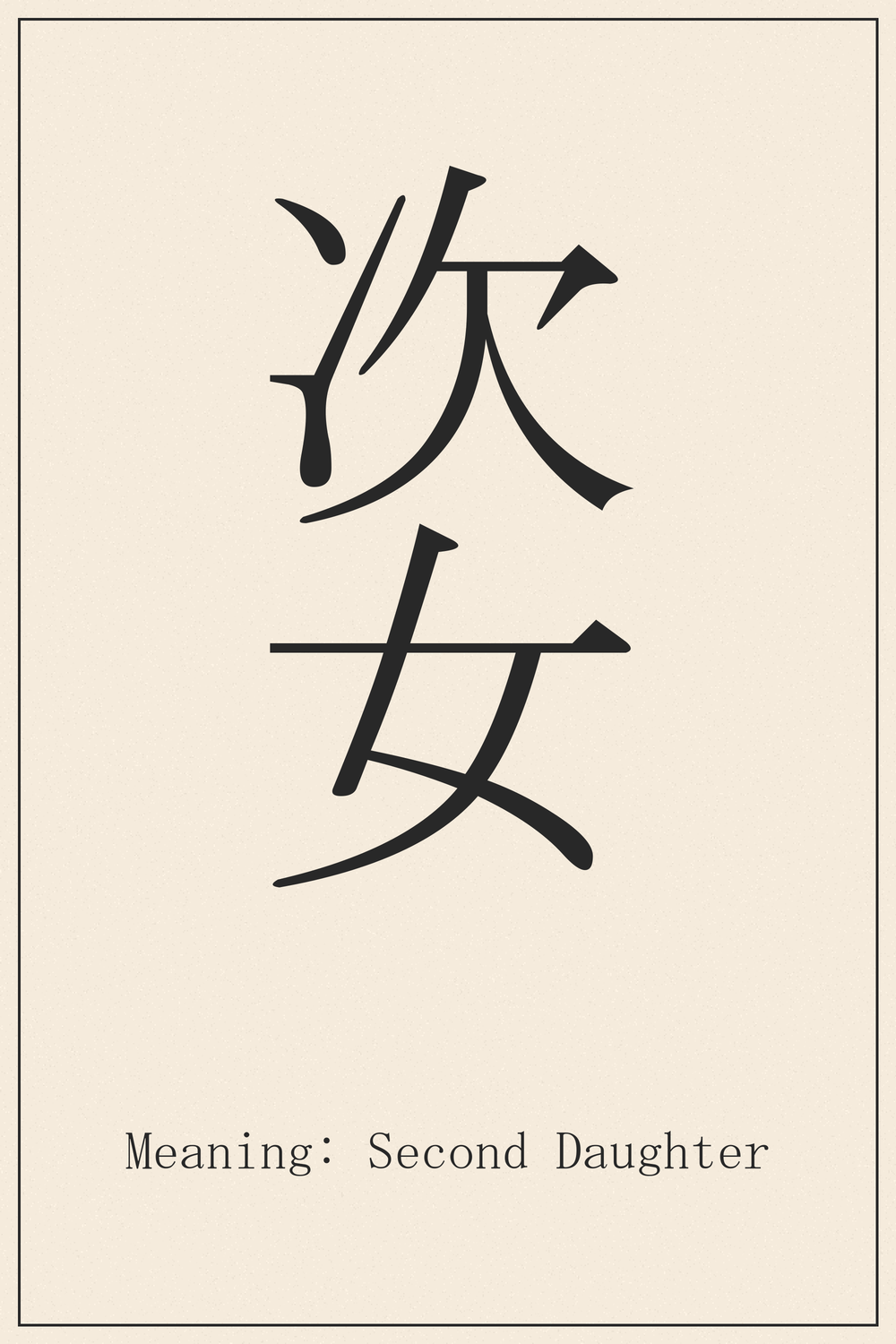
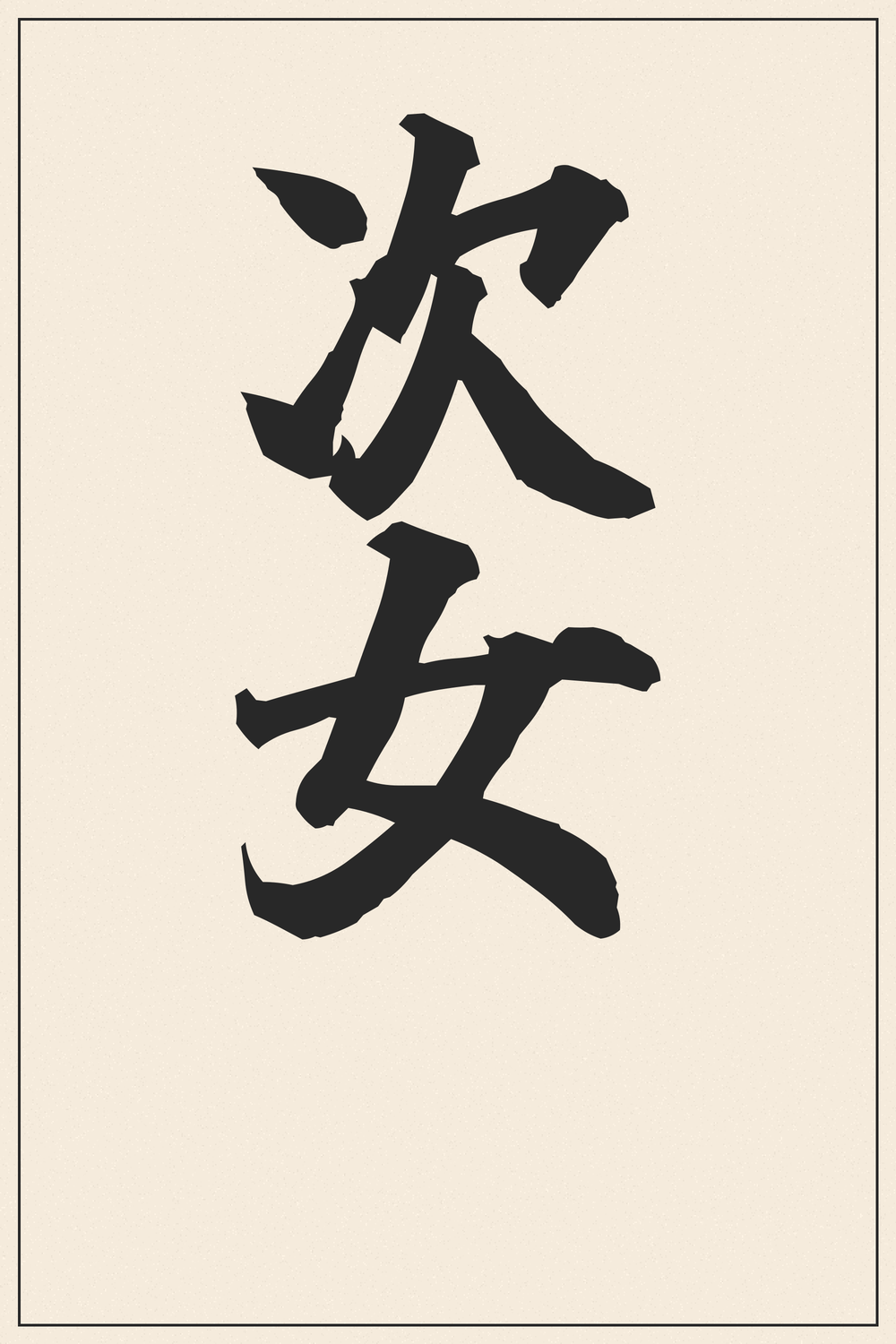
For those seeking to honor the deep bonds of family, the Kanji 次女 (Jijo) encapsulates the cherished role of a second daughter. It represents not just a position within a family, but a unique individual spirit.
The atmosphere of a Kanji character changes dramatically depending on the font style. A character that looks elegant in a brush style might look bold and modern in a different font.
Recommendation:
Since a tattoo is permanent, we strongly recommend comparing various font styles beyond what is shown here. Use our designs as a trusted reference for the correct structure, but feel free to explore different artistic variations to find the perfect match for your vision.
The Deep Meaning Behind 次女
The term 次女 (Jijo) combines two significant Kanji: 次, meaning ‘next’ or ‘second,’ and 女, meaning ‘woman’ or ‘daughter.’ Together, they directly translate to ‘second daughter,’ reflecting a straightforward and universally understood familial position in Japanese culture.
In traditional Japanese families, the order of birth held considerable importance, influencing roles and expectations. While modern contexts have evolved, ‘次女’ still carries a sense of a distinct individual within the family unit, often associated with a unique personality or perspective.
Kanji Breakdown
Understanding the individual components of 次女 reveals its direct and profound meaning.
Meaning: Next, Second, Order
This character inherently denotes sequence or succession. It can also imply ‘following’ or ‘subsequent,’ establishing the numerical order within a series, in this case, a line of daughters.
Meaning: Woman, Female, Daughter
A fundamental character representing the female gender. In family contexts, it specifically refers to a daughter, completing the designation of ‘second daughter’ when combined with 次.
Conclusion
The Kanji 次女 is a simple yet powerful representation of a specific family role, embodying the unique place a second daughter holds. It speaks to the warmth of family ties and the continuity of generations.
For a tattoo, 次女 serves as a clear and affectionate homage. It is a beautiful way to symbolize love for a daughter or to commemorate one’s own identity as a cherished second daughter, etched with clarity and personal significance.
Comments