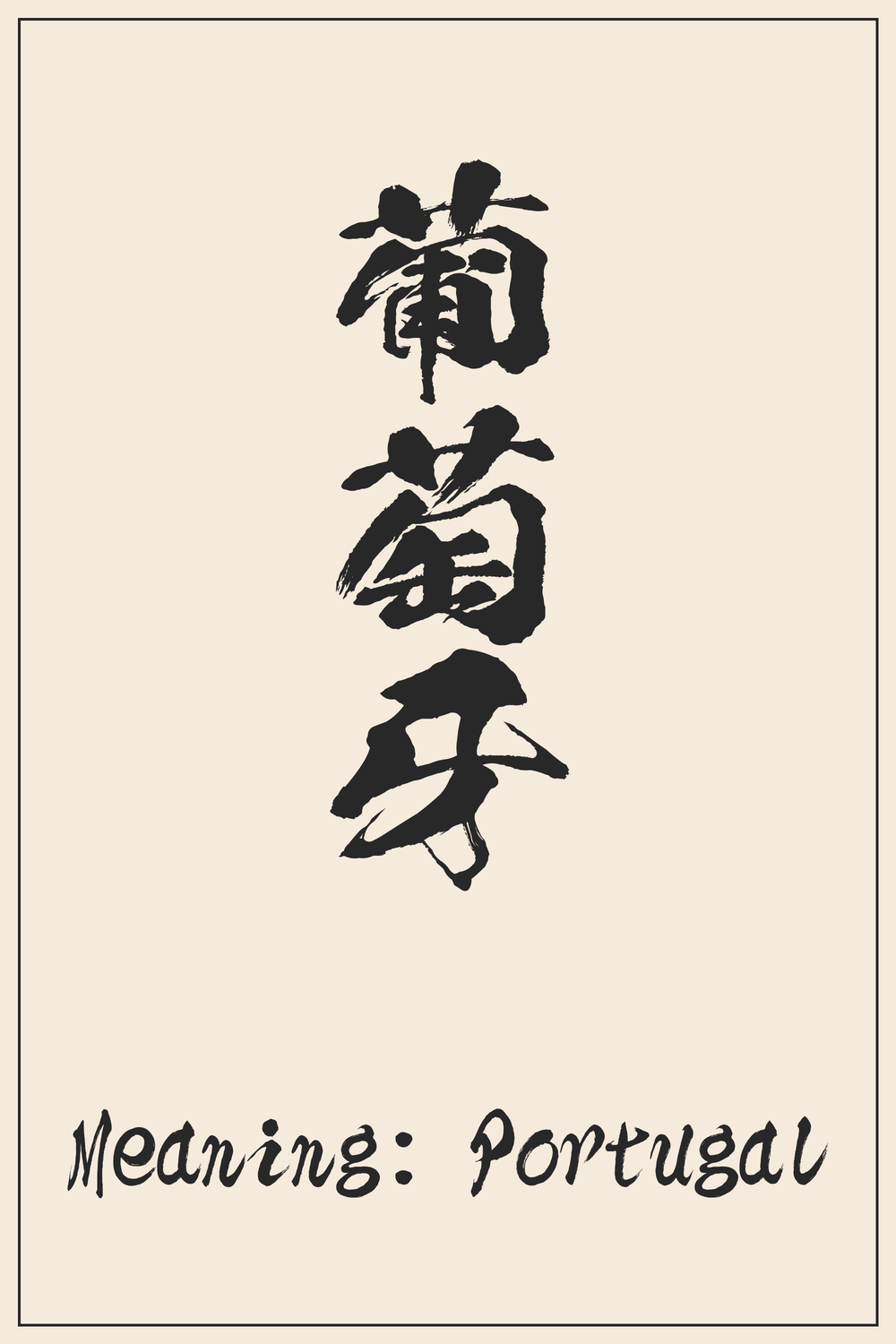
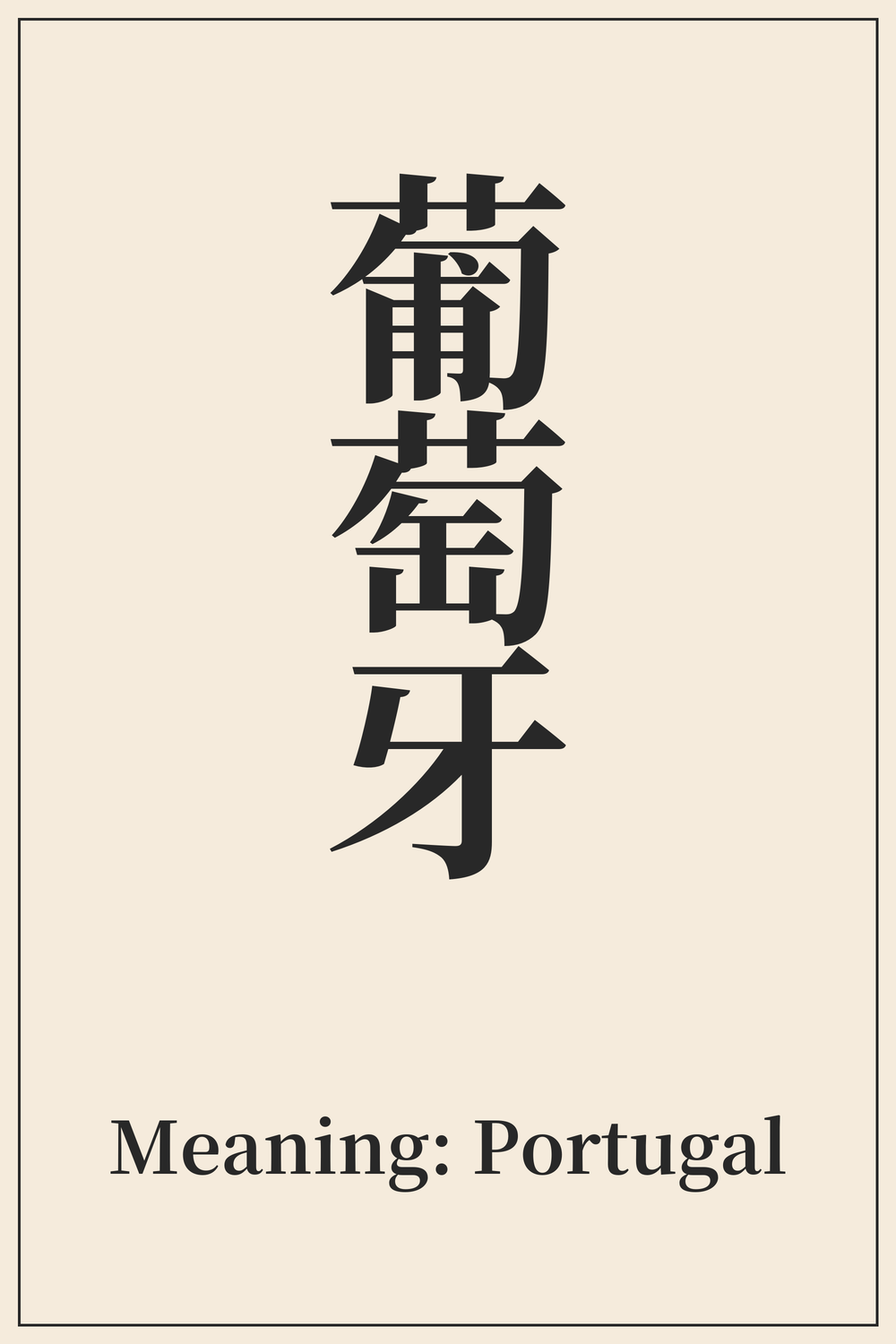
The Kanji 葡萄牙 (Porutogaru) serves as the unique Japanese phonetic representation for the nation of Portugal, a testament to the intriguing way foreign names are adapted into Japanese. This fascinating combination of characters reveals a deep dive into linguistic and cultural history.
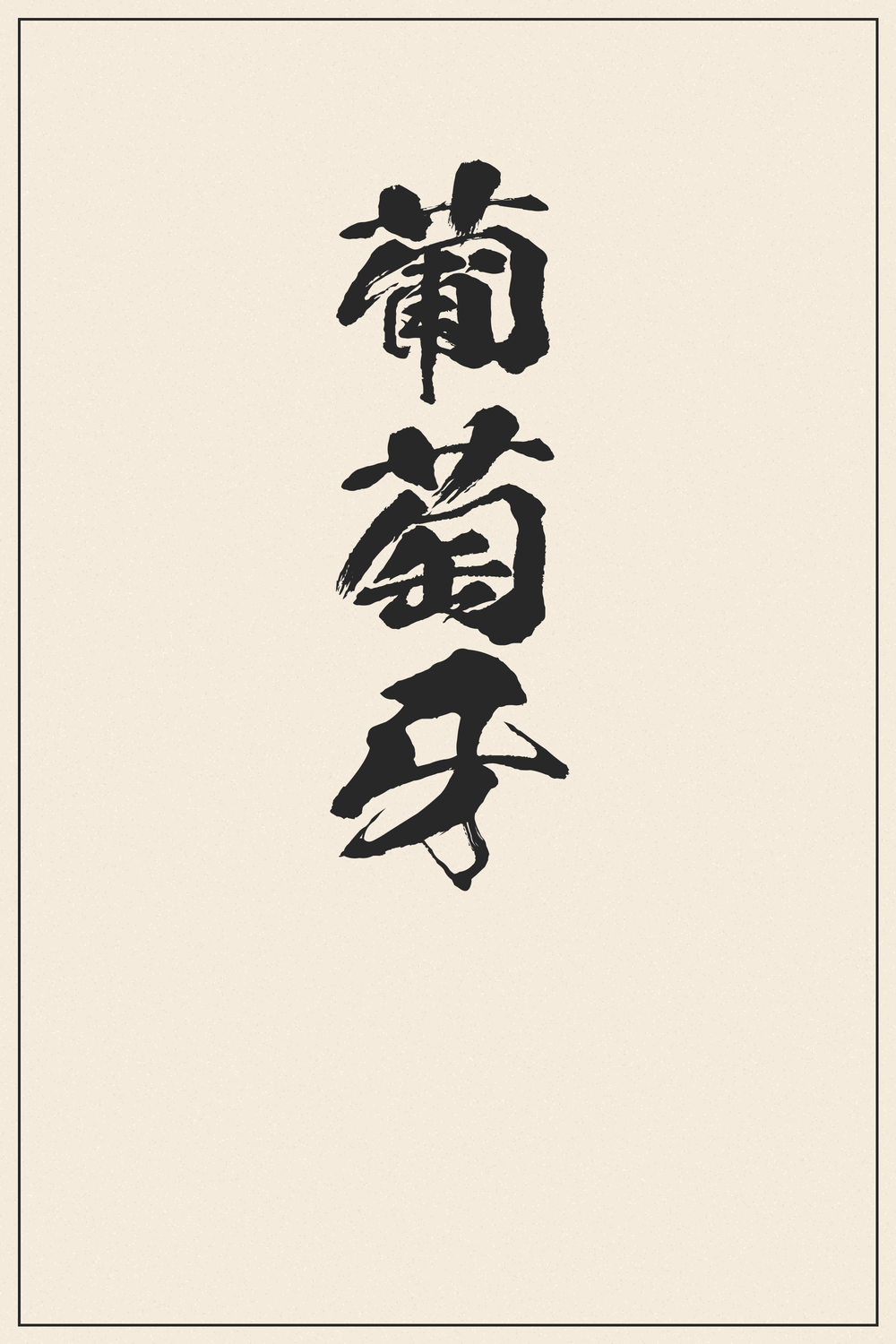
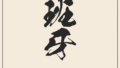
The atmosphere of a Kanji character changes dramatically depending on the font style. A character that looks elegant in a brush style might look bold and modern in a different font.
Recommendation: Since a tattoo is permanent, we strongly recommend comparing various font styles beyond what is shown here. Use our designs as a trusted reference for the correct structure, but feel free to explore different artistic variations to find the perfect match for your vision.
The Deep Meaning Behind 葡萄牙
The characters 葡萄牙 (Porutogaru) are a classic example of ‘Ateji’ (当て字), where Kanji are used for their phonetic values rather than their literal meanings to represent foreign words or names. This specific combination was chosen centuries ago to phonetically approximate ‘Portugal’ when Europeans first arrived in Japan.
Historically, adapting foreign names into written Japanese posed a challenge, leading to the creative use of Ateji. While 葡萄牙 literally translates to ‘grape grape tooth,’ these meanings are entirely incidental to its function as a country name. It reflects a period of early cultural exchange and the linguistic ingenuity employed to integrate new concepts into the Japanese language.
Kanji Breakdown
The Kanji for Portugal, 葡萄牙, is a phonetic compound. Let’s explore the individual characters, remembering that their literal meanings are secondary to their sounds in this context.
Meaning: Vine, grape. This character features the ‘grass/plant’ (艹) radical at the top, indicating its connection to flora. The lower part, 匍, implies ‘crawling’ or ‘lying prostrate,’ which visually connects to the way a grape vine spreads and grows along the ground or support structures.
Meaning: Grape. Similar to 葡, this character also uses the ‘grass/plant’ (艹) radical. The component 勹 (bao) combined with 勹 (kou) forming 勹 (tao) on its own can mean ‘road’ or ‘path.’ This suggests the spreading nature of a grape vine along a path or trellis, reinforcing the concept of a growing plant.
Meaning: Tooth, fang. This character is an ancient pictograph depicting the shape of a tooth or tusk. In the context of 葡萄牙, it is used purely for its ‘ga’ sound, bearing no semantic relation to the country of Portugal.
Conclusion
In summary, 葡萄牙 (Porutogaru) is a fascinating linguistic artifact, representing Portugal through the phonetic application of Kanji. It stands as a prime example of Ateji, where the literal meanings of ‘grape grape tooth’ are completely superseded by its pronunciation to denote a foreign nation.
For those considering this Kanji, it is crucial to appreciate its role as a phonetic transcription rather than a character with a symbolic meaning related to Portugal. While it carries historical and linguistic weight, its literal components do not offer a deep, inherent ‘Portuguese’ meaning. Its value lies in its historical context and the unique way it represents a distinct culture.
Comments