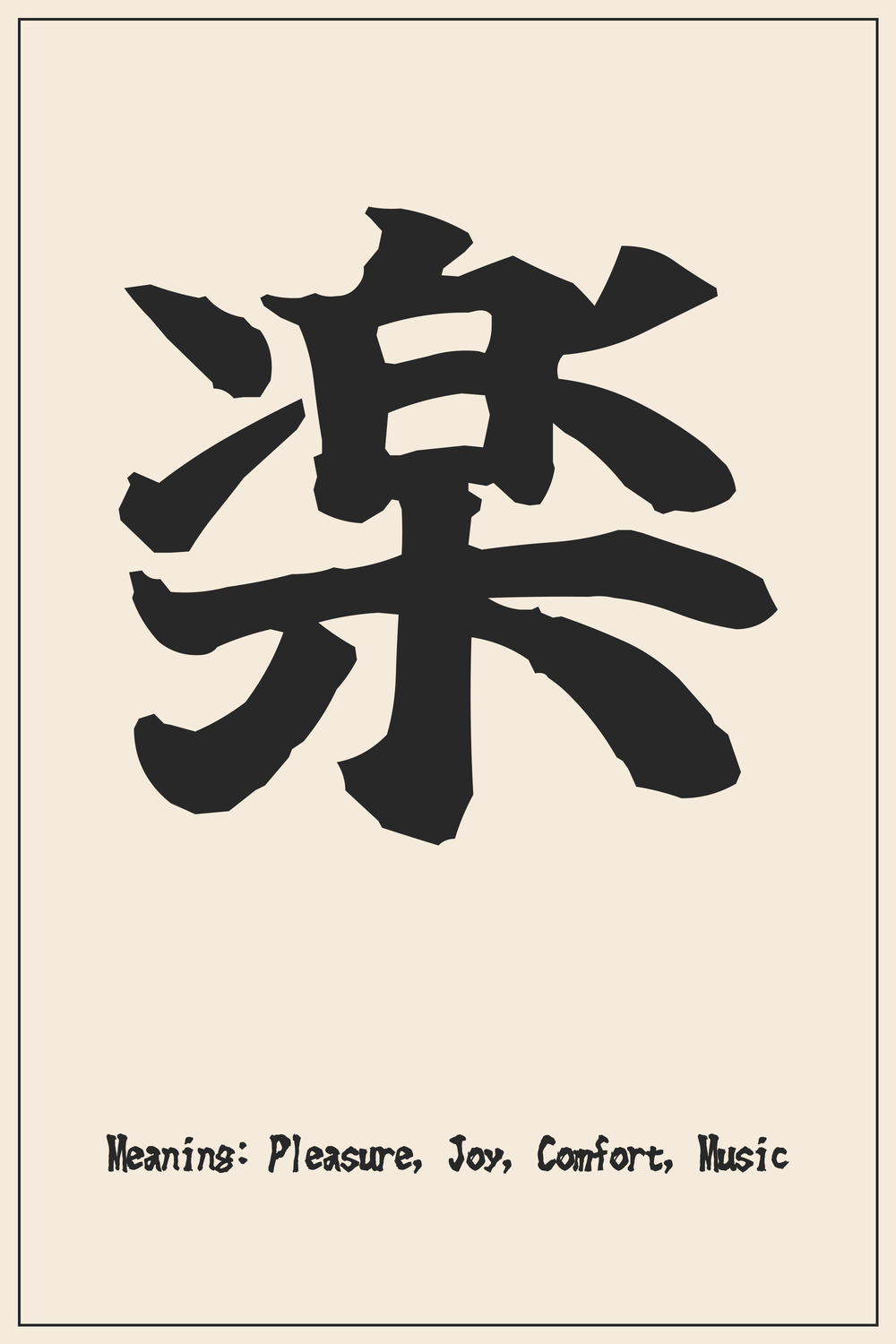
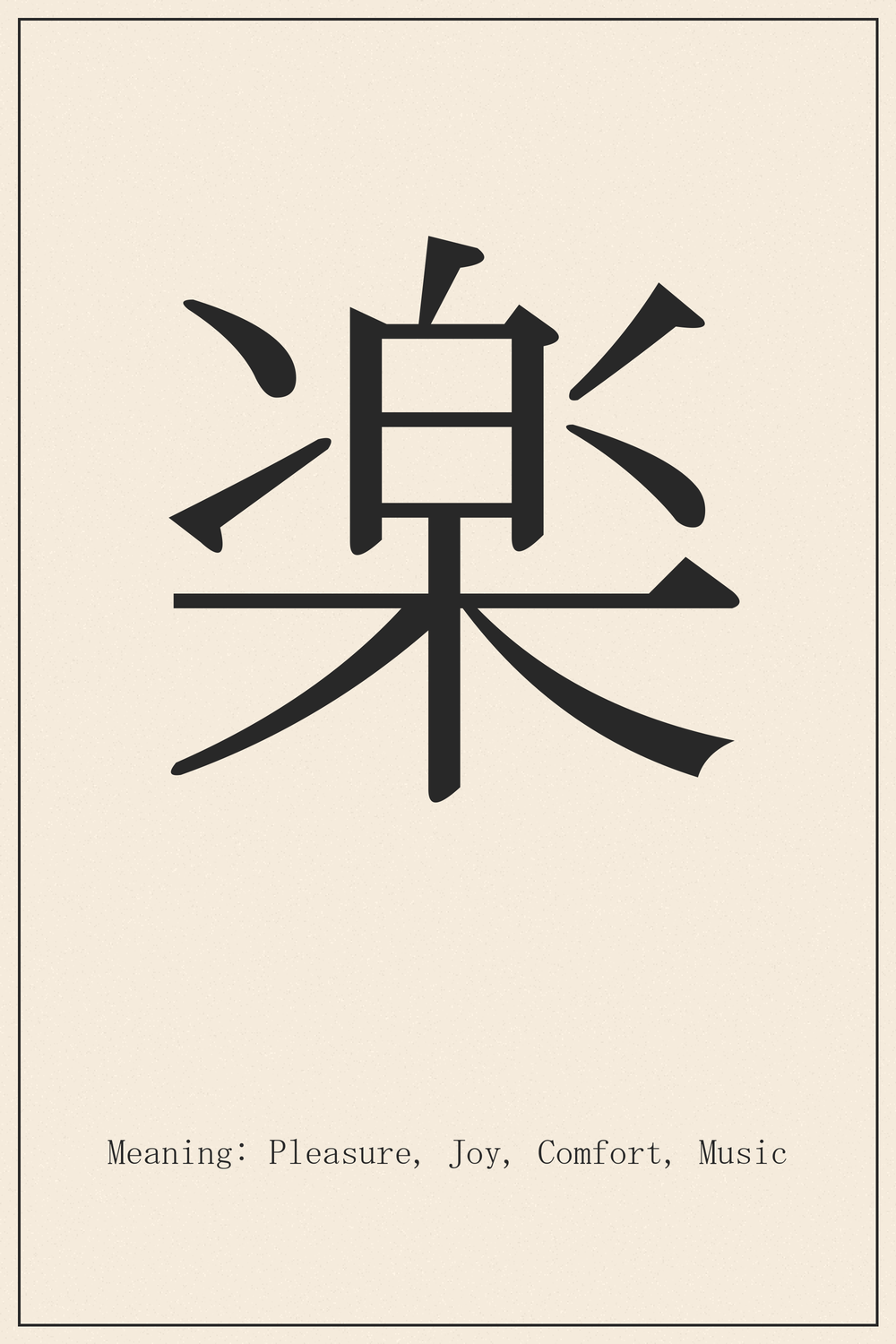
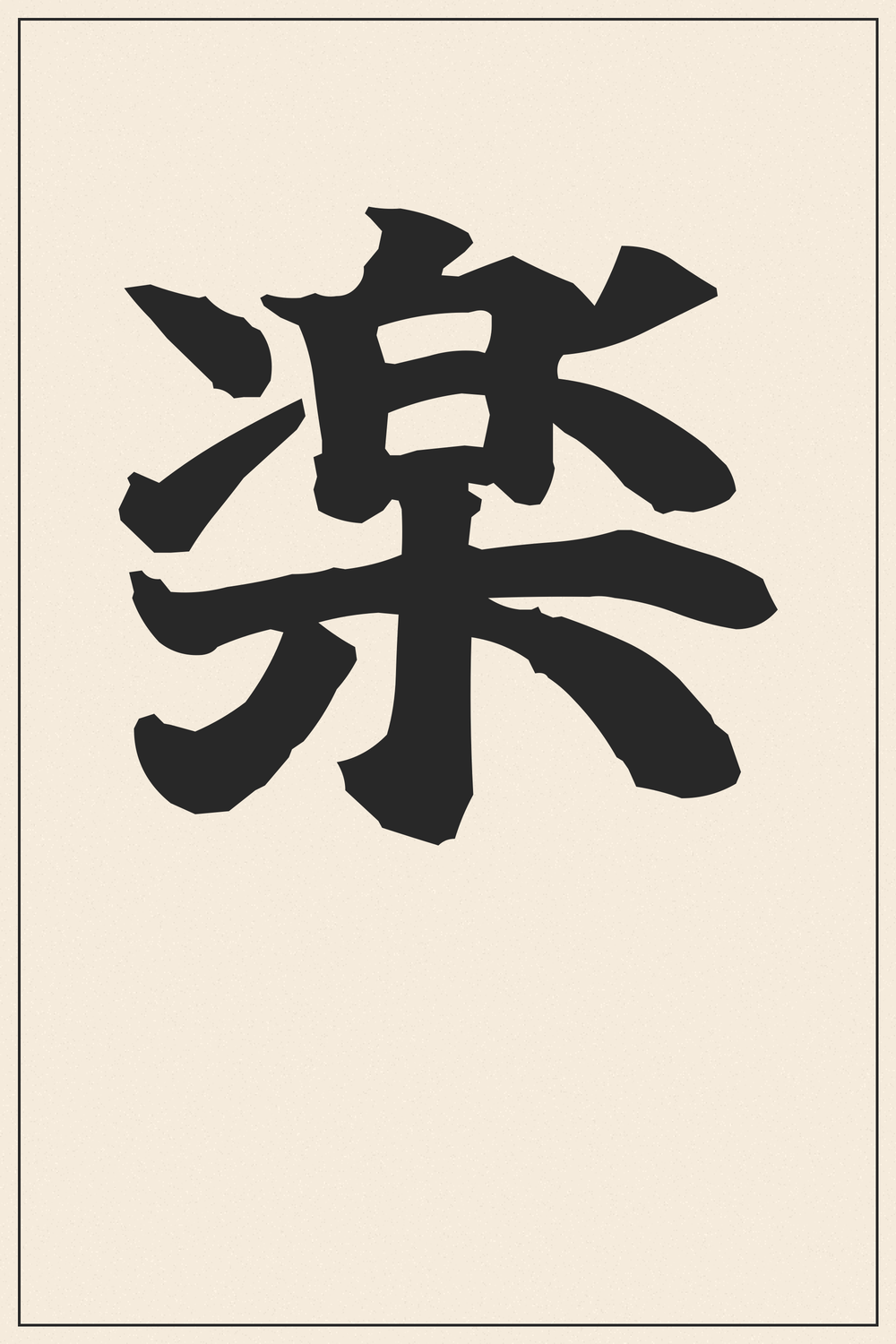
The Kanji 楽 embodies the essence of joy, comfort, and music, offering a profound symbol for a harmonious life. It captures the spirit of enjoyment and ease, making it a powerful emblem for those seeking happiness.
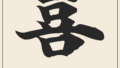
The atmosphere of a Kanji character changes dramatically depending on the font style. A character that looks elegant in a brush style might look bold and modern in a different font.
Recommendation:
Since a tattoo is permanent, we strongly recommend comparing various font styles beyond what is shown here. Use our designs as a trusted reference for the correct structure, but feel free to explore different artistic variations to find the perfect match for your vision.
The Deep Meaning Behind 楽
The Kanji 楽 (gaku, raku, tanoshii) is a fascinating character whose etymology is deeply rooted in music and celebration. Ancient forms of this character depict a stringed instrument or a drum, suggesting a connection to musical performances and the joy they bring.
Over time, its meaning expanded to encompass the broader sensations of pleasure, ease, and comfort that music evokes. This evolution highlights how deeply the concepts of enjoyment and harmony are intertwined in Japanese culture, extending beyond auditory experiences into daily life and well-being.
Kanji Breakdown
The character 楽 is composed of several elements that contribute to its rich meaning:
Meaning: While often meaning ‘white,’ in this context, the top part of 楽 is believed to derive from an ancient depiction of a stringed instrument or a drum, complete with decorative elements, representing the source of music.
Meaning: Represents ‘tree’ or ‘wood.’ In the context of 楽, it symbolizes the wooden stand or frame of the musical instrument depicted in the character’s ancient form.
Meaning: Meaning ‘small,’ these two components at the bottom are thought to represent bells, ornaments, or possibly the sound reverberating from the musical instrument, adding to the visual depiction of music and enjoyment.
Conclusion
The Kanji 楽 is a beautiful representation of pleasure, joy, comfort, and the power of music. It serves as a reminder to find happiness in everyday life, embrace entertainment, and live with ease and contentment.
Choosing 楽 for a tattoo is a testament to one’s appreciation for life’s enjoyable moments and a commitment to a positive mindset. It’s a timeless symbol that resonates with a desire for harmony and happiness, making it a wonderful choice for personal expression.
Comments