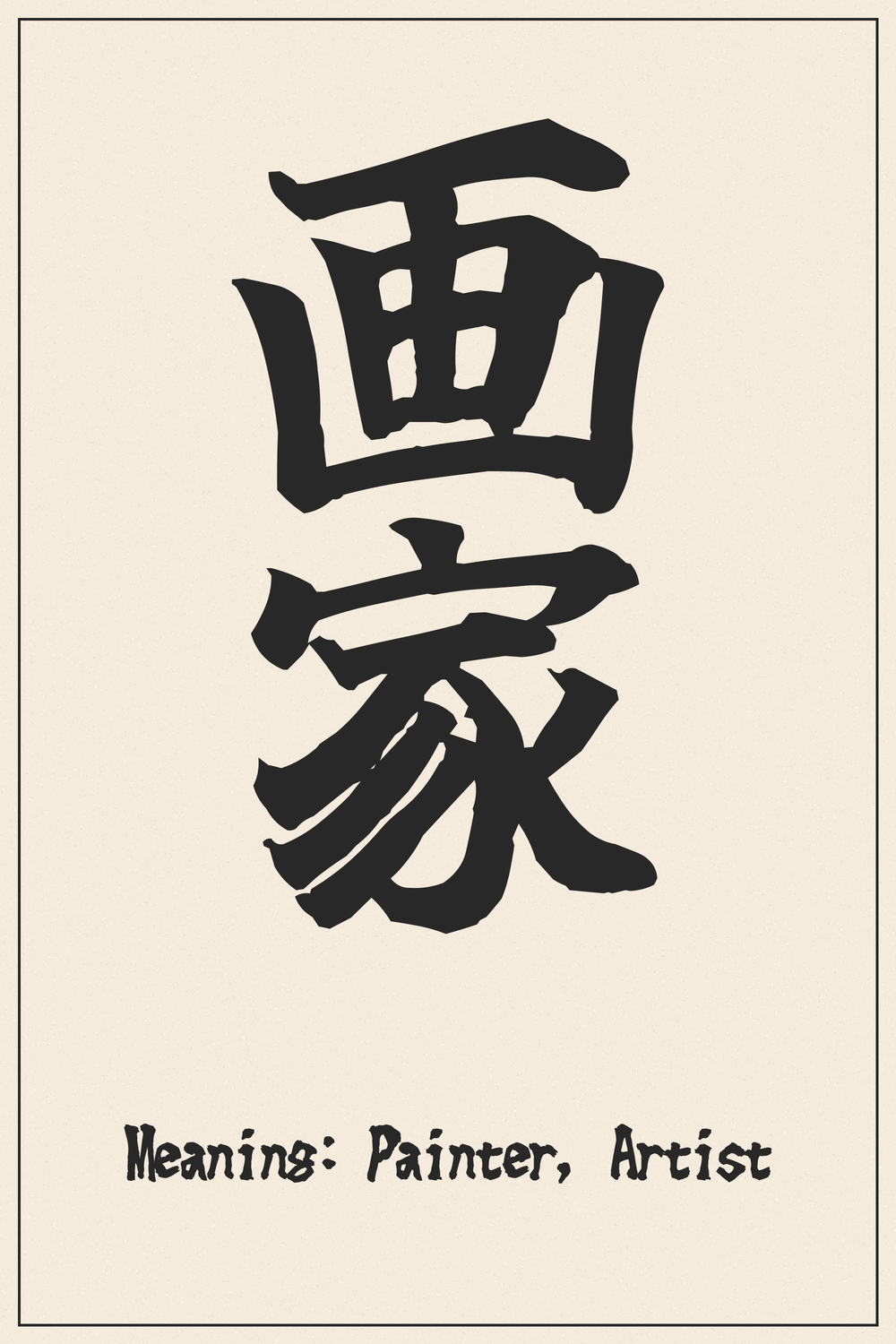
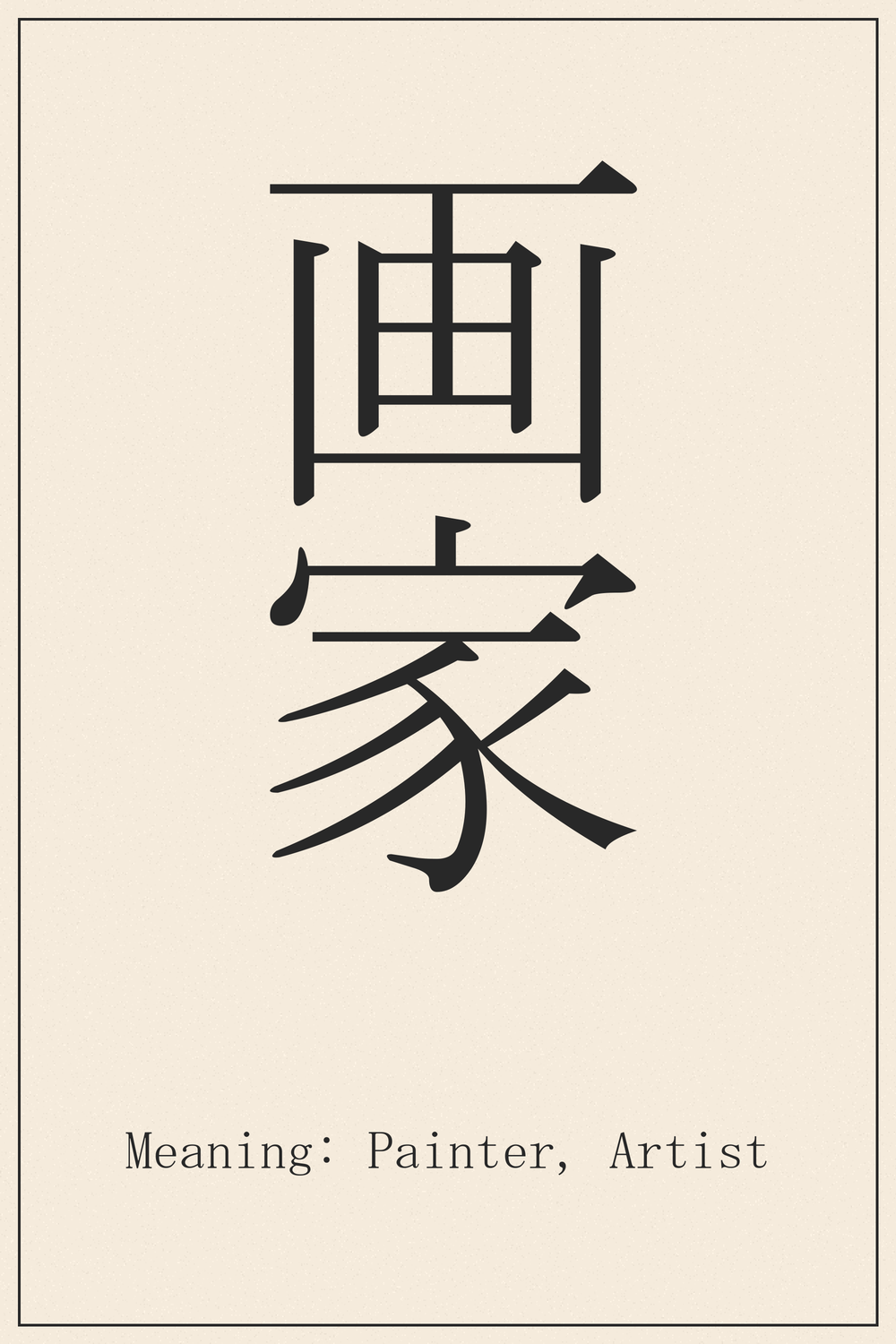
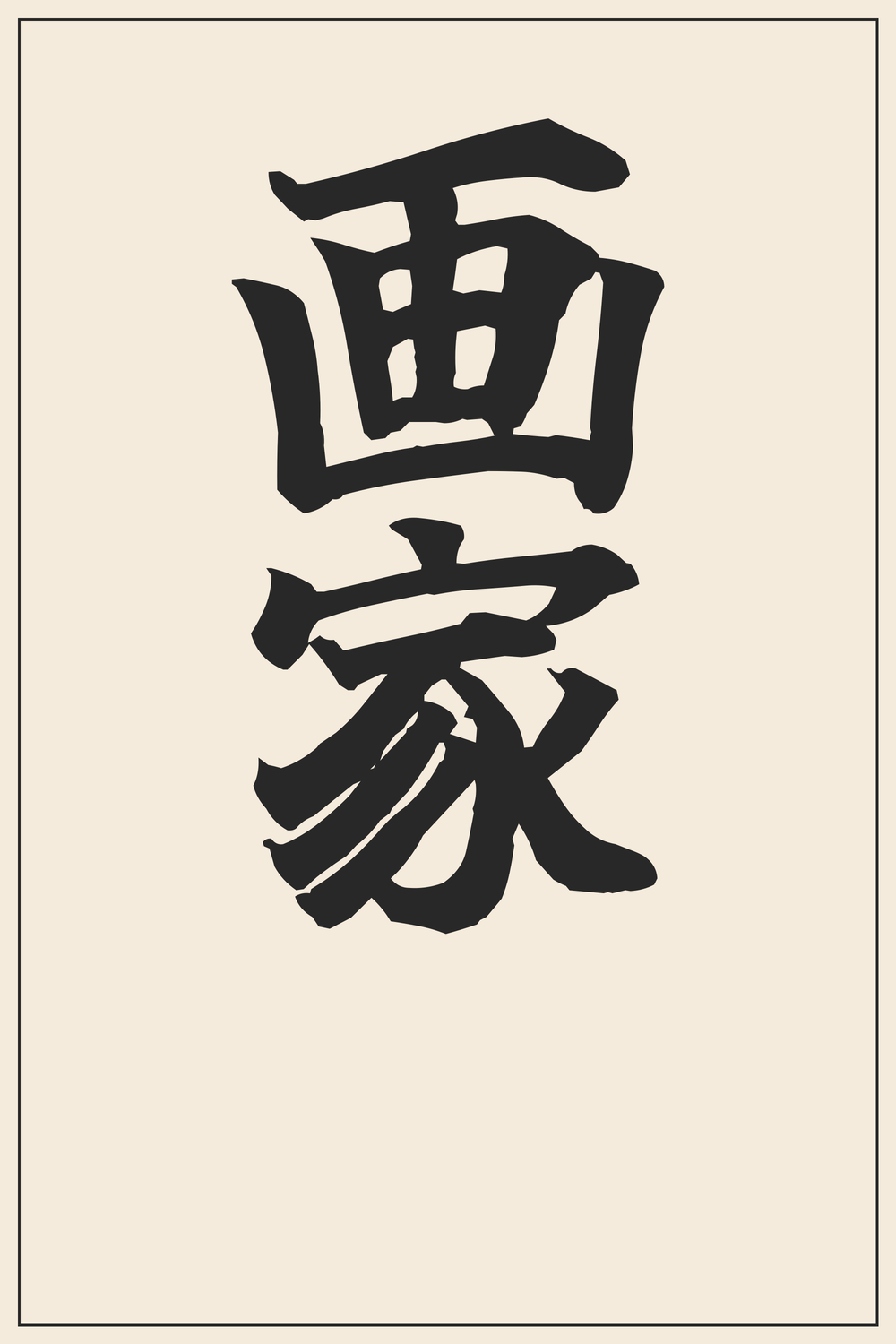
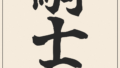
Embodying the essence of creation, the Kanji for ‘Gaka’ captures the spirit of the artist. It is a powerful symbol for those dedicated to visual expression and craftsmanship.
The atmosphere of a Kanji character changes dramatically depending on the font style. A character that looks elegant in a brush style might look bold and modern in a different font.
Recommendation:
Since a tattoo is permanent, we strongly recommend comparing various font styles beyond what is shown here. Use our designs as a trusted reference for the correct structure, but feel free to explore different artistic variations to find the perfect match for your vision.
The Deep Meaning Behind 画家
The term ‘画家’ (Gaka) is a compound Kanji that directly translates to ‘picture’ or ‘drawing’ (画) and ‘house’ or ‘expert’ (家). Historically, ‘家’ was appended to various fields to denote a professional or specialist in that area, signifying mastery and dedication. Thus, ‘画家’ literally means an ‘expert in drawing’ or ‘one who makes pictures professionally’.
In Japanese culture, artists have long held a revered status, from traditional ukiyo-e masters to contemporary manga artists. The concept of ‘道’ (Do), or ‘path,’ is often associated with artistic pursuits, emphasizing discipline, continuous learning, and a deep connection to one’s craft. Embracing ‘画家’ can symbolize a lifelong journey of artistic exploration and contribution.
Kanji Breakdown
The Kanji ‘画家’ is composed of two characters, each contributing to its profound meaning.
Meaning: Picture, drawing, painting, stroke. This character originally depicted a brush drawing lines within an enclosed space or on a field, conveying the action of creating an image or a stroke.
Meaning: House, family, professional, expert. The Kanji combines 宀 (roof) and 豕 (pig), originally representing a dwelling with domesticated animals. It later evolved to signify a household and, when used as a suffix, an expert or specialist in a particular field.
Conclusion
Choosing ‘画家’ as a Kanji tattoo is a profound declaration of identity for those who live and breathe art. It signifies not just a profession, but a deep commitment to creativity, craftsmanship, and visual storytelling.
This Kanji can serve as a constant source of inspiration, representing your passion, skill, and the artistic legacy you wish to create. It is a tribute to the dedicated and expressive spirit of a painter, a timeless symbol of devotion to one’s craft.
Comments