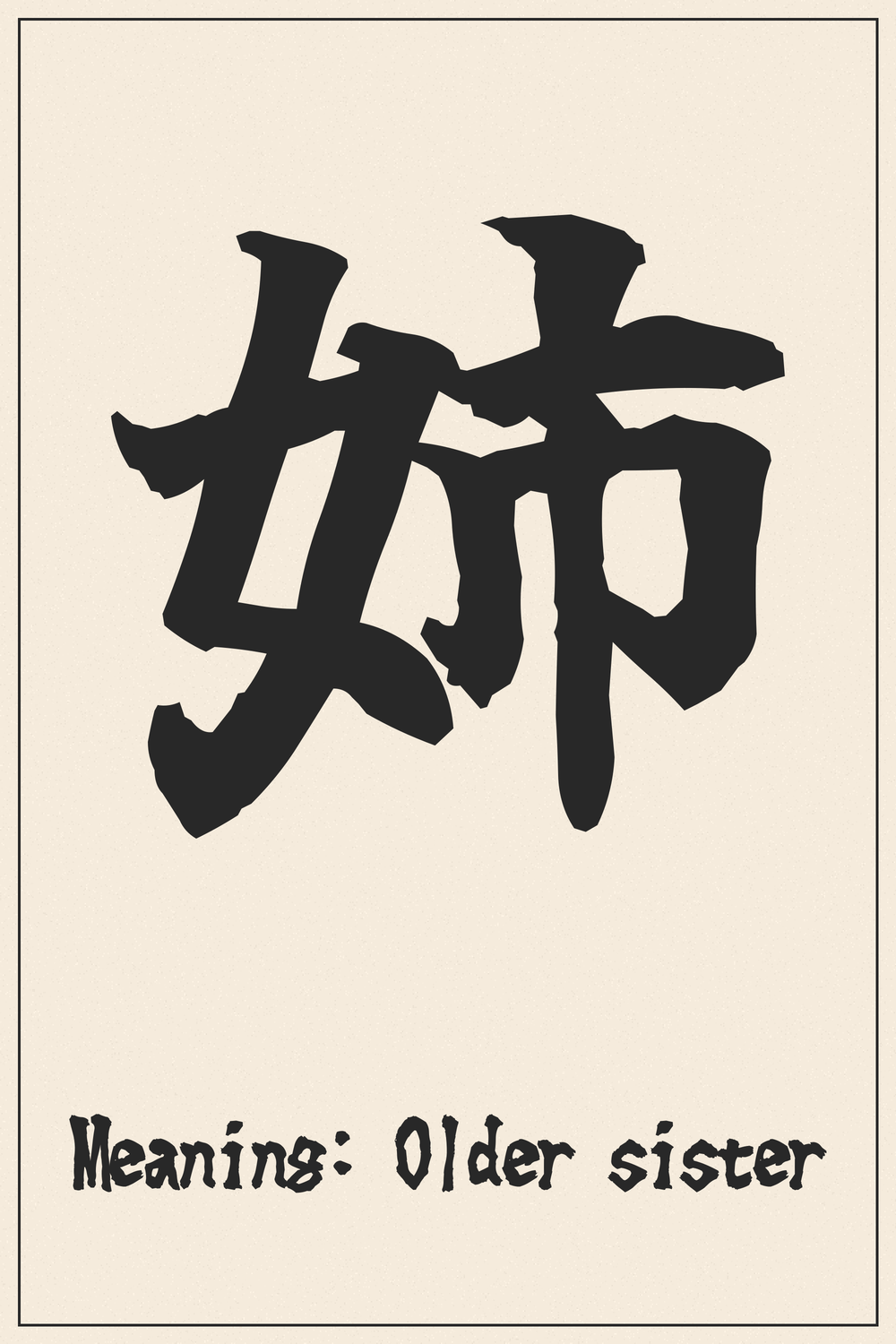
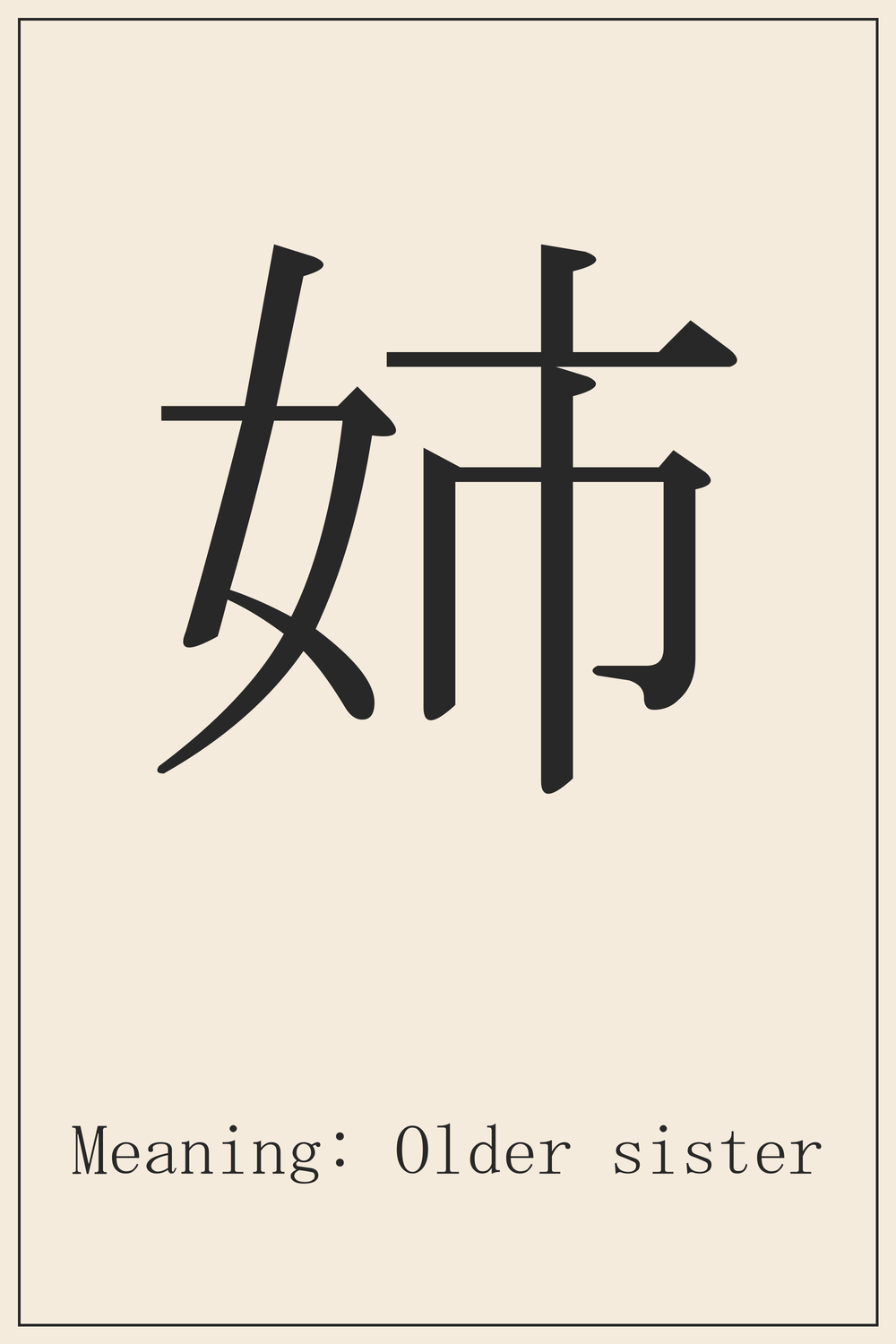
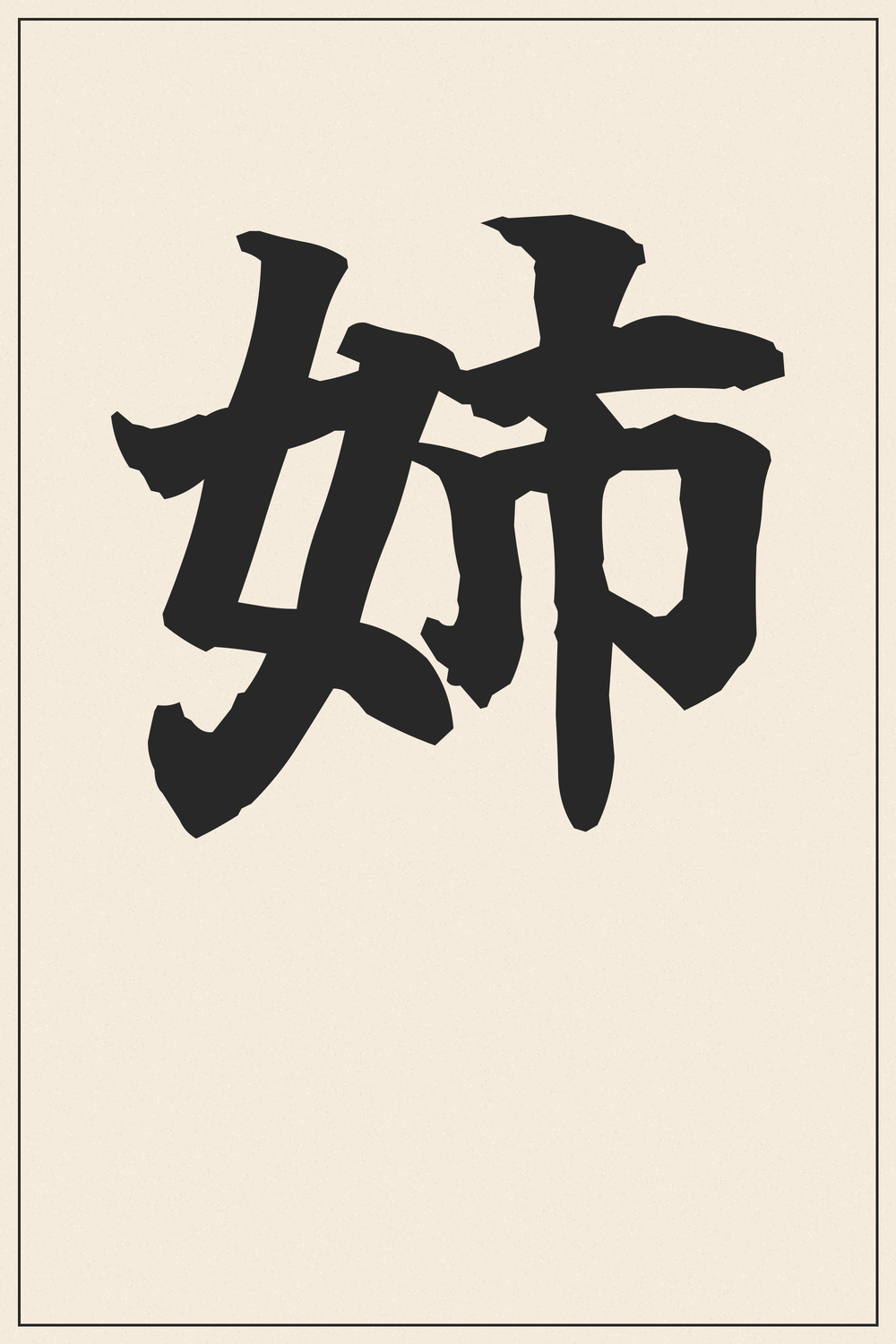
The Kanji 姉, representing ‘older sister,’ is a heartfelt symbol of familial love and respect. It embodies the protective embrace and deep bond shared between siblings, making it a powerful personal statement.
The atmosphere of a Kanji character changes dramatically depending on the font style. A character that looks elegant in a brush style might look bold and modern in a different font.
Recommendation:
Since a tattoo is permanent, we strongly recommend comparing various font styles beyond what is shown here. Use our designs as a trusted reference for the correct structure, but feel free to explore different artistic variations to find the perfect match for your vision.
The Deep Meaning Behind 姉
The character 姉 (ane) is composed of 女 (onna), meaning ‘woman,’ and 市 (ichi), which here acts as a phonetic component or a stylized representation suggesting an elder figure. Historically, the upper part depicted a woman with a hairpin, signifying a woman of mature age or status within the family.
In Japanese culture, the relationship with an older sister (姉) often involves guidance, care, and mutual support. The term carries nuances of respect and endearment, reflecting a hierarchy within the family yet rooted in deep affection and shared history.
Kanji Breakdown
The Kanji 姉 is elegantly constructed from two key components, each contributing to its profound meaning of ‘older sister.’
Meaning: This radical fundamentally means ‘woman’ or ‘female.’ Its presence immediately signifies the gender of the person the Kanji refers to, establishing the core identity of ‘sister.’
Meaning: While commonly meaning ‘city’ or ‘market,’ in the context of 姉, this component’s role is primarily phonetic, influencing the character’s ancient pronunciation. It also visually contributes to the overall structure, hinting at the mature, established status of an older sister, rather than directly conveying a literal ‘market.’
Conclusion
Choosing 姉 for a tattoo is a profound way to honor the unique bond with an older sister, celebrating her influence and the enduring connection you share. This Kanji serves as a timeless emblem of family ties, respect, and unconditional love, offering a subtle yet deeply personal statement.
It’s a beautiful homage to a foundational relationship, perfect for those who cherish their familial connections and wish to carry a symbol of their beloved older sister with them always.
Comments