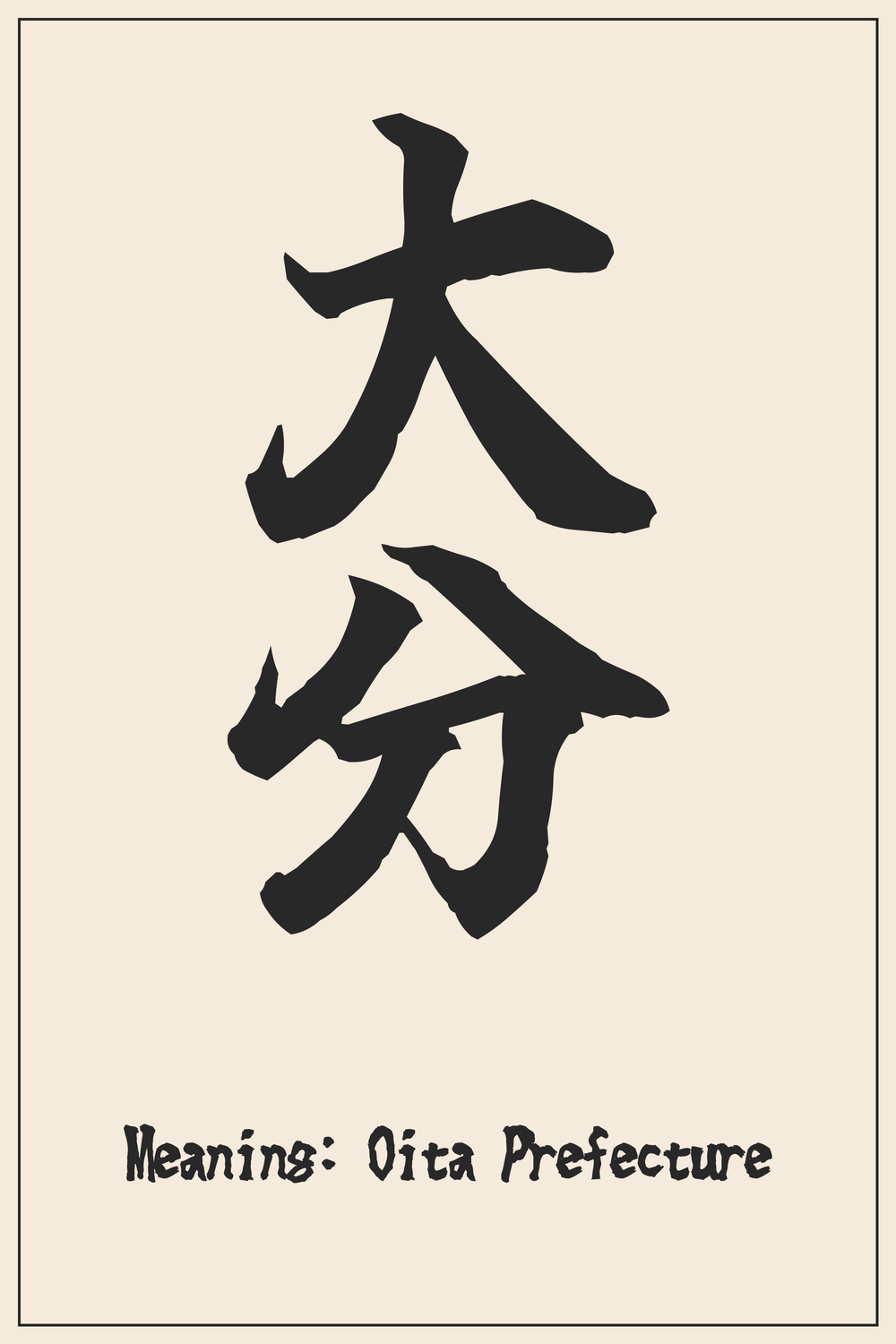
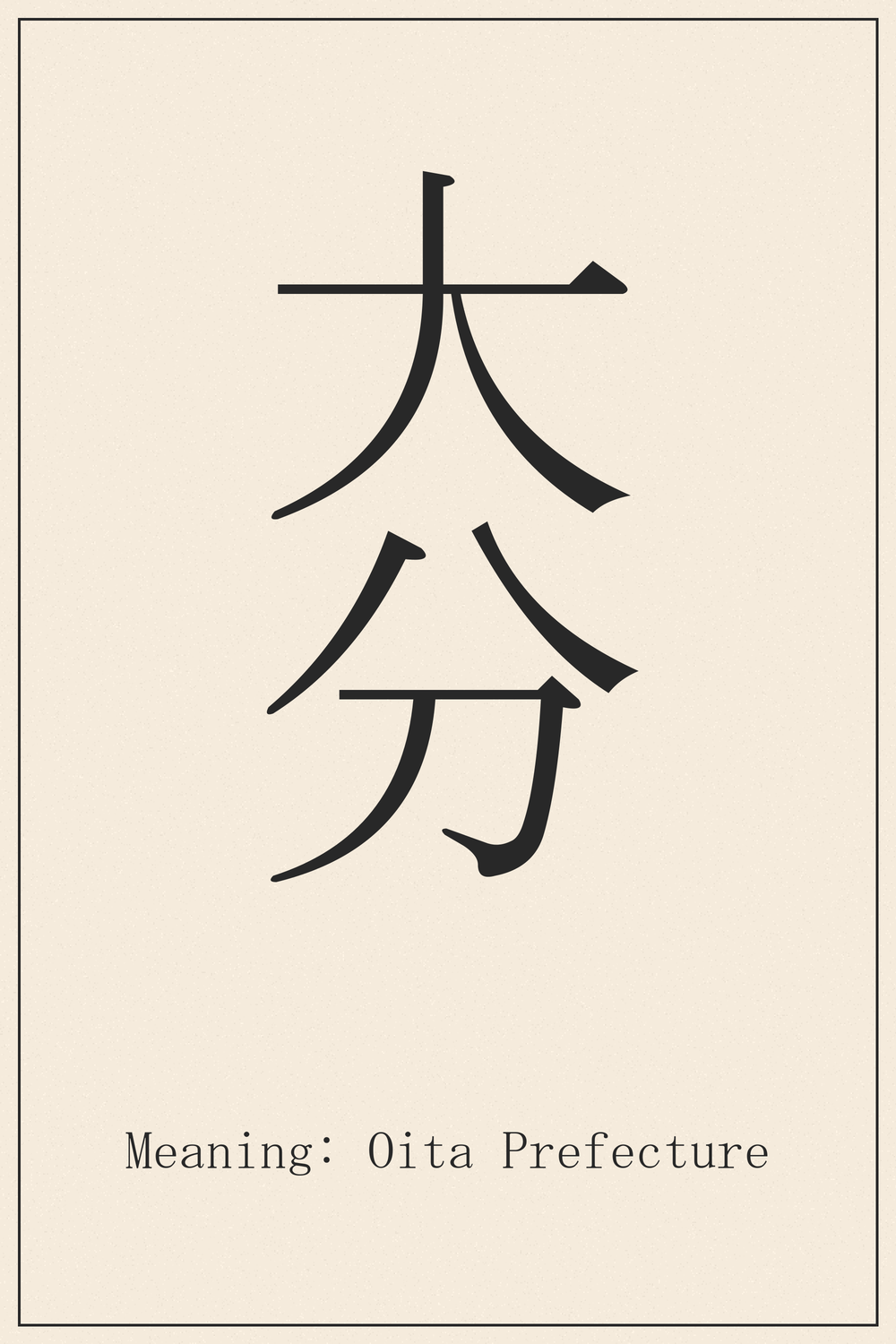
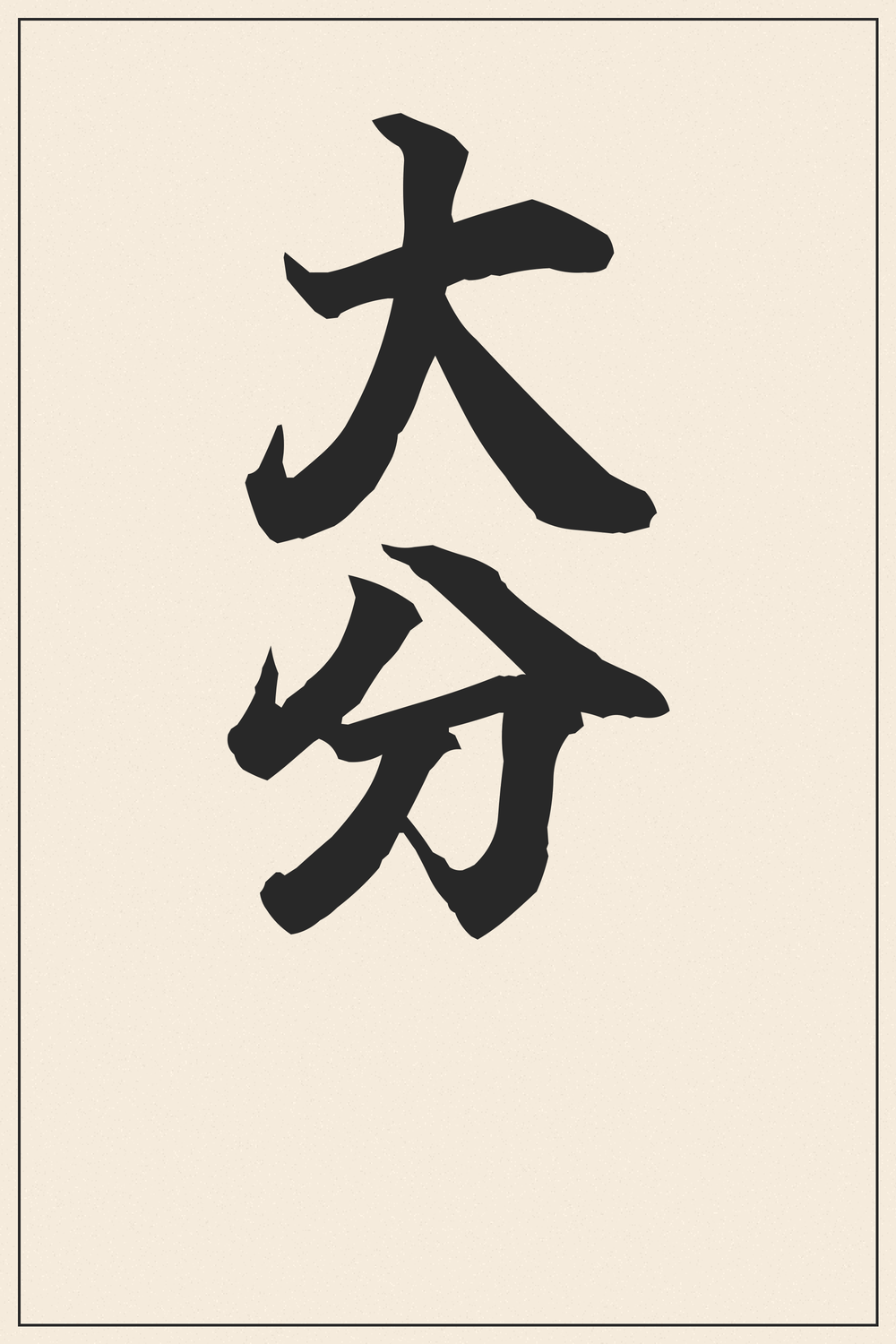
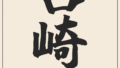
Embrace the spirit of Kyushu with the Kanji for Oita. This character pairing represents a region renowned for its natural beauty and geothermal wonders, carrying a unique sense of place.
The atmosphere of a Kanji character changes dramatically depending on the font style. A character that looks elegant in a brush style might look bold and modern in a different font.
Recommendation:
Since a tattoo is permanent, we strongly recommend comparing various font styles beyond what is shown here. Use our designs as a trusted reference for the correct structure, but feel free to explore different artistic variations to find the perfect match for your vision.
The Deep Meaning Behind 大分
The name ‘Oita’ (大分) is a historical placename, believed to derive from ‘Ōita’ or ‘Ohita,’ signifying ‘big field’ or ‘big rice paddy’ in ancient Japanese, though the exact etymology is debated. The characters 大 (ō/dai: big) and 分 (ita/bun: part/divide) are applied to represent this ancient sound and meaning.
Oita Prefecture, located on the island of Kyushu, is famously known as the ‘hot spring capital’ of Japan, boasting numerous onsen resorts like Beppu and Yufuin. It symbolizes natural abundance and a deep connection to the earth’s geothermal power, making it a significant location in Japanese culture and tourism.
Kanji Breakdown
The characters forming ‘Oita’ each carry distinct meanings, contributing to the identity of this celebrated Japanese prefecture.
Meaning: Big, Great, Large. This kanji depicts a person stretching out their arms and legs, symbolizing something vast or large. It conveys concepts of greatness and expansiveness.
Meaning: Part, Divide, Portion. The character 分 combines 八 (hachi, eight, also represents division) and 刀 (katana, sword/knife). It originally depicted something being divided into parts with a knife, hence its meaning of separation or portion.
Conclusion
Choosing ‘大分’ for a Kanji tattoo signifies a personal connection to this vibrant Japanese prefecture, known for its unique culture and natural wonders. It represents more than just a place; it embodies a region of profound beauty and warmth.
For those with cherished memories of Oita, or a deep appreciation for its cultural contributions, this Kanji offers a subtle yet powerful symbol. Its clean lines and distinct character make it a sophisticated and meaningful tribute.
Comments