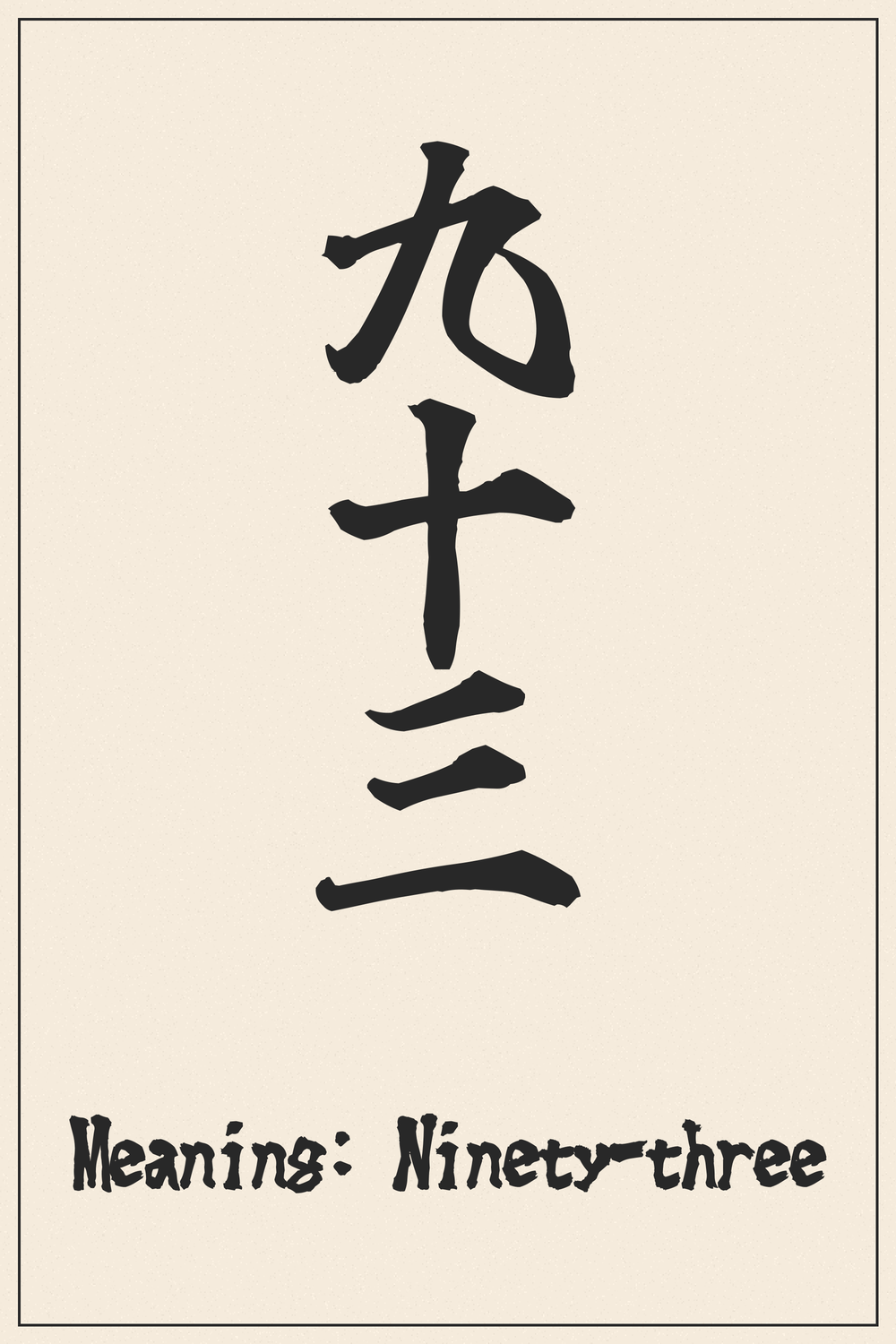

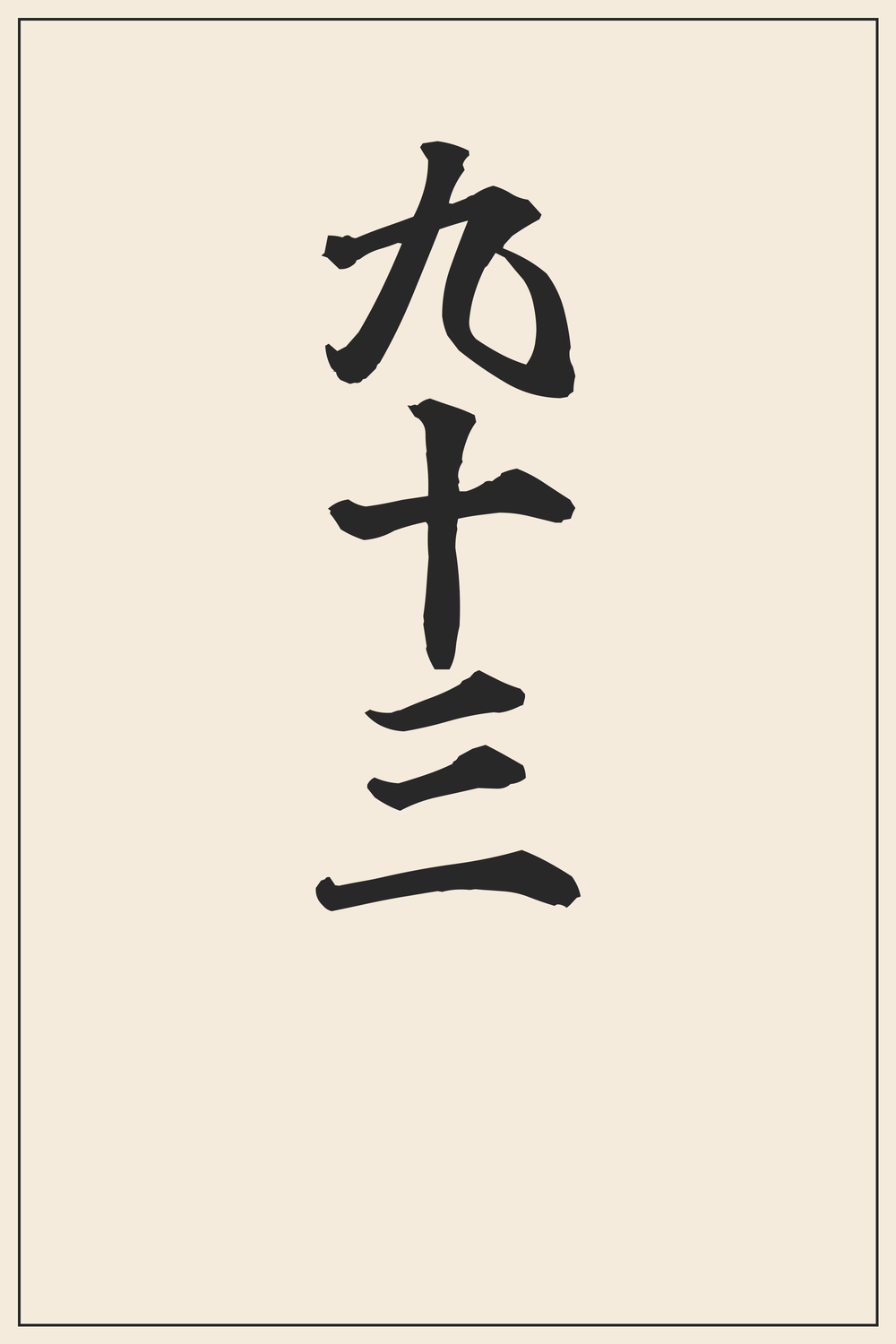
The Kanji for ‘Ninety-three’ represents a specific numerical value, offering a clear and direct statement. It can symbolize an age, a significant count, or a milestone achieved in one’s journey.
The atmosphere of a Kanji character changes dramatically depending on the font style. A character that looks elegant in a brush style might look bold and modern in a different font.
Recommendation:
Since a tattoo is permanent, we strongly recommend comparing various font styles beyond what is shown here. Use our designs as a trusted reference for the correct structure, but feel free to explore different artistic variations to find the perfect match for your vision.
The Deep Meaning Behind 九十三
In Japanese, compound numbers like 九十三 (Kyuujuu San) are formed by combining individual numerical Kanji. 九 (kyuu/ku) means ‘nine’, 十 (juu) means ‘ten’, and 三 (san) means ‘three’. Together, they literally translate to ‘nine-ten-three’, which is the standard way to express ‘ninety-three’.
While ‘ninety-three’ itself doesn’t carry deep philosophical or cultural symbolism in the same way as concepts like ‘zen’ or ‘harmony’, it serves as a precise and concrete representation of quantity. It can signify an age, a personal milestone, a significant count, or even a date, making its meaning highly personal and contextual to the individual who chooses it.
Kanji Breakdown
The number ninety-three is composed of three fundamental Kanji, each with its own clear meaning and structure:
Meaning: Nine
This simple Kanji directly represents the number nine. It is characterized by its two distinct strokes.
Meaning: Ten
Visually resembling a cross, this Kanji represents the number ten, often symbolizing completeness or the end of a cycle in counting.
Meaning: Three
This Kanji is one of the simplest, consisting of three horizontal strokes, directly depicting the number three.
Conclusion
The Kanji 九十三, meaning ‘Ninety-three’, offers a straightforward and unambiguous numerical representation. It embodies the essence of a specific quantity, whether it refers to an age, a count, or a significant personal milestone. Its directness makes it a powerful symbol for marking a particular point in time or a collection of experiences.
For a tattoo, 九十三 is an excellent choice for those who wish to commemorate a specific age, a number of years, or a quantifiable achievement. Its simple, elegant strokes lend themselves well to clear and impactful designs, ensuring that the chosen numerical significance is both timeless and deeply personal.
Comments