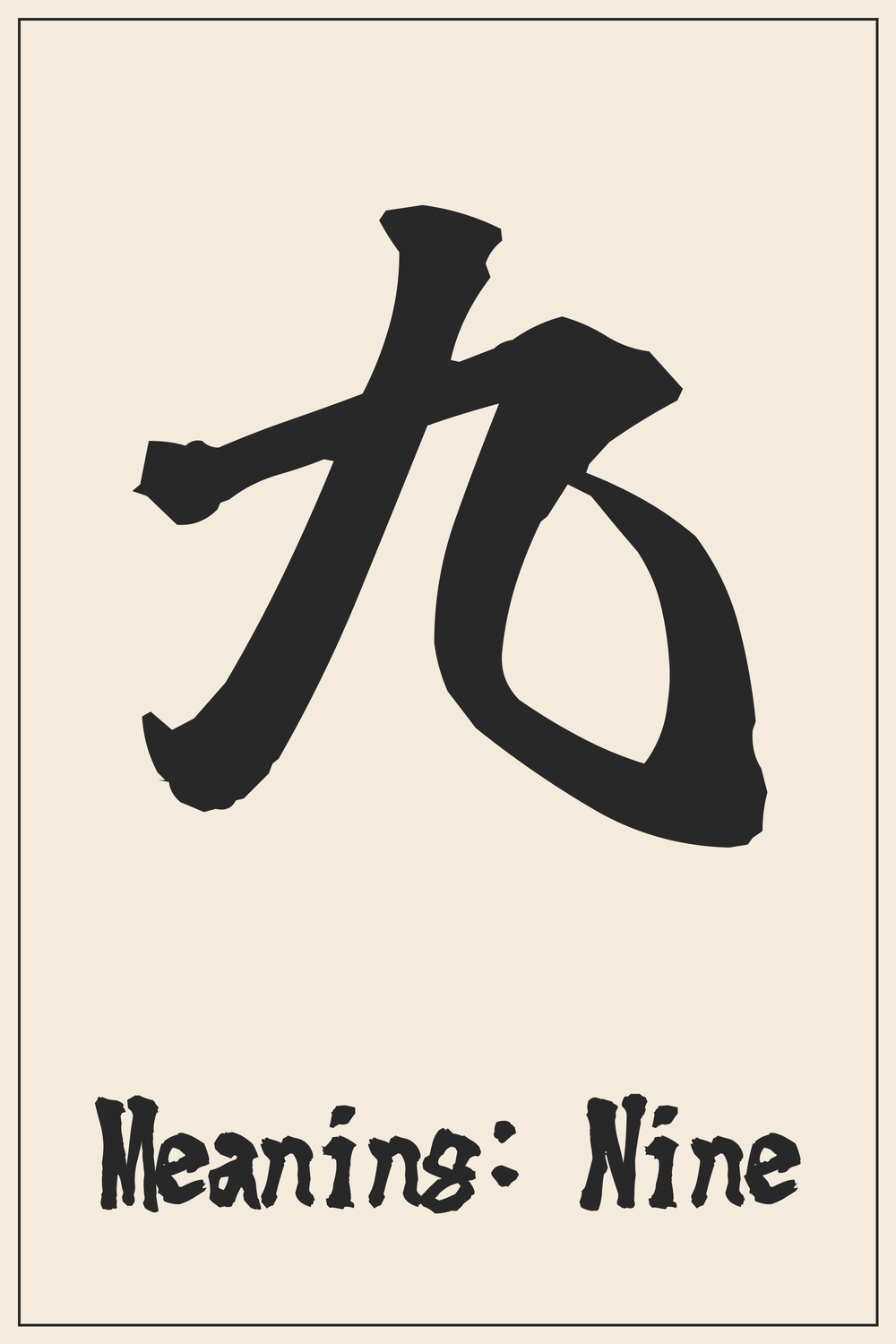
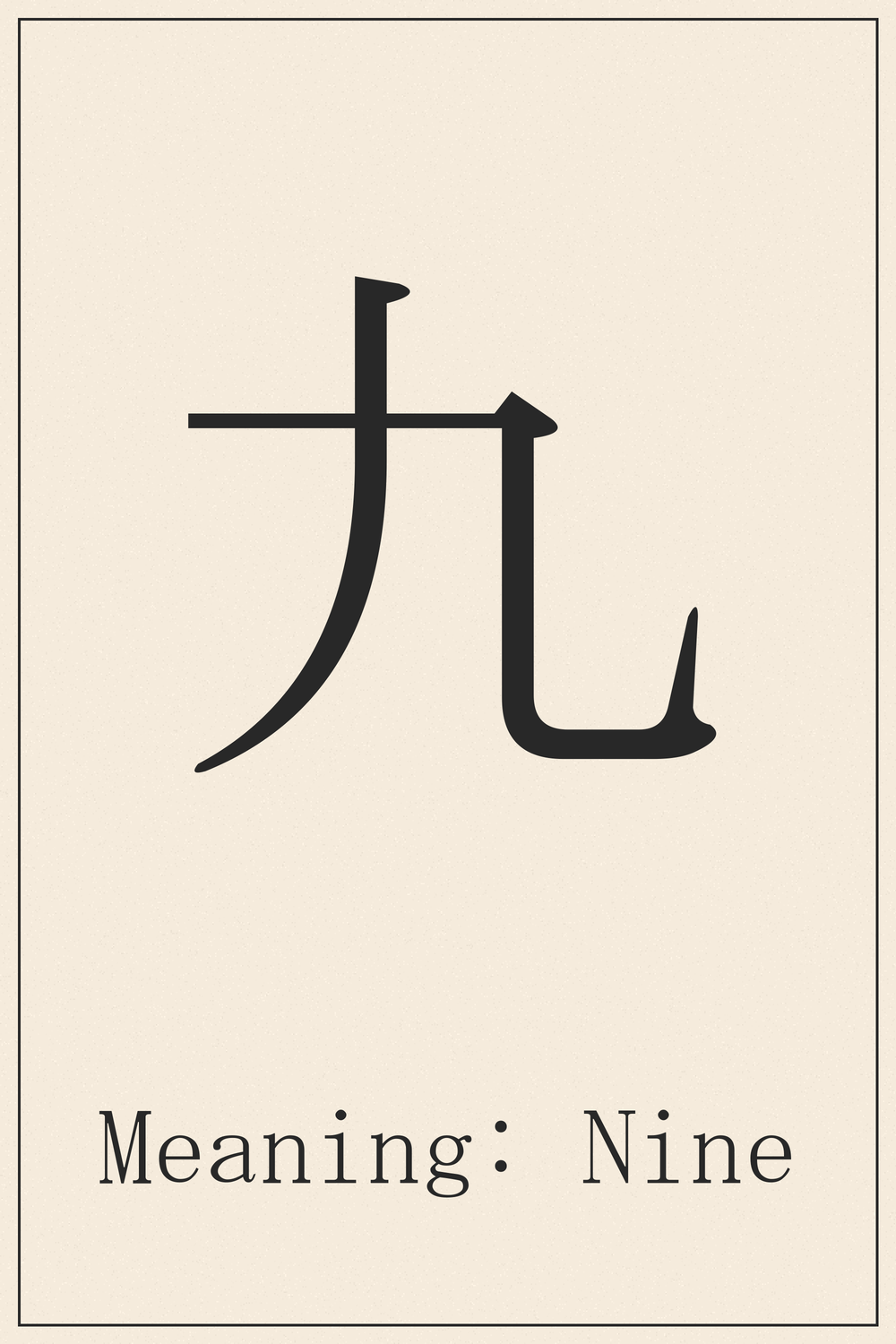

The Kanji ‘九’ (Kyuu) represents the number nine, a fundamental digit in numerology. However, in Japanese culture, it carries a significant, often negative, symbolic weight due to its pronunciation.
The atmosphere of a Kanji character changes dramatically depending on the font style. A character that looks elegant in a brush style might look bold and modern in a different font.
Recommendation:
Since a tattoo is permanent, we strongly recommend comparing various font styles beyond what is shown here. Use our designs as a trusted reference for the correct structure, but feel free to explore different artistic variations to find the perfect match for your vision.
The Deep Meaning Behind 九
The character 九 is an ancient ideogram, believed to have originated from a pictographic representation of a bent arm or elbow, eventually evolving to denote the number nine. Its simple, elegant strokes represent a basic numerical concept.
While numerically straightforward, 九 holds a unique place in Japanese culture. Its most common reading, ‘ku,’ is a homophone for 苦 (suffering, agony). This linguistic connection imbues the number nine with an unfortunate, inauspicious connotation, often leading to its avoidance in certain contexts, such as hospital room numbers or flight seats.
Kanji Breakdown
The Kanji 九, with its elegant simplicity, stands as a single, indivisible character, symbolizing the number nine.
Nine: This single character directly represents the cardinal number nine. Its formation is a testament to the concise nature of Kanji, capturing a fundamental quantity with minimal strokes.
Conclusion
The Kanji 九 fundamentally signifies the number nine, a universal numerical value. However, its cultural interpretation in Japan is deeply colored by its phonetic resemblance to ‘suffering,’ rendering it a number often associated with misfortune rather than completeness or power.
For those considering a Kanji tattoo, it is paramount to understand not just the literal meaning but also the cultural nuances. While visually simple, 九’s strong negative association in Japanese culture makes it a choice best approached with caution, as it could unintentionally convey a message of hardship or bad luck.
Comments