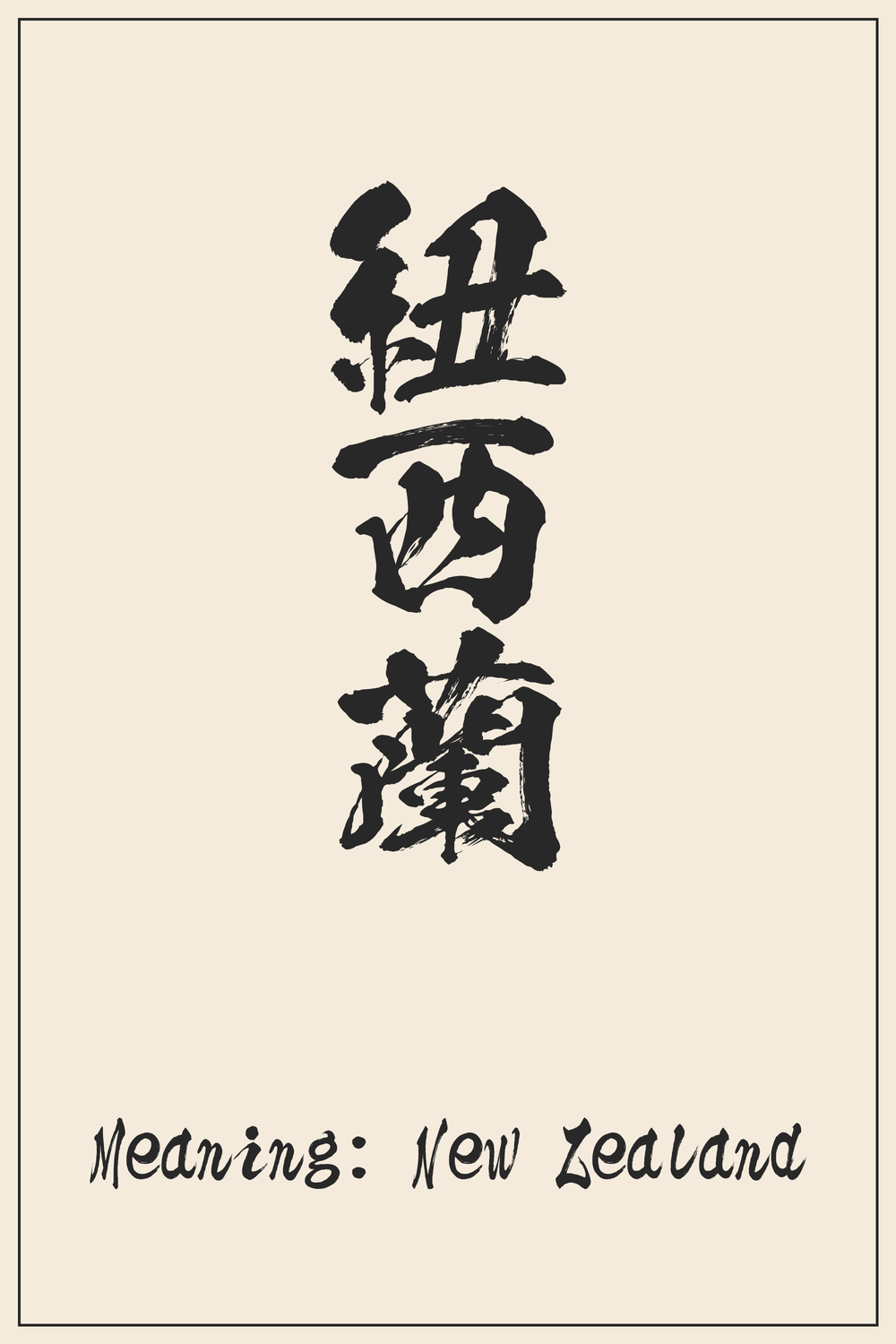
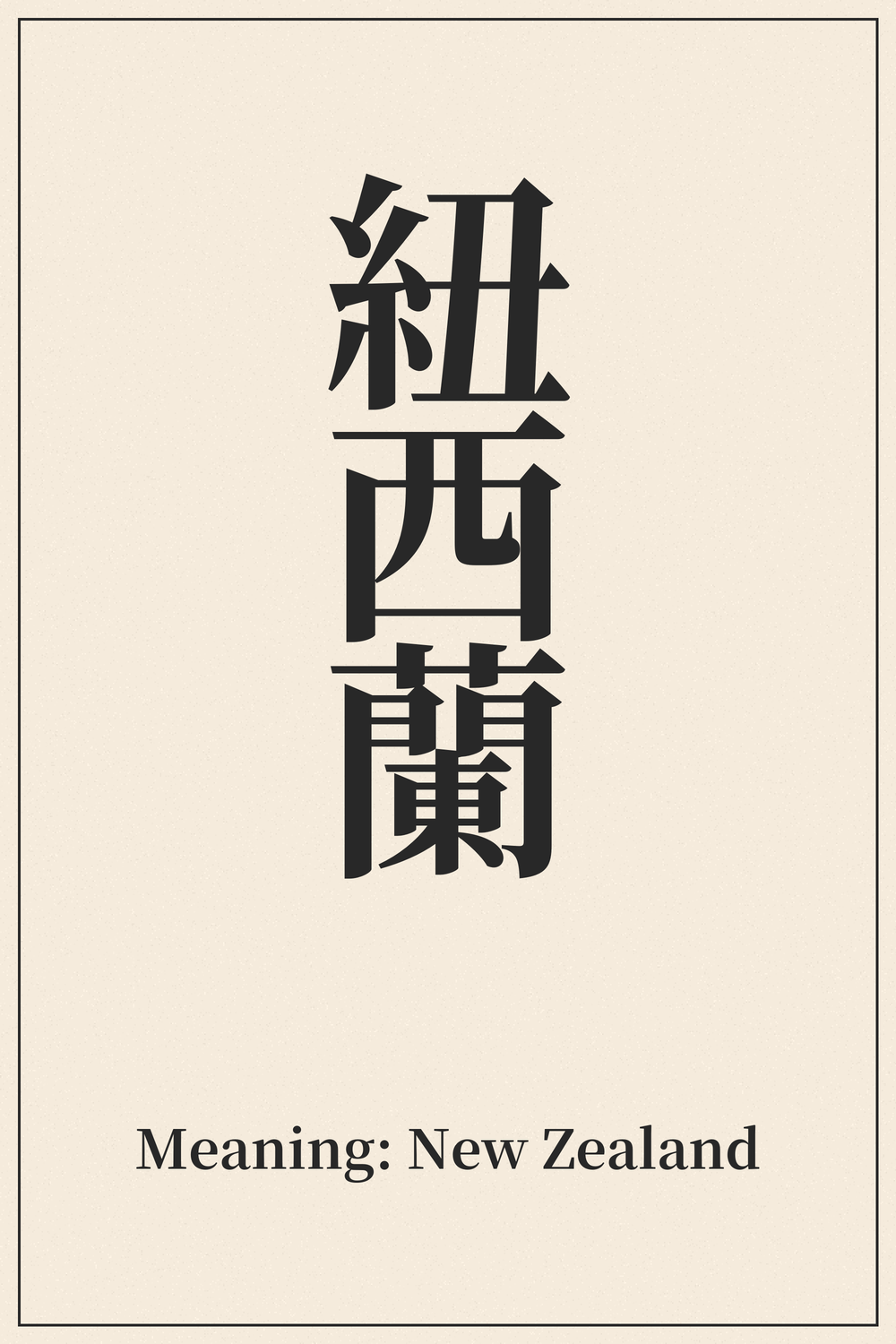
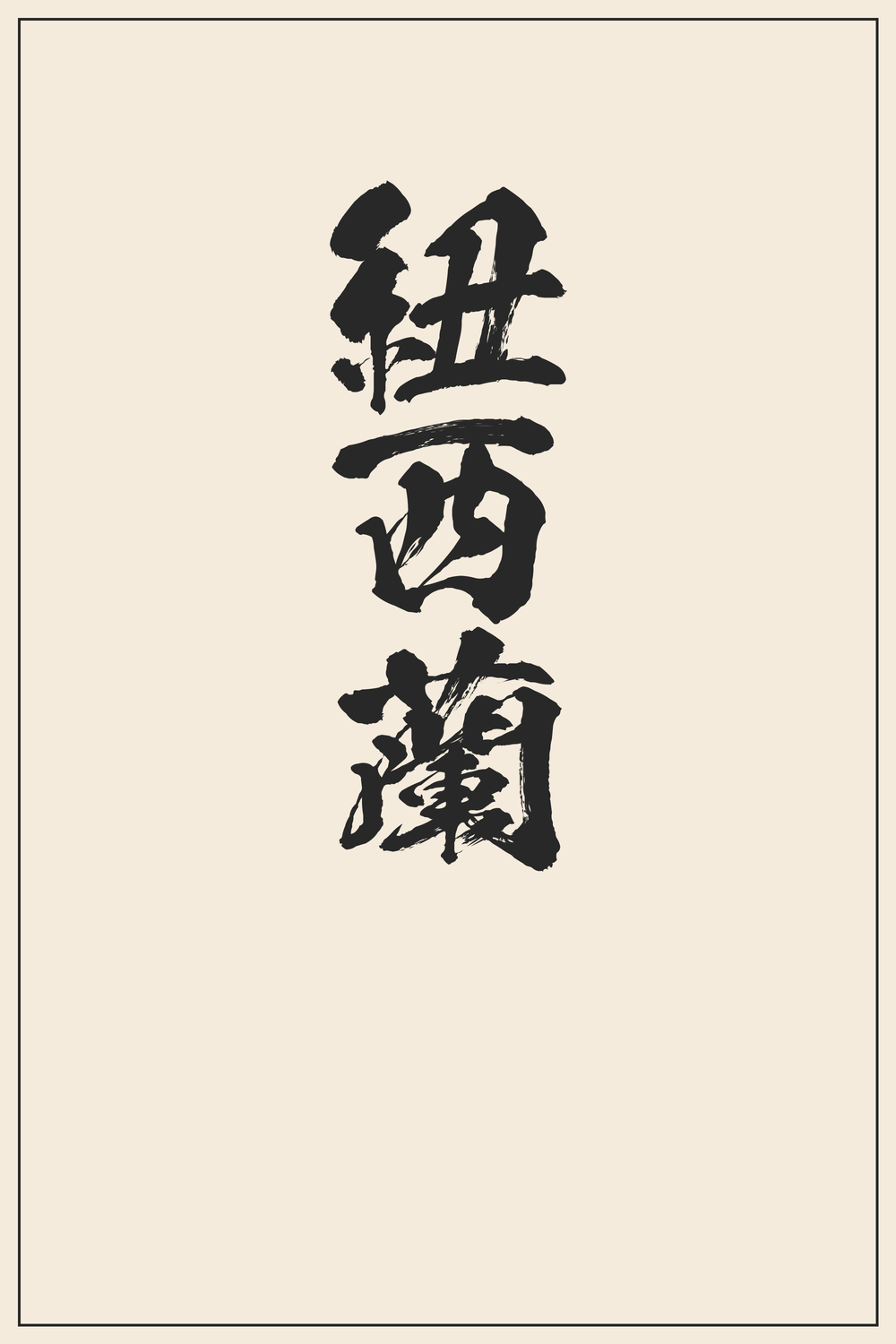
紐西蘭 (Nyuujiiran) is a fascinating example of how Japanese adapts foreign words. Rather than conveying a symbolic meaning, these characters are carefully selected purely for their phonetic values, representing the country New Zealand.
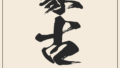
The atmosphere of a Kanji character changes dramatically depending on the font style. A character that looks elegant in a brush style might look bold and modern in a different font.
Recommendation: Since a tattoo is permanent, we strongly recommend comparing various font styles beyond what is shown here. Use our designs as a trusted reference for the correct structure, but feel free to explore different artistic variations to find the perfect match for your vision.
The Deep Meaning Behind 紐西蘭
The Kanji combination 紐西蘭 (Nyuujiiran) serves as an ateji, a phonetic transcription, for the country ‘New Zealand’. These characters are chosen not for their individual meanings to form a new concept, but solely for their sounds to approximate the foreign name.
Ateji like 紐西蘭 are a common linguistic practice in Japanese, particularly for transliterating foreign proper nouns, including country names. This method allows for the integration of foreign terms into the Japanese script, demonstrating an adaptable approach to language.
Kanji Breakdown
The compound 紐西蘭 is a phonetic transliteration, with each character contributing a sound rather than a semantic meaning to the whole. Here’s a breakdown of the individual Kanji:
Meaning: String, cord, tie. This character is part of the phonetic transcription ‘Nyuujiiran’. It literally means “string” or “cord,” but here it is used for its “nyuu” sound.
Meaning: West. Contributing to the “jii” sound in ‘Nyuujiiran’, this character literally means “west.” Its usage here is purely phonetic, diverging from its original semantic value.
Meaning: Orchid, Holland. This character, meaning “orchid” or historically “Holland,” provides the “ran” sound. It completes the phonetic representation of ‘New Zealand’ without carrying its inherent meaning into the compound name.
Conclusion
紐西蘭 (Nyuujiiran) exemplifies the ingenious use of ateji in Japanese, transforming a foreign country name into a sequence of Kanji based on sound. It highlights how characters can serve a purely phonetic role, distinct from their traditional meanings, to integrate new vocabulary.
While the individual Kanji have rich histories, their combination as ‘New Zealand’ is primarily a phonetic device. For those considering a tattoo, understanding this phonetic context is key. Its beauty lies in its linguistic adaptation rather than a hidden symbolic meaning.
Comments