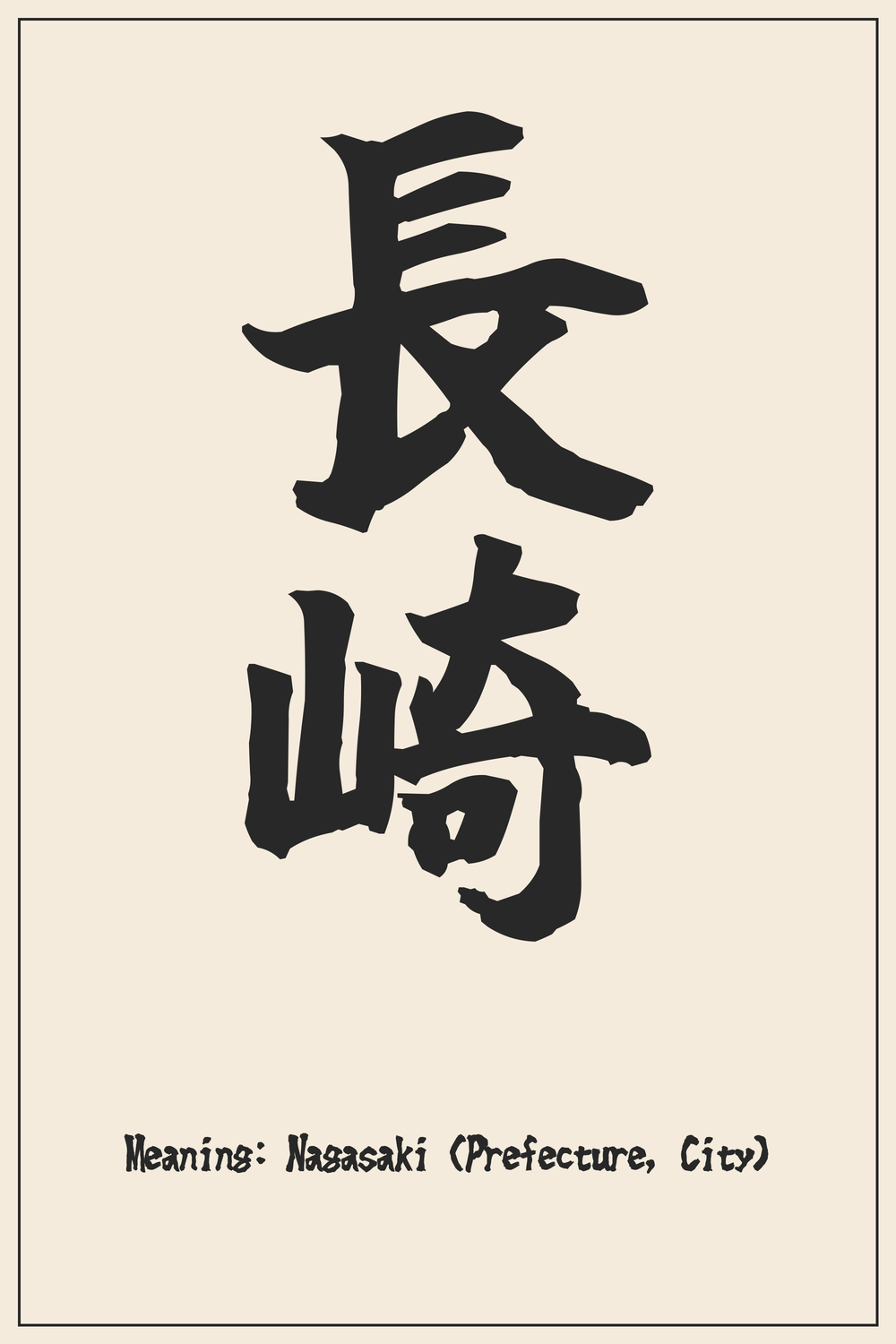
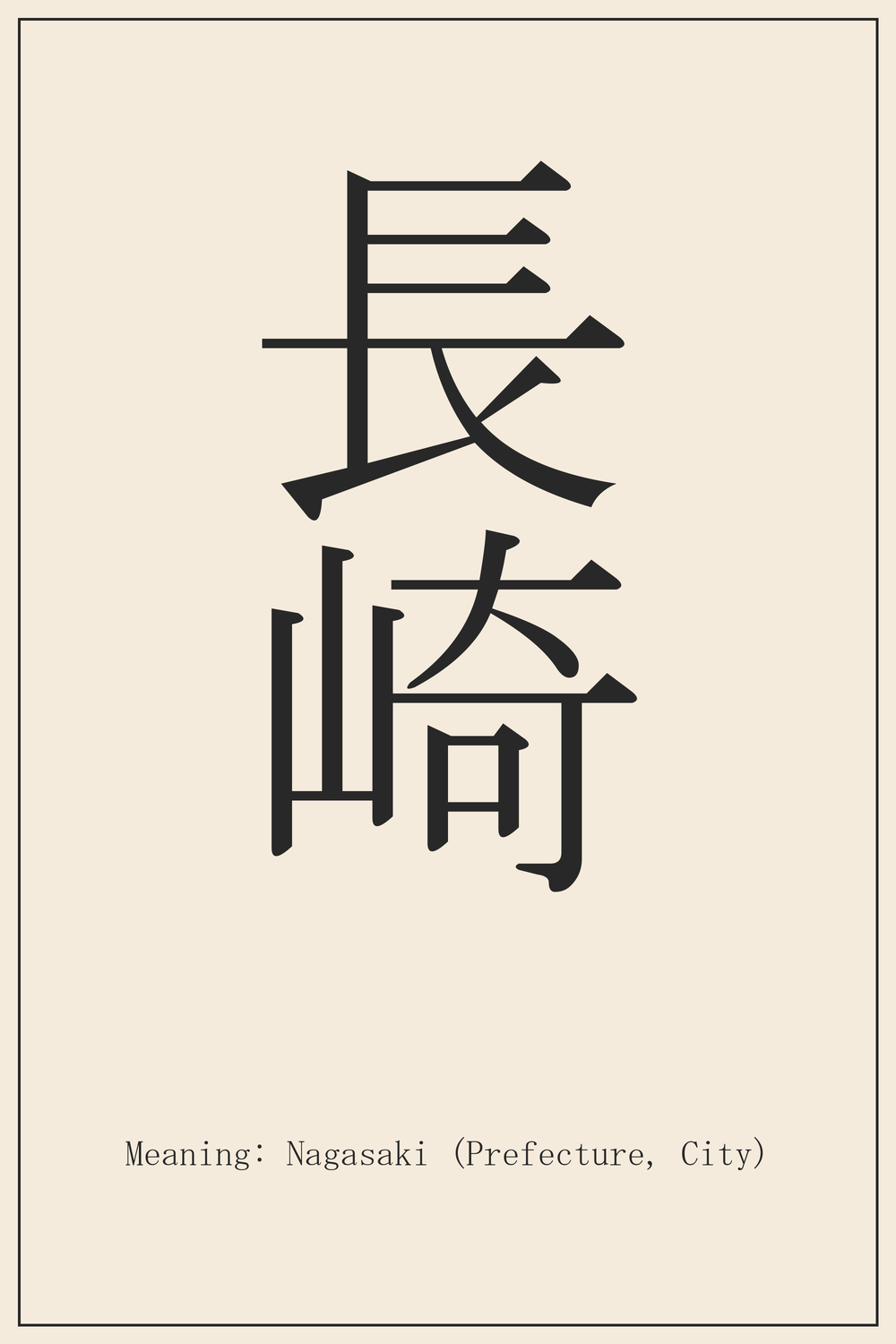
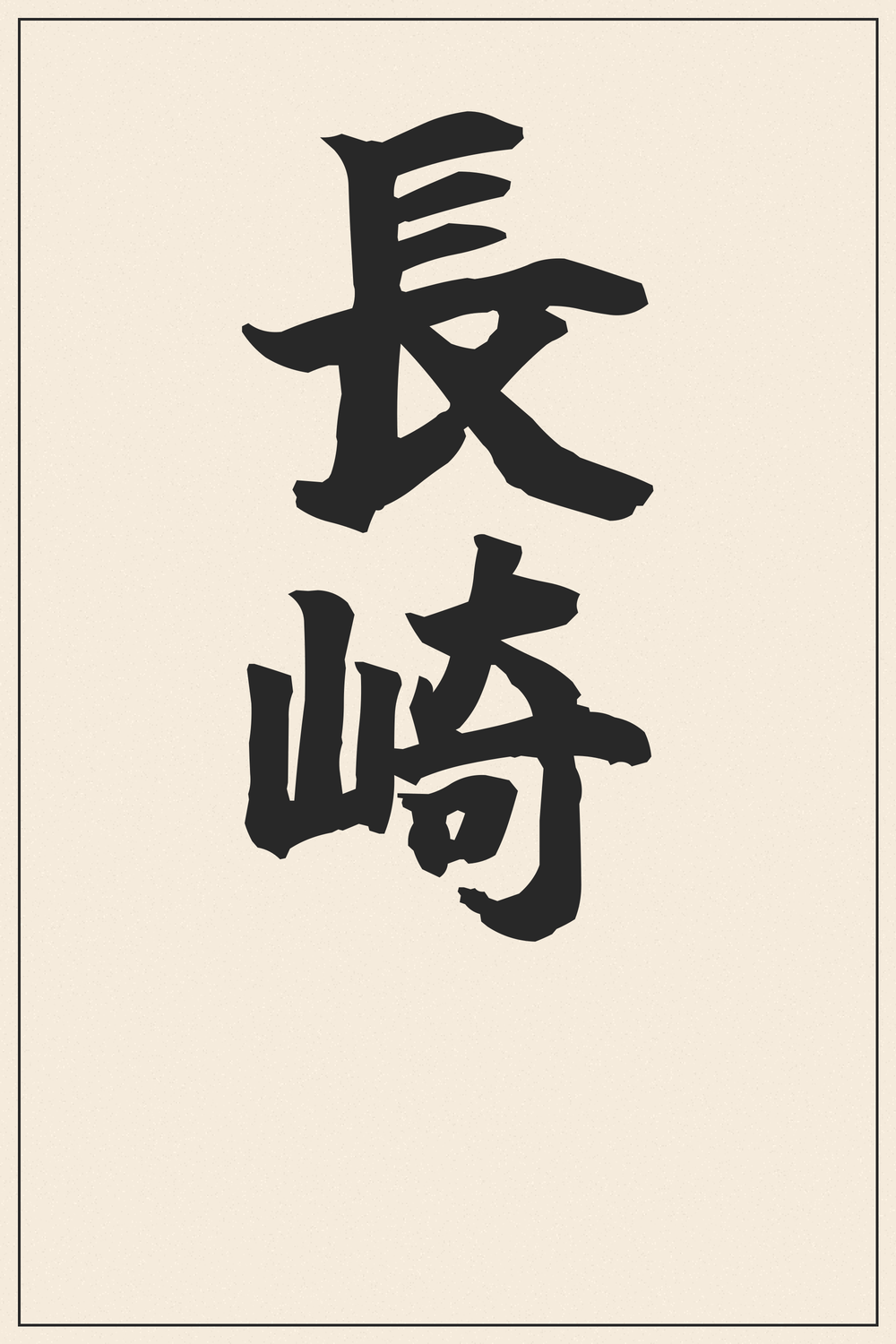
The Kanji for Nagasaki, 長崎, represents one of Japan’s most historically significant and resilient cities. It embodies a rich narrative of international exchange, cultural fusion, and profound peace.
The atmosphere of a Kanji character changes dramatically depending on the font style. A character that looks elegant in a brush style might look bold and modern in a different font.
Recommendation:
Since a tattoo is permanent, we strongly recommend comparing various font styles beyond what is shown here. Use our designs as a trusted reference for the correct structure, but feel free to explore different artistic variations to find the perfect match for your vision.
The Deep Meaning Behind 長崎
The name “Nagasaki” (長崎) literally translates to “long cape” or “long peninsula,” a direct reference to the distinctive geographical features of its harbor. This straightforward naming reflects the practical approach to early Japanese place-naming, rooted in observable natural characteristics.
Historically, Nagasaki was Japan’s primary gateway to the outside world during its period of isolation, facilitating trade and cultural exchange with China and Europe. Today, it stands as a global symbol of peace and resilience, forever marked by the atomic bombing of 1945 but also known for its beautiful port, vibrant culture, and unique historical contributions.
Kanji Breakdown
The compound 長崎 combines two distinct characters, each contributing to the geographical and historical identity of the famous Japanese city.
Meaning: Long, chief, leader. The character originally depicted an old person with long hair, symbolizing ‘length’ in terms of time and later extending to ‘long’ in space or ‘elder/chief’ in status.
Meaning: Cape, peninsula, promontory. This character combines the radical for “mountain” (山) with a phonetic component, depicting a landform (specifically a mountainous one) that projects into the sea.
Conclusion
The Kanji 長崎, meaning “long cape,” elegantly captures the geographical essence and historical depth of one of Japan’s most celebrated cities. It symbolizes not only a distinct coastal feature but also a crucial nexus of cultural exchange and a beacon of peace.
For those with a profound appreciation for Japan’s rich history, its resilience, or a personal connection to this iconic city, a tattoo of “Nagasaki” serves as a meaningful and visually balanced tribute, encapsulating a narrative of endurance and hope.
Comments