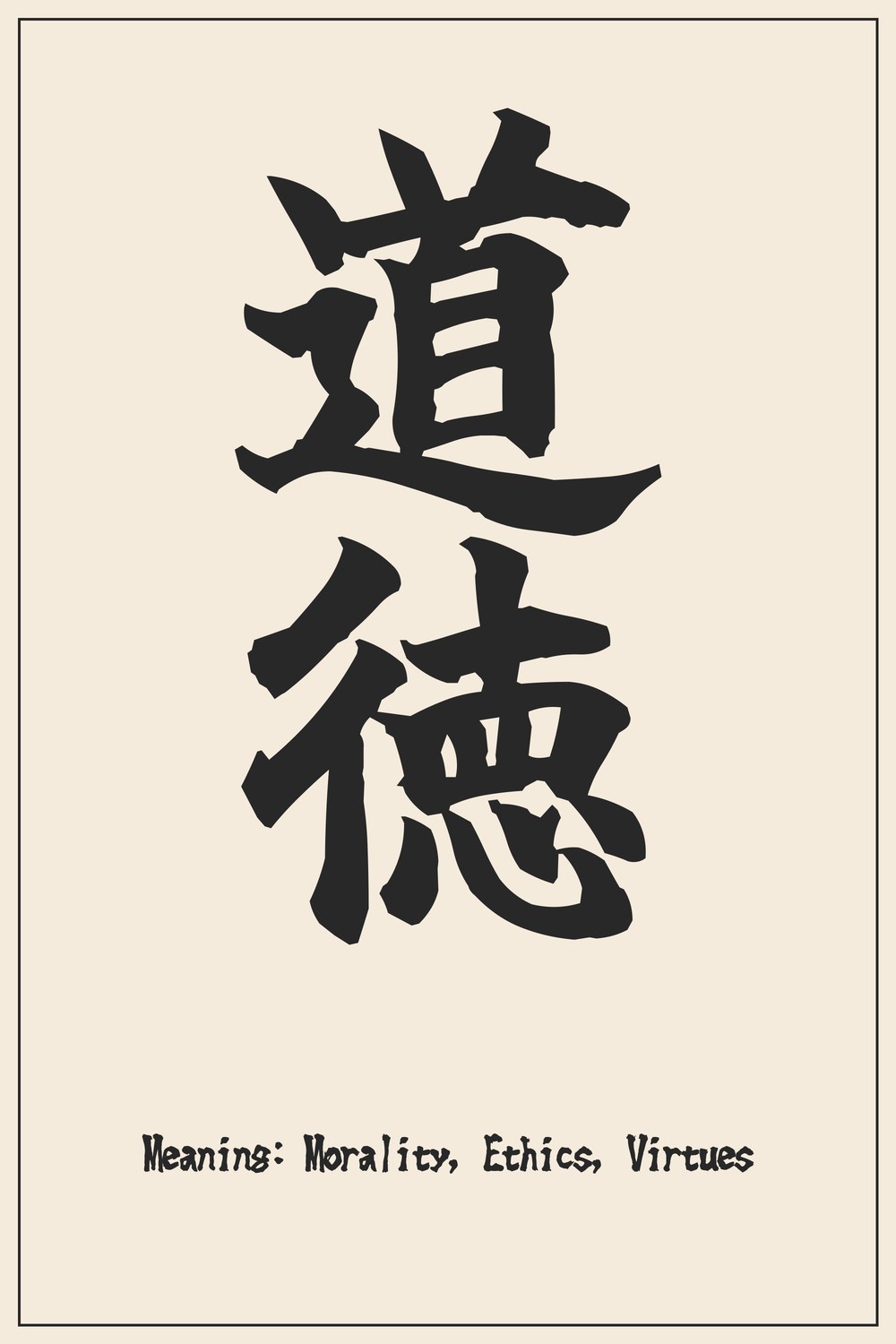
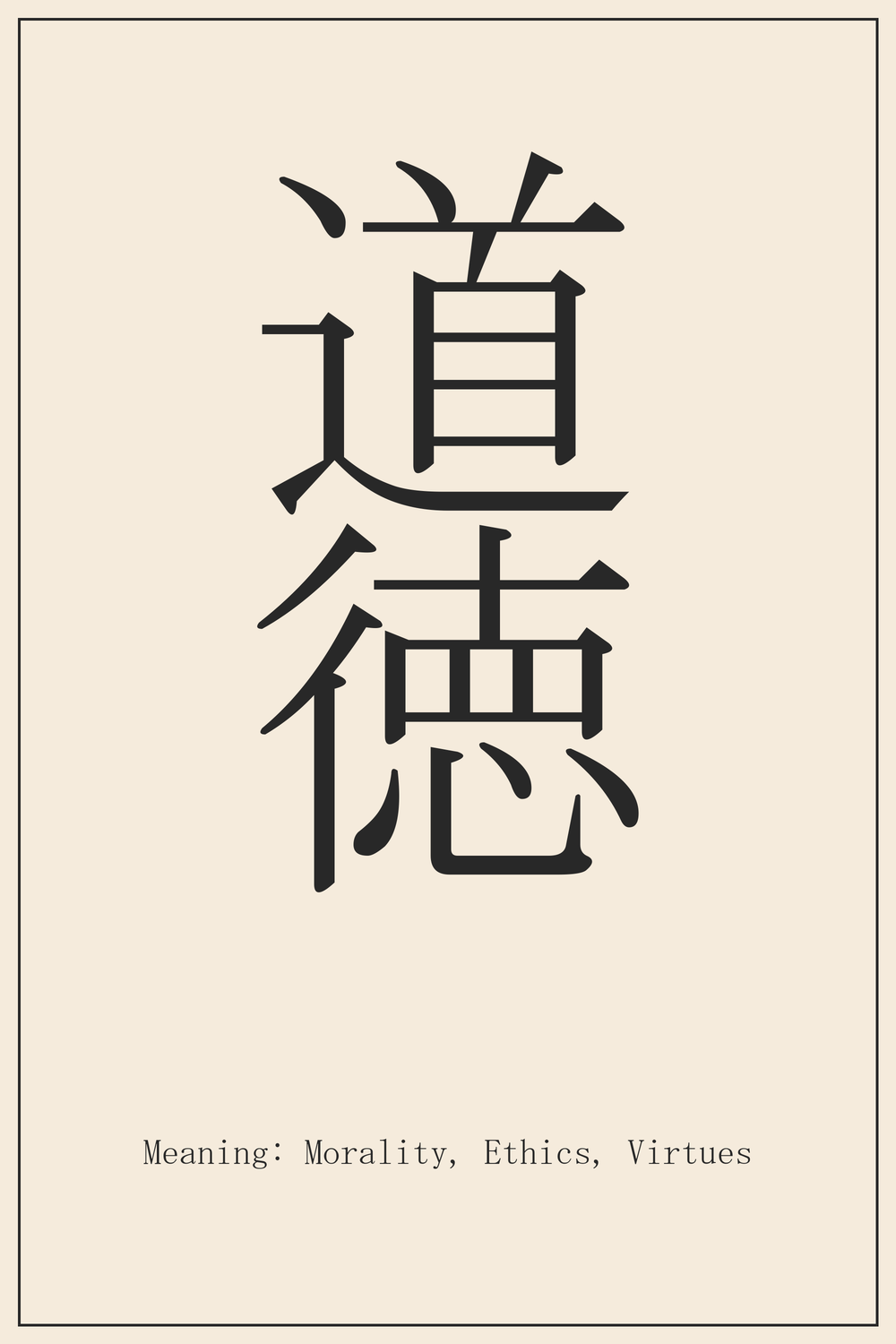
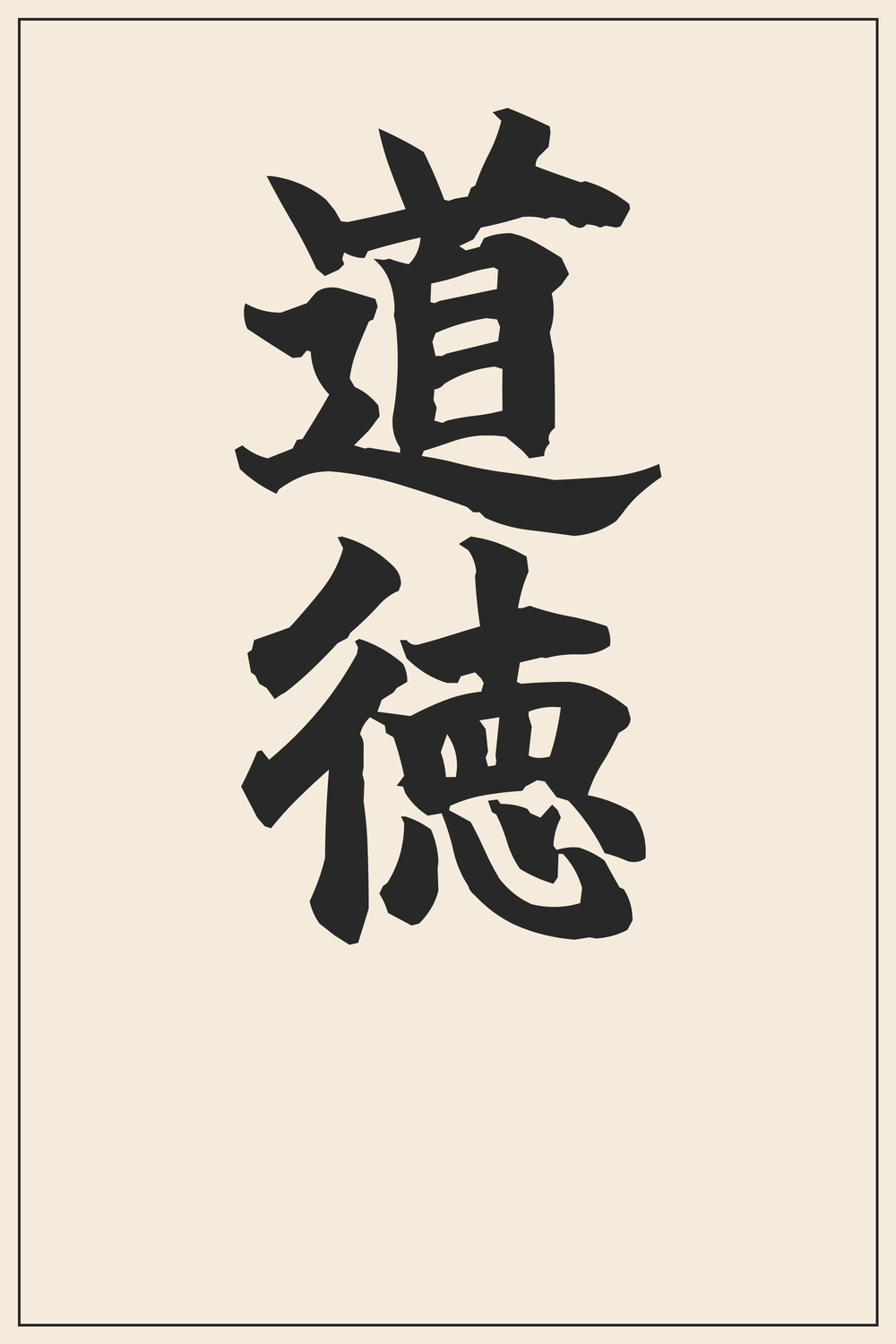
“道徳” encapsulates the profound principles of morality and ethics that guide human conduct. It is a fundamental concept in Japanese culture, reflecting societal values and personal integrity.
The atmosphere of a Kanji character changes dramatically depending on the font style. A character that looks elegant in a brush style might look bold and modern in a different font.
Recommendation:
Since a tattoo is permanent, we strongly recommend comparing various font styles beyond what is shown here. Use our designs as a trusted reference for the correct structure, but feel free to explore different artistic variations to find the perfect match for your vision.
The Deep Meaning Behind 道徳
The compound 道徳 (Dōtoku) brings together two powerful concepts. 道 (Dō) literally means “path” or “road,” but its deeper philosophical implication extends to “way of life,” “doctrine,” or a “guiding principle.” It denotes a course of action or a profound philosophy one adheres to.
徳 (Toku) signifies “virtue,” “goodness,” or “benevolence,” embodying integrity and moral excellence. When combined, 道徳 encapsulates the idea of following a “moral path” or “way” with inherent “virtue” and “integrity,” forming the bedrock of ethical conduct.
Kanji Breakdown
Each character within 道徳 contributes significantly to its overarching meaning, creating a layered concept of ethical living.
Meaning: Path, Way, Principle
The character 道 is composed of ⻌ (shiori), representing movement or a path, and 首 (kubi), meaning head. This combination visually suggests following a path or a guiding principle with one’s intellect and direction.
Meaning: Virtue, Morality, Integrity
The character 徳 consists of 彳 (gyōninben), a radical signifying “step” or “street,” and 直 (jiki), meaning “straight” or “honest,” and 心 (kokoro), meaning “heart.” It powerfully illustrates the act of walking a straight path with an honest heart, embodying true integrity and moral character.
Conclusion
“道徳” is a profound expression of moral rectitude, ethical principles, and the virtuous path one chooses to follow in life. It encapsulates the core values that foster personal integrity, responsible conduct, and societal harmony.
For a tattoo, “道徳” serves as a constant and visible reminder to live with unwavering integrity, uphold strong moral standards, and contribute positively to the world. Its deep philosophical meaning makes it a thoughtful and inspiring choice for those dedicated to a principled existence, encouraging an ever-present commitment to ethical behavior.
Comments