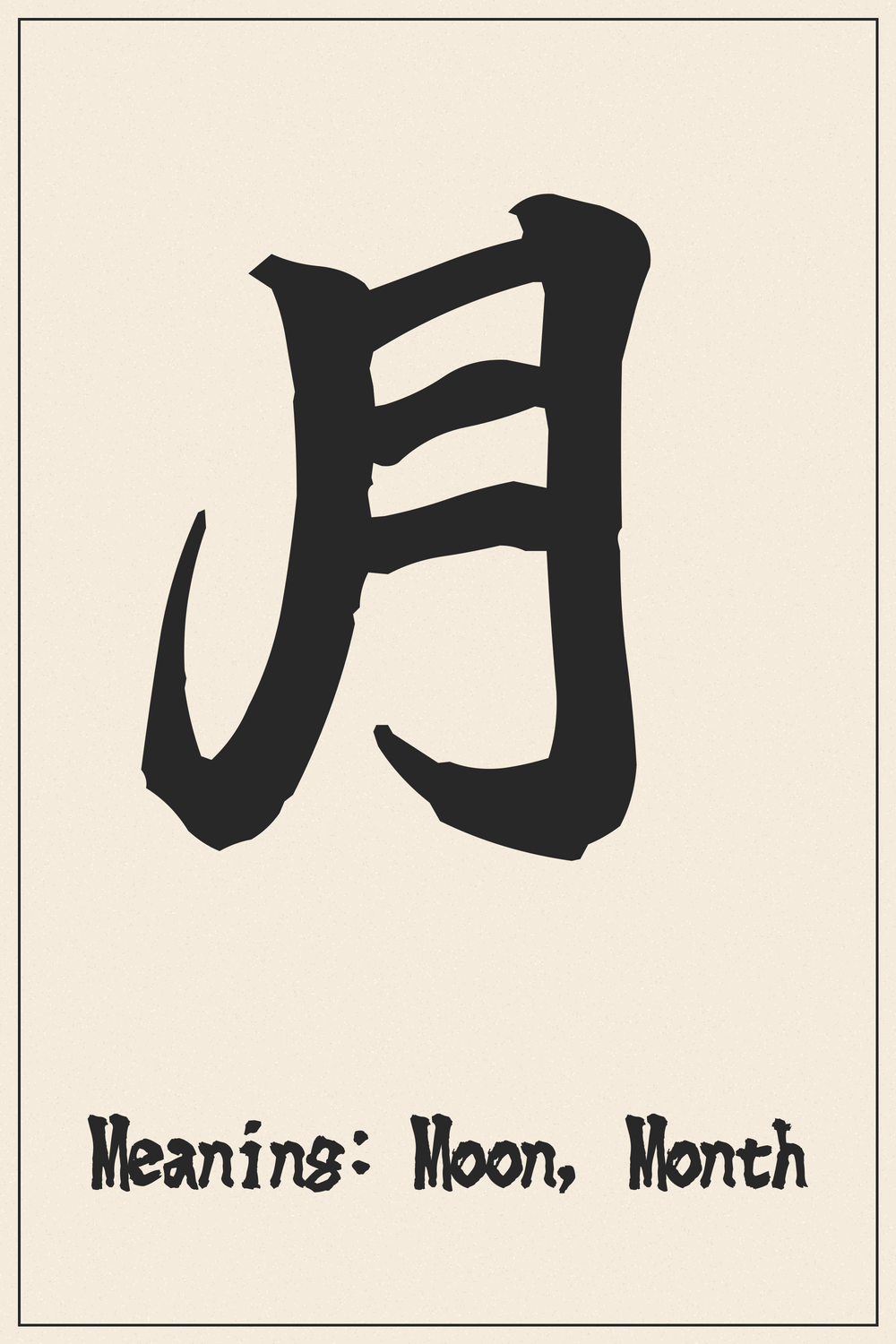
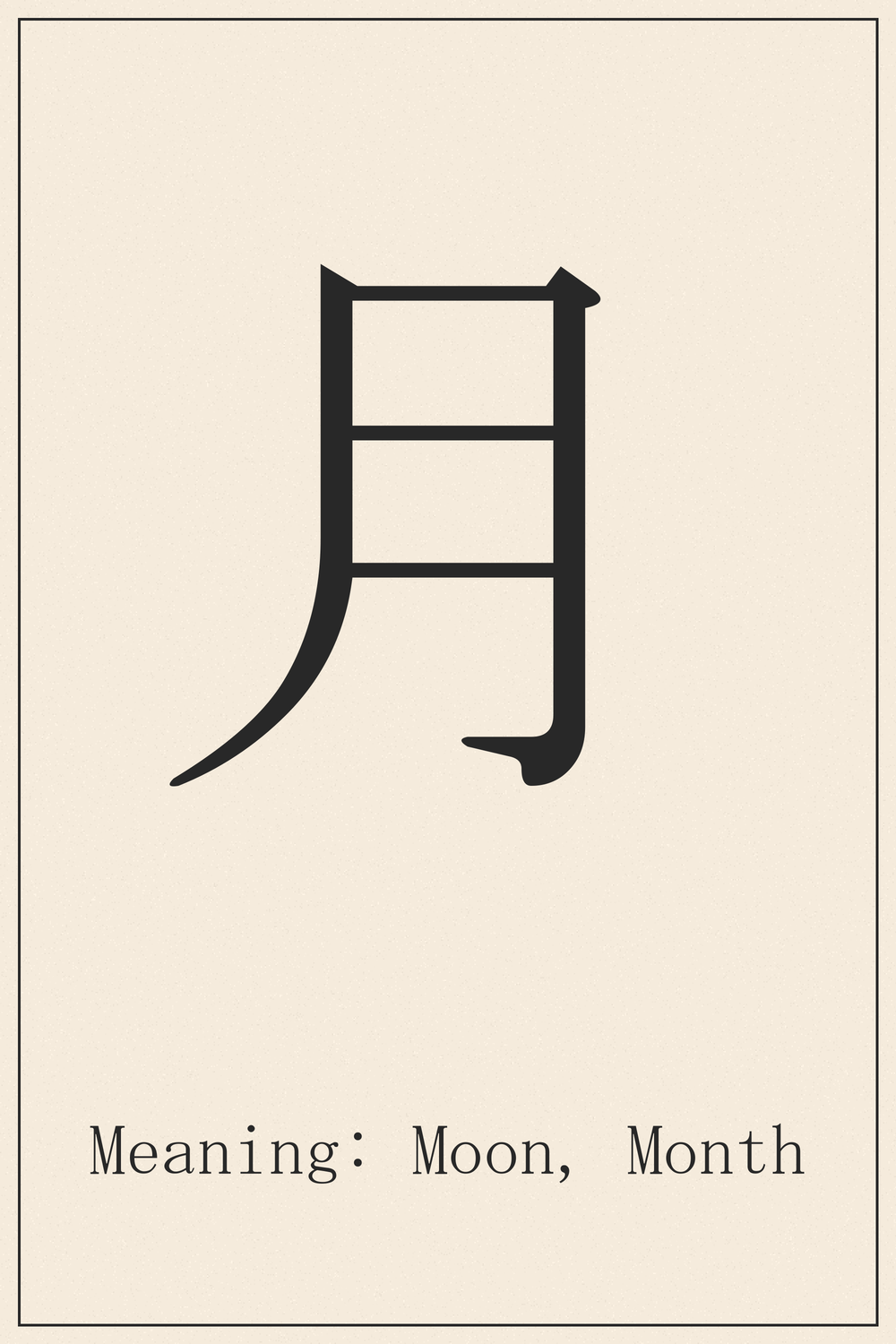
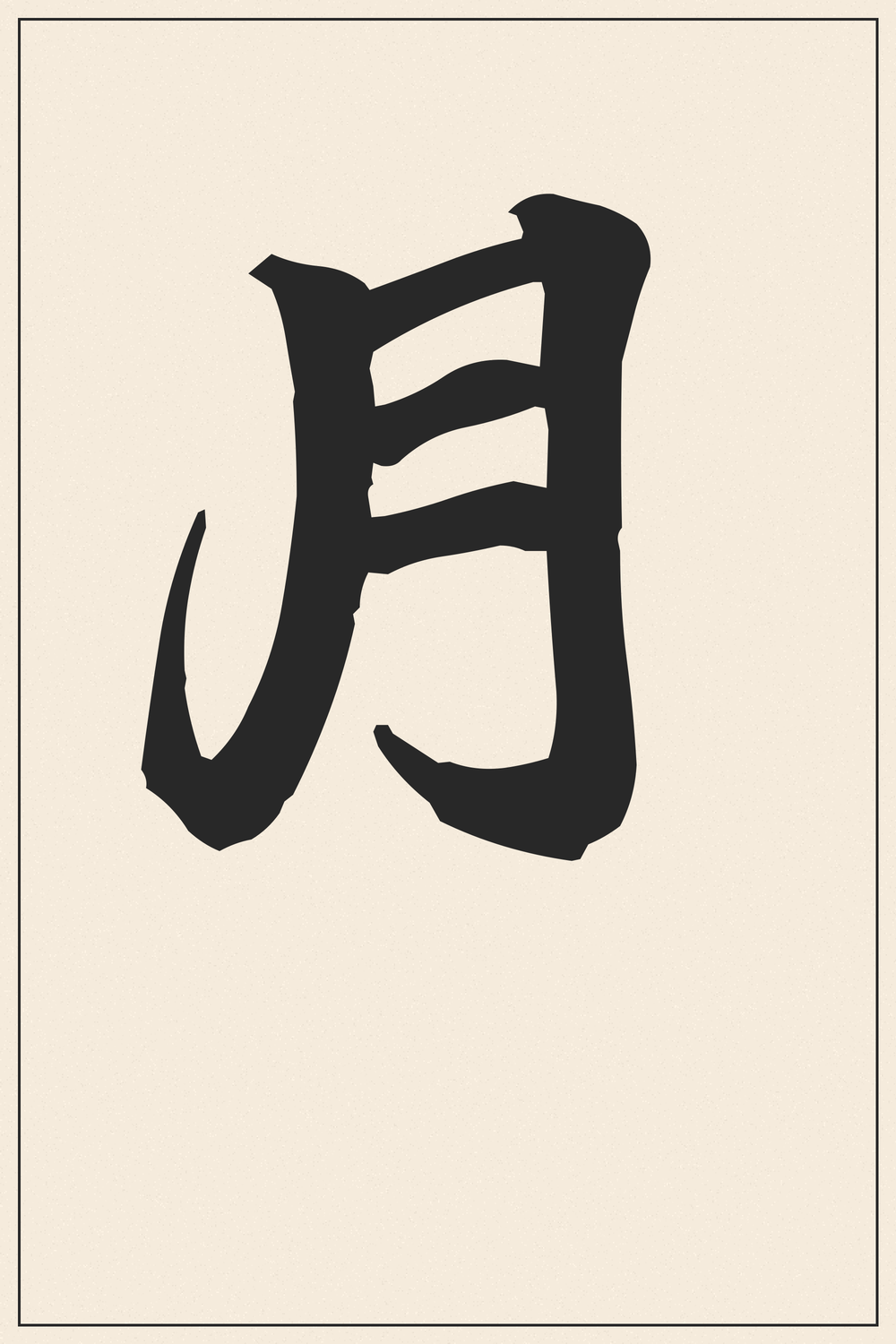
The kanji 月 (Tsuki) encapsulates the serene beauty and profound symbolism of the moon. It represents not just a celestial body but also the rhythm of time and the ebb and flow of life.
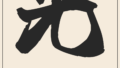
The atmosphere of a Kanji character changes dramatically depending on the font style. A character that looks elegant in a brush style might look bold and modern in a different font.
Recommendation:
Since a tattoo is permanent, we strongly recommend comparing various font styles beyond what is shown here. Use our designs as a trusted reference for the correct structure, but feel free to explore different artistic variations to find the perfect match for your vision.
The Deep Meaning Behind 月
The kanji 月 originated as a pictograph depicting a crescent moon. Its ancient forms clearly illustrate the celestial body, with two internal lines representing its surface features or light, showcasing a direct visual representation.
In Japanese culture, the moon (月, tsuki) holds deep significance, often associated with beauty, change, femininity, and the passage of time. It is a prominent theme in poetry, art, and festivals, embodying a tranquil and mysterious essence. The kanji also denotes ‘month,’ highlighting its role in the lunar calendar and measuring time.
Kanji Breakdown
The kanji 月 is a single, integral character that functions both as a standalone symbol and as a radical in more complex kanji. Its form directly reflects its ancient origins.
Meaning: Moon, Month. The character is a direct pictographic representation of the crescent moon, symbolizing celestial beauty, cycles, and the measurement of time.
Conclusion
The kanji 月 is a powerful symbol of natural cycles, serene beauty, and the subtle passage of time. Its elegant simplicity belies a profound depth, connecting to ancient observations of the cosmos and the rhythms of life.
Choosing 月 for a tattoo is an embrace of quiet strength and enduring change. Its clean lines and universally recognized meaning make it a timeless and deeply personal emblem, perfectly suited for those who find inspiration in the moon’s celestial dance and its influence on our world.
Comments