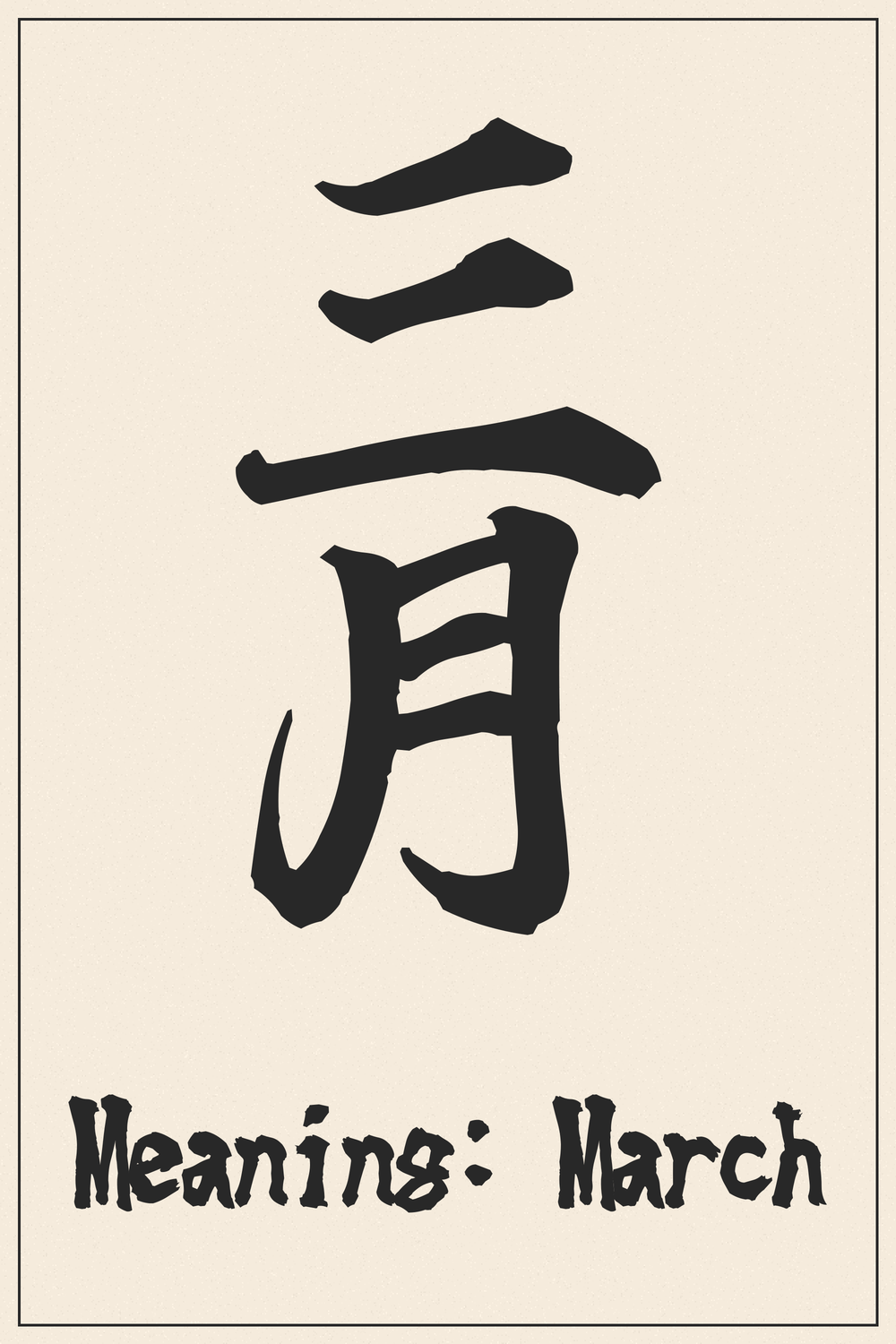
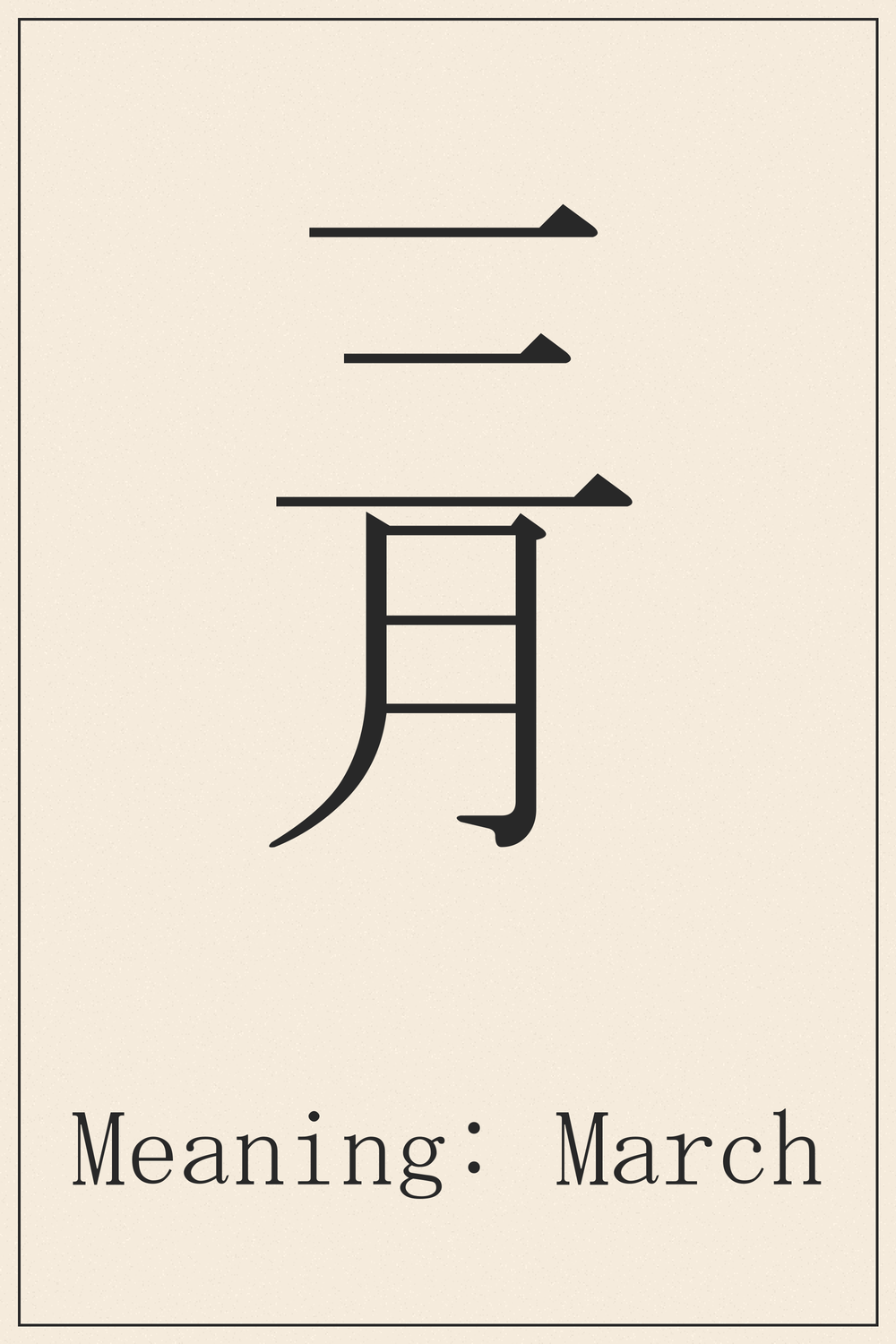
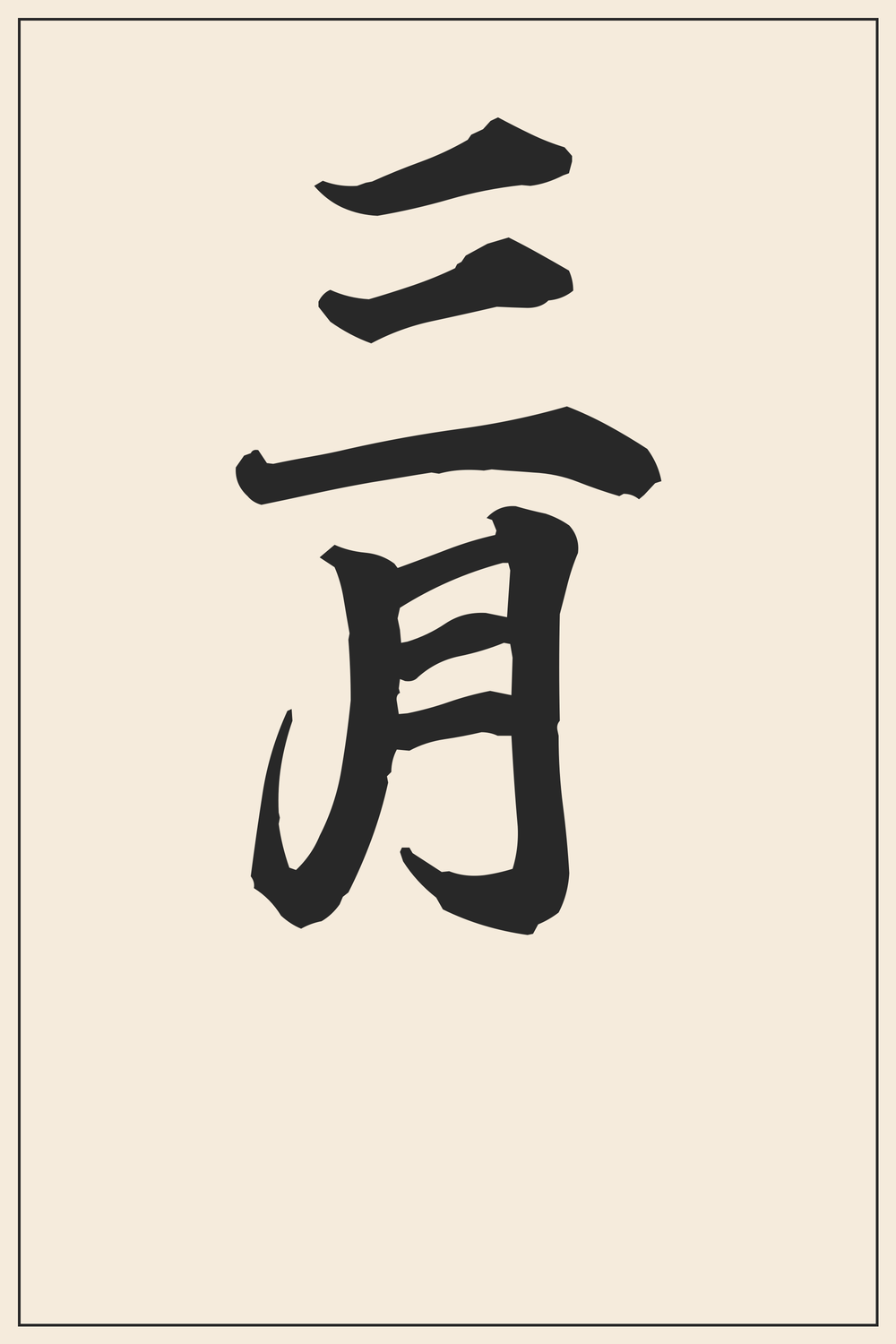
The Kanji ‘三月’ marks the beginning of spring in Japan, embodying renewal and the anticipation of warmer days. It signifies a period of transition, full of natural awakening.
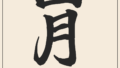
The atmosphere of a Kanji character changes dramatically depending on the font style. A character that looks elegant in a brush style might look bold and modern in a different font.
Recommendation:
Since a tattoo is permanent, we strongly recommend comparing various font styles beyond what is shown here. Use our designs as a trusted reference for the correct structure, but feel free to explore different artistic variations to find the perfect match for your vision.
The Deep Meaning Behind 三月
‘三月’ literally translates to ‘third month’. The character ‘三’ (san) represents the number three, an ancient symbol of plurality and completion. ‘月’ (gatsu/getsu) primarily means ‘moon’ but is also used for ‘month’ as lunar cycles historically marked time.
In Japan, March is particularly significant as it heralds the arrival of spring. It is associated with the Hina Matsuri (Doll’s Festival) and is the time when cherry blossoms begin to bloom in warmer regions, symbolizing new beginnings and transient beauty.
Kanji Breakdown
The composition of ‘三月’ is straightforward, combining two fundamental characters that convey its meaning directly.
Three: An ideogram depicting three horizontal lines, representing the cardinal number three. It often symbolizes multiplicity, completeness, or stability.
Month, Moon: Originally a pictograph of a crescent moon, this character is used to denote both the celestial body and, by extension, a unit of time—a month.
Conclusion
‘三月’ encapsulates the essence of March, a pivotal month signifying the transition from winter to spring. It carries a sense of renewal, natural beauty, and the quiet promise of growth.
For a tattoo, ‘三月’ represents a personal connection to this time of year, perhaps symbolizing a birth month, a significant event, or an appreciation for spring’s awakening. Its simplicity offers an elegant and timeless personal statement.
Comments