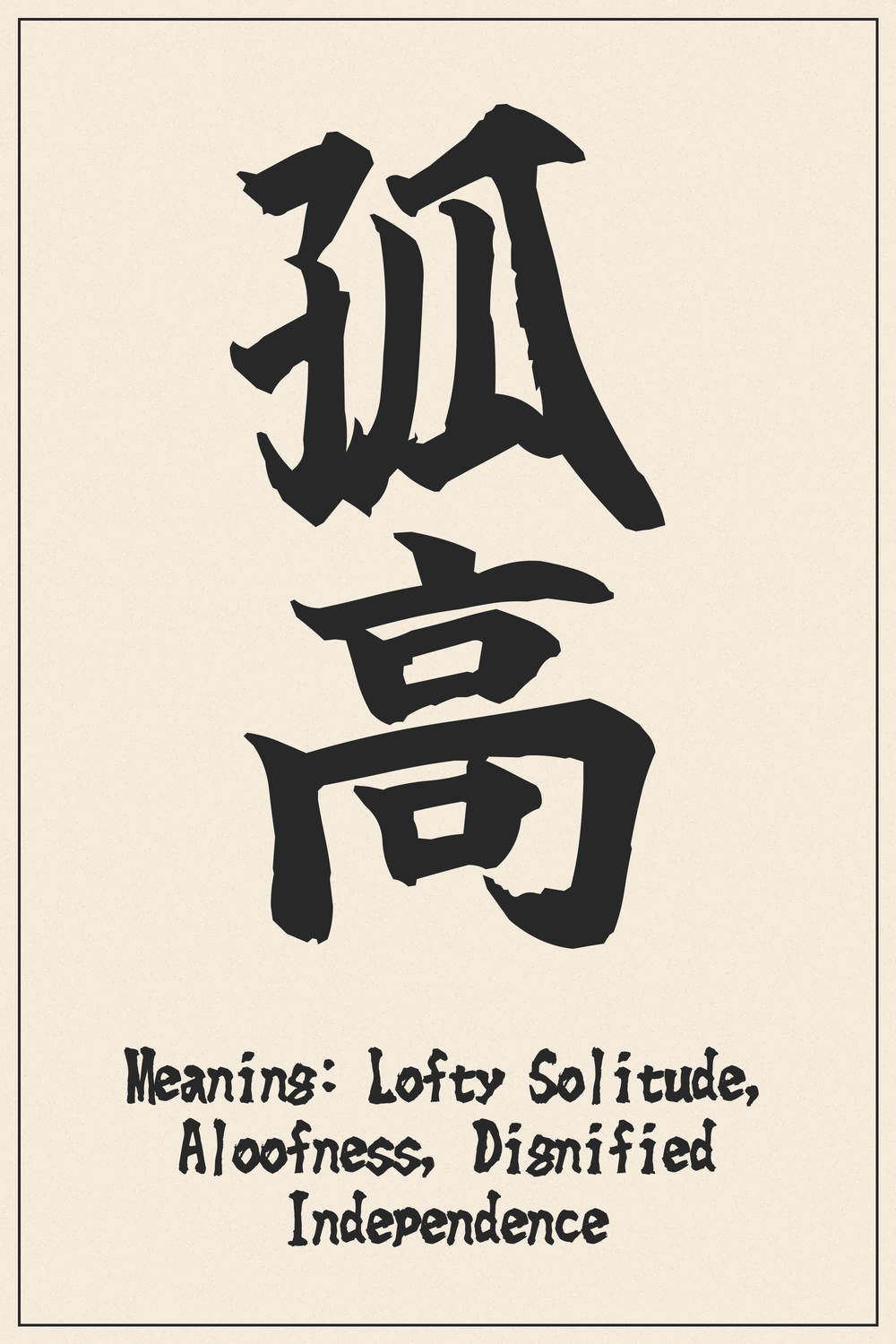
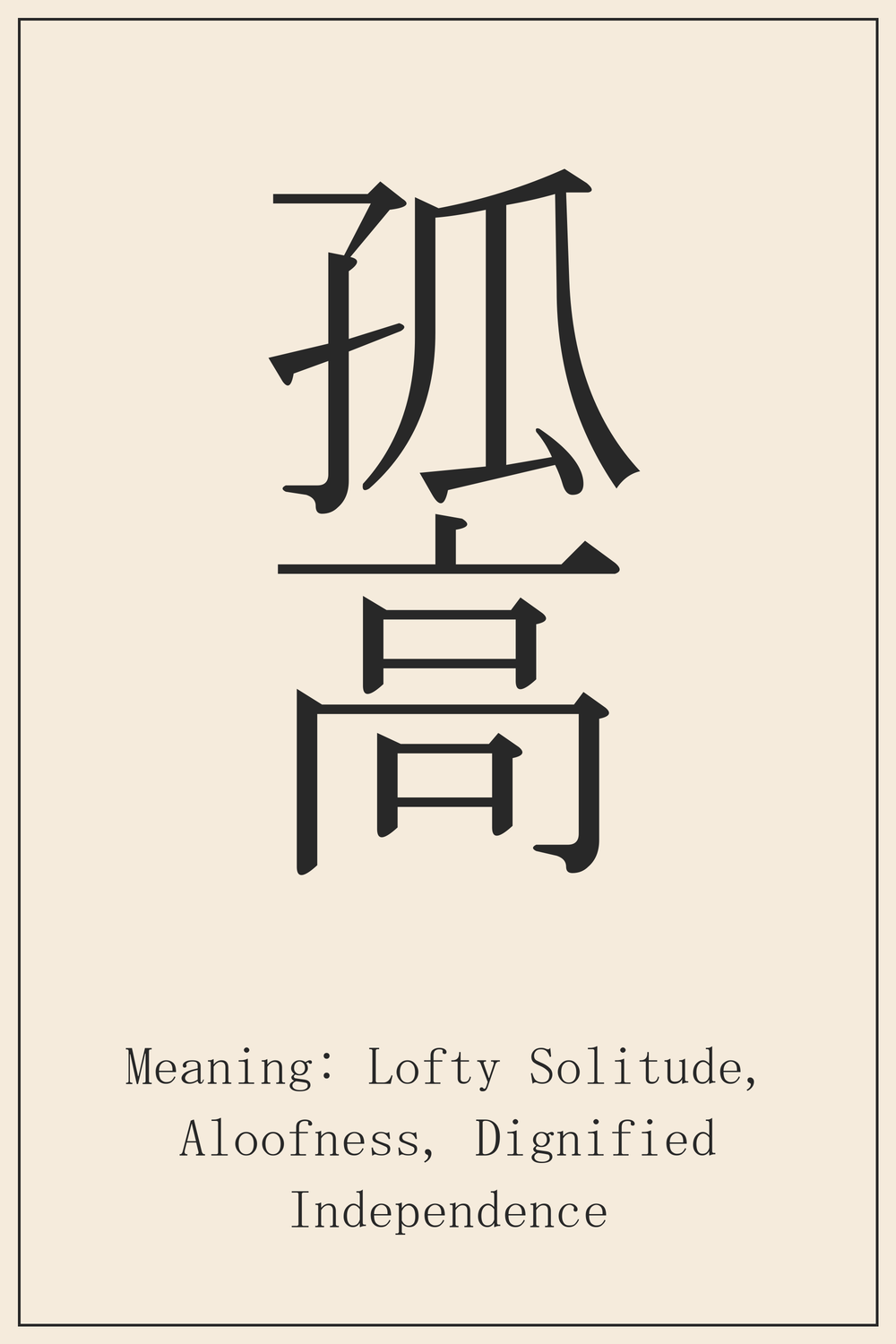
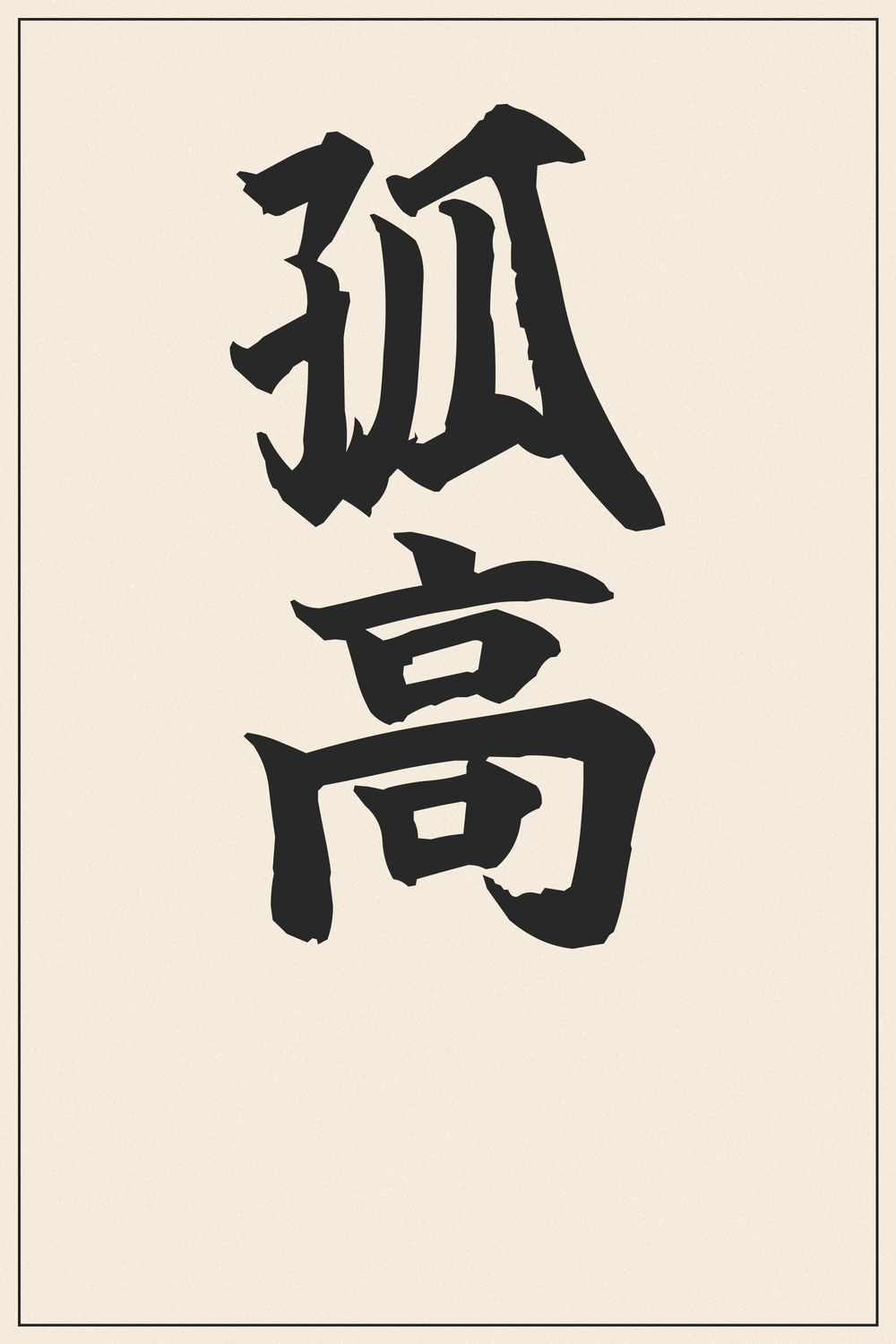
Embrace the power of your inner strength and unwavering spirit with the profound Kanji ‘孤高’. This term embodies a rare and admired state of dignified independence, standing above the mundane.
The atmosphere of a Kanji character changes dramatically depending on the font style. A character that looks elegant in a brush style might look bold and modern in a different font.
Recommendation:
Since a tattoo is permanent, we strongly recommend comparing various font styles beyond what is shown here. Use our designs as a trusted reference for the correct structure, but feel free to explore different artistic variations to find the perfect match for your vision.
The Deep Meaning Behind 孤高
The term ‘孤高’ (Kokou) beautifully encapsulates the idea of a spirit that stands alone, not out of loneliness, but out of a profound and dignified independence. It describes an individual whose principles and actions elevate them above the common crowd, commanding respect through their unwavering integrity.
In Japanese culture, ‘孤高’ is often used to praise artists, scholars, or historical figures who maintained their unique vision or moral stance despite external pressures. It speaks to a rare strength of character and a quiet confidence that defines one’s path. This concept reflects a highly regarded state of being, where self-reliance is not merely practical but deeply philosophical.
Kanji Breakdown
The compound ‘孤高’ is formed by two characters, each contributing to its profound meaning.
Meaning: Alone, solitary, orphan. This character comprises the radical for ‘child’ (子) and a phonetic component related to ‘melon’ (瓜), which can suggest something detached or singular. It implies a state of being by oneself.
Meaning: High, tall, lofty, elevated. This character visually depicts a tall building or observation tower, emphasizing elevation and prominence. It conveys a sense of being above or superior.
Conclusion
The Kanji ‘孤高’ is more than just a word; it’s a statement of self-possession and respect. It champions the individual who chooses their own path, maintaining their ideals with quiet strength and dignity, rather than seeking approval from others. It is the essence of true independence, not as isolation, but as a deliberate and powerful stance.
For those who resonate with the idea of living authentically, embracing their unique journey, and standing firm in their convictions, ‘孤高’ serves as a magnificent and inspiring symbol. A tattoo of ‘孤高’ would be a profound testament to your inner fortitude and distinguished spirit.
Comments