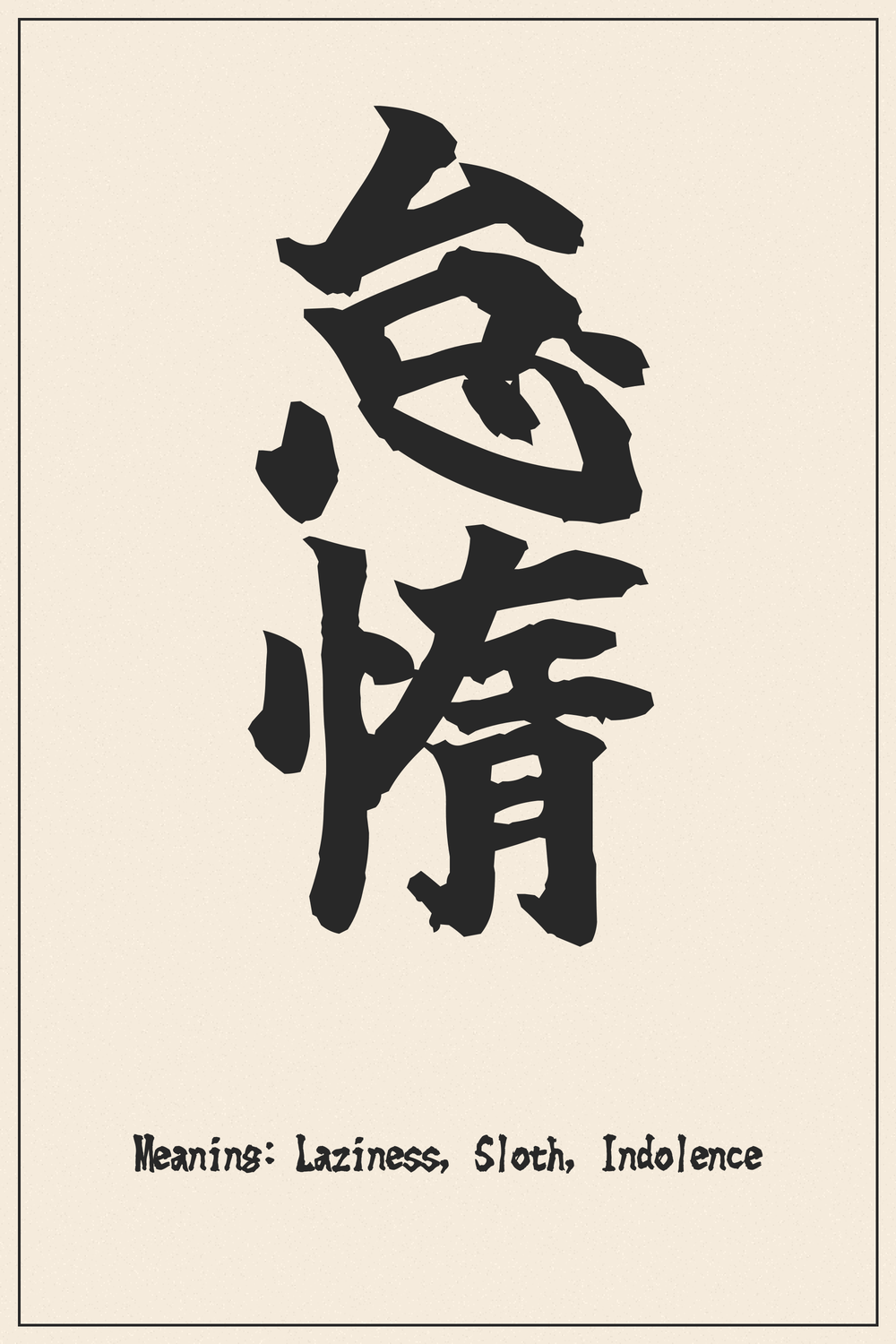
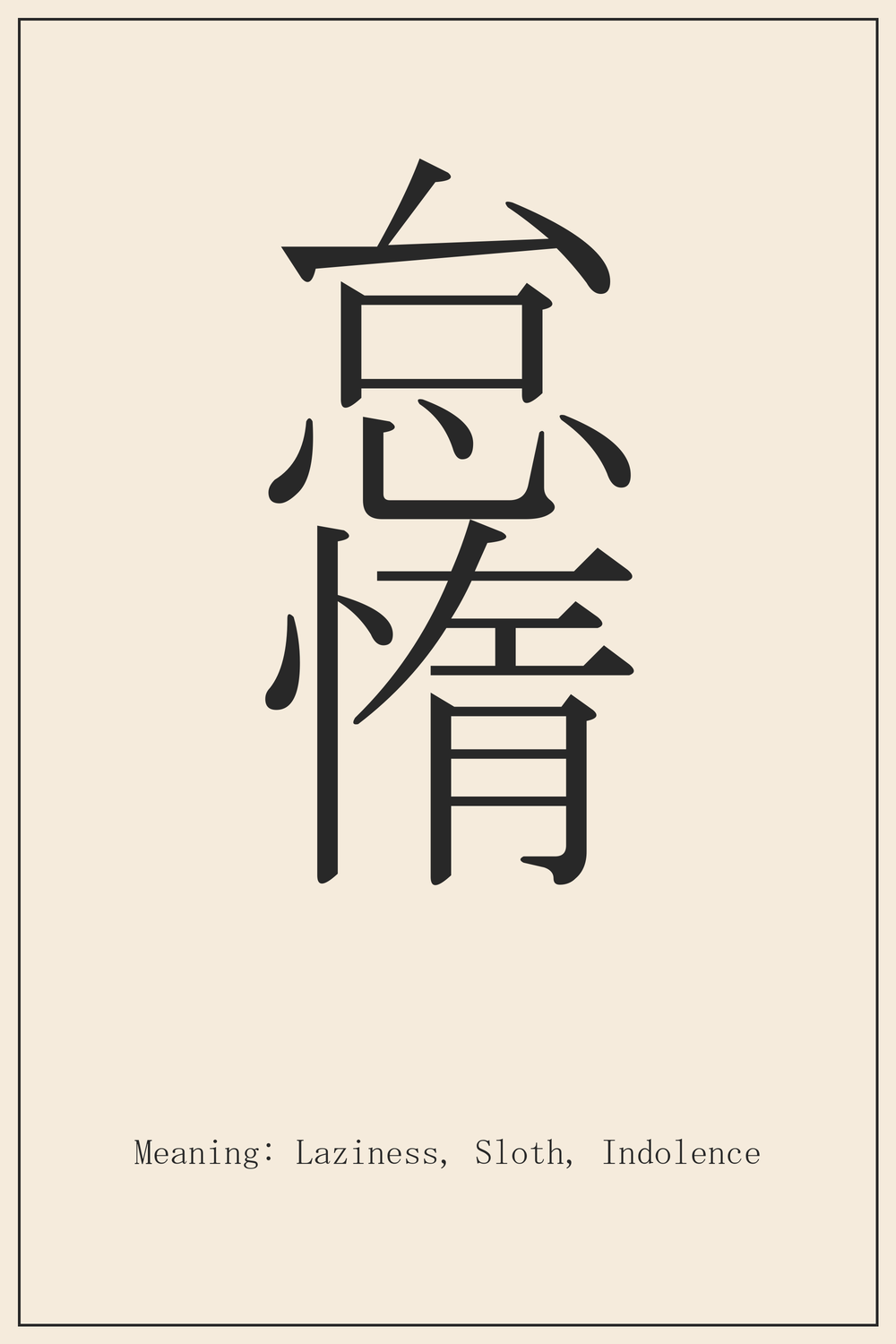
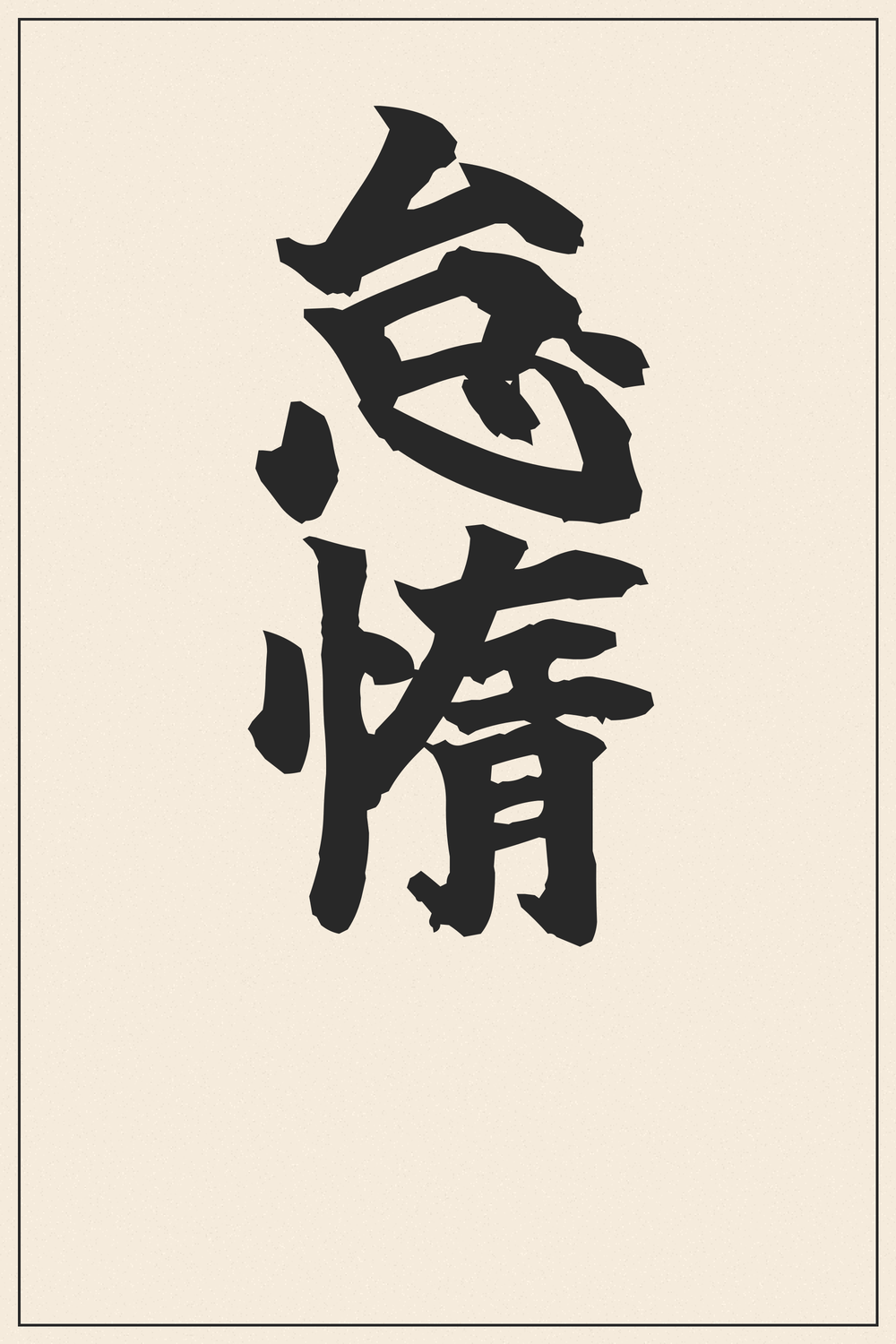
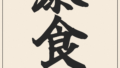
The Kanji 怠惰 (Taida) encapsulates the profound concept of laziness or sloth. It serves as a powerful reminder of the pitfalls of inaction and apathy, resonating deeply within philosophical and cultural contexts.
The atmosphere of a Kanji character changes dramatically depending on the font style. A character that looks elegant in a brush style might look bold and modern in a different font.
Recommendation:
Since a tattoo is permanent, we strongly recommend comparing various font styles beyond what is shown here. Use our designs as a trusted reference for the correct structure, but feel free to explore different artistic variations to find the perfect match for your vision.
The Deep Meaning Behind 怠惰
The compound Kanji 怠惰 (Taida) directly translates to laziness or sloth. Both individual characters contribute to this meaning, reflecting a state of neglect or idleness stemming from the heart or mind. This concept stands in stark contrast to the diligence and strong work ethic often valued in Japanese culture.
While traditionally seen as a negative trait or a cardinal sin, its modern appeal, particularly through pop culture, has given it new significance. The recognition of ‘Sloth’ as one of the ‘Seven Deadly Sins’ in various narratives, including the popular anime ‘The Seven Deadly Sins’ (Nanatsu no Taizai), has elevated its status as a compelling symbol.
Kanji Breakdown
To fully grasp the essence of 怠惰, it’s insightful to examine its individual components and their etymological roots.
Meaning: The character 怠 (tai) means ‘neglect’, ‘be lazy’, or ‘be idle’. It combines the radical 殆 (tai – meaning ‘almost’, ‘danger’, but often functioning phonetically and implying neglect or deficiency) with 心 (kokoro – heart, mind). This suggests a heart or mind that is negligent or lacking in effort.
Meaning: The character 惰 (da) means ‘lazy’, ‘indolent’, or ‘negligent’. It is formed by the radical 心 (kokoro – heart, mind) and 堕 (da – fall, degenerate). This composition evokes the image of a heart or spirit that has ‘fallen’ or degenerated into a state of idleness and lethargy.
Conclusion
The Kanji 怠惰 (Taida) offers a potent representation of laziness, indolence, and sloth. Its characters individually reinforce the idea of a neglected or fallen spirit, leading to inaction.
For a tattoo, 怠惰 can serve as a powerful personal reminder to overcome apathy and pursue one’s goals, or it can be a stylish nod to the popular cultural phenomenon of the Seven Deadly Sins. Its clear meaning and strong visual form make it a compelling choice for those seeking a Kanji with both profound and contemporary resonance.
Comments