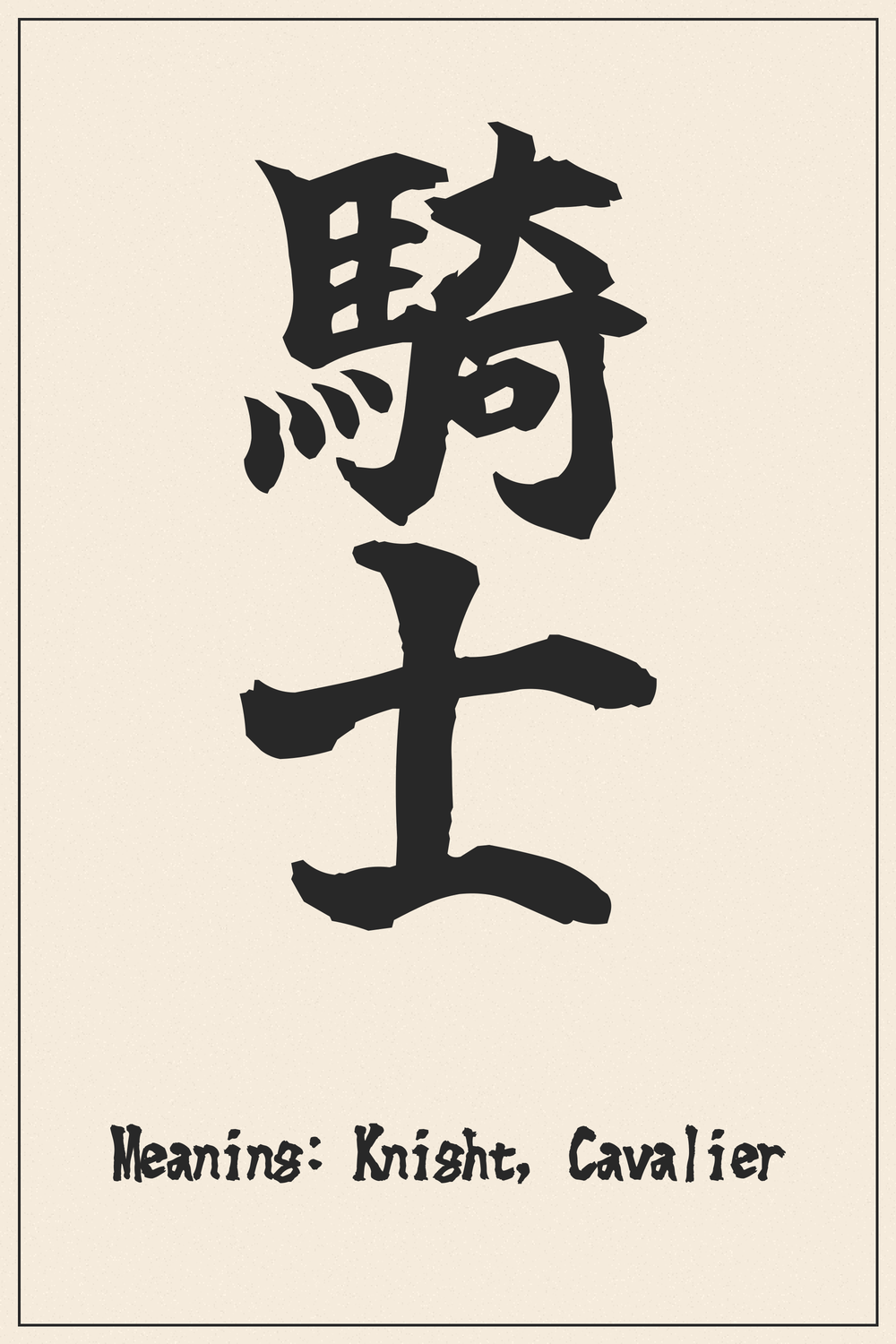
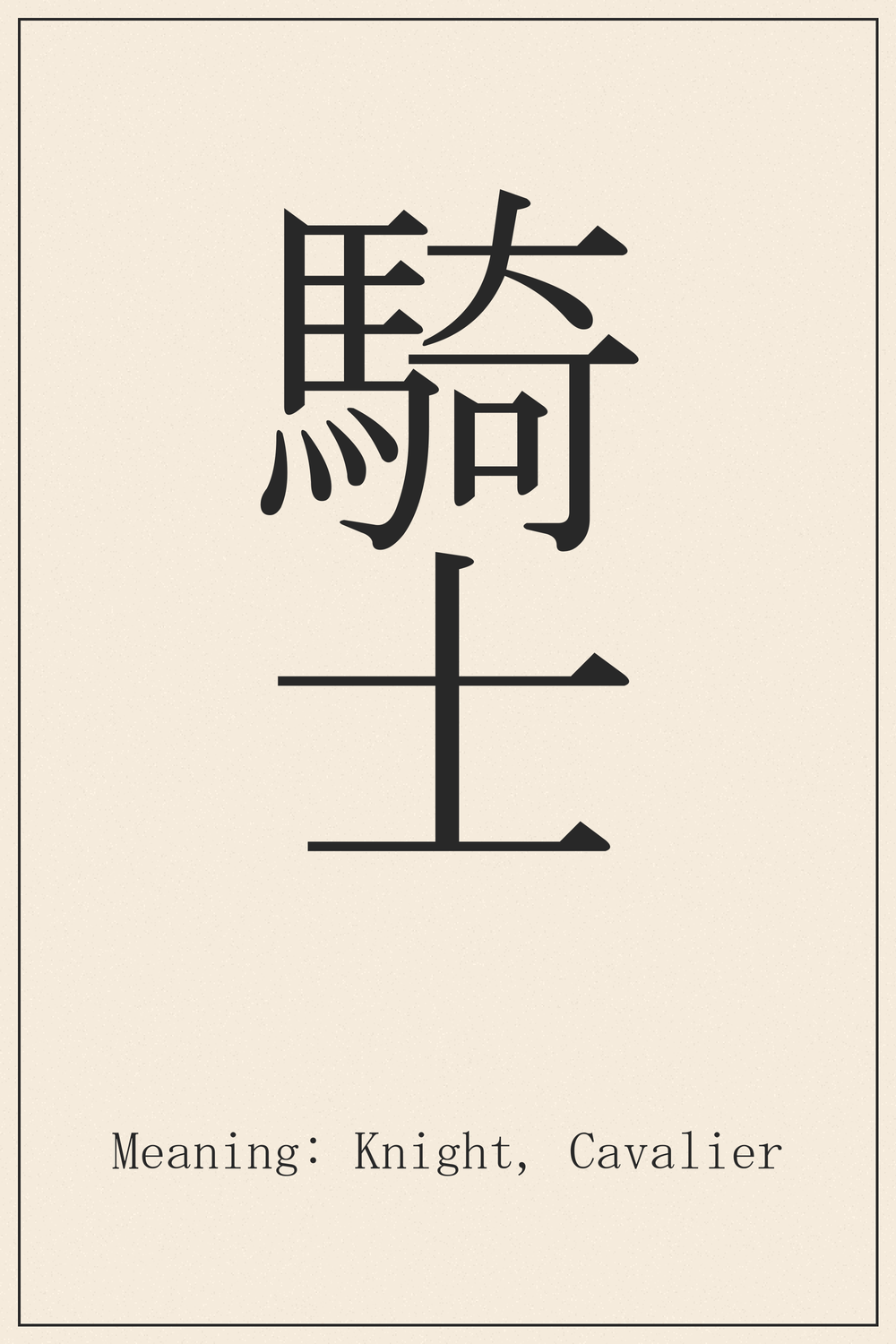
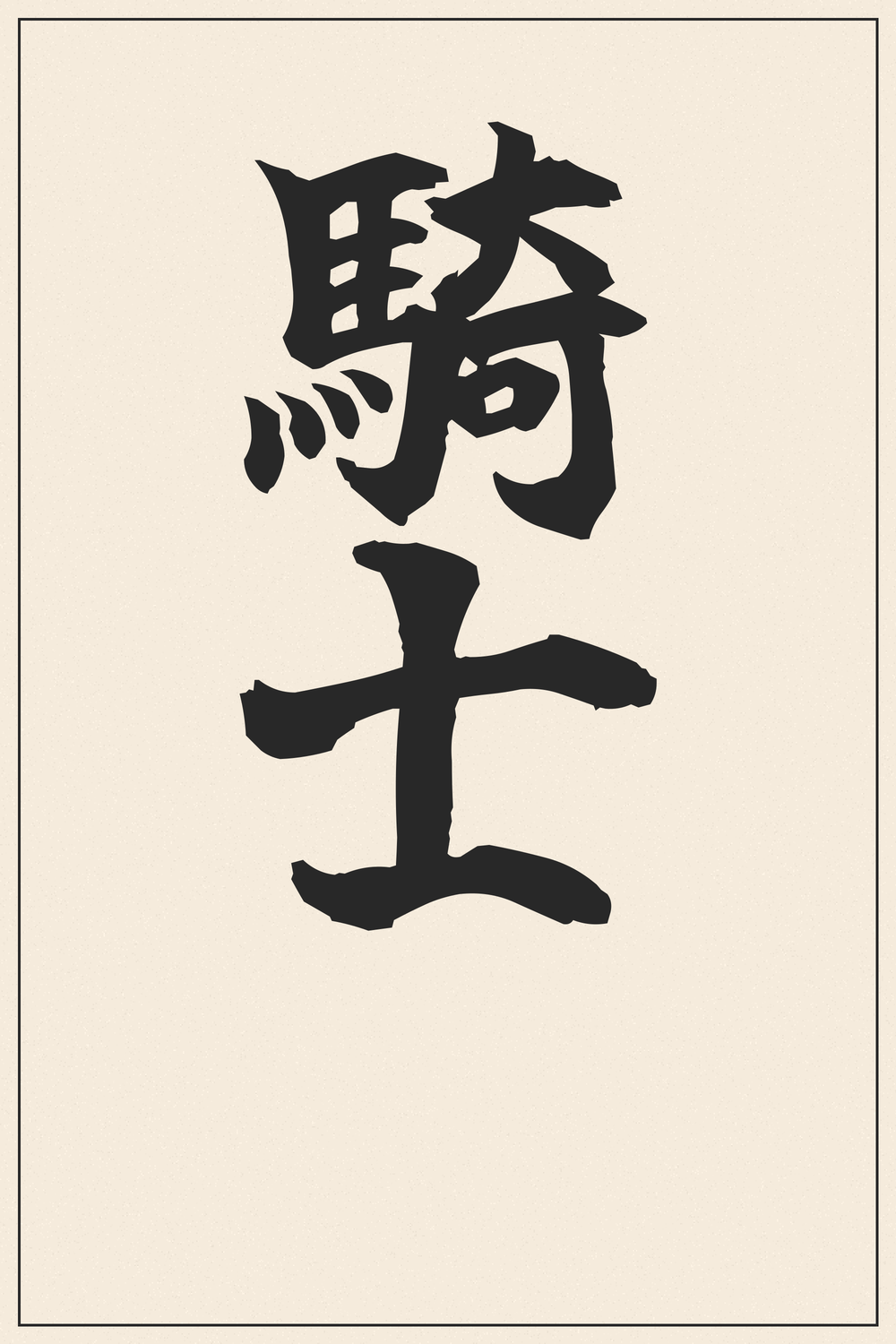
The Kanji 騎士 embodies the spirit of chivalry and strength, representing the noble warrior. It carries a profound sense of duty, honor, and protection, making it a powerful symbol.
The atmosphere of a Kanji character changes dramatically depending on the font style. A character that looks elegant in a brush style might look bold and modern in a different font.
Recommendation:
Since a tattoo is permanent, we strongly recommend comparing various font styles beyond what is shown here. Use our designs as a trusted reference for the correct structure, but feel free to explore different artistic variations to find the perfect match for your vision.
The Deep Meaning Behind 騎士
The term 騎士 (Kishi) combines 騎 (ki), meaning “to ride” or “cavalry,” and 士 (shi), signifying “gentleman,” “scholar,” or “warrior.” Its formation directly refers to mounted warriors.
While often associated with European medieval knights, 騎士 in a Japanese context evokes a similar ideal of a highly skilled and honorable fighter. It represents a protector, embodying courage, loyalty, and a strong moral code, echoing the virtues found in both Eastern and Western martial traditions.
Kanji Breakdown
The compound 騎士 is formed by two distinct Kanji, each contributing to its profound meaning.
Meaning: To ride, mounted warrior, cavalry.
This character is a phono-semantic compound. It visually depicts 馬 (uma/ba), meaning “horse,” signifying the act of riding, combined with 奇 (ki), which denotes “strange” or “unusual,” but here serves primarily as a phonetic component that hints at the “ki” sound and can subtly imply skill or distinction in riding.
Meaning: Gentleman, warrior, scholar.
Historically, 士 referred to a class of educated gentlemen or lower-ranking nobility. In martial contexts, it denotes a warrior or soldier, embodying integrity and skill. This character is also the first part of “samurai” (侍, read ‘shi’ in ancient times, later ‘ji’).
Conclusion
The Kanji 騎士 beautifully encapsulates the noble ideals of a knight or cavalier: honor, courage, loyalty, and protection. It’s a powerful emblem for those who value strength of character and a commitment to justice.
Embracing 騎士 as a tattoo symbolizes a personal dedication to these timeless virtues. Its intricate yet balanced form offers a compelling visual representation of a guardian spirit, a constant reminder of one’s inner strength and moral compass.
Comments