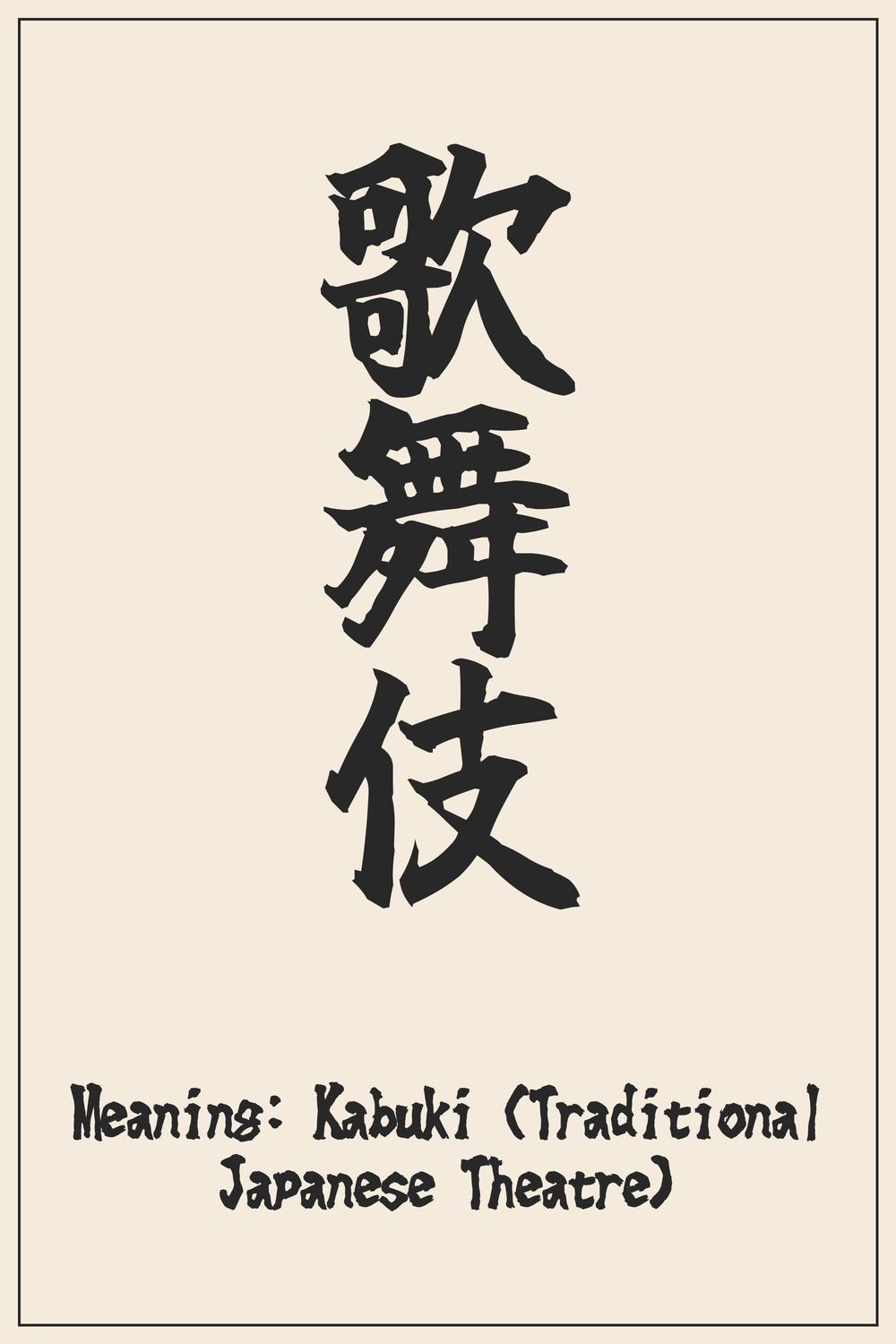
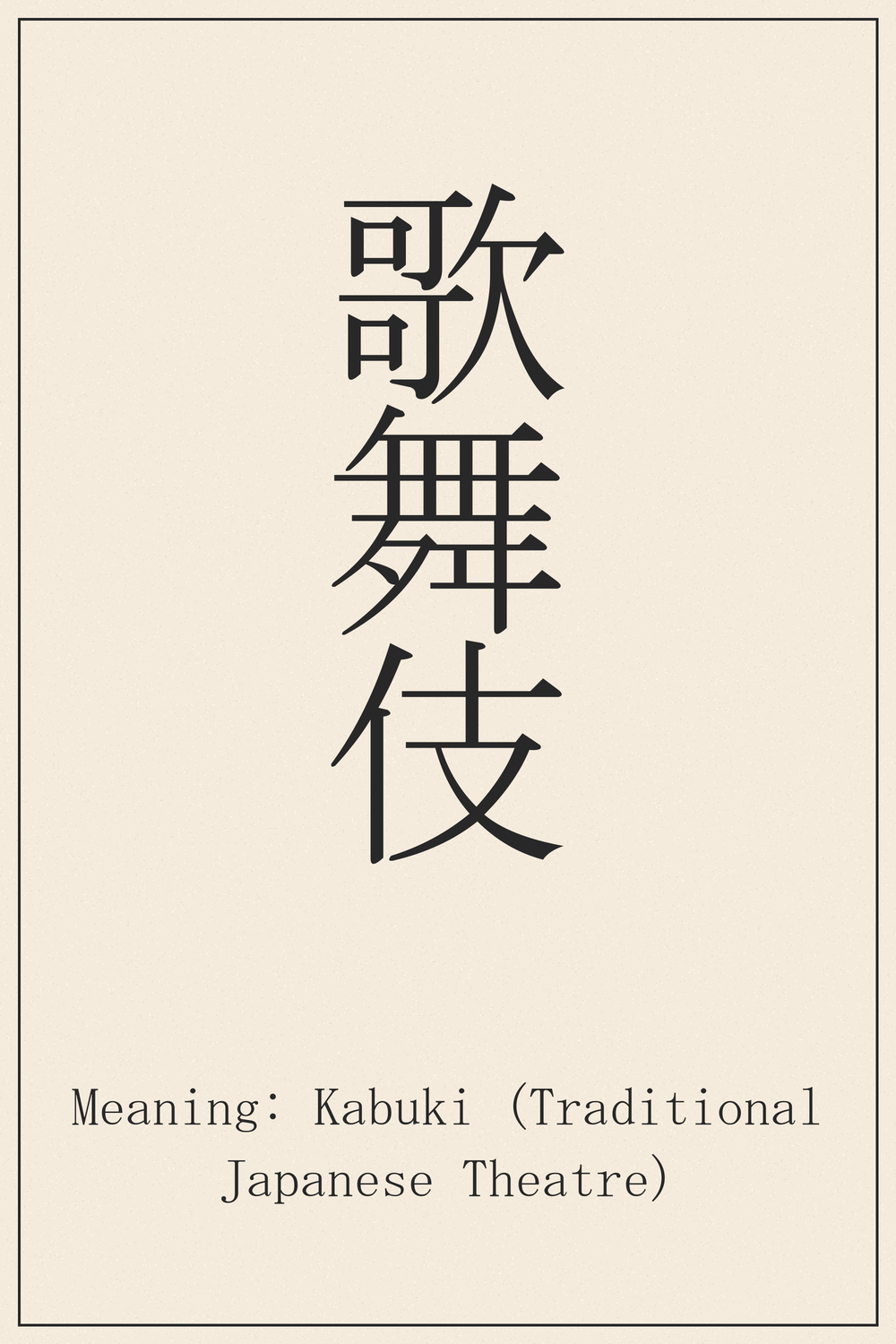
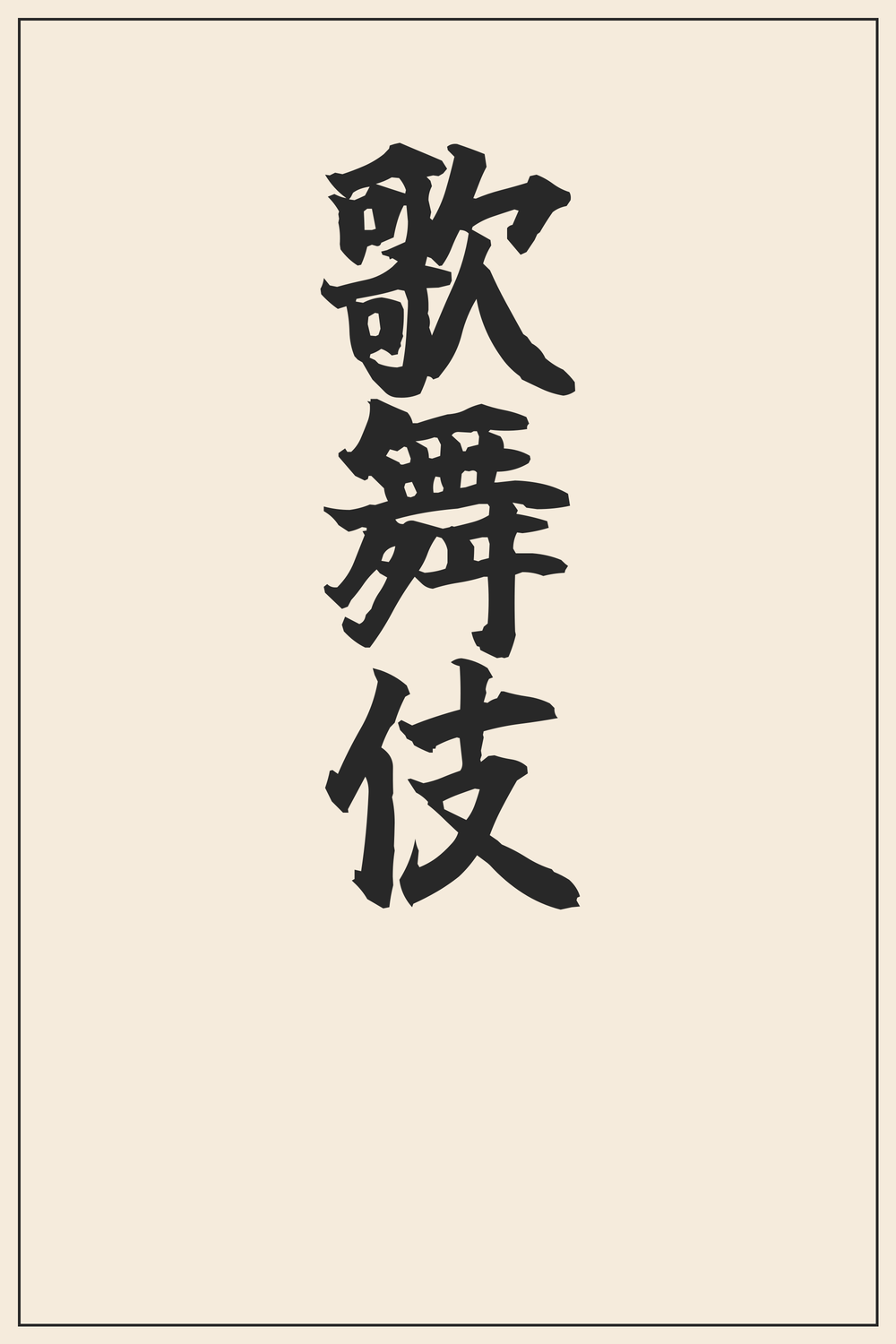
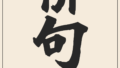
The Kanji for ‘Kabuki’ captures the essence of Japan’s most iconic and vibrant traditional performing art. It represents a living history of drama, music, and dance, embodying the spirit of Japanese culture.
The atmosphere of a Kanji character changes dramatically depending on the font style. A character that looks elegant in a brush style might look bold and modern in a different font.
Recommendation:
Since a tattoo is permanent, we strongly recommend comparing various font styles beyond what is shown here. Use our designs as a trusted reference for the correct structure, but feel free to explore different artistic variations to find the perfect match for your vision.
The Deep Meaning Behind 歌舞伎
The term ‘Kabuki’ itself is believed to derive from the verb ‘kabuku,’ meaning ‘to lean,’ ‘to be out of the ordinary,’ or ‘to be eccentric.’ This original nuance reflects the avant-garde and flamboyant nature of early Kabuki performances, which broke away from traditional Noh theatre conventions.
As a traditional Japanese theatrical art, Kabuki dates back to the early 17th century. It is renowned for its highly stylized drama, elaborate costumes, dramatic makeup (kumadori), and the unique combination of music, dance, and mime. Kabuki is a profound cultural institution, showcasing tales of history, morality, love, and conflict.
Kanji Breakdown
The compound ‘歌舞伎’ is a phonetic representation and a meaningful combination of three characters, each contributing to the art form’s essence.
Meaning: Song, sing. This character denotes the musical and vocal aspects, crucial to Kabuki’s narrative and emotional delivery.
Meaning: Dance. Represents the dynamic and interpretive choreography that is fundamental to Kabuki, often conveying unspoken emotions and actions.
Meaning: Skill, performance, actor. While originally referring to ‘skill,’ this character in Kabuki context highlights the artistry and trained expertise of the performers.
Conclusion
The Kanji ‘歌舞伎’ is far more than just a name; it encapsulates a vibrant, complex art form that has shaped Japanese culture for centuries. It stands for the dedication, theatrical flair, and narrative depth inherent in traditional performance.
Opting for a ‘Kabuki’ tattoo is a testament to an appreciation for classical art, rich cultural heritage, and the enduring power of human expression. It’s a statement of style and a nod to a masterpiece of world theatre.
Comments