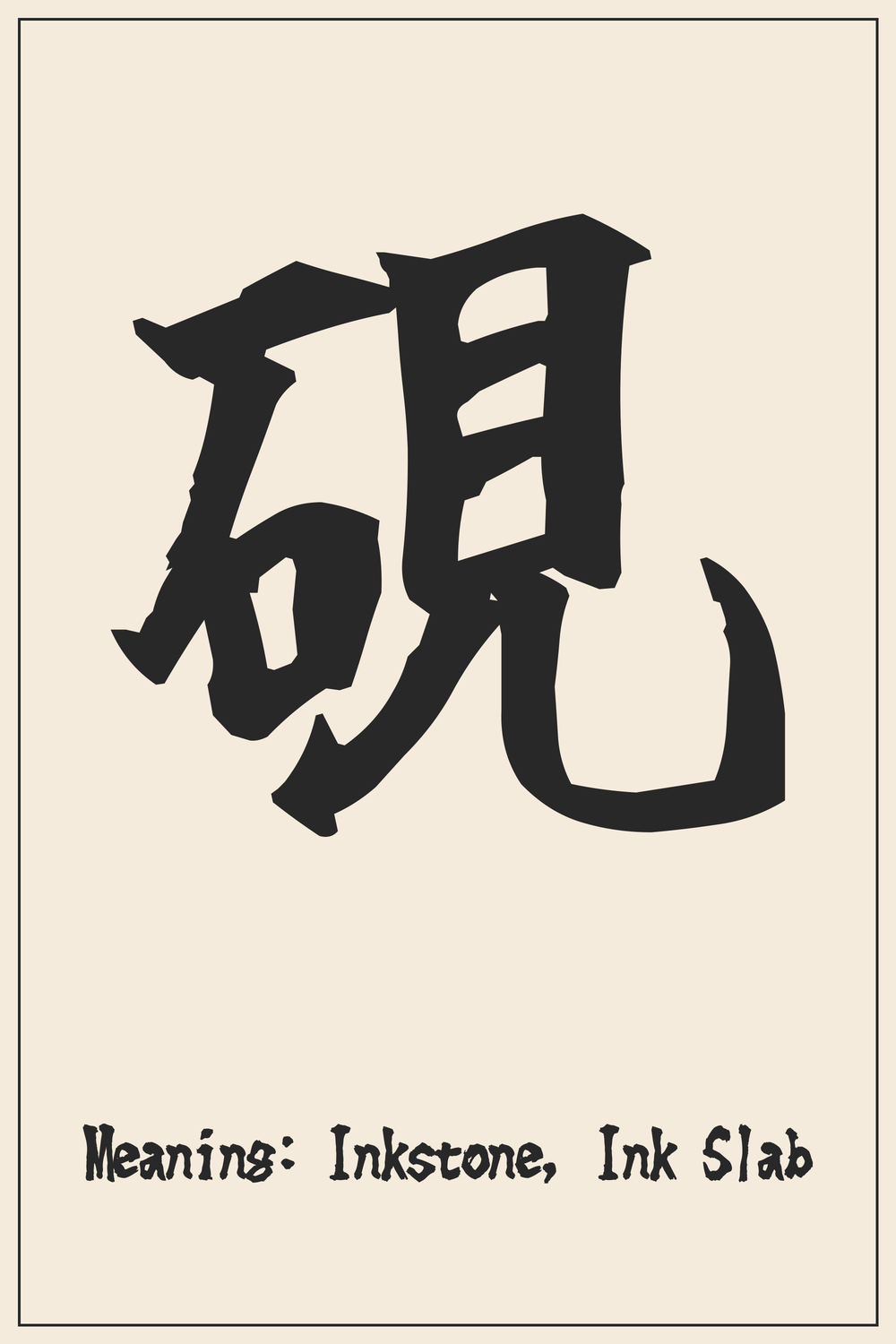
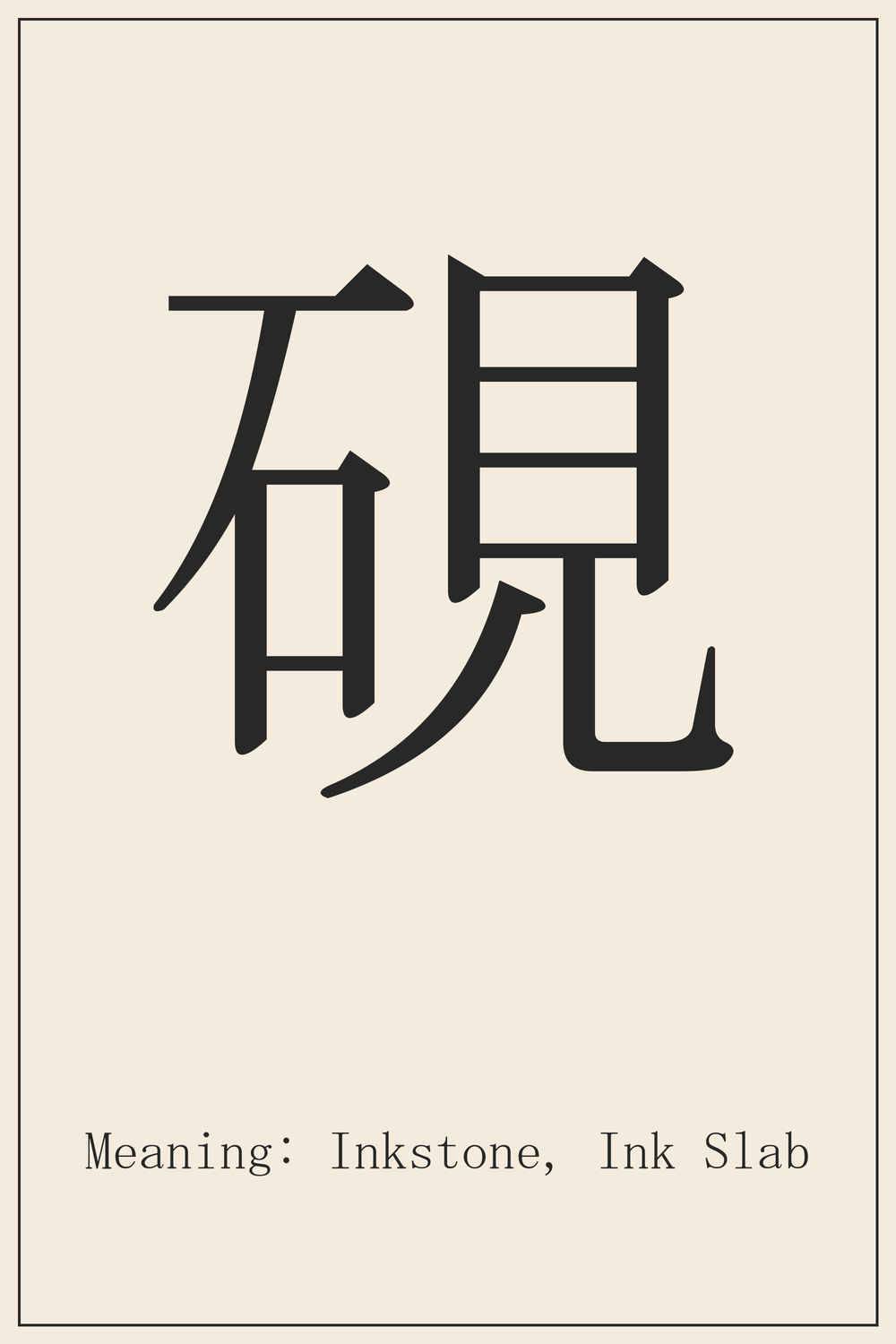
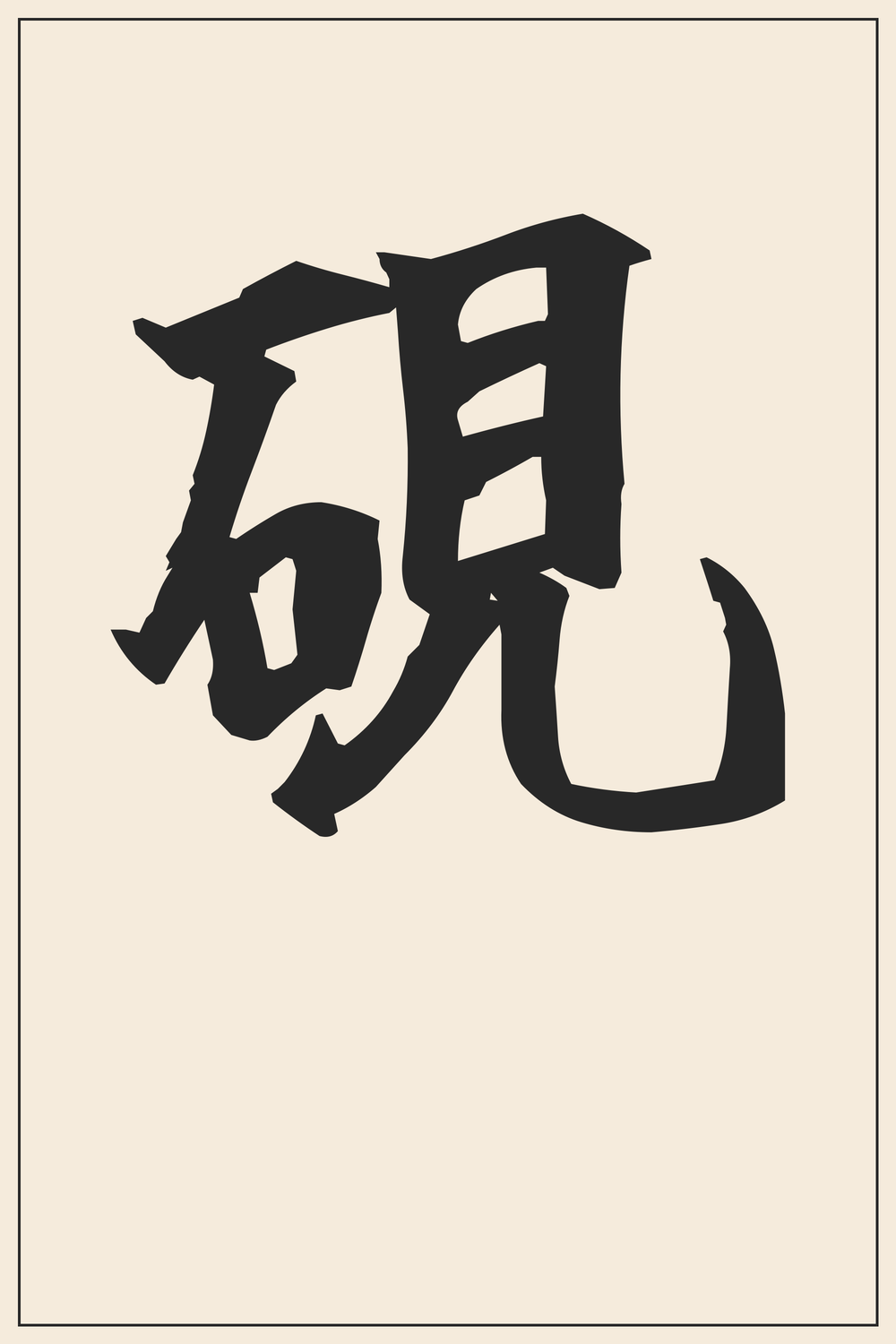
The Kanji 硯 (Suzuri) represents the inkstone, a timeless artifact central to East Asian calligraphy and painting. It symbolizes the foundation of artistic creation and scholarly pursuit.
The atmosphere of a Kanji character changes dramatically depending on the font style. A character that looks elegant in a brush style might look bold and modern in a different font.
Recommendation:
Since a tattoo is permanent, we strongly recommend comparing various font styles beyond what is shown here. Use our designs as a trusted reference for the correct structure, but feel free to explore different artistic variations to find the perfect match for your vision.
The Deep Meaning Behind 硯
The Kanji 硯 (suzuri) embodies the essence of traditional East Asian calligraphy and ink painting. Historically, the inkstone has been one of the “Four Treasures of the Study” (文房四宝, bunbō shihō), alongside the brush, ink stick, and paper, indispensable for scholars and artists.
More than just a tool, the inkstone represents patience, precision, and the meditative process of grinding ink, which is often considered a vital part of preparing the mind for artistic or scholarly endeavors. It symbolizes the diligent pursuit of knowledge and the mindful creation of beauty through written expression.
Kanji Breakdown
The Kanji 硯 is a phono-semantic compound, skillfully combining a semantic component related to its material with a phonetic component suggesting its sound.
Stone / Rock: This radical (ishi-hen) clearly indicates that the object is made of stone. Inkstones are traditionally carved from various types of durable stone.
See / Appearance: In this context, 見 (ken) primarily functions as the phonetic component, suggesting the ‘ken’ sound for the Kanji. It may also subtly allude to ‘inspecting’ the ink’s quality as it is ground.
Conclusion
The Kanji 硯, or “inkstone,” is a symbol of artistic discipline, intellectual pursuit, and the enduring beauty of traditional Japanese culture. It represents the quiet dedication required for mastery in calligraphy and other fine arts.
Choosing 硯 for a tattoo signifies an appreciation for craftsmanship, deep concentration, and the rich heritage of written expression. While a niche choice, it resonates deeply with those who value the meditative aspects of art and learning.
Comments